avatarDark Energy Articles

Free AI web copilot to create summaries, insights and extended knowledge, download it at here

2523

Abstract

nce.org/doi/10.1126/science.adf8984?adobe_mc=MCMID%3D12970974728423514851222920714261848261%7CMCORGID%3D242B6472541199F70A4C98A6%2540AdobeOrg%7CTS%3D1704787911">Science</a>.”</p><blockquote id="111b"><p>“In the last twenty years, sharks have increasingly been considered one of the most endangered groups of wild animals in the world. Consequently, they have been the subject of discussions about increased care for the fate of these animals. However, no assessment of the impact of protective regulations on shark mortality globally has been carried out,” the article reads.</p></blockquote><p id="f734">Scientists found that shark mortality increased by 4% in coastal waters. However, it decreased by 7% due to pelagic fishing, especially in the Atlantic and western Pacific.</p><blockquote id="f70d"><p>“By combining fishing mortality data with the global regulatory landscape, we show that widespread legislation aimed at preventing overfishing has not reduced the mortality of these creatures,” wrote the researchers.</p></blockquote><figure id="adc4"><img src="https://cdn-images-1.readmedium.com/v2/resize:fit:800/1*J_9pnEDUyxRGlbEAXVc2hw.jpeg"><figcaption>[Photo: NOAA, Public domain, via <a href="https://commons.wikimedia.org/wiki/File:Shark_fins.jpg">Wikimedia Commons</a>]</figcaption></figure><h1 id="94ea">A significant portion of the caught sharks belongs to endangered species</h1><blockquote id="3f09"><p>“On the other hand, regional bans on shark fishing or their control have achieved some success. These analyses, combined with expert interviews, highlight evidence-based solutions to reverse the ongoing, excessive exploitation of sharks,” conclude the Canadian scientists.</p></blockquote><p id="d6bf">They add that additional actions are needed to save particularly the 25 million individuals per year belonging to endangered species.</p><p id="eeaf">Sharks are most commonly caught for their fins. In many countries, especially in Asia, this body part is considered a delicacy. The main markets for fin trade are China, Hong Kong, Taiwan, Malaysia, Singapore, and Thailand. Another problem is the process of harvesting fins, which involves cutting them off live sharks. The fish, with its fins cut off, is thrown overboard while still alive. It then dies in agony, unable to swim and slowly bleeding.</p><figure id="d819"><img src="https://cdn-images-1.readmedium.com/v2/resize:fit:800/1*d40F9AGCbK2w69ynT6An4A.jpeg"><figcaption>[Photo: Hector Garcia, <a href="https://creativecommons.org/licenses/b

Options

y-sa/2.0">CC BY-SA 2.0</a>, via <a href="https://commons.wikimedia.org/wiki/File:Shark_fins_Thailand.jpg">Wikimedia Commons</a>]</figcaption></figure><p id="2492">Activists have been calling for an end to this practice for years. Unfortunately, WWF data shows that the increase in shark fishing correlates with the rise in the value of their meat. It is estimated that the global trade in shark and ray meat could be worth up to 2.6 billion dollars. For comparison, in 2000, it was “only” 157 million dollars.</p><p id="64ba">Experts acknowledge that deep systemic changes are needed. This involves not only the sale of meat but also souvenirs, such as shark teeth or bones, which can be bought at local stalls in Asian countries. Conservationists emphasize that sharks are crucial for the stability of the ecosystems they inhabit. These animals are responsible for the health of the oceans.</p><div id="2f5b" class="link-block"> <a href="https://readmedium.com/exploring-the-lethal-caffeine-dose-how-much-coffee-is-too-much-646c509d2558"> <div> <div> <h2>Exploring the Lethal Caffeine Dose: How Much Coffee is Too Much?</h2> <div><h3>Caffeine present in coffee, tea, and cocoa is a strong stimulant to the nervous system. However, a large amount of it…</h3></div> <div><p>medium.com</p></div> </div> <div> <div style="background-image: url(https://miro.readmedium.com/v2/resize:fit:320/1*aUyBrS2acYWSQxu-B4Ntdg.jpeg)"></div> </div> </div> </a> </div><h1 id="4556">Attention all readers!</h1><p id="bb38"><b><i>As content creators on Medium.com, we face minimal compensation for our hard work. If you find value in my articles, please consider supporting me on my “<a href="https://www.buymeacoffee.com/oconnel">Buy Me a Coffee</a>” page. Your small contributions can make a big difference in fueling my passion for creating quality content. Thank you for your support!</i></b></p><figure id="1057"><img src="https://cdn-images-1.readmedium.com/v2/resize:fit:800/0*Pm9TOr-5svmNuuXB.png"><figcaption><a href="https://www.buymeacoffee.com/oconnel">https://www.buymeacoffee.com/oconnel</a></figcaption></figure><figure id="71ef"><img src="https://cdn-images-1.readmedium.com/v2/resize:fit:800/0*KJc52P2X8j4VSRWK.png"><figcaption><a href="https://www.buymeacoffee.com/oconnel">https://www.buymeacoffee.com/oconnel</a></figcaption></figure></article></body>

Silent Slaughter: The Annual Demise of 80 Million Sharks for Their Fins

The latest data shows that shark fishing has increased due to their fins. Humans are killing them by an additional 4 million compared to pre-2012 levels.
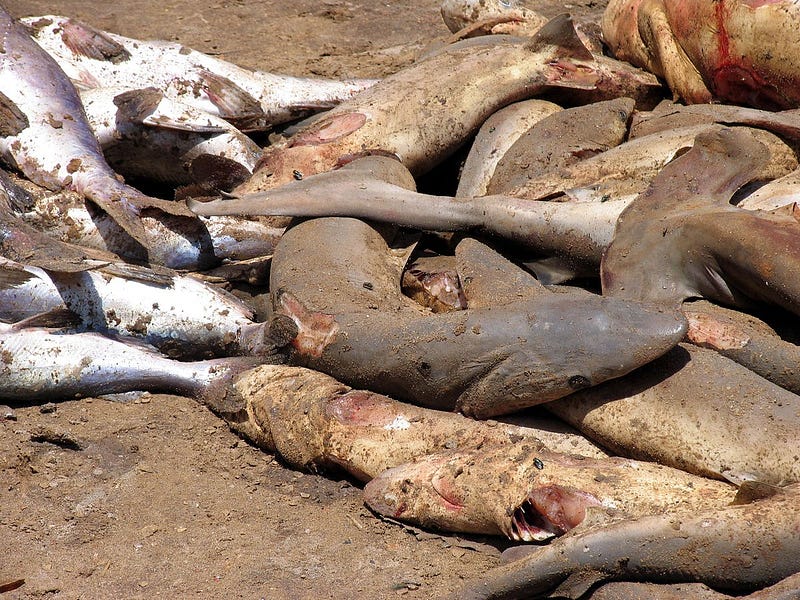
[Photo: Sebastián Losada, CC BY-SA 2.0, via Wikimedia Commons]

Almost everyone is familiar with the iconic film “Jaws” directed by Steven Spielberg. The music accompanying the approaching shark still instills fear today, and scenes with the predator in the lead role once caused uncontrollable terror. The sight of this predatory fish in action is undoubtedly frightening, especially since shark attacks on humans are not fiction.

How many people do sharks kill?

The problem is that dangerous interactions between humans and sharks occur extremely rarely. It is estimated that there are about 70 unprovoked attacks each year. These animals kill about 10 people annually.

This means that these predatory fish are actually much less dangerous than, for example, lions. Interestingly, the most dangerous mammals include… hippos. They kill up to 500 people each year.

These numbers speak for themselves. Although direct encounters with sharks can end tragically, they happen very rarely. We call these animals man-eaters, but in reality, humans are shark killers on a massive scale. Recent research has shown that we kill up to 80 million sharks annually, solely for their fins. This is 4 million more than before 2012.
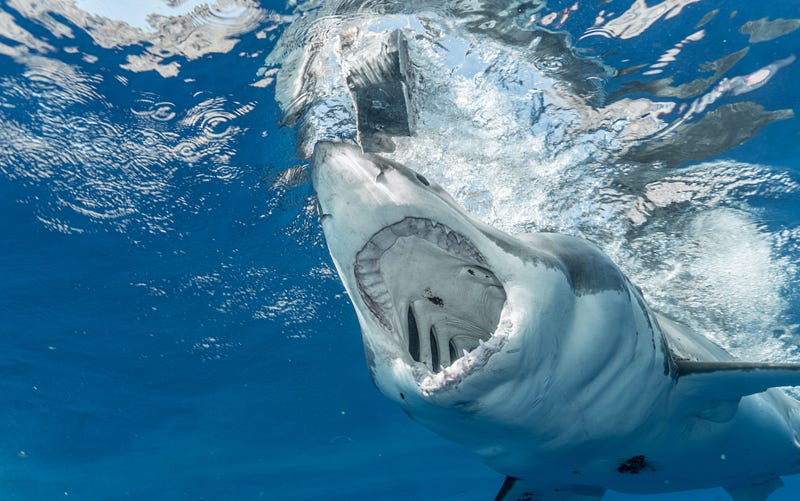
[Photo by Mile Ribeiro from Pexels]

People kill even 80 million sharks just for their fins

Canadian scientists analyzed fishing data from 2012 to 2019. This period saw a sharp increase in fishing activity. Furthermore, researchers found that over 30% of all sharks are endangered species. The research results were recently published in the prestigious scientific journal “Science.”

“In the last twenty years, sharks have increasingly been considered one of the most endangered groups of wild animals in the world. Consequently, they have been the subject of discussions about increased care for the fate of these animals. However, no assessment of the impact of protective regulations on shark mortality globally has been carried out,” the article reads.

Scientists found that shark mortality increased by 4% in coastal waters. However, it decreased by 7% due to pelagic fishing, especially in the Atlantic and western Pacific.

“By combining fishing mortality data with the global regulatory landscape, we show that widespread legislation aimed at preventing overfishing has not reduced the mortality of these creatures,” wrote the researchers.
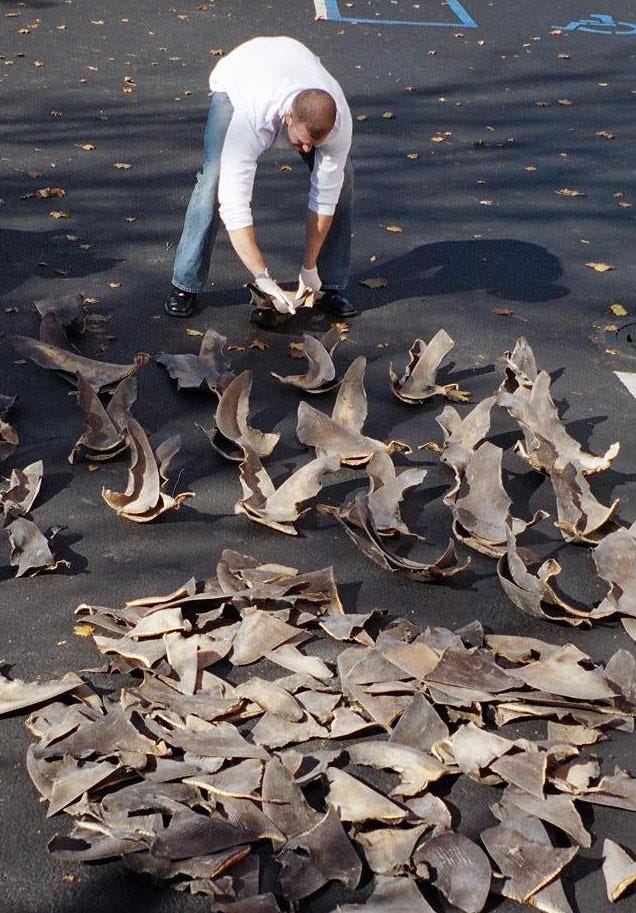
[Photo: NOAA, Public domain, via Wikimedia Commons]

A significant portion of the caught sharks belongs to endangered species

“On the other hand, regional bans on shark fishing or their control have achieved some success. These analyses, combined with expert interviews, highlight evidence-based solutions to reverse the ongoing, excessive exploitation of sharks,” conclude the Canadian scientists.

They add that additional actions are needed to save particularly the 25 million individuals per year belonging to endangered species.

Sharks are most commonly caught for their fins. In many countries, especially in Asia, this body part is considered a delicacy. The main markets for fin trade are China, Hong Kong, Taiwan, Malaysia, Singapore, and Thailand. Another problem is the process of harvesting fins, which involves cutting them off live sharks. The fish, with its fins cut off, is thrown overboard while still alive. It then dies in agony, unable to swim and slowly bleeding.

[Photo: Hector Garcia, CC BY-SA 2.0, via Wikimedia Commons]

Activists have been calling for an end to this practice for years. Unfortunately, WWF data shows that the increase in shark fishing correlates with the rise in the value of their meat. It is estimated that the global trade in shark and ray meat could be worth up to 2.6 billion dollars. For comparison, in 2000, it was “only” 157 million dollars.

Experts acknowledge that deep systemic changes are needed. This involves not only the sale of meat but also souvenirs, such as shark teeth or bones, which can be bought at local stalls in Asian countries. Conservationists emphasize that sharks are crucial for the stability of the ecosystems they inhabit. These animals are responsible for the health of the oceans.

Attention all readers!

As content creators on Medium.com, we face minimal compensation for our hard work. If you find value in my articles, please consider supporting me on my “Buy Me a Coffee” page. Your small contributions can make a big difference in fueling my passion for creating quality content. Thank you for your support!

https://www.buymeacoffee.com/oconnel
Animals
Nature
Life
Science
Sharks
Recommended from ReadMedium