
Silencing the Inner Critic
There’s a kid in my head and she really doesn’t like me.
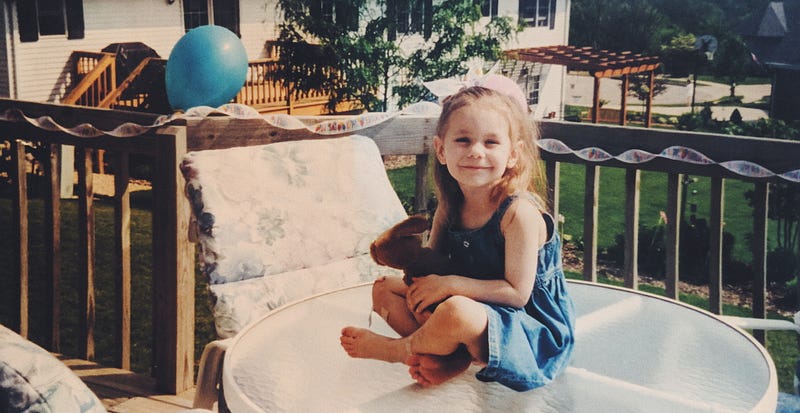
When my therapist first started talking about the “little girl” inside me, I felt weird and uncomfortable. Here I was, a fully functioning albeit anxious adult. And I was supposed to believe six-year-old me was trapped inside somewhere, somehow? Trying to get out of me like a Sigourney Weaver Alien movie?
While some part of me still wanted to watch “SpongeBob” reruns and eat Oreo PopTarts for three square meals a day, I knew that’s not what she meant.
But it took me time to realize that the traumas I felt in childhood were creating a very real, adult voice in my head. The voice told me I wasn’t good enough. The voice told me betrayal and abandonment were inevitable. The voice told me I didn’t deserve love.
Childhood Emotional Neglect is not the presence of bad situations growing up; it’s the absence of nurturing ones. And in seeing our own “missing pieces” we struggle. It’s hard to diagnose what isn’t there. It’s like trying to find a needle-shaped hole in a haystack.
A lot of people have acknowledged that childhood trauma can play a role in adulthood wellbeing. But childhood trauma as we diagnose it tends to be the things we remember — abuse, fighting, divorce. For me, for a long time, I couldn’t yet acknowledge what wasn’t there.
I grew up as an emotional kid, largely invested in my circumstances. I cared about the people around me. I was perceptive and sensitive. I’d cry when I saw a dead bird on the street. I wrote “books” with complex emotional storylines — six chapters about a daughter helping her mentally ill mother. I once yelled at my dad for killing ants.
When I brought my emotions to the table, though, I was often met with disdain.
“What’s wrong now?”
“Can you leave me alone?”
“It’s not a big deal.”
“It’s all in your head.”
Those notes of emotional negligence became a familiar song, and they kept chiming and clanging around in my brain through adulthood.
I never considered myself a loner. I hated nights in — they reminded me of my abandonment as a child. To combat this, at 25 I took a two-month solo trip across the world. I met new people, tried new things. On happier days I basked in the glow of self-driven itineraries, ate schnitzel and gelato and learned some French.
I felt less concerned about being alone, but still, something was missing from how I engaged with people. How people saw me, maybe… but mostly, how I saw myself.
The thing is, I always considered the emotional parts of me to be abrasive. I was terrified of showing any emotion or insecurity — I’d immediately overcompensate and apologize profusely. I didn’t believe in my gut that anyone enjoyed my company. I anticipated being abandoned because, well, I frankly deserved it.
Needless to say, this hurt my relationships. I wasn’t portraying too much confidence in my daily life, and everyone around me needed to prop me up to let little, bright parts of me peep out past the curtain.
All of this translated into immense neediness and fears of being alone. I expected everyone to read my mind, see me clearly. But self-validation was hard because something about me just kind of resented myself.
When I began to read articles on Childhood Emotional Neglect, everything miraculously clicked into place. I began to realize the things I heard as a kid became my own self talk as an adult. There wasn’t any need for this. I wasn’t inherently flawed. I was hurt. I needed help.
That little kid had been sad and lonely for too long, and I was abandoning her. The weight of this was a gut punch.
And I realized that silencing my “inner critic” wasn’t a gag order. That only made her more hurt, more lonely, more anxious, more traumatized, and more prone to lashing out.
My inner critic had something valuable to say. I needed to validate her in order to calm her down.
And to do that, I needed to understand her. I needed to listen to her. “Where is this coming from?” I began asking. I flipped the script entirely. “What’s going on? Can I help?” I couldn’t be the one to forsake her emotions because, if not me, then who?
Thinking of the hurt parts of me as my “little kid” helped me control her impulses. There were two of us now. She mattered to me, but she wasn’t in charge. I called my shots, I reacted with confidence, I forged ahead. And if she needed to have a big ol’ ugly cry and eat Cinnamon Toast Crunch cereal, that was okay, too.
Since I’ve noticed my own inner critic, I’ve started seeing that other people have hurt little people pulling the ropes and levers in their heads, too. These are good people at their core. They listened too long to the mean stuff, they adopted it into their own vernacular, and they never acknowledged their pain or forged their own self-validating voice.
We all deserve to give that little kid a hug. We deserve better for our adult selves than the adults might have done for us then. We deserve to be angry, hurt, and eventually forgiving for what might not have been there when we grew up.
It’s possible to heal, to feel fulfilling and enriching emotional relationships. It’s possible to brim with confidence that’s authentic and pulls the right people in like a magnet. But first, we’ve gotta love the lonely, hurt, and completely valid little kids in ourselves: give them an emotional confidante they never had.


