
Silence at 7,000 Feet
An answer to “What is your best exciting flying adventure?”
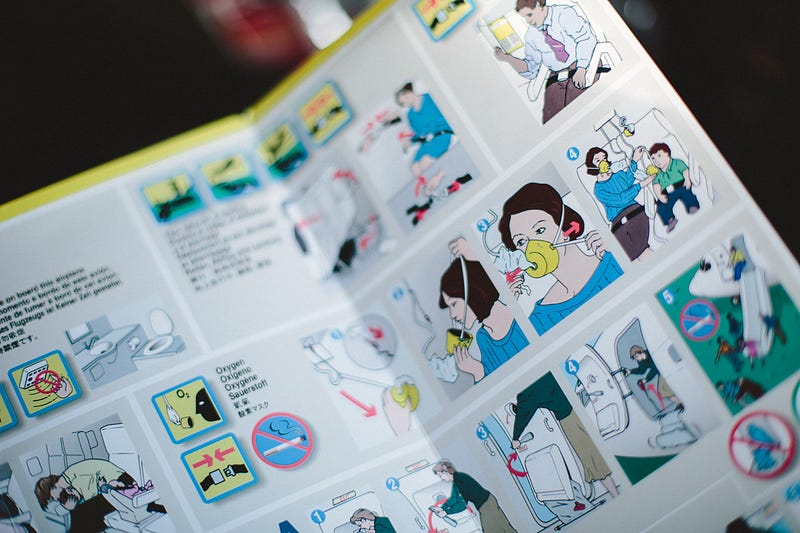
The flights out of our regional airport were mainly small planes, to take passengers to larger airports with larger planes. The smallest had a single column of seats on one side of the plane, and an aisle on the other. Unless you were a child, you couldn’t stand upright.
The more common planes were turboprop jets. In case you’re unfamiliar with the term, that means they had jet engines with propellers on the front of them. The plus side is that they can land on shorter, rougher runways and are more fuel-efficient for short flights. The negatives are that they are slow and incredibly noisy.
I never thought that I’d pray for the bone-rattling, eardrum-thumping noise of a turboprop jet. Until one fateful trip.
A normal 45-minute commuter flight
The flight started the same as any other flight from the regional airport to a nearby international airport. The passengers walked out onto the tarmac like a line of ducks, following the flight attendant. One at a time, we climbed the shaky aluminum steps into the body of the plane, then shuffled to our assigned seats.
It was a mid-sized turboprop jet. Probably a DASH 8, since those were the most common planes flying out of our airport. It had nine rows of four seats, with a center aisle. As was common, the final row was taped off.
The plane was about half full, with somewhere between fifteen and twenty passengers. Most, like me, were businesspeople flying for work. A young mother with a toddler was also on the flight.
Seasoned flyers groaned when they saw the toddler.
Unlike jet airplanes that fly high above the earth where the air is too thin to breathe, turboprops fly lower in breathable air. As a result, the cabin is not pressurized. You feel the changes in the atmosphere in your ears. Toddlers rarely understood this. Their ears hurt, and they usually started crying or screaming.
There will be no coffee
This was an early morning flight, and I was only half-awake. Many of the business people around me were also stifling yawns or leaning against the windows with their eyes closed.
So, we were dismayed when the pilot came on to inform us that the weather was rough between our airport and our destination. Since the clouds continued well above 15,000 feet, he couldn’t go over them. He was going to try to go under them if he could. But it would not be safe for the flight attendant to move around the cabin.
There would be no beverage service on this flight.
More groans and grumbles arose from the passengers. But the plane was cleared for takeoff and quickly accelerated. The rattle and whine of the engines drowned out any further complaints.
Talkers have to talk
I promptly opened my paperback and began reading. I’d mastered the art of reading in a moving vehicle during my family’s long car trips as a child. If you brace your elbows on your ribs, rather than the armrests, your book and your eyes will vibrate up and down together. From a reading perspective, it seems like your book is holding perfectly still.
Others had never mastered this skill, or perhaps were extroverts instead of introverts. They turned to the passenger in the seat next to them and tried to have a conversation.
Given that the engines sounded like a blender chopping ice, this mostly involved shouting at the top of their lungs. Even so, the sound distortion caused by the engines made it almost impossible to understand what was being said, unless the person was yelling directly into your ear.
It became just more sound buffeting my eardrums, making my ears ache. I spared a brief moment to be amazed that the small child wasn’t screaming, then turned my focus back to my book.
We experience turbulence
The plane hit the edge of the predicted rough weather. It popped upward like a cork released underwater. A moment later, it unexpectedly dropped five or ten feet.
Someone in one of the rows behind me screamed reflexively, biting off the scream when the plane found its footing again and climbed back up to where it belonged.
I still couldn’t understand what the people around me were saying, but I could hear the change in tone. Nervous laughter and self-conscious apologies replaced the earlier earnest discussions.
The pilot made an announcement, having something to do with moving to a lower altitude to hopefully get under the clouds. His words were just as chopped up and distorted as my fellow passengers, so I got the gist of it without the specifics.
I believe we’d been flying at about 10,000 feet, and he was dropping down to about 7,500 feet to try and get under the clouds. I’m not sure, but that seemed like what he was saying.
What’s that sound?
We hit further pockets of turbulence, causing the plane to bounce upward or drop lower. Of more concern to me was the way the engine noise changed. As we popped upward, the whine increased, as if the air was harder to push through. And when we dropped, the sound decreased, as if there was less air to move through.
The talkers finally stopped talking. I suspect they were praying instead. Or clenching their jaws shut so that they wouldn’t throw up.
There were no human sounds in the cabin, aside from involuntary gasps when the plane popped or dropped. That just made the changes to the sound of the engines more obvious.
Then the sound of the engines disappeared. And the plane plummeted.
One Mississippi…
Two Mississippi…
Three Mississippi…
I could see individual trees on the hillsides, growing alarmingly closer, before the engines gave a chittering roar and the plane shot back upward.
It’s all in the attitude
I looked around the cabin. Mostly, I saw strained, bloodless faces in forced expressions of false confidence. Some people had closed their eyes, lips silently moving as their fingernails dug slices out of the armrests.
In the back of the plane, someone lost their battle against motion sickness and was violently ill. Hopefully into an airsickness bag. A wave of gagging and retching followed, as row by row we were hit with the overwhelming stench.
This misery and desperation were broken by tiny hands clapping together. A small, high voice piped, “Again, Mommy! Again!”
The adults were terrified. The toddler thought this was a fantastic ride and was having the time of his life.
I had to grin.
We landed safely, most of us devoutly thanking the pilot for his skill in both keeping us in the air and bringing us down again. A few people muttered that they were never flying again.
But the lesson I took from the ordeal is that our attitude and outlook influence our experience far more than what is objectively occurring.
When I find myself frightened or overwhelmed, when life seems out of control, I hear that small, piping voice shouting, “Again, Mommy! Again!” And I wonder, how can I just let go of my expectations and enjoy the ride?
Check out pockett dessert’s original answer to this writing prompt:


