
New Orleans | Travelogue
Signs of the Bywater
Watch your step, mind the flair
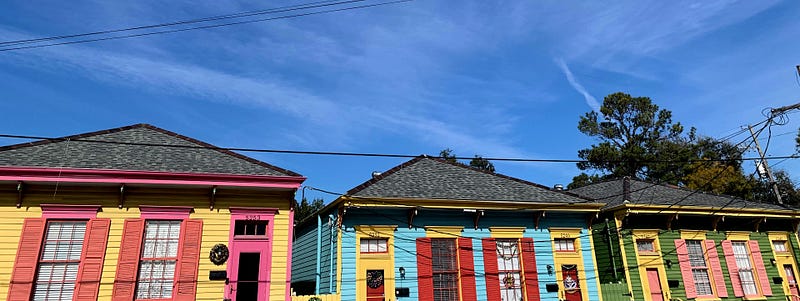
All signs pointed toward staying at the Bywater Parlor.
I travel to New Orleans often-ish, but the Bywater Neighborhood has never appeared on my radar. Until I came upon the Bywater Parlor’s Instagram account.
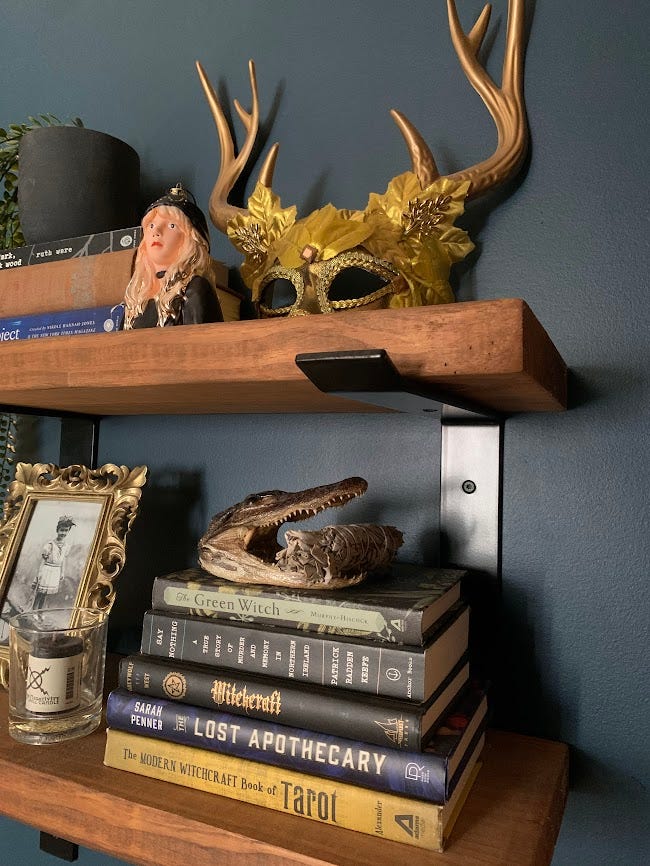
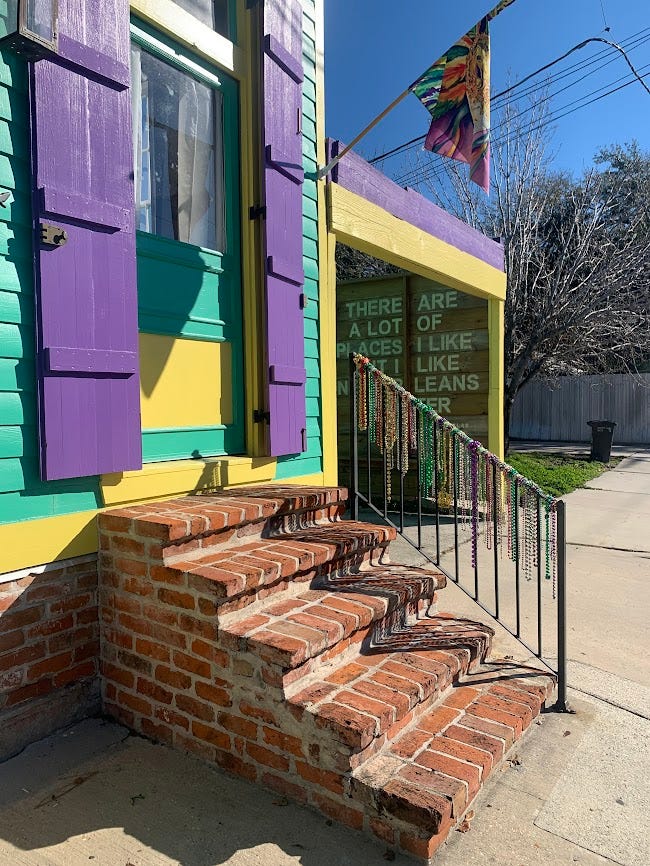
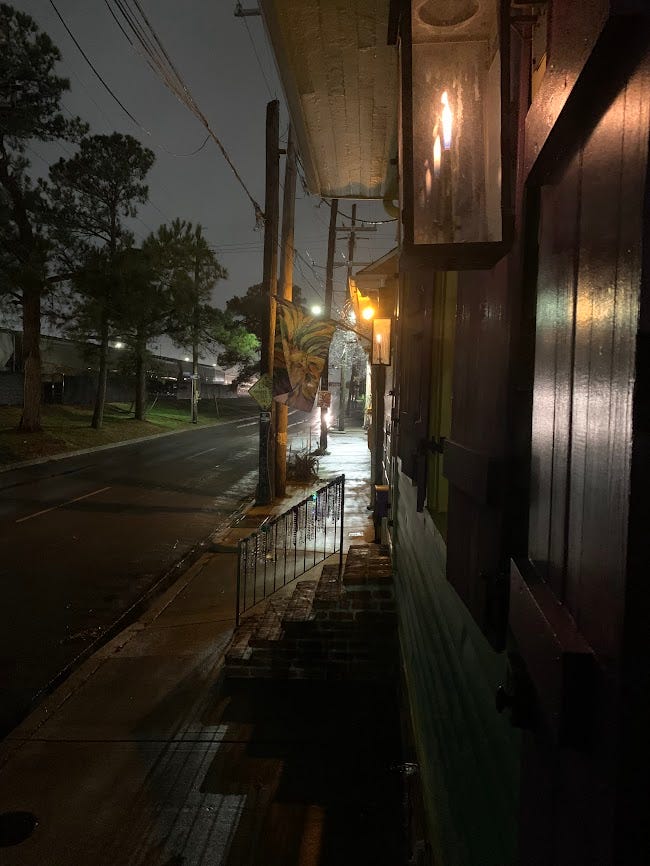
The Bywater Parlor is a former tattoo parlor that has been renovated into one side of a duplex near the edge of the Bywater Neighborhood. The house is painted in teal, yellow, and purple; the interiors are a bit witchy; it wreaks of New Orleans.
While staying at the Bywater Parlor, I woke before the sun each morning, slipped into jeans and a sweater or two (yes a sweater — it was 34F [1C] my last morning there), and walked 15 minutes down Royal Street to Petite Clouet, the neighborhood cafe.
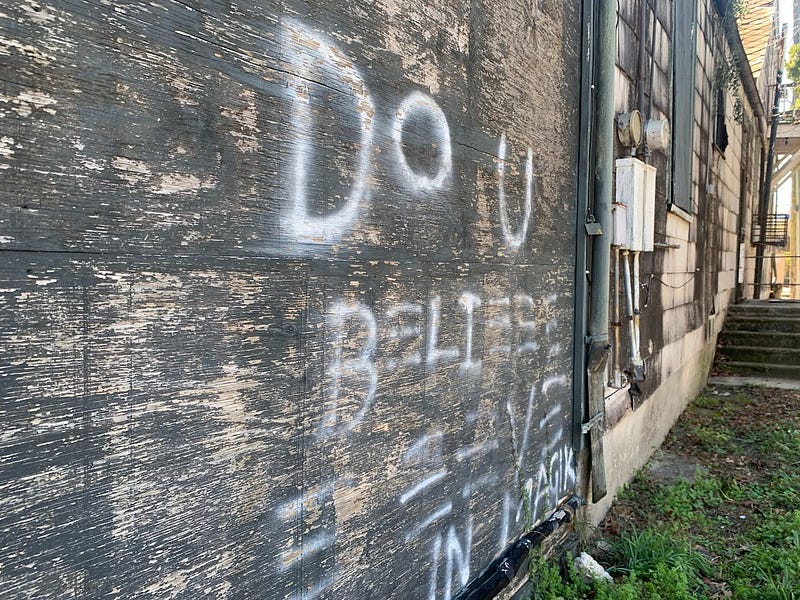
During my dozen or more walks and bike rides within this new-to-me neighborhood, I followed signs to establish who exactly lives here. Where’s the heartbeat? And why did our Uber driver hesitate to drop us off here?
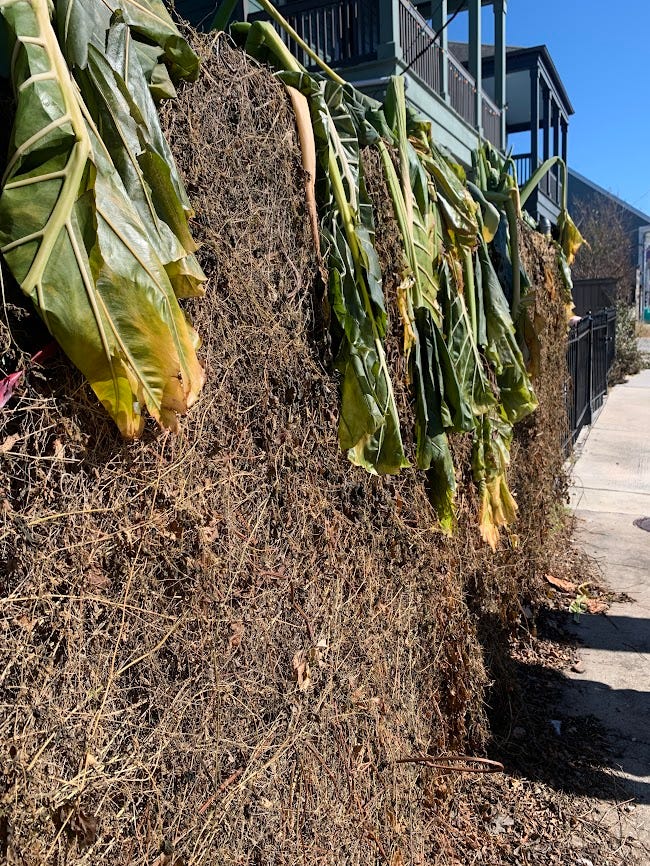
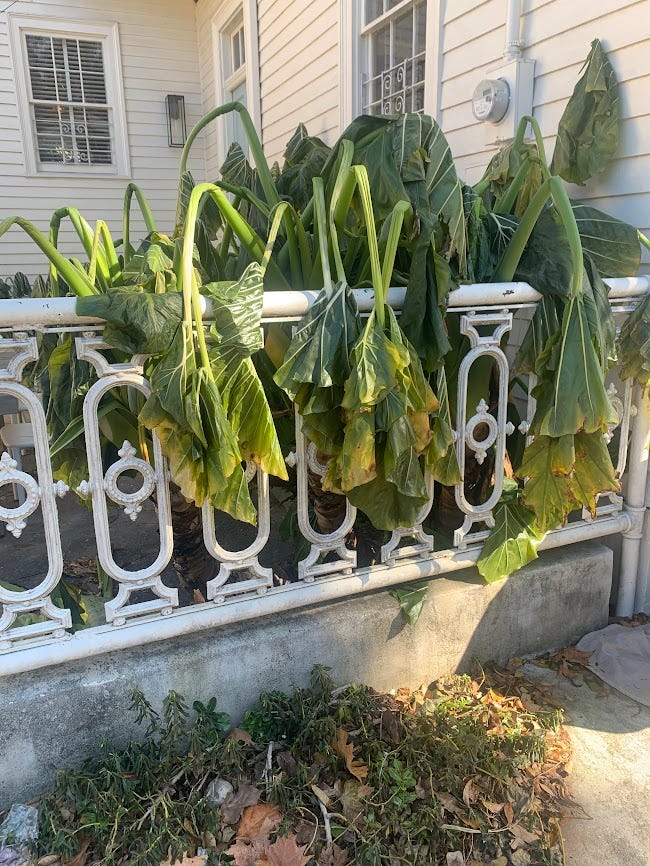
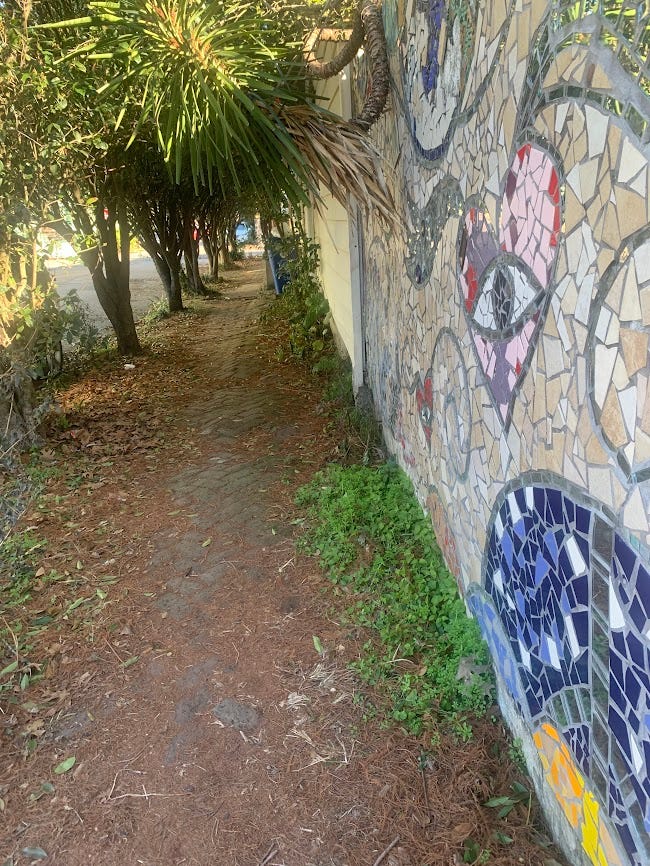
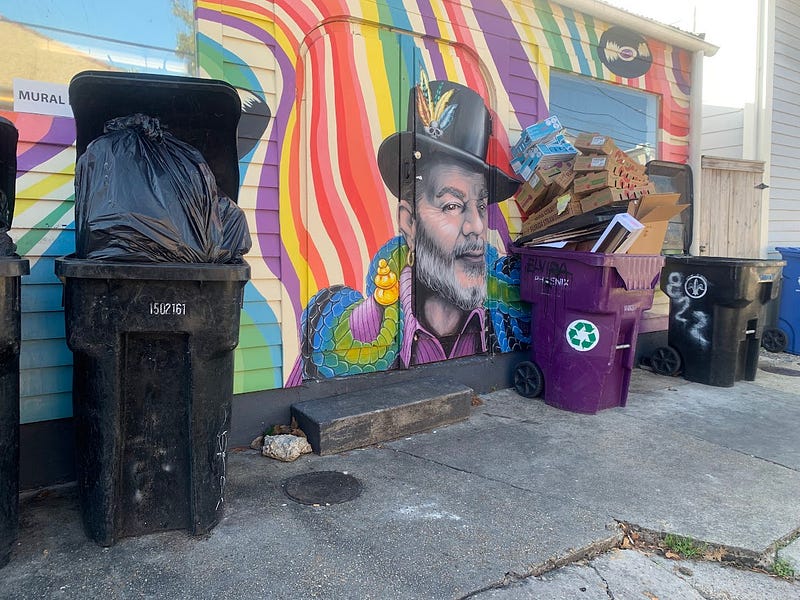
I maneuver around trash bins and feel sadness for homeowners and their frozen monsteras and banana plants, watching my step (if you’ve been to New Orleans you know the sidewalks are less than even).
During my time in the Bywater, New Orleanians shared that the temperatures were the coldest they remember.
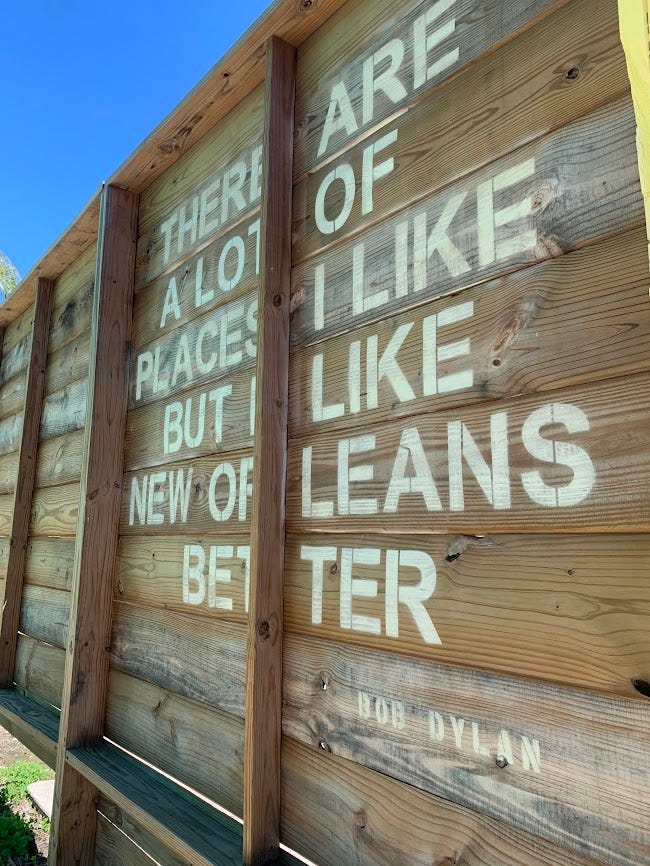
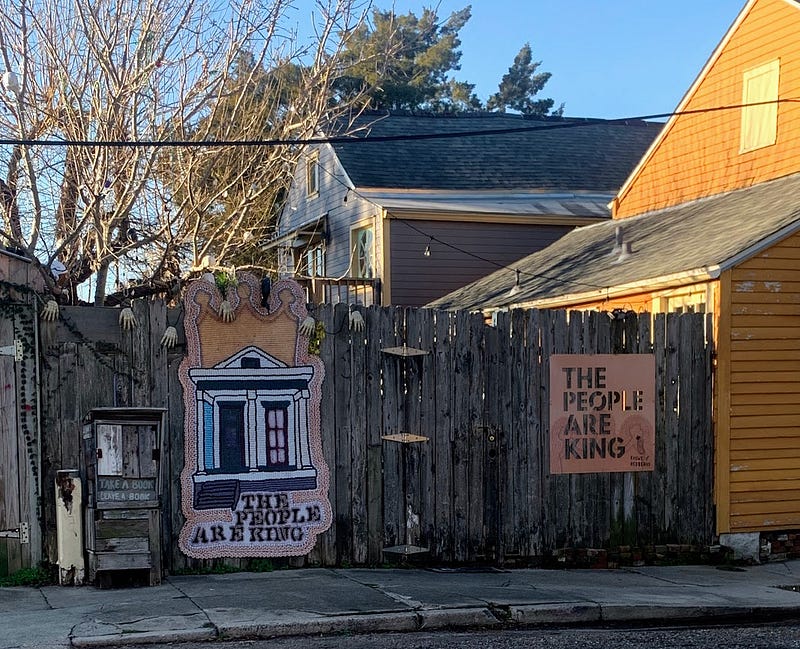
The literal signs of the neighborhood made me curious, sometimes eliciting an internal bark of laughter. I’ve dreamt of living in New Orleans for more than 20 years, but this neighborhood gave me the hope of practicality.
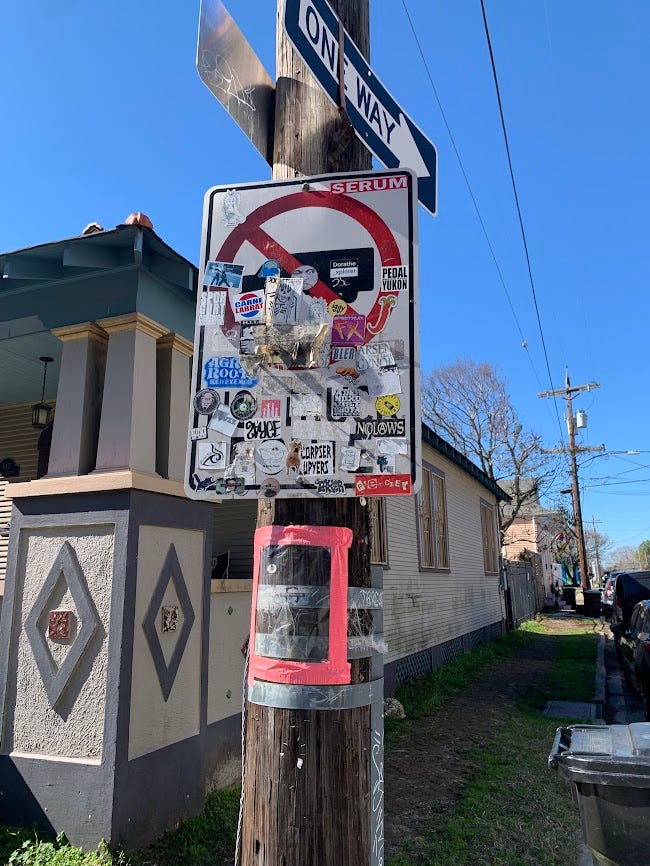
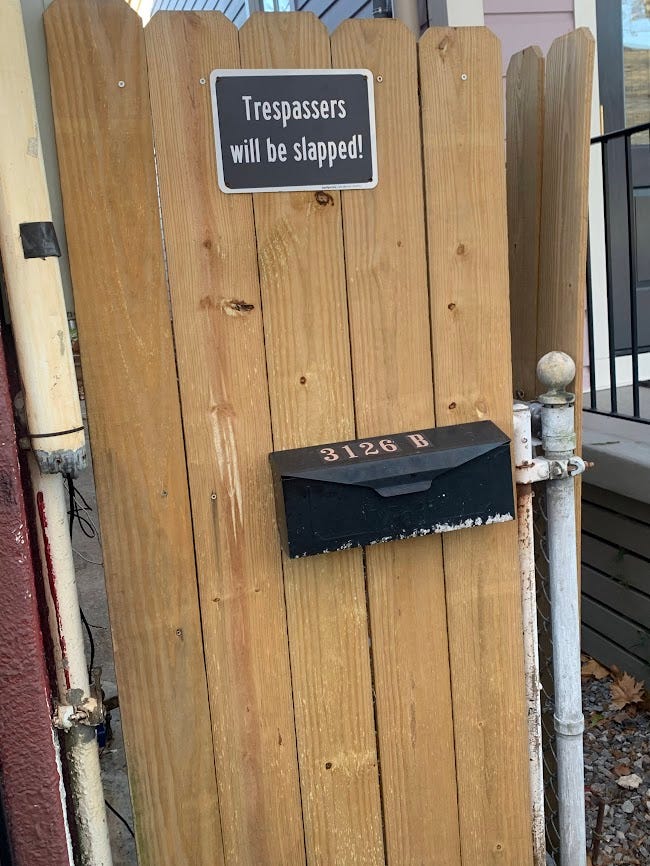
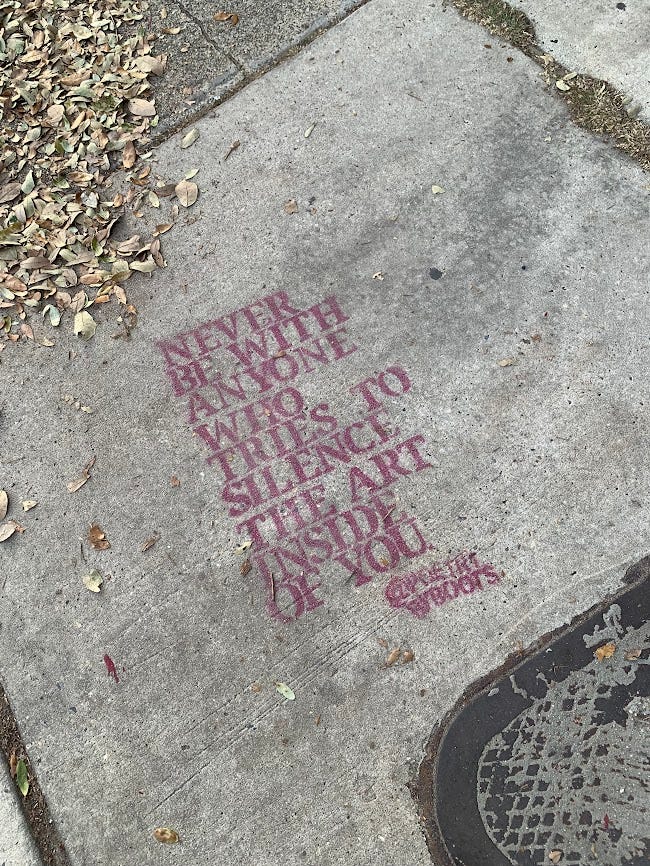
I’m convinced there is no boring moment in the Bywater neighborhood. It’s not loud if we’re talking decibels, but everything else is loud — the colors, the decor, entire shotgun-style residencies are in fest mode.
On my weekday morning walks, there are folks operating smokers in the backyard of The Joint, others making trips back and forth to their pick-ups — rehabbing porches and patios. It’s a jovial type of peacefulness. Everyone says “Mornin’” as I pass.
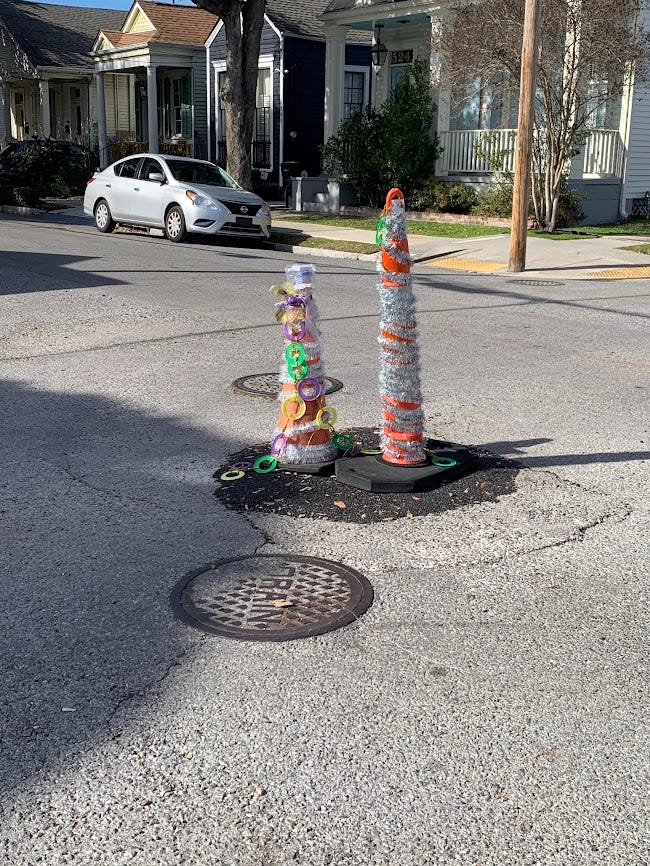
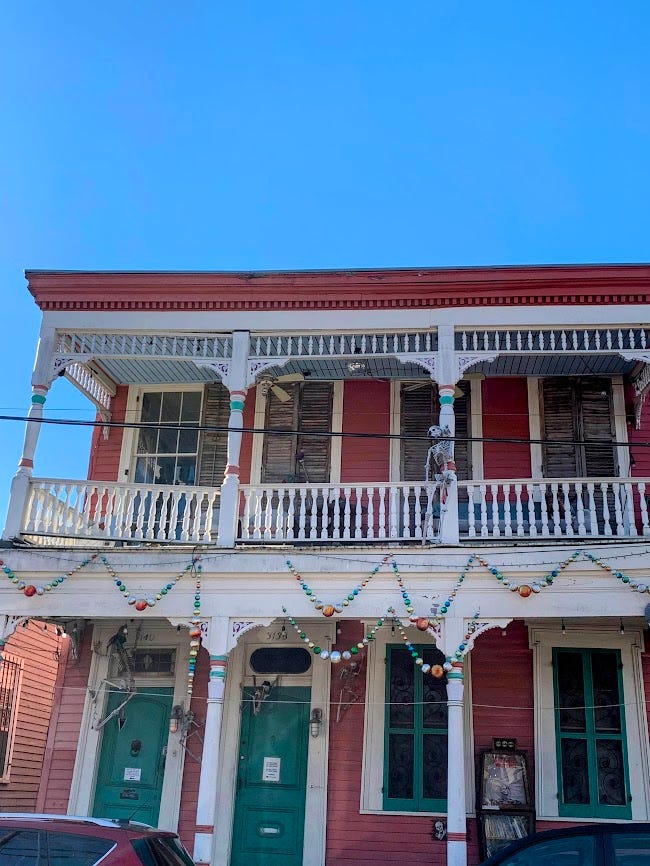
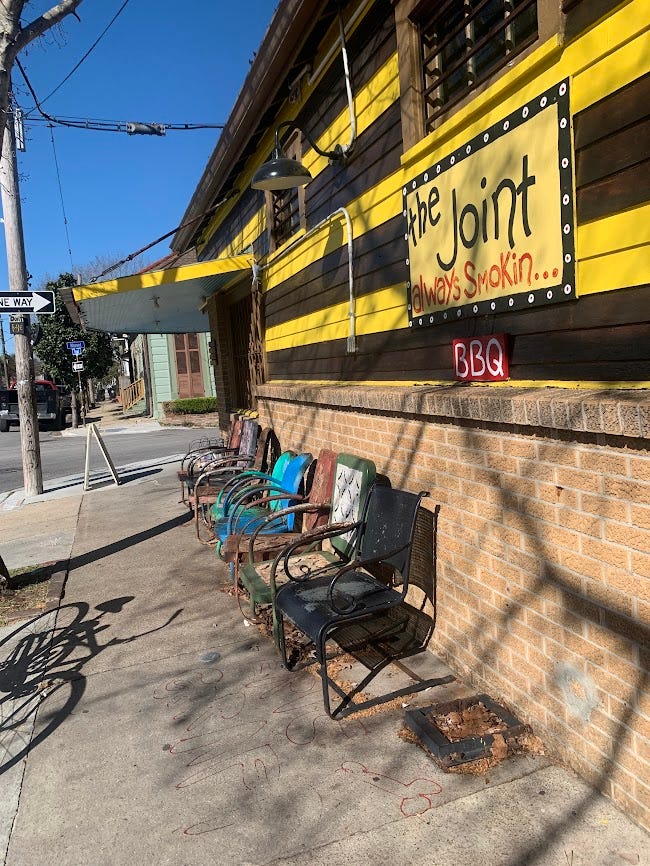
I know I’m amid Southern hospitality but I didn’t expect this much genuine kindness, and curiosity too. Where I’m from in the Midwest, everyone says “Hi, how are you?” not quite waiting for the response to their question — how are you?
But here, the greeting feels genuine. There’s no commitment, just the right amount of interaction.
Many of the people in the neighborhood that we’ve met are from Madison, Wisconsin; Chicago, Illinois; Massachusetts; and even St. Paul, Minnesota.
They all claim the city in conversation, being here since the ‘90s or early 2000s. But they’re not from here — which makes me question the amount of transplants, possible gentrification, and the authenticity of what I perceive as Southern culture.
How much of the Bywater is original? And does it even matter?
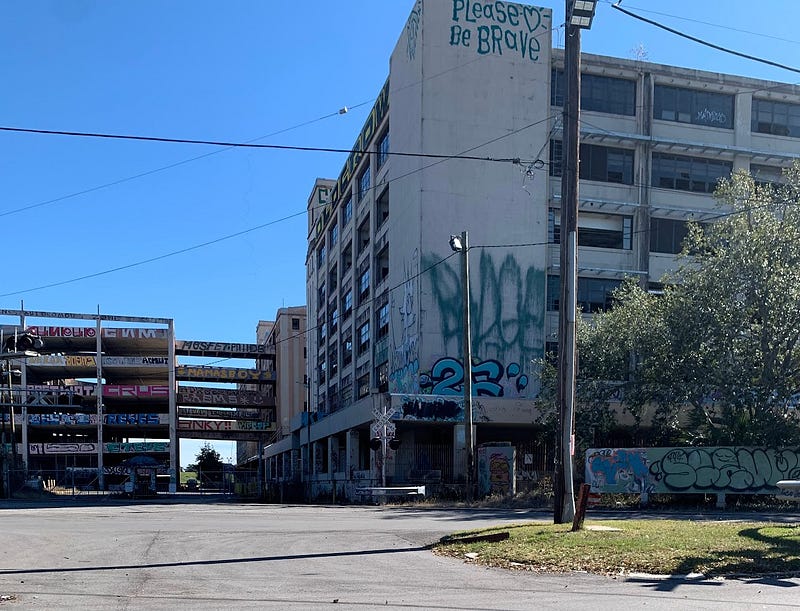
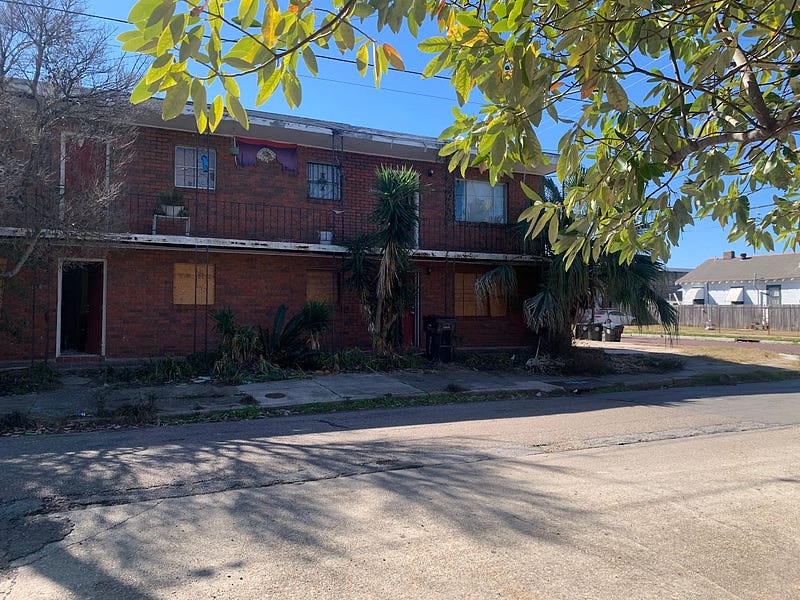
On my walks, I will see spots of dilapidated buildings and boarded-up windows.
A second ride-share driver shares they don’t pick people up across the highway a dozen blocks over. We hear recommendations of staying away from the Ninth Ward and not walking anywhere after dark.
There is one place I did visit almost as often as Petite Clouet — Vaughan’s Lounge.
Vaughan’s seemed to incorporate everything New Orleans under one roof.
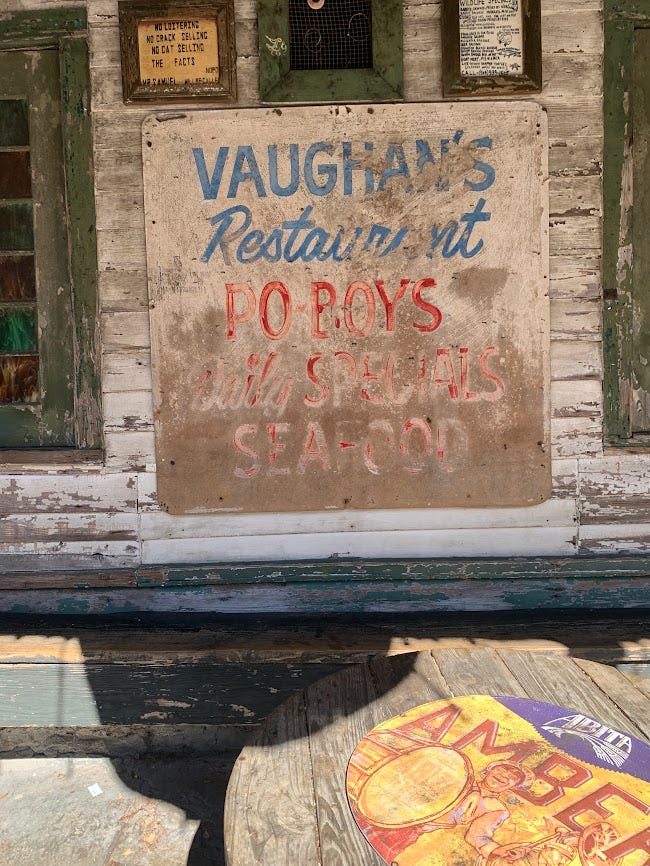
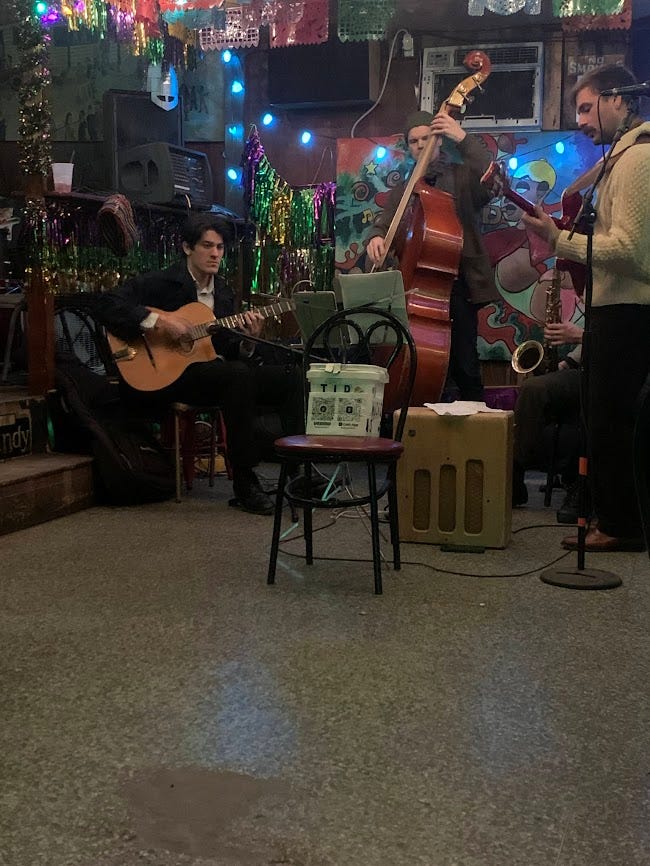
It’s the communal establishment every neighborhood dive bar wants to be.
As I approached Vaughan’s for the first time, there were a few fellas in circle formation playing hacky sack. Boy, I haven’t thought about hacky sack since seventh grade. They greet us as we scale the building, finding the entrance to the bar. There are signs forbidding cat and crack selling, welcoming everyone, and instructing hippies to use the side door.
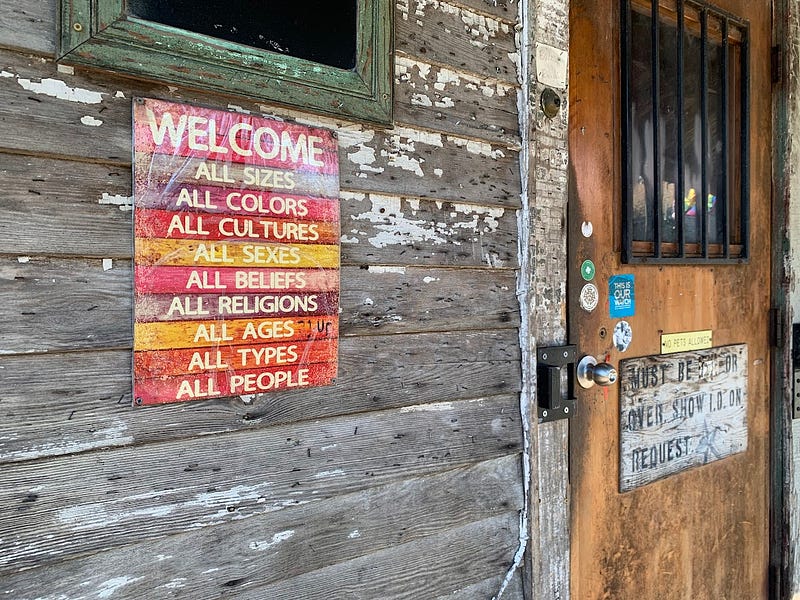
Inside, string lights and multi-colored neon flags rope the ceiling. “Coloreds only, no Whites allowed” is posted behind the bar, along with a deer mount with an eye patch.
Despite the “NO PETS ALLOWED” posted on the door, there are a few dogs inside, including a white chihuahua in a burgundy sweater, circling folks’ feet, waiting for a bite. There’s a reason why — there are containers of soul food, free for whoever is hungry, located near one corner of the bar.
An NBA game is playing on a television in a smaller adjacent room — no one is paying attention but it’s there, ready for whoever finds this important.
Cash only, no tabs, no cover.
The band is made up of a few guitars and a saxophone. I hear “boogie” and “hucklebuck” as the band labels the tunes, mentioning an Irish band in the 1980s sporting tracksuits. I’m pleasantly surprised when the couple sitting in front of us rises two, or three times to embrace and sway to the music.
I wish I would have gone into the restroom at Vaughan’s. Bar restrooms can give us an insight into the true institution. Not that you necessarily need it at Vaughan’s.
Other neighborhood haunts, like Bacchanal, soothed my restroom fix.
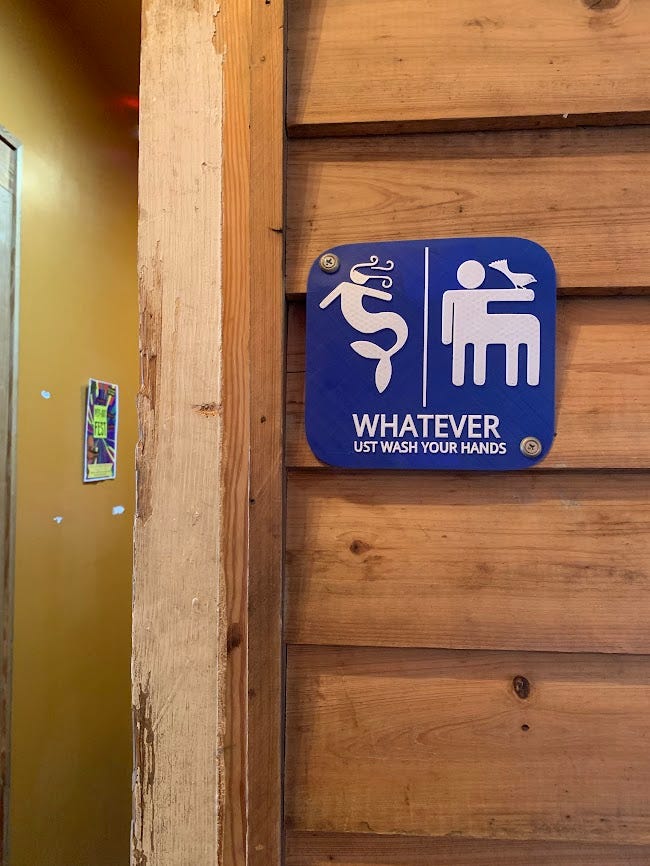
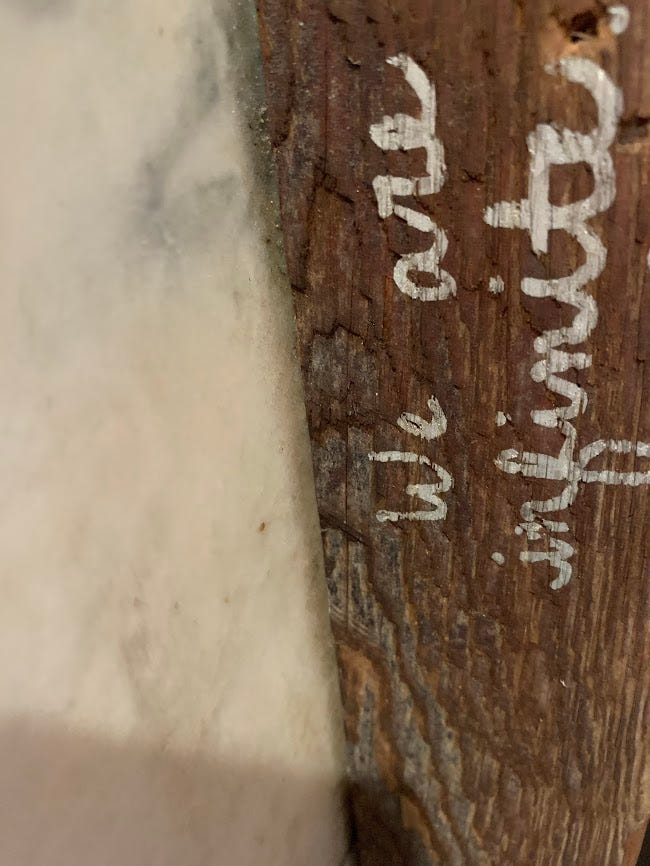
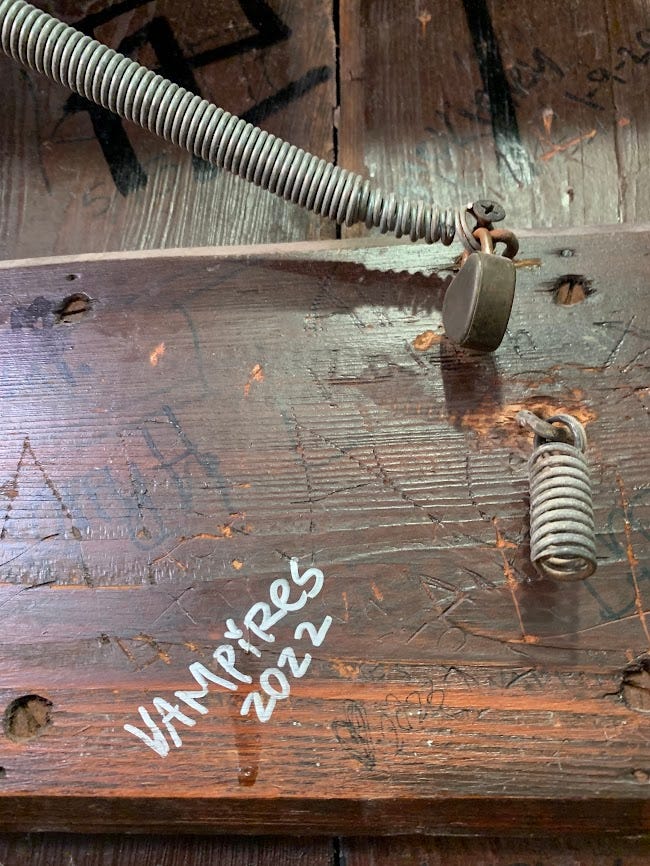
Signs are everywhere, literally and figuratively.
And as I peered into the opaque soul of the Bywater Neighborhood of New Orleans, I read the signs: the establishments, physical signs, storytelling, signs of Carnival, greetings, and even the restrooms. The signs show me what I already know to be true.
New Orleans is magic.
Thank you to JoAnn, Michele, Adrienne, Jillian, and Anne for the work you do for us and the beloved Globetrotters publication.
This is my submission for the January Monthly Challenge — Signs.
If you have a moment, please check out Jillian’s take on the monthly challenge. I found her discoveries of love from all around the world truly creative — it’s my favorite (that I’ve read) for the monthly signs challenge thus far:
As well as Rhonda’s, which added some fun and humor into the challenge — these monkeys crack me up:


