avatarRebecca Sealfon

Free AI web copilot to create summaries, insights and extended knowledge, download it at here

1818

Abstract

ow as “the first online notary service,” in an industry that “hasn’t changed much since the time of the Romans.”</p><figure id="6fdd"><img src="https://cdn-images-1.readmedium.com/v2/resize:fit:800/1*fNGFcbVItEKN-hbFHKtTDA.jpeg"><figcaption>Image from Amazon.com</figcaption></figure><p id="e084">Concurrently with signNow’s launch, he published a 134-page book called <a href="https://www.amazon.com/History-Signatures-From-Paintings-Robo-Signings/dp/1460978447"><i>A History of Signatures: From Cave Paintings to Robo-Signings</i></a>, which was part of the press release for signNow’s first funding round of 500,000 from angel investors. The book remains available. At the steep price of 39.99, it does not seem to have been intended for wide circulation. It is not ranked among the top 250,000 in world history, for example. It bills itself as “THE only comprehensive book on the nature, history, and impact of signatures.”</p><p id="2651">In the book, Hawkins presents himself as a maker of history through signNow, and a West Point graduate concerned with honor who had encountered many types of financial fraud at the firms he had worked. The book outlines the history of signatures, various types of signature fraud, and the role of signNow — originally NotaryNow — in the next part of signature history.</p><h1 id="8a45">signNow is acquired</h1><p id="f013">Two years later, in 2013, <a href="https://www.barracuda.com/">Barracuda Networks </a>— a company specializing in security, networking, and storage for cloud computers — acquired signNow. By that time, signNow had become one of the main eSignature services, with over a million users and more than half of the Fortune 500 in its database.</p><p id="b3fb">Under Barracuda Networks, signNow remained a standalone product but integrated into Barracuda’s

Options

existing offerings. As it became more established and eSignatures more mainstream, its pitch increasingly came to focus on convenience. In 2012, <a href="https://www.inc.com/magazine/201206/jennifer-alsever/3-digital-signature-apps.html"><i>Inc.</i> magazine</a> had highlighted it as being free and easy to use, discussing its ready availability on mobile devices without so much as mentioning its distinct security features. signNow’s emphasis on mobile signatures was an asset to Barracuda.</p><figure id="5a79"><img src="https://cdn-images-1.readmedium.com/v2/resize:fit:800/0*Gi_t8pxJX4d3iyZ7.jpg"><figcaption>Image from PCMag</figcaption></figure><h1 id="09e5">signNow’s current incarnation, under airSlate</h1><p id="4cc5">In 2017, signNow was acquired again, this time by pdfFiller — a service for editing PDF forms online. Today, pdfFiller is owned by airSlate, a business workflow automation service, and is one of its major products.</p><p id="9690">Rather than a novel technology, airSlate presents signNow as a comprehensive, slick piece of its larger toolkit. Its website focuses on how it interoperates with other parts of the platform, its versatility, the convenience of its API, and the no-code services that can be used to deploy it.</p><figure id="1dcd"><img src="https://cdn-images-1.readmedium.com/v2/resize:fit:800/1*0zCe1TzG1Tvb36zjE94kyg.png"><figcaption>From the current signNow website. Screenshot mine.</figcaption></figure><p id="63fc">signNow is a success story. In only a decade, it has transformed from being a revolutionary standalone service to being a standard piece of business software. It still exists as its own product and remains a preeminent player in the eSignature industry.</p><p id="9a5e"><b>Note: </b>I work for airSlate and am involved with signNow.</p></article></body>

signNow: The Evolution of a Successful Pitch

Photo by Cytonn Photography on Unsplash

Signature fraud is real, and its consequences can be devastating. The Australian Football League, for example, was rocked by a doping scandal in which a sports scientist allegedly forged the signatures of a pharmacist and a doctor, enabling players to receive dangerous banned substances. The scientist was found guilty of trafficking in the substances and was barred from associating with the Australian Football League for life. Depending on the circumstances, handwritten signatures can be difficult for even trained handwriting experts to verify.

In 2011, Chris Hawkins, a West Point graduate and an ex-U.S. Army platoon leader, and Andrew Ellis, a businessperson who had graduated from the University of Southern California, developed a technology to address this issue. The company they founded, signNow, allowed legally binding signatures to be recorded electronically and added to electronic documents.

signNow’s early period

Initially, the company presented itself primarily as an electronic notary service, NotaryNow. Its pitch emphasized the venerable history of the signature, its potential for abuse, and the marriage of this ancient tradition with modern technology. At the 2012 TechCrunch Disrupt technology fair, Hawkins described signNow as “the first online notary service,” in an industry that “hasn’t changed much since the time of the Romans.”
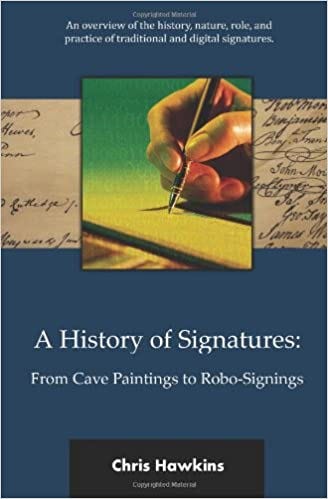
Image from Amazon.com

Concurrently with signNow’s launch, he published a 134-page book called A History of Signatures: From Cave Paintings to Robo-Signings, which was part of the press release for signNow’s first funding round of $500,000 from angel investors. The book remains available. At the steep price of $39.99, it does not seem to have been intended for wide circulation. It is not ranked among the top 250,000 in world history, for example. It bills itself as “THE only comprehensive book on the nature, history, and impact of signatures.”

In the book, Hawkins presents himself as a maker of history through signNow, and a West Point graduate concerned with honor who had encountered many types of financial fraud at the firms he had worked. The book outlines the history of signatures, various types of signature fraud, and the role of signNow — originally NotaryNow — in the next part of signature history.

signNow is acquired

Two years later, in 2013, Barracuda Networks — a company specializing in security, networking, and storage for cloud computers — acquired signNow. By that time, signNow had become one of the main eSignature services, with over a million users and more than half of the Fortune 500 in its database.

Under Barracuda Networks, signNow remained a standalone product but integrated into Barracuda’s existing offerings. As it became more established and eSignatures more mainstream, its pitch increasingly came to focus on convenience. In 2012, Inc. magazine had highlighted it as being free and easy to use, discussing its ready availability on mobile devices without so much as mentioning its distinct security features. signNow’s emphasis on mobile signatures was an asset to Barracuda.
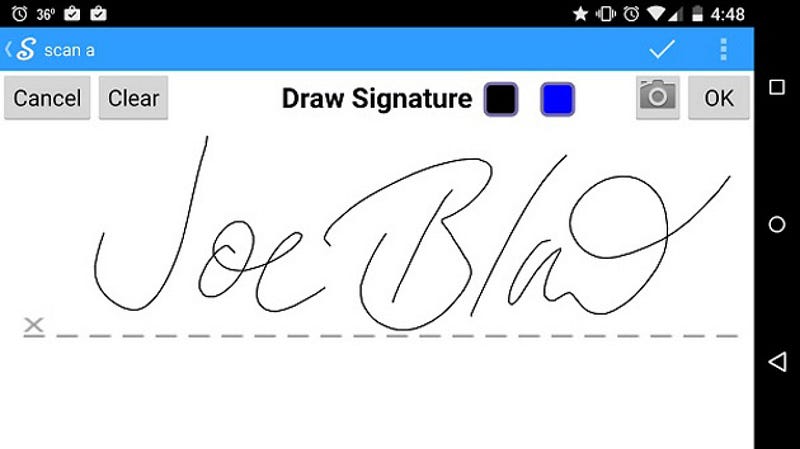
Image from PCMag

signNow’s current incarnation, under airSlate

In 2017, signNow was acquired again, this time by pdfFiller — a service for editing PDF forms online. Today, pdfFiller is owned by airSlate, a business workflow automation service, and is one of its major products.

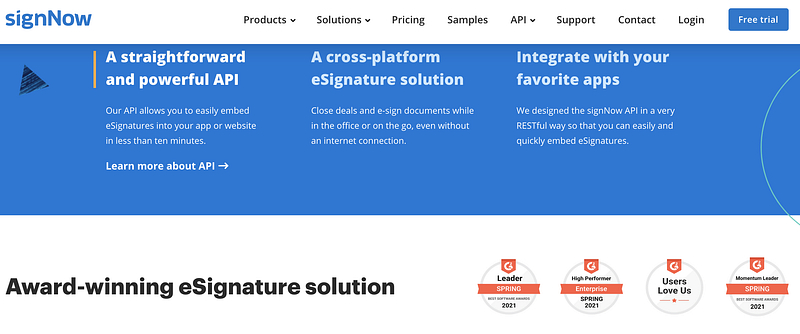
Rather than a novel technology, airSlate presents signNow as a comprehensive, slick piece of its larger toolkit. Its website focuses on how it interoperates with other parts of the platform, its versatility, the convenience of its API, and the no-code services that can be used to deploy it.
From the current signNow website. Screenshot mine.

signNow is a success story. In only a decade, it has transformed from being a revolutionary standalone service to being a standard piece of business software. It still exists as its own product and remains a preeminent player in the eSignature industry.

Note: I work for airSlate and am involved with signNow.

SaaS
Marketing
Technology
Startup
Tech
Recommended from ReadMedium