
Whatever You Chose To Eat, Will Either Feed Your Body, Or Open the Door To Disease
Eat totally natural food and watch your health improve.
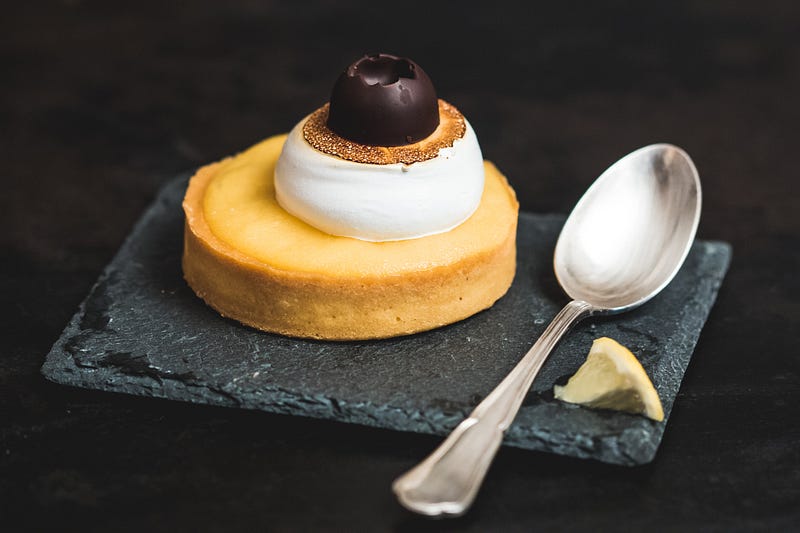
When Nouvelle Cuisine hit our fair shores around 1980, one of my friends named it Cuisine Stingy. It looked wonderful on the plate, but there was not much of it. Still, to the eye it was pretty attractive…we salivated at the prospect.
She further challenged this style of eating by suggesting that there must have been a fair few hands on our plates, ergo on our food, to achieve such artistic perfection. So let’s just say she wasn’t a fan.
But those of us who could blind our eyes to the possibility of someone else’s paws being on our meals, soon dismissed the imagined horror, as we warmed to the incredible flavors and textures of foods that had been gently cooked, using fresh produce, fresh herbs, butter, lemon juice and vinegar.
Those offering this style of food also changed their menus according to the seasons. The emphasis was on all things fresh, and giving value to everything on your plate, eating healthily, and making it aesthetically pleasing.
This style of eating still lives on in some of the more expensive restaurants here in Australia, especially those attached to wineries. Almost all of the venues have their own organic gardens.
So when a tiny little French cafe opened up near us, we had to give it a go. Let’s face it, the French just know how to do things. Il faut casser le noyau pour avoir l’amande (you have to break the shell to get the almond!)…nothing artificial for our Gallic chefs!
The cafe looked French, with subtle French music playing, the aroma of coffee filling the air, and behind glass counters, wonderful arrays of all things French, croissants, eclairs, and macarons, to name a few, there to tempt us.
They were dainty, as expected, maybe more highly-colored than we might have imagined, but they seemed like the real McCoy. Of course it never occurred to us to ask about whether they were made on the premises.
One bite and the excitement disappeared. The cloying sweetness was more than we could stomach. In that moment we realized we were more than likely eating food-like food.
Should there be a law against food-like food?
I think so. I also hope that by the time you read the rest of this article, you will realize that food standards have slipped alarmingly, something we are paying a hefty price for.
The dirty little secret the food industry would rather keep under wraps
The truth is, scientists are making our food, not chefs. Everything is scientifically designed to be moreish, and addictive, so that gradually we find ourselves lured into loving it.
Pretend food is all that produce that’s immediate, comes in packets, or bottles, all neatly packed up for our convenience, the stuff with an ingredients’ list (in the tiniest of print) that most of us don’t understand.
It’s couched in vocabulary known only to a few, and just in case we get wind of what the ingredients are, they’ve got themselves covered, by constantly changing the vocabulary to feel-good descriptors that allow us all to relax!
It’s super-cheap, and because it’s designed so that we never reach satiety (remember, it’s a science!), we eat too much of it!
So how did this all come about?
Much of it can be related to the exponential growth of the food industry much of which arrived, almost by stealth, and gained huge traction, some time after the Second World War, but then ramped up exponentially in the last twenty years.
Unsurprisingly, the convenience aspect of processed foods was phenomenal. People were drawn in like lambs to the slaughter. So much time was saved in the kitchen, it was affordable, it was super-tasty, and, more importantly, the kids lapped it up!
How much better could it get?
Soon we were addicted to the flavor, the texture, the crunch in the mouth, (it’s a science, remember!), and so began the slippery slope of the health decline that continues today.
In an era of comparative affluence, of higher education, an era where we are generally living longer and supposedly healthier lives, we have the in-your-face dichotomy of people, young and old, chronically ill or dying of all manner of largely-preventable diseases:
- cancer
- Alzheimer’s
- MS
- Parkinson’s
- diabetes
- heart disease
- stroke
- neurological disease
- obesity
The simple truth is people are not really aware of the cause of their sickness. The advertising of fake food is cleverly designed and worded to make us believe that what we are eating will nourish us, and so we respond to the sensory-rich, persuasive advertising.
We buy their creed.
We buy yet more of it.
‘In the modern world of business, it is useless to be a creative, original thinker unless you can also sell what you create.’ David Ogilvy
Fake food is a graceless science, as are the hideous alluring utterances of advertising moguls who help to pedal the products.
They use the cleverest of wording, mouth-watering descriptions that have all our senses on heightened alert…for all the wrong reasons!
Let’s have a look at some of these.
Visual:
- slow-cooked, golden-brown, triple-basted chicken
Taste:
- juicy, melt-in-the-mouth, buttery, creamy, mashed potatoes
Geographic:
- Paris-inspired, spicy Cajun, Thai sensations, French fries
Health:
- Heart-smart, low-calorie, vegetarian, vegan, low-fat, no-fat
It all sounds wonderfully reassuring, but the reality is that almost all of it is bereft of nutrients, and bears little resemblance to the descriptors.
And if we accept this as truth, and continue to consume it, then we are at a risk of malnutrition.
But can things really be this bad?
Aren’t we the lucky generation, the ones enjoying the perks of modern living?
- better housing and sanitation
- better education
- exciting technology, and
- instant online access to amazing information
- supermarkets bulging with ‘food’
And yet…possibly starving?
You only have to look around. The evidence is there.
Counter-intuitively, obesity should alert us to something being wrong.
Because obesity is the outward sign of a nutritionally-starved body.
When you eat natural foods
When you eat good food the satiety hormone, LEPTIN, effectively curbs your hunger and reduces sugar cravings. It also regulates your metabolism and the fat-burning process begins.
If on the other hand, you are leptin-resistant, your metabolism slows down, and the sugar cravings kick in.
And I get it! I get the addiction. Because it happens quickly.
It’s difficult to appreciate this notion of starvation when you wander down the aisles of supermarket stores where packaged food is abundant, packaged beautifully, and cleverly promoted.
The companies ‘rely on deep science and pure science to understand how we’re attracted to food and how they can make their foods attractive to us.”
- the right amount of salt
- and trans fats
- high-fructose corn syrup
- a tantalizing crunch in the mouth
- mouth-watering
- tantalizing smell
- a bunch of eat-more-of-me, chemicals
And therein lies the rub!
So many of us have grown to love this way of eating! Even if intuitively we know, or suspect it’s bad for us, we still crave, and eat it.
To compound the issue, it is much cheaper and easier to produce than fresh food, and has an infinite shelf life, and even though it all comes with a use-by date, we really don’t ever have to worry about things going off!
In our increasingly busy lives, where convenience is everything, it’s easy to see why parents get sucked in to choosing the junk option. Because children love it, it’s immediate, and it makes for an easy choice for tired, time-poor parents.
Salt, sugar and trans-fats are the basic pillars of the processed food industry. The perfect scientific combination of all three is what causes addiction, and we are caught in its lair.
But we can do something about it
Some of my family live in the Channel Islands. My cousin’s grandchildren live on a farm. They kill their own animals, grow organic vegetables and fruit, and cook their food, virtually from scratch.
Until the children went to school they had never tasted industrial food. Consequently, they couldn’t bear the smell of flavored chips, or flavored milk, flavored anything, and to this day, still can’t…and they are now young teenagers!
There is hope!
Interestingly, these boys are rarely sick.
They have always cooked as a family, an expectation that was set when the children were small. Let’s face it, you’re never too young to stir, or rinse, or switch on a blender (with supervision!). The graduation to actually cooking something all on your own, can happen naturally.
‘Cooking with your kids and engaging them in hands-on activities are two ways to begin to educate children about the healthy eating, and kick start the important task to help change how the younger generation looks at food and nutrition.’
Do we owe it to our children to teach them how and why it is important to eat well, and be able to cook?
Do we owe it to ourselves to do the same?
The fact is we would all do better to get back into the kitchen and learn and enjoy, the art of cooking.
Just thinking about food and how it affects our bodies, I had this flash of inspiration…an analogy regarding how things work. My husband will only put premium petrol in our car. He says it runs so much better when he does.
That’s how we should treat our bodies. Feeding ourselves premium fuel I am sure, would have us all feeling more energetic, happier, and healthier. believe it or not, we would save ourselves money!