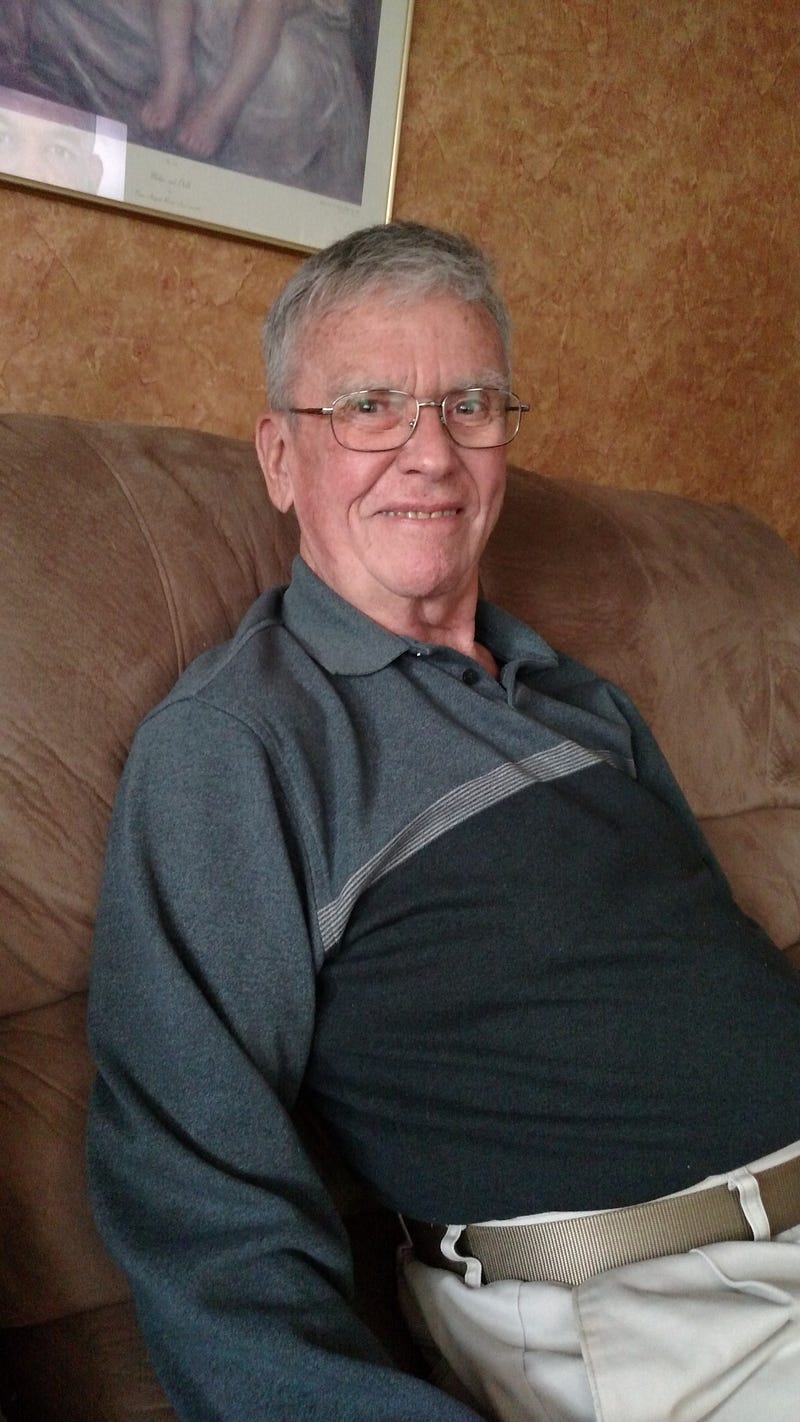
Shut Out
When I am needed the most
I am presenting next week as part of a large panel and am going to attempt to integrate PowerPoint for the first time. I know, I’m behind the times. They are very simple slides, but I’m long past due for getting a more polished look for my lectures.
Same topic as usual. Why is it important to confront the uncomfortable concept of death and dying? This presentation is going to be a little different in that besides talking about my experience with Tim (my deceased husband), I am also going to talk about a current situation.
I met a very, very dear friend after Tim died, who has become in some ways like a second father. He’s just a couple of years younger than Dad and bears some physical resemblance to him as well. He has actually met my dad a few times.
He has been in the hospital for the last several weeks. I have visited when I can, but recently the family has requested no visitors outside of the family. I certainly would not ever want to offend the family, especially in such a stressful situation.
The problem is, what the family wants is something different from what the patient wants.
My friend had reached out to me and said he wanted me to visit. I even double-checked to make sure I understood correctly. That is quite a dilemma. Why would the family not want me to visit? I don’t know, but I can attempt to make an educated guess.
Things can sound quite sensible in theory when you are talking about them outside of your personal experience, or especially outside of an actual acute situation. When you choose a health proxy, for example, many people think the appropriate person would be the person you are closest to.
Actually, much more important than that, the proxy should be the person who is most likely to honor your wishes. Sometimes what we want for our loved ones is not what the actual patient wants. When the time comes, you might find it difficult to do what your loved one wants if it is different from your own desires.
If you are emotionally in deep, doing the “right” thing (in this case what the patient wants) can become very cloudy.
My friend Darren articulated something that really struck me. We were talking about this situation and in general about how I often am trying to do the right thing and somehow end up “being the bad guy.”
He said it is because I bring light to the dark corners of the room that haven’t been swept out yet because I’m not afraid to go to the difficult places. I loved that. Not sure I deserve that much credit, but it felt really great to hear.
One time when I was visiting my friend, he started to open up to me about “end of life stuff” such as how his illness was affecting his family. Then there is the big question of why is this even happening? That is the one I always say I don’t think there is an answer to.
Why do we die? Because humans don’t live forever.
We all have to die at some point. Every one of us. Because there are cancer cells we can’t control. Because there is disease and violence. Because people make bad decisions sometimes. But sometimes it is just because we are mortal.
I did my best to work through the labyrinth with my dear friend. In the background, one of his family members was bustling around saying things like, “Don’t worry. This is just a bump in the road,” or “You will be back to normal in no time.”
I cringed. He has stage IV cancer and there are no treatment options left. No, this is more than a bump in the road. This is nearing the end of the road. No, he will not be back to his old self.
I think he must know deep down. I think that is why he wants to talk to me. I can handle the conversation. I wonder if deep down he understands he can’t really talk to his family member. But now it feels like I’ve been shut out.
I don’t know how it will play out. At this point, he has changed his mind about visitors. Was he told that I am acting crazy? Or is he just not up to having company?
All I know is that at one point he specifically asked me to come and I couldn’t go. Well, I could have but I would have greatly upset the family. That is certainly not my goal.
It’s all heartbreaking. I dream about him and I keep thinking if I don’t get a chance to see him again, I am at least relating to him on that level.
I just don’t want him to think I have abandoned him in this very fragile time of his life. He has given me hugs and hand-holding many, many times when I’ve been down and out.
One of the days that Ed had texted and asked me to visit him and his daughters asked me not to come, I reached out to someone at Roswell that I had met who worked with “family engagement.”
While I wasn’t sure what that is exactly, I wondered if my situation would fit in. I forgot that I called him, but a few days later he got back to me.
I told him that I had decided not to go to the hospital, but I said I would be interested in knowing what his opinion on the situation would have been.
He said that the bottom line is really about the patient’s wishes being respected.
While we both understood that accepting death is difficult and some families just refuse to go there, it wasn’t about that. It was about Ed. He suggested that he talk directly to him and find out what his wishes were.
If he indeed wanted me to visit, then perhaps the social work department could get involved to help the family shift their thinking about how best to support their father.
I cautioned him by reminding him that the family believes they are doing the right thing for him so this would be an extremely delicate situation. It would have to be handled ever so carefully. He agreed and said he would get back to me.
He didn’t. Instead, I got a scathing text from one of the daughters addressed to me, and copied to the other siblings. It spoke of how disappointed she was when a social worker from the hospital approached her because “her dad’s counselor had called to complain that his family was keeping her from seeing him.”
She told the worker that I was not his counselor, etc.. She also went on to talk about my creating nonsense at a time when they are focusing on his well-being.
I was stunned. And angry.
I texted them all and said that it was not true and that I had their father’s well-being in mind at all times. I told them I would like to sit down and talk with them and straighten things out because it’s much too important to text about.
I never heard from any of them again. I texted. I called. I left messages. I texted and called Ed but never got responses.
I didn’t know if his phone was being monitored or if his family had told them I lied to the hospital and they all hated me.
I thought and thought about how to let him know I cared. I have several cards he’s sent me over the last few years where he called me his best friend. I would dare say I might have been his only friend.
This was horrible. I decided to send a card to the hospital.
Only he wasn’t there anymore. I started looking for him in various rehabs that we had talked about as possibilities for him to go to. I peppered the search in between the calls to him and his daughters.
This weekend I found out the truth.
I found his obituary. He was gone.
And his wake and funeral were over as well.
I reached out again to the family to ask where he was buried. No response.
To say I was devastated doesn’t really describe it. It was such a complex ball of emotions. Of course, there is the loss of a very, very dear friend. There was the shock that this family despised me this much that they wouldn’t even let me know about the wake.
I know in my heart I absolutely did not one tiny thing wrong to deserve their hatred. Not one. And now I’m also experiencing a great deal of anger.
I’ve had boatloads of loss in my life and I absolutely did not need to have a loss that was the result of a bad ending.
And then there is the anger at myself. Because I have been so depressed lately, I chose not to go to the hospital because I just didn’t have the strength it would have taken to stand up to the family and honor his wishes.
If I wasn’t so depressed, I would have taken my strong patient-advocate self.
But instead, a wonderful man asked me to come and he died thinking I ignored him.
I have always said beginnings and endings are crucial in life. You can’t have one without the other either.
I was thinking about how sometimes people behave badly and then at the end of their life, they make peace or say they are sorry. The ending changes everything. Maybe it shouldn’t, but there has been lots of forgiveness that happens at the end. And I say hurray for that.
I realized that I assumed the reverse is true. If the ending is bad, it negates any good that happens before that. Darren reminded me that is not the case.
He said the months and years before this ending, I was a good friend to Ed, and he was a good friend to me. Good enough for him to call me his best friend.
The ending was only a small space in comparison.
When he was lonely and sad when his wife was in the nursing home and then eventually died, I was there for him. I mattered to him.
Thank you, Darren. You are so right. The reverse is absolutely not true. While the ending was sad and unfair, his daughters can’t take away the years of our friendship.
All of the walks, talks, hugs, fires, and pool parties meant something. I love you, my dear friend.
I am just sorry I wasn’t able to tell you one more time.
