
Shout Out To Haki R. Madhubuti — Poet
The day I became a poet
Haki R. Madhubuti, the poet, is 80 years today. February 23. He shares a birthday with the intellectual of all intellectuals, W.E.B. DuBois, and my oldest and first born child, Adanya.
That alone makes the day just that much more special to me. My child, and then two Black men of great historical significance.
I met Haki Madhubuti for the first time in October 1988. I was a poet trying to find his voice in the world of poetry and more than a few people said — you need to meet Haki Madhubuti.
I did eventually meet Haki, and it was pure luck.
I had just given my first public poetry reading two days before at Martin Luther King Jr. Library in Washington D.C. Ethelbert Miller, the poet, and self proclaimed literary activist, had put me on his Ascension Reading Series in the city and the night had gone well. Ascension #92. How could I forget?
Debra Garner, a poet, and now a minister also read poetry that night, and Helen Elaine Lee, a college professor, and novelist, read fiction. I met many of the poets I respect and count as friends that night — Kenneth Carroll, Peter Harris, and Darrell Stover, just to name a few.
I also met Junette Pinkney who was at the reading to promote an event celebrating the 20th anniversary of Third World Press of Chicago two nights later. After the Ascension reading, she came up to me excited and told me she loved my poetry and asked me did I want to meet Haki Madhubuti.
I almost fainted. I couldn’t believe it.
Yet, two days later, there I was and Junette was introducing me to Haki Madhubuti at the event. The place was packed. I still to this day find it kind of hard to believe.
Minutes into the meeting at a house on A Street S.E. once owned by Frederick Douglass, Haki read some of my poems and then said — I am going to call you up during the program and you can read some of your poems to the audience.
My legs almost gave away, but I knew, it was one of those moments. It was something I had been hoping for and working on ever since I began writing poetry serious in college. It was a culmination. Someone was throwing me a rope. Grab the rope, climb over the wall and chase it.
Haki Madhubuti in 1988 was a legend. When the Black Arts Movement took flight in the mid 1960s, Haki was writing and publishing poetry that spoke to the moment of Black autonomy in America. The African American struggle for self definition.
Gone were the normal trappings of trying to convince white America that we deserved equality. He had little time for that. His voice resonated. He had small chapbooks of poetry called “Black Pride” and “Don’t Cry, Scream.”
He founded Third World Press of Chicago in 1967. He is (was) an institution builder, founding African-centered schools in his native city of Chicago, while writing, publishing, doing cultural work, and raising his children with his wife, the scholar-educator, Dr. Safisha Madhubuti.
Of course, meeting Haki was a dream come true and when he finally called me up to the stage to read, the room was jam packed with cultural and political dignataries who had come to support Black art.
The poet Gwendolyn Brooks was at the event and sat right on the front row. Peter Harris, the great D.C. poet, was there. Frances Cress Wellsing, the celebrated psychiatrist, and intellectual was there as well. Jeff Donaldson, the Chicago visual artist, and Dean of the Howard University School of Fine Arts, was right there as well. It was an electric night full of Black art and Black people in my city.
After I read, the crowd showed its support for a young poet, trying to find his voice, Haki pulled me aside, and said — send me a manuscript when you get one together. It was all I needed to hear.
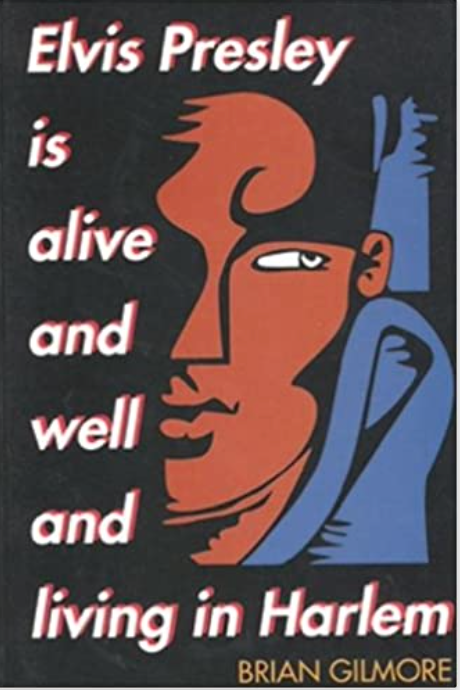
Eventually I did send Haki my work, and a few years after we met in the city of my birth in a room packed with Black people of good will, love, and great art, Third World Press published my first book, elvis presley is alive and well and living in harlem.
Without that first book, no way I would have had the poetry career and journey I have had so far. It isn’t likely I would have perservered as a poet either and been able to publish four collections of poetry now and to write and travel and share my work all over the U.S.
That first book is the building block upon which I continue to write each day.
Haki and I have remained in touch over the years. He is always there with a kind word of encouragement and to remind me I will always be part of the Third World Press family. I do not take his friendship, support, and mentorship lightly either.
Few things mean more to me as a poet than that night back in October 1988 when I met Haki and he gave me a shot to be a poet. When he received a Hurston-Wright Foundation Legacy Award a few years ago, I was honored to introduce him.
And ten years ago when he turned 70 years, My family and I drove from East Lansing, Michigan on an ice cold night to Chicago, his hometown, to show our love and appreciation on his birthday. After I shook his hand and embraced him as is customary, I introduced him to my daughter, Adanya, born February 23, just like him. He embraced her as well. That’s Haki R. Madhubuti.
elvis presley is alive and well and living in harlem
Haki R. Madhubuti (Biography)
Born Donald Luther Lee in Little Rock, Arkansas, Madhubuti adopted his Swahili name after visiting Africa in the early 1970s. Madhubuti was raised in Detroit, Michigan, with his mother until the age of 16, when she was murdered. Madhubuti claims that his mother, Maxine, is the prime force behind his creativity and interest in the Black Arts. After serving in the United States Army from 1960 to 1963, Madhubuti received a Master of Fine Arts degree from the prestigious Iowa Writers’ Workshop at the University of Iowa.
Haki Madhubuti became deeply interested in and influenced by Black Arts Movement figures such as Richard Wright at an early age. He is a major contributor to the Black literary tradition, in particular through his early association with BAM beginning in the mid-1960s, and has had a lasting and major influence. Recognizing the lack of resources and institutions dedicated to black scholars, Madhubuti has become a leading proponent of independent Black institutions. He is the founder of Third World Press, (established in 1967), where he was also publisher, and chairman of the board. Today, Third World Press is the largest independent [ African American-owned press in the United States].
In December 1967, Haki R. Madhubuti met with Carolyn Rodgers and Johari Amini in the basement of a South Side Chicago apartment to found Third World Press, an outlet for African-American literature. Forty years later in 2007, the company continued to thrive in a multimillion-dollar facility. Over the years, this press would publish works for Pulitzer Prize for Poetry|Pulitzer Prize-winning author Gwendolyn Brooks, as well as Amiri Baraka, Sonia Sanchez, Sterling Plumpp and Pearl Cleage.
Heavily influenced by his creative predecessor Gwendolyn Brooks, Madhubuti’s poetry is similar marked by a rhythmic, experimental style, frequently in the free verse form. Also like Brooks, Madhubuti’s poetic bibliography is characterized by a shift from the personal to the political over the span of his career. He has dedicated a number of poems to her and is the founder and previously the director emeritus of the Gwendolyn Brooks Center for Black Literature and Creative Writing.
Over the years, he has published 28 books (some under his former name, “Don L. Lee”) and remains one of the world’s best-selling authors of poetry and non-fiction, with books in print in excess of 3 million. His subsequent books include Claiming Earth: Race, Rage, Rape, Redemption (1994), GroundWork: New and Selected Poems 1966–1996 (1996), and HeartLove: Wedding and Love Poems (1998).
Berl's Poetry Shop Make Blackout Poetry Lindsay Soberano-Wilson Electric Literature W.E.O.C. Editors Medium Creators


