
Should Women Start ‘Brigading’ Online Misogynists?
A turn of the tables might be just the ticket
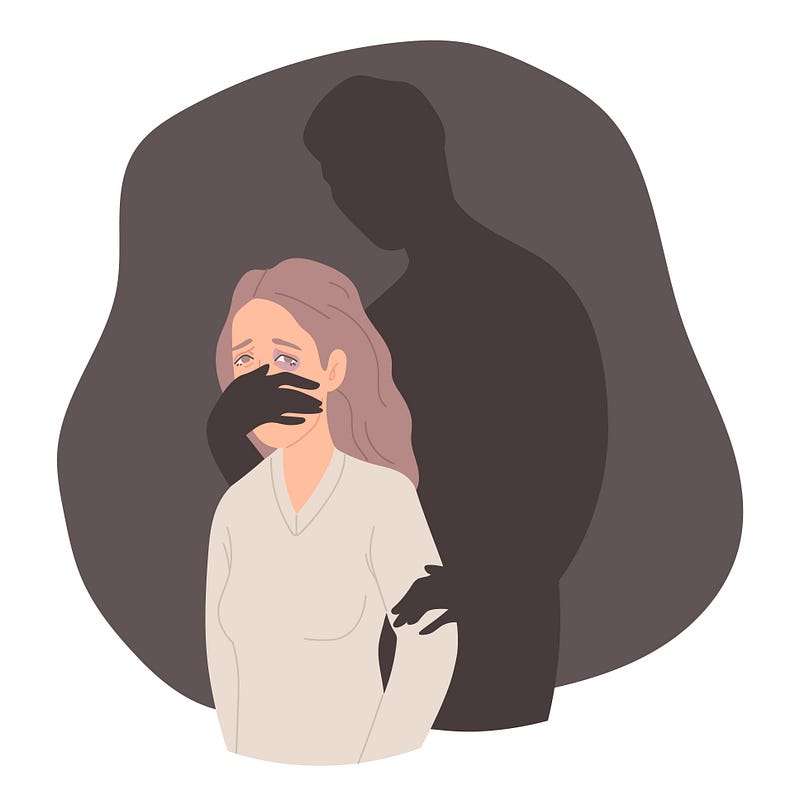
In the face of women’s growing power in social, economic, and political institutions, collectives of men are gathering in backlash to their perceived devaluation in the gender hierarchy. This loose collective of men, defined as men’s movements, believe that power over women is an essential trait of masculinity that they are entitled to. Movements in the 1990s applied anti-feminism backlash to biological conceptions of masculinity and Christianity’s control of family dynamics. Today, men’s responses to perceived gender devaluation operate through anti-feminist discourse and collective harassment towards women online, using the internet as a tool to amplify backlash. Clusters of online spaces where men mobilize against feminism construct the ‘manosphere’. (source)
Brigading is a manosphere tactic for coordinating mass attacks against agreed-upon targets, nearly all of them female. It is weaponized harassment that is used to terrify and overwhelm women into no longer raising their voices in public forums and dissuading other women from speaking out. Brigading has been used against female journalists, feminist writers, and activists, as well as women gamers. In fact, some of the most infamous brigading took place during “Gamergate.”
The rhetorical trick of presenting a campaign as nobly battling exactly the interests it itself personifies would go on to become central to future campaigns of the alt-right and the manosphere. Gamergate’s proponents harassed, abused, and deliberately obfuscated their real aims, all the while claiming to be acting in the name of ethics, transparency, and purity.
So Gamergate introduced the idea of troll armies to the mainstream. Suddenly, what had previously been a solo pursuit could be harnessed as a mass activity for mass gain. And this would later be exploited by ideological leaders, who would build up great armies of “attack dogs,” just waiting to be unleashed on unsuspecting targets.
Bates, Laura. Men Who Hate Women (p. 176). Sourcebooks. Kindle Edition.
But what if women (and their allies) started taking a page out of that book? What if they started fighting back in concerted responses to hateful and misogynistic rhetoric? I’m not advocating for rape or death threats, which are common in brigading. I don’t think it’s appropriate to stoop to their level of pathology and hate, but I can’t help but wonder what would happen if large swaths of society actually stood up against the ubiquitous misogyny that is festering in these manosphere communities.
Ligue du LOL was the name of a private Facebook group, counting among its members around thirty highly successful, influential young journalists and media professionals. They were said to have used the group to organize campaigns of abuse and online harassment against other social media users (mostly women in journalism as well as feminist and LGBTQ activists and people of color) between 2009 and 2012. At the time, multiple victims tried to report the existence of the group and the severity of the harassment, both to the media and to the employers of those involved, with no success. In 2019, after a newspaper published an article about the group, stories began to pour out about similar private networking groups on services like WhatsApp, which were being used to circulate sexist and homophobic messages.
Bates, Laura. Men Who Hate Women (pp. 182–183). Sourcebooks. Kindle Edition.
After all, it’s not just about demonizing and terrorizing women, and railing against gender equality. Manosphere communities have a large overlap with homophobic and white supremacist/racist ideals — amongst incels, but also Pick-Up Artists (PUAs) and Men’s Rights Activists (MRAs) as well as many cultural conservatives.
While most of the counterterrorism community has focused on the threat posed by Salafi-jihadists and radical right-wing extremists, the growth of a misogynistic ideology fuelled by involuntary celibates, or ‘incels,’ has quietly grown more ubiquitous.
This ideology persists largely online in the so-called ‘manosphere,’ which is a decentralised network of websites, gaming platforms, and chatrooms imbued with a heavy sense of misogyny and significant overlap to other violent ideologies, including but not limited to, right-wing extremism and white supremacy. (source)
Incels are the most violent subsection of the manosphere, both in ideology and in practice, but the rest of it is pretty retrograde as well. And part of the way that festers is that mostly anonymous online users egg each other on to greater and greater hate, impacting not only how women present themselves online, but at times driving women from their chosen careers.
This is the extent to which our society has sublimated the threat posed by online misogynistic extremism into the perception of a small group of immature, annoying, sometimes funny teenagers, joking around and playing technological tricks. The most important element of this caricature is that it is perceived, above all, as harmless, or at least not genuinely harmful.
The reality is very different, partly because the tactics of trolls have now become far more organized and sophisticated than the label would suggest, partly because of the very real and enormously underestimated psychological consequences of trolling, and partly because of the ways in which online abuse has now begun to have deadly offline consequences.
Bates, Laura. Men Who Hate Women (p. 171). Sourcebooks. Kindle Edition.
But what if instead of allowing that to take place, people of conscience fought back?
Social media has only been a major part of my life for the past five years since I joined Medium and started writing. I joined Twitter soon after in order to promote my work and that of my publications. My only prior experience with social media was Maya’s Mom, a site for parents, and Facebook. Entering the world of ubiquitous misogyny and trolling has been a bit of a shock, to say the least, and the more I learn, the more shocking it becomes.
The misogyny I experience online comes in many forms, from incredulity that I could possibly know what I’m talking about, to more sinister versions of bashing and aggression — overwhelmingly from men. I’m to the point now where I block unpleasant people fairly quickly. In the past week, I’ve blocked 5 men. The larger a voice I get, the more this becomes necessary. I prefer to give someone the benefit of the doubt, particularly because truly communicating online can be tricky, and to allow for a variety of perspectives, but as Maya Angelou famously said, “When people show you who they are, you should believe them.”
Several times in the past few days, I’ve wished I had an army of sensible angels who could swoop down on hateful rhetoric and support me in standing up to it. What might it mean to people who feel like they can be aggressive and attack with impunity if they suddenly realized that they couldn’t?
Perhaps someone will balk at that as “cancel culture” but you know what, hate should be canceled. People should be allowed to speak out against rhetoric that they find to be dehumanizing, entitled, or just plain mean. If “market forces” are supposed to be a good thing in the economy, then why aren’t they also a good thing when it comes to standards of behavior and civility?
I would dearly love to have an online community of several thousand that I could call upon any time someone expresses hateful, dehumanizing, or entitled speech to let them know that this isn’t mainstream, it isn’t acceptable, and it won’t be tolerated in silence.
A lot of problematic dynamics take place in our culture because people are afraid to speak up. They don’t want to be the ones with their neck stuck out because they don’t really know how many others support them. Quite often, they are actually in the majority, but because nobody wants to challenge old norms alone, that might not necessarily be apparent.
This is particularly true for men. A lot of male bonding takes place via sexualizing and denigrating women. Guys who challenge that sometimes get called names or have their place in the group questioned.
Social norms theory begins with the premise that people often misperceive the extent to which their peers hold certain attitudes or participate in certain behaviors. In the absence of accurate knowledge, they are more likely to be influenced by what they think people think and do rather than what they actually think and do.
Social norms theory has also been applied to men’s attitudes about sexism, sex, and men’s violence against women. There have been a number of studies in the past several years that demonstrate that significant numbers of men are uncomfortable with the way some of their male peers talk about and treat women. But since few men in our society have dared to talk publicly about such matters, many men think they are the only ones who feel uncomfortable. Because they feel isolated and alone in their discomfort, they do not say anything. Their silence, in turn, simply reinforces the false perception that few men are uncomfortable with sexist attitudes and behaviors. It is a vicious cycle that keeps a lot of caring men silent.
Katz, Jackson. The Macho Paradox (p. 11). Sourcebooks. Kindle Edition.
But what if there were a clear, mainstream community of people of conscience who supported each other in challenging hateful, retrograde rhetoric? What if there was a sort of virtual “Take Back the Night” — an international movement to end sexual, relationship, and domestic violence — for everyone?
It’s too easy in this culture to get sucked into looking at things through a zero-sum lens — rather than looking for win-win solutions, too many people believe that somebody else has to lose in order for them to win. But that’s not remotely true. Life is not a contest, and good people can and do care about the needs and interests of a wide variety of areas.
Honestly, I don’t expect to see this sort of pro-social community forming anytime soon, but it is a nice dream nonetheless, particularly when I see and hear about women who just want to be safe and treated fairly ganged up on in vile and disturbing ways by brigades of misogynists who only care about their own pathetic egos.
What if good people— all good people — looked out for each other and cared about each other’s pain? What if they stood together against hatred and dehumanization? Imagine the society that we could have if more people stuck their necks out to protect others from abuse — all others from all forms of abuse. The trolls and brigaders would have to back down and we might be able to have actual dialogues about the ways that this culture needs to improve — to benefit everyone.
© Copyright Elle Beau 2023


