
Should We Trust the Kardashev Scale?
What Does an Advanced Civilization Really Look Like?
In the last few hundred years, humanity has experienced an explosion in scientific and technological progress unprecedented in the 195,000 to 300,000 years we’ve existed. Given the rapid advancement we’re witnessing in our technology, it’s natural to wonder just how far we’ll be able to progress in the next hundred, thousand or even million years. For all we know, there could already be alien civilizations in our universe whose technology would appear magical to us. With so many different predictions about futuristic civilizations, it’s hard to imagine anyway to measure and compare them to ourselves. But not only are there ways to compare advanced civilizations, we can actually assign numbers to measure their advancement. One of the more popular metrics for doing this is the Kardashev Scale, which divides civilizations into six stages of advancement. But does this ranking actually tell us how advanced a civilization is?
Created by Russian astrophysicist Nikolai Kardashev in 1964, the Kardashev Scale measures how technologically advanced a civilization is based on how much power it consumes. Power being a measurement of energy per unit of time. Plugging how much power a civilization uses into a special formula gives us a number that represents the advancement of that civilization’s technology. The formula is simple:
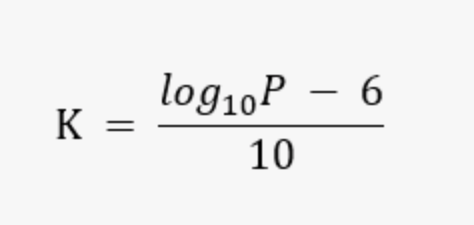
Using this formula, we can begin talking about the six different types of civilizations predicted by the Kardashev scale. It should be mentioned that Kardashev originally envisioned only three types of civilizations, but more were later added on. There are also different interpretations of what denotes certain types, so the definitions in this post may be different from that of other sources discussing the scale. Regardless, they’ll still give us a sense of what the growth of civilizations looks like in terms of their energy usage.
Type 0
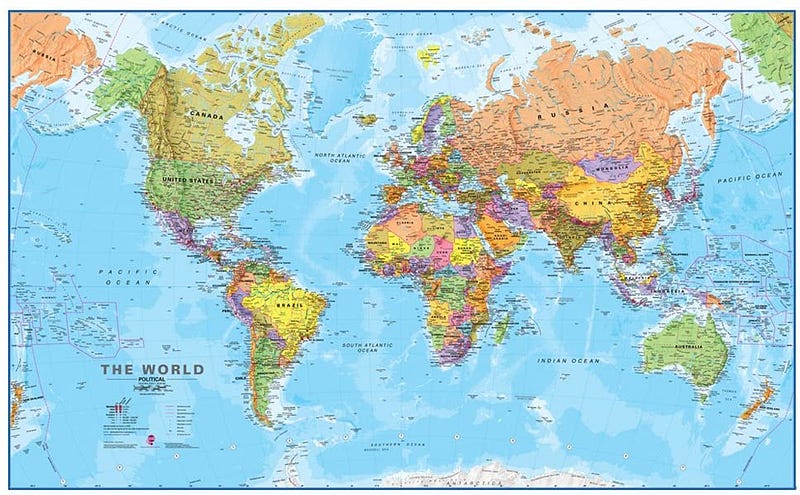
A Type 0 civilization is the most basic. This describes a civilization that cannot yet harness the total energy available to them on their home planet. Humanity currently finds itself a Type 0 civilization, though we are predicted to reach the next type within the next 200 to 500 years. The Kardashev number for a Type 0 civilization is anything below 1.16, for reasons we’ll see in a minute.
Type 1

A Type 1 civilization is capable of harnessing all the energy available to them on their home planet. Since this scale is to get a sense of how advanced these civilizations are compared to us, we’ll assume this planet is identical to Earth and orbiting at the same distance from its star, which we’ll assume to be identical to our Sun. The vast majority of the energy available on our planet comes from the Sun’s radiation. Sunlight hits Earth’s atmosphere with an estimated power output of 1,368 watts per square meter. We’ll give advanced civilizations the benefit of the doubt and assume they can harness all the energy in their atmosphere. Assuming only half of earth’s atmosphere is receiving sunlight at any given time(about 2.9x10¹⁴ meters²) and ignoring the relatively minuscule amount of energy available from sources other than the Sun, we get that a Type 1 civilization would be able to harness around 4.0x10¹⁷ watts of power. Therefore, the Kardashev number for a Type 1 civilization must be at least 1.16.
Type 2
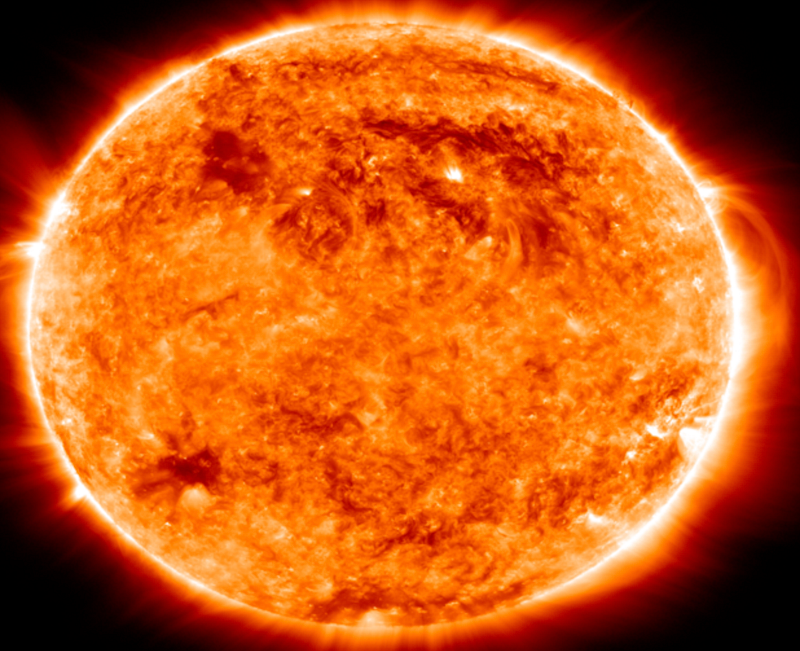
A Type 2 civilization is one capable of harnessing all the energy output by their planet’s parent star. Again, we’ll assume this means a star identical to our Sun. The Sun radiates energy with an estimated 3.846x10²⁴ watts of power. This means a Type 2 civilization would need to have a Kardashev number of at least 1.86.
Type 3
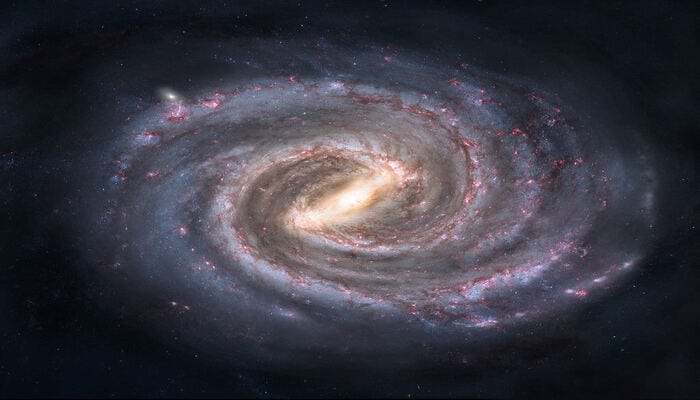
A Type 3 civilization is one capable of harnessing the energy output by all the stars in its home galaxy. For simplicity, we’ll use our milky way galaxy as the standard. Though stars vary greatly in luminosity, the average power output of a star in our galaxy is about that of our sun, and NASA estimates that there are around 250 billion stars in our galaxy. Therefore, a Type 3 civilization should be able to harness about 9.6x10³⁵ watts. We can check this estimate by looking at a paper from Ohio State University which states the total luminosity of all the stars in our galaxy is 3x10¹⁰ solar luminosities, or 1x10³⁵ watts. Our estimate is only off by less than a factor of 10, which is a good indicator that the Ohio State estimate is correct. Using that estimate, we can determine that a Type 3 civilization should have a Kardashev number of at least 2.9.
Type 4
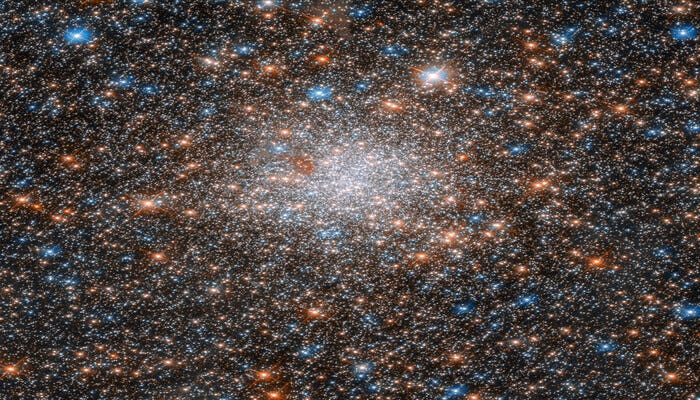
A Type 4 civilization would be able to harness a power output equal to that of all the galaxies in our observable universe. If we assume we live in a typical galaxy, then we can get the total energy consumption of a Type 4 civilization by multiplying the energy output of our galaxy times the number of galaxies in our observable universe. We can also assume a Type 4 civilization would make use of the energy from black holes and neutron stars as well as regular stars. Adding the 10³⁵ watts put out by all the stars in our galaxy to the 9.6x10³² watts put out by all the neutron stars and the 9.9x10³⁸ watts put out by all the black holes, we get that just one galaxy would put out about 9.9x10³⁸ watts. (Black holes with accretion disks put out a lot of energy.) Multiplying this number by the estimated 150 billion galaxies in the observable universe, we get that a Type 4 civilization should be able to harness about 1.5x10⁵⁰ watts. This means a Type 4 civilization would have a Kardashev number of at least 4.4.
Type 5
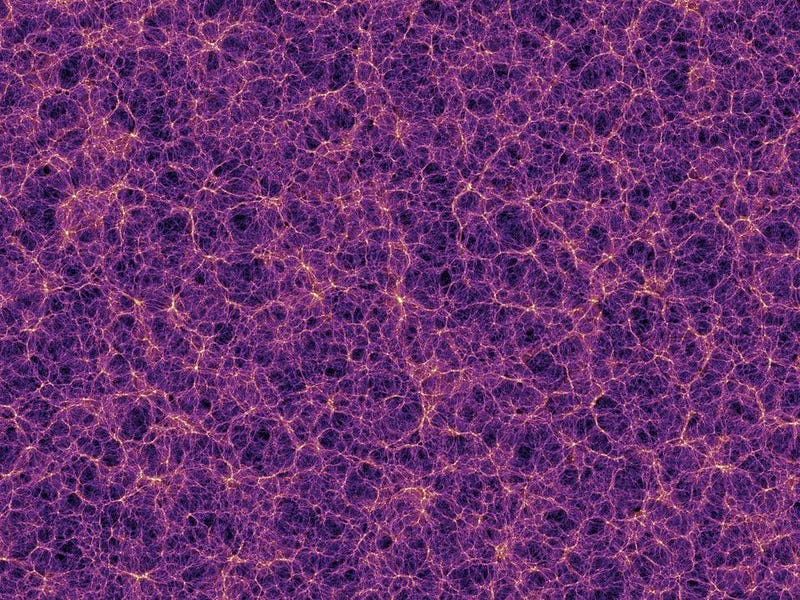
A Type 5 civilization is the highest type defined by the Kardashev scale. This type of civilization would be able to manipulate all the matter and energy within their own observable universe and likely travel beyond it. The total amount of matter and energy in the universe may seem impossible to know, but that’s where Einstein comes in. Einstein’s theory of general relativity can be used to find the overall energy density of our universe, because that density determines the shape of our universe. As far as we know, a universe can be three shapes: positively curved, negatively curved or flat. The best measurements made by cosmologists suggest that our universe is flat, which means objects that start moving parallel to each other in empty space will continue moving parallel to each other as long as they remain undisturbed. Using this fact, it has been determined that our universe has an overall energy density of 9.9/10²⁷ kilograms per meter³. Multiplying this value by the volume of our universe, about 3.6x10⁸⁰ meters³, we get a total mass for our universe of 3.5x10⁵⁴ kilograms. Einstein also discovered that E=mc², where E is energy, m is mass and c is the universal speed limit. Using this formula, we can determine that our universe contains about 3.2x10⁷¹ joules of energy.
Now we know how much energy a Type 5 civilization would use, but how quickly would they be able to use it? Well, a civilization this advanced could essentially run the universe like a machine, say a computer, and though it may seem crazy, there actually is a way of figuring out the power consumption of a universe-sized computer. According to a paper by Seth Llyod, a professor of quantum mechanical engineering at MIT, a physical system with the energy of our universe where every particle is used to make a computation would process information at a rate of 5x10¹⁰² logical operations per second. If our universe-sized computer can process 5x10¹⁰² logical operations per second, we’ll assume it can download 5x10¹⁰² bits of information per second. According to the laws of quantum mechanics, information can never be created or destroyed. Therefore, downloading 5x10¹⁰² bits of information from any physical system containing information would require leaving that system a blank slate with no useful information left over. In physics, this would be equivalent to changing the system’s entropy, since entropy is a measure of information content. And changing entropy requires energy.

Using the formula above, we can calculate the total amount of energy needed to perform our 5x10¹⁰² bit download. According to a principle called the Landauer Limit, one bit of information is equal to about 4.16/10²⁴ joules per kelvin. Therefore, 5x10¹⁰² bits is equal to about 2.1x10⁷⁹ joules per kelvin. Astronomers estimate that the universe has an average temperature of just 2.375 kelvins. Plugging these numbers into our formula, we get that processing 5x10¹⁰² bits of information would require about 4.9x10⁷⁹ joules of energy. Remember that that our computer can perform this many operations every second and is therefore using 4.9x10⁷⁹ joules of energy every second. This finally gives us the minimum power consumption of a Type 5 civilization, which is 4.9x10⁷⁹ watts. Therefore, a Type 5 civilization would have a Kardashev number of at least 7.4.
Okay, got all that? If not, I’ll summarize. The Kardashev scale ranks a civilization’s technological advancement by assigning it a Kardashev number. Based on our assumptions:
A Type 0 civilization has a Kardashev number less than 1.16.
A Type 1 civilization has a Kardashev number of at least 1.16.
A Type 2 civilization has a Kardashev number of at least 1.86.
A Type 3 civilization has a Kardashev number of at least 2.9.
A Type 4 civilization has a Kardashev number of at least 4.4.
And a Type 5 civilization has a Kardasehv number of at least 7.4.
These numbers can be plugged into a formula to get the total amount of power used by a civilization. But taking a step back to look at these rankings raises some important questions. Does this scale truly do a good job of assessing how advanced a civilization is? Does energy consumption translate to technological advancement? Does technological prowess necessarily mean a civilization is advanced? Many would argue that the true measure of a civilization’s advancement is determined by its values and the quality of life it assures each of its citizens. What does the Kardashev scale tell us about that?
On one hand, for a civilization to harness a vast amount of energy, it would first need to use science to discover efficient and renewable sources of energy. It would also need to create advanced technology to harness that energy. This implies that the people of that civilization have the capacity to cooperate on vast scales and over long time periods. It also implies that the civilization invests necessary resources in the scientific method, which could lead to them adopting social norms which are scientifically proven to better individuals’ quality of life.
On the other hand, it could be the case that a civilization achieves this level of power through the subjugation and oppression of its citizens. It’s leaders may lust for power in such a way that they undervalue and ignore the happiness of their citizens. In even more extreme cases, individuality may be abandoned entirely and the peoples of a civilization could be forced into a sort of hive mind. As stories like 1984 argue, absolute power may corrupt absolutely. We can already see this sort of idea playing out among tyrannical politicians and greedy corporations in our world today. But perhaps the mindset that allows for these systems of power are ultimately unsustainable and cannot continue into future stages of human evolution.
It could also be the case that alien civilizations or future humans will have a completely different thought process than that of modern humans. For this reason, their civilizations may operate in a way that is impossible for us to understand at this point in our evolution. It’s difficult to tell which of these hypotheses is likely to be true seeing as the only civilizations we’ve observed so far have been here on this planet. This is where decades of science fiction and fantasy may provide us with answers.
Many civilizations depicted in our stories have characteristics that can be applied to the Kardashev scale. Not only that, the stories that house these civilizations often deal with questions of whether power comes at the expense of morality. In my next blog post, I’ll look at some of these fictional civilizations and determine where they rank on the Kardashev scale. Using them as reference points, we can see what humanity’s writers have to say about the true nature of power and whether it is a symbol of our advancement or a threat to our overall happiness.
Works Cited
McFadden, C. (2019, February 28). Sizing Up a Civilization With the Kardashev Scale. Retrieved July 30, 2020, from https://interestingengineering.com/sizing-up-a-civilization-with-the-kardashev-scale
A Brief Explanation of the Kardashev Scale: How Far Can Humanity Really Advance? (2017, May 22). Retrieved July 30, 2020, from https://futurism.com/the-kardashev-scale-of-civilization-types
The Kardashev Scale — Can We Advance Beyond a Type 3 Civilization? (2019, August 21). Retrieved July 30, 2020, from https://futurism.com/the-kardashev-scale-type-i-ii-iii-iv-v-civilization
Greshko, M. (2020, May 06). These Early Humans Lived 300,000 Years Ago-But Had Modern Faces. Retrieved July 30, 2020, from https://www.nationalgeographic.com/news/2017/06/morocco-early-human-fossils-anthropology-science/
Yannick OswaldB.A. International Energy ManagementM.Sc. International Sustainable DevelopmentCurrently PhD candidateInterested in Energy, B.A. International Energy ManagementM.Sc. International Sustainable DevelopmentCurrently PhD candidateInterested in Energy, & *, N. (n.d.). Re-evaluating Humanity’s Score on the Kardashev Scale. Retrieved July 30, 2020, from http://collective-mind.org/?p=72374
The Sun’s Energy, ag.tennessee.edu/solar/Pages/What%20Is%20Solar%20Energy/Sun%27s%20Energy.aspx.
Earth’s Energy Balance. (n.d.). Retrieved July 30, 2020, from https://climate.ncsu.edu/edu/EnergyBalance
Sharp, T. (2017, October 13). Earth’s Atmosphere: Composition, Climate & Weather. Retrieved July 30, 2020, from https://www.space.com/17683-earth-atmosphere.html
Imagine the Universe! (n.d.). Retrieved July 30, 2020, from https://imagine.gsfc.nasa.gov/features/cosmic/earth_info.html
How Many Stars in the Milky Way? (n.d.). Retrieved July 30, 2020, from https://asd.gsfc.nasa.gov/blueshift/index.php/2015/07/22/how-many-stars-in-the-milky-way/
Luminosity. (n.d.). Retrieved July 30, 2020, from https://astro.unl.edu/naap/hr/hr_background2.html
The Editors of Encyclopaedia Britannica. (2019, July 29). Stefan-Boltzmann law. Retrieved July 30, 2020, from https://www.britannica.com/science/Stefan-Boltzmann-law
HOW HOT IS A STAR? (n.d.). Retrieved July 30, 2020, from http://www.astronomy.ohio-state.edu/~ryden/ast162_2/notes8.html
Dunbar, B. (n.d.). Neutron Stars. Retrieved July 30, 2020, from https://www.nasa.gov/mission_pages/GLAST/science/neutron_stars.html
Hill, K. (Producer). (2018, May 10). How to Forge Thor’s Infinity War Weapon [Video file]. Retrieved July 29, 2020, from https://www.youtube.com/watch?v=bOLOBJSJL0I
Klesman, A. (2019, November 20). Do We Live in a ‘Normal’ Galaxy? Retrieved July 30, 2020, from https://www.discovermagazine.com/the-sciences/do-we-live-in-a-normal-galaxy
Black Holes. (n.d.). Retrieved July 30, 2020, from https://science.nasa.gov/astrophysics/focus-areas/black-holes
(n.d.). Retrieved July 30, 2020, from http://csep10.phys.utk.edu/OJTA2dev/ojta/c2c/sun/properties/luminosity_tl.html
Leman, J. (2020, April 18). Quick Question: How Many Galaxies Are There? Retrieved July 30, 2020, from https://www.popularmechanics.com/space/deep-space/a32109712/how-many-galaxies/
WMAP- Content of the Universe. (n.d.). Retrieved July 30, 2020, from https://wmap.gsfc.nasa.gov/universe/uni_matter.html
Reich, H. (Director). (2017, July 20). What is the Shape of the Universe? (ft. PhD Comics) [Video file]. Retrieved July 29, 2020, from https://www.youtube.com/watch?v=oCK5oGmRtxQ
Baraniuk, C. (2016, June 13). Earth — It took centuries, but we now know the size of the Universe. Retrieved July 30, 2020, from http://www.bbc.com/earth/story/20160610-it-took-centuries-but-we-now-know-the-size-of-the-universe
O’Dowd, M. (Producer). (2018, October 10). Creating a Universe Simulation [Video file]. Retrieved July 29, 2020, from https://www.youtube.com/watch?v=0GLgZvTCbaA
Seth Lloyd. (n.d.). Retrieved July 30, 2020, from https://www.worldsciencefestival.com/participants/seth_lloyd/
Seth Lloyd. (n.d.). Retrieved July 30, 2020, from https://meche.mit.edu/people/faculty/[email protected]
Foreback, B. (2017, March 03). Logical vs. Bitwise Operators. Retrieved July 30, 2020, from https://www.harrisgeospatial.com/Learn/Blogs/Blog-Details/ArtMID/10198/ArticleID/15645/Logical-vs-Bitwise-Operators
O’Dowd, M. (Producer). (2018, May/June). Why Quantum Information is Never Destroyed [Video file]. Retrieved July 29, 2020, from https://www.youtube.com/watch?v=HF-9Dy6iB_4
Muller, D. (Producer). (2014, July 16). What is NOT Random? [Video file]. Retrieved July 29, 2020, from https://www.youtube.com/watch?v=sMb00lz-IfE
(n.d.). Retrieved July 30, 2020, from https://www.chemguide.co.uk/physical/entropy/moreadvanced.html
Entropy Change. (n.d.). Retrieved July 30, 2020, from https://www.sciencedirect.com/topics/engineering/entropy-change
O’Dowd, M. (Producer). (2018, July 18). The Misunderstood Nature of Entropy [Video file]. Retrieved July 29, 2020, from https://www.youtube.com/watch?v=kfffy12uQ7g
Jordan, S. (2017, March 3). Could entropy be defined as the number of BITS of information needed to describe the position of every particle in the system? Retrieved July 29, 2020, from https://www.quora.com/Could-entropy-be-defined-as-the-number-of-unique-BITS-of-information-needed-to-describe-the-position-of-every-particle-in-the-system
Sjordan. (2019, March 12). Stephen P Jordan. Retrieved July 30, 2020, from https://www.nist.gov/people/stephen-p-jordan
The Editors of Encyclopaedia Britannica. (2019, December 12). Boltzmann constant. Retrieved July 30, 2020, from https://www.britannica.com/science/Boltzmann-constant
Gunn, D. (n.d.). Does the temperature of the Universe change with time? Retrieved July 30, 2020, from https://www.sciencefocus.com/space/does-the-temperature-of-the-universe-change-with-time/
Orwell, G. (2008). 1984. Harlow: Pearson Education.
Why Pure Information Gives Off Heat. (2022). Up and Atom. Retrieved August 5, 2022, from https://www.youtube.com/watch?v=XY-mbr-aAZE.