
Should We Pretend the Best Questions Are Asked in Confirming Judges?
I was disappointed but maybe I didn’t understand
The appeal of American institutions is their relative newness, which makes their history more straightforward to new citizens.
During the confirmation hearings, the Senate provided the nation with an example of the usage of power in an impressive “show and tell”. Unwittingly, some senators showed the world how women are treated in the workplace.
As a black woman, I thought if they could belittle and besmirch Judge Jackson, how do these men and their cohorts work with women in private spaces? In an earlier post, I observed the pervasiveness of workplace harassment.
It shocked me to realize my powerful convictions about judicial appointments when I watched the Hearings.
I believe that appointments of police officers, prosecutors, and judges should not be based on their political affiliation. They should work without political interference. Their competence should be determined by their professional bodies or professional bosses.
This system has a major benefit
It reduces the opportunities for corruption allowing officials to do their jobs without the uncertainty of administration change or fear of retribution. These three public examples highlight non-interference.
· Princess Anne, driving with her bodyguard, received traffic tickets.
· The ticket purser fined the cabinet minister in charge of the police and prisons on the spot for not having a valid ticket while on a train.
· The wife of the Prime Minister, then an acting judge, didn’t have the right currency. The train left on time without her, causing her court cases to be postponed.
No one lost their job for enforcing these relatively minor rules and, inconveniencing the rich and powerful.
Prosecutors do not have to prosecute or demand harsh sentencing to please their electorate or political donors. People get aroused after a heinous crime. The cool objectivity of a professional serves the interest of justice better than an opportunistic politician with an eye on re-election.
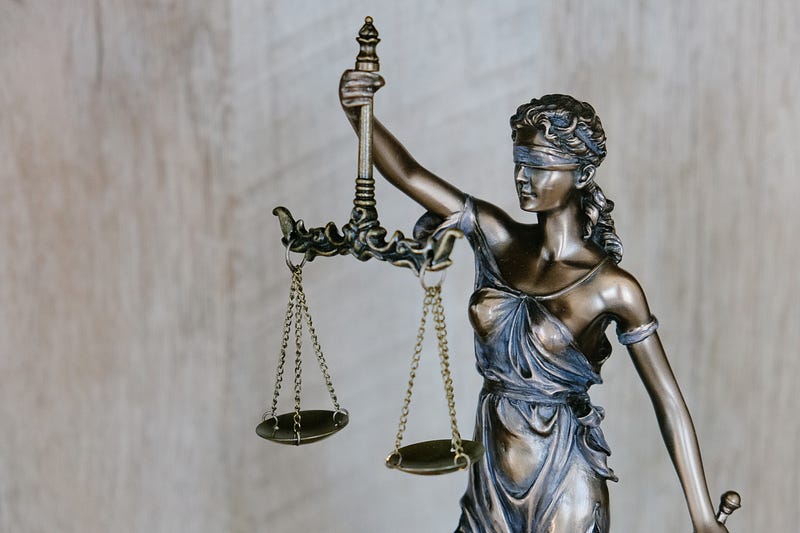
No system is perfect and I won’t be surprised if times have changed a bit in Britain too. Nevertheless, nothing so far reassures me that in America politics does not hold the blindfold of justice.
The Untapped Promise of the American System
I’m fascinated by the American process that allows the people through their representatives to question these nominees. However, I grew fonder of the British way of making judicial appointments when I saw the spectacle of those hearings.
If every judge is expected to act impartially, why should their political or religious beliefs matter?
The injunction given over three millennia ago by the prophet Moses is still as relevant as ever.
”Do not pervert justice; do not show partiality to the poor or favoritism to the great, but judge your neighbor fairly. Do not go about spreading slander among your people. Do not do anything that endangers your neighbor’s life….” (Leviticus 19:15–16. NIV)
Isn’t this a philosophy that people of every religious belief or none can endorse?
I did not listen to every question asked of Judge Jackson, but the questions I heard related more to the cultural/political issues like critical race theory, the definition of a woman, or softness on crime.
The last is interesting, because American toughness does not give us a safer society compared to European countries or even our Canadian neighbor. Our rate of incarceration, while decreasing, is still several times higher than in NATO countries.
In suggesting that she is soft on crime, do they really think that our position as number one for the national rate of imprisonment is praiseworthy?
The lengths to which parties go to ensure their side has the most judges in the court erode my confidence in their impartiality.
Lady Justice to supposedly blind but she can be unjust if she is clueless about the lives of those who are different. Diversity should make room for different lifestyles and cultures. Experience and beliefs color a judge’s perspective, but should not define the law.
Eager to learn, the process interested me, but the level of inquiry disheartened me. From what I saw, courtesy, willingness to find the truth, curiosity, and respect were not much in evidence.
Perhaps President Biden should have just selected Judge Jackson instead of making a bold election promise to have a black nominee.
Choosing from a Minority Group reflects positively on our society.
When I bought my second home decades ago, I had a $10,000 shortfall on the new mortgage.
The loan officer wanted me to buy a cheaper house. I refused because it was my ideal house in the right neighborhood. I had never defaulted on their current mortgage and had a secure job with excellent prospects. In a week, I got the loan and additional life insurance for the shortfall. He didn’t break the rules. He chose to utilize the lesser-known ones.
My disappointment with the confirmation System
No one ever accused me of getting into university, getting a house, or a job because of my race, but it is on record somewhere in England. Sometimes my blackness surprised folks, but they never questioned my qualifications. Like me, Judge Jackson earned her competence despite her race. Unlike me, in my ordinariness, she is a high profile, public figure in America and considered fair game.
My disappointment with the confirmation System
Nominees for the Supreme Court should expect the greatest scrutiny, but I don’t think this was it.
The pertinent and incisive questions that I expected were in short supply, but Judge Jackson’s demeanor impressed me. She politely bore with patience and dignity her inquisition and calculated disrespect.
Whatever happens, she will survive in her distinguished career with her supportive family.
The next time, arrogant men accuse women of being temperamental and moody, we can remind them that not all women whine or yell under pressure. Some can even deflect their interrogators with their serenity in the face of provocative churlishness.
I remain unconvinced about the true function of the Senate hearings. Does it ever achieve its function or is it a rubber stamp for any Senate majority? Should its purpose or the process be changed?
Reference
Emily Widra & Tiana Herring — States of Incarceration: The Global Context, Sept 2021 in Prison Policy Initiative
Read every story from Verbieann Hardy (and thousands of other writers on Medium).
Your membership fee directly supports Verbieann Hardy and other writers you read. You’ll also get full access to every story on Medium.


