
A Moral Dilemma
Should We Keep Peeves as Pets?
Have you pet your peeve today?
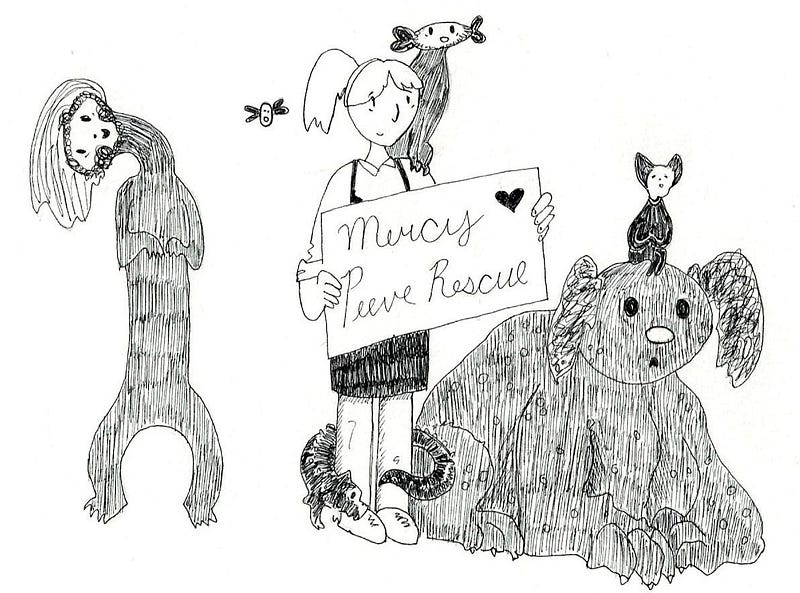
“That’s one of my pet peeves,” Sarah said, right there on the Zoom call. We were talking about editing and something came up — the oxford comma, it’s/its, coffee stains on manuscripts with cigarette burns. Something. And everyone on the call nodded, as if to say, “So true! We know all about peeves!”
Then Carol said, “This is my pet peeve.” And she held up the peeve for all to see on our screens. It was kind of cute, and also grotesque. I was repulsed and fascinated, simultaneously.
“Y’know,” I said, because obviously they did not know, “There are better pets to keep than peeves.”
But are there?
The reasons not to keep peeves are obvious. Peeves are annoyingly frugal. Their gaze turns lettuce rusty. Their odor reminds you of a friend who recently passed away. They will buttonhole you at a party with conversation about Avant Garde jazz.
“He’s playing a piano, but it’s really like eighty-eight tuned drums!” is an actual thing that an actual peeve said to me once in their typically whiney, cloying, conniving voice.
And yet. People take such comfort in their peeves. Who are we to deny them that?
I, for example, have a peeve of my own — people who hold things up to your face and say, “Smell this!” — and it never ceases to please me that there’s a behavior in the world that I can loathe and repudiate without hesitation. In the ocean of ambiguity that is our lives, my peeve is an island of changeless certainty.
Also, my peeve is very cute. Admittedly, most peeves, like yours, are ugly and repugnant, but mine has the perfect mixture of wide-eyed anime wonder and pleasing, vapid insouciance.
Finally, it’s good for the peeves. Peeves are notoriously incapable of surviving in the wild, as anyone who has lived through a wild peeve outbreak will tell you. In such a situation, roadkill season will find the roads slick with dead peeves, not to mention the cars wrecked by peevish distractions.
Domestic life is perfect for peeves. They love being fed, cuddled, talked to, and, most importantly, talked about. We care for them; they care for us. Our dudgeon and outrage would be feeble and anemic without our peeves. The world — our homes — would be a lesser place.