
Should the Supreme Court Reopen the Boston Marathon Bomber case?
The case will likely be heard later this year.
The Boston Marathon Bombing took place on April 15, 2013. I was still a contractor for Homeland Security when it happened. Sitting at my desk, one of the big guys stormed through the door and announced.
“The sh** has hit the fan.”
Bombs had exploded near the finish line at the Boston Marathon, killing three people instantly and injuring 264. Seventeen people lost their limbs.
Another terror attack, in my city this time.
Two pressure cooker bombs had exploded 14 seconds apart, spewing pellets.
The suspects are identified as Tamerlan Tsarnaev, 26, and his 19-year-old brother Dzhokhar Tsarnaev.
Tamerlan is wounded in an explosion and shootout with police and dies at local Beth Israel Deaconess Hospital. His brother escapes. A manhunt ensues in the neighborhoods of Boston.
He is apprehended on April 19th, Day 5, on a tip from a resident of Watertown who found a man hiding under the tarp in his boat covered in blood.
He is sentenced to six death sentences on May 15th and formally sentenced on June 24th.
The US Court of Appeals vacates his sentence based on his attorneys’ arguments that the jury was biased and the trial should have taken place outside of Massachusetts.
His attorneys take it one step further filing an opposition brief, meaning the case could not be taken to the Supreme Court.
Denied.
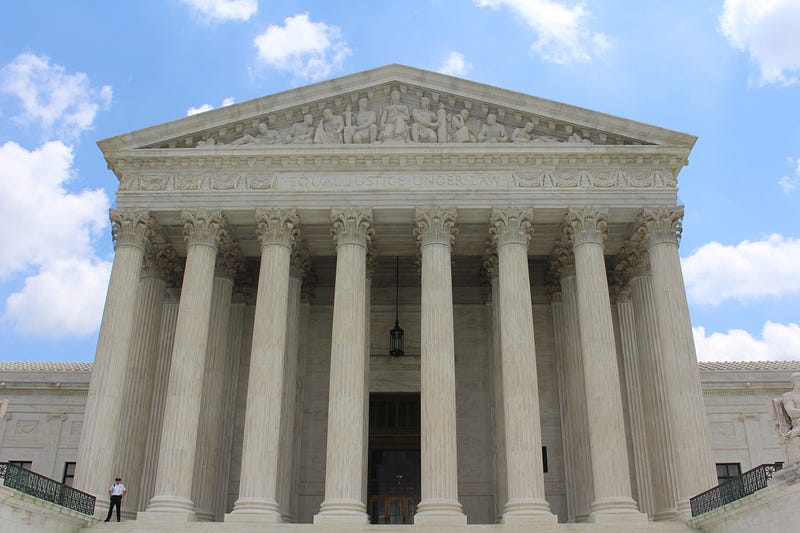
The Supreme Court has agreed to review the death penalty case in the Fall of 2021.
The Cost of the Fight
He has been serving a life sentence at the Supermax Prison in Florence, CO, at the cost of $32K a year since July 18, 2015. It’s cheaper than death row due to the absence of trial and appeal process costs.
That means to date; it has cost the taxpayers almost $200k to keep him alive.
The Supreme Court has agreed “to review” the case. Four of the nine Justices must vote to accept it. This allegedly costs $100 to 250K. If the justices agree beyond this, the price tag is another $250K.
At the very least.
And that’s just the lawyers. It doesn’t include the justices, their clerks, staff, and opposing lawyers.
A reasonable estimate is a cool $1M to try the case.
Tsarnaev would need to be incarcerated for 31 years and three months to reach that.
Is justice worth the cost? And is it justice?
The Moral Dilemma
It’s a life for a life. Or, in this case, a life for many, and this does not count the ones that were destroyed. One of the victims was an eight-year-old boy.
The strongest argument for the death penalty is the deterrence of crime. The assumption is that someone will consider the death penalty before committing a heinous crime.
Yet studies show it is not effective.
So next, let’s consider the victims.
Does it give some sense of relief or closure to those who have lost a loved one to violence? Studies suggest that it does not. In fact, they conclude that it interferes with the healing process.
Marietta Jaeger-Lane, whose daughter was kidnapped and murdered, states, “By becoming that which we deplore, people who kill people, we insult the sacred memory of all our precious victims.”
And let’s not forget that even if Tsarnaev is sentenced to death, President Biden has stated that he is seeking to eradicate the death penalty.
The Outcome
There may be a lengthy and expensive trial, and in the end, the Supreme Court may uphold the Court of Appeals.
This means Tsarnaev goes back to prison, and that we, the taxpayers, continue to support him as he serves his life sentence until his natural demise. And this is in addition to what was spent on his Supreme Court trial.
Or Tsarnaev may be put to death, and the many victims or his violent acts feel no relief. Instead, they get to relive the horrors of the Boston Marathon Bombing.
And it was a big, expensive drama, and no one benefitted except for some lawyers.
Life in prison for violent offenders should mean a life without parole. Whether they repent or find Jesus or obtain college degrees, it doesn’t change their violent nature or their past.
If they are a threat to others in prison and others' lives are at stake, then yes, the death penalty would indeed preserve life.
Sure we want revenge. But from where I stand, the best revenge is to not be like him.
Dzhokhar Tsarnaev will receive justice when his life ends.
And he will be judged perfectly.


