
Should Men be Banned from Complimenting Women?
How telling a woman she’s “the total package” is the new sexism of our age

Remember the days when a compliment — not a catcall or a one-liner used by a pick-up artist — was viewed as a positive thing? Remember how a compliment in the morning from a work colleague gave you that extra bounce and glow that carried you on a zephyr of confidence through to lunchtime? Well, according to an article on this platform, and its supporters, those days are gone and verboten.
Why would such an innocuous exchange in telling your partner they look great today be a despicable act of wickedness? Well, the author of the rash and ill-thought-out essay I’ll be looking at would tell you it would imply your partner looks like a bag of shit tied in the middle on every other day you fail to compliment them on how wonderful they look. Of course, linguistically and logically it doesn’t mean that. It takes all of two seconds to understand there is no inference of this sort to be made.
Let’s get into the specifics of these heinous crimes committed by men against women.
We are first met with this insightful introduction:
So, here are five different sexist fake compliments that need to die. It doesn’t matter if you mean well. The meaning doesn’t matter. The receiving of the comment is what counts.
It’s the “meaning doesn’t matter” and the “receiving of the comment” that I want to focus on first. Let’s take her line of thought further. A man compliments a woman on receiving a promotion. It is then up to the woman to decide whether it’s a compliment or an affront. By the author’s thinking, there can never be a compliment or praise that cannot be harmful in some way — depending on how a person decides to interpret the (intended) compliment at a particular time.
There is a term in law called mens rea. Its literal meaning is “guilty mind”. It’s the intent of the person allegedly committing a crime. This is necessary for the law to stop innocent people who are unknowingly caught up in criminal activity from being convicted.
For example, if I give a bowl of poisoned cherries to Michael with the intent of killing him, and Michael died from the poison, I would be committing an act of murder. Now instead, let’s say I asked Frank to deliver the bowl of cherries to Michael. Law-abiding, lovely Frank unwittingly delivers poisoned cherries to Michael, where Michael eats them and dies. Frank’s intent was to do a good deed. And we clearly wouldn’t view Frank’s act the same as mine — even though they had the same outcome. Why? Because intent matters.

Our first utterly heinous compliment:
“I love that you’re not like other girls.”
Ugh, this one is truly cringeworthy. When I hear this one, I immediately picture a cheesy 90s rom-com.
But, guys still use this line as if it’s a compliment.
Should we be happy that we are “not like other girls?” And how exactly are you classifying an entire gender? Because in my experience, women are completely complex and diverse, and unique.
Plus, why would I not want to be like other women? I can name over a hundred women that I would love to be like.
It’s not a compliment to use other women as a negative comparison. It’s an insult.
Cheesy, yes! But so what?! For starters, The word “other” doesn’t mean what the author wants it to mean in her sentence: “other” is not an absolute term. It doesn’t mean all women outside of the one being spoken to. A person would have to say, “I love that you’re not like all the other girls” to mean that. And by the very act of saying “I love that you are not like other girls,” it is not, as you say, “classifying an entire gender.”
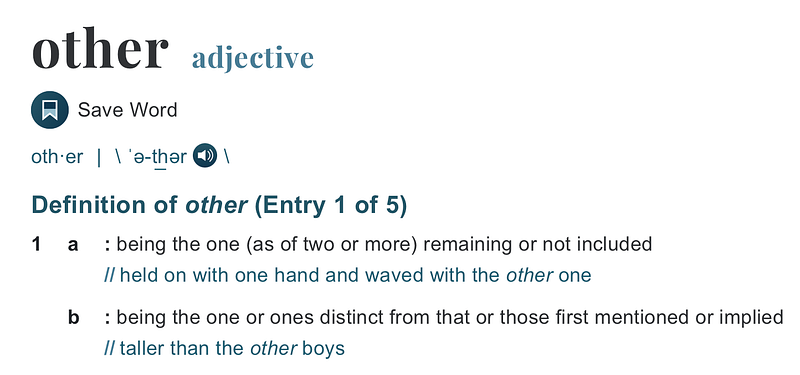
But let’s be charitable and say she meant “I love that you’re not like all the other girls.” It’s obvious to all and sundry the guy giving the complement hasn’t met the 3 billion women on the planet. He’s assuming you are smart enough to understand it’s within the domain of women he has met.
The woman he is complimenting might, indeed, be unlike other women he has met. She may have some qualities he finds unique about her. He may have been attracted to, and dating, women of a similar type before — those high in extraversion, for example — and decided he wanted to strike out and date someone different. All perfectly valid and likely reasons.
Is calling your partner special also banned?
Another cliché but an innocuous compliment to be stricken from the lips of men everywhere:
“You are the total package.”
Again, another seemingly harmless compliment that is more sinister than you believe it to be.
“You are the total package” usually alludes to the fact that a woman is beautiful and smart. It implies a certain element of surprise. As if most women are not both beautiful and smart.
Again, it’s dangerous and a disservice to women to negatively compare them.
With this comment, you set the standard for what a woman is and you elevate one above the rest as an anomaly. It’s not good for anyone.
Beauty and intelligence are subjective, too. And they certainly are not the only two qualities of a woman.
Leaving to one side the idea intelligence is subjective (It’s not), if beauty is subjective — like you mention — then when he says “you are the whole package”, according to you, he could be saying you are the whole package I’m looking for — his subjective idea of beauty, etc. He is not necessarily saying you are better than all other women by any objective standards, which you later make the argument he is when you say, “You set the standard for what a woman is.”
“The package” (in the compliment, “you are the total package”) could consist of an array of traits and qualities. So when you say “…the total package usually alludes to the fact that a woman is beautiful and smart”, you are making a sexist generalization that men typically reduce women to these two qualities. I’m pretty sure men, like women, are smart enough to know women are multi-faceted. They are able to do this through their understanding that women are part of the same species as men. And men, also, have other qualities than being handsome and intelligent.
Onto the next in the list of utterances set out to belittle women.
“You would make such a good wife and/or mother.”
This is not the compliment that you think it is.
For starters, just because a woman is demonstrating a nurturing quality or some other indication that qualifies her as “wife” or “mother” to you, it does not mean you have any clue what she wants.
Not all women want to be wives or mothers. You should not make assumptions like this.
Or on the other side of the coin, maybe she does want to be a wife and/or mother, and there are obstacles in the way preventing that. Infertility. A recent painful break-up.
In any case, this comment can do way more harm than good.
I can see how this could be annoying to a woman who doesn’t want to have be a mother or wife. But this isn’t the barbed compliment you think it is.
Contrary to what the author says, “You would make such a good wife and/or mother” doesn’t imply you know what the woman wants. It simply says, if you were to choose to be a mother or wife, I think you would be good at both [Clutches pearls in shock!]. And that’s a positive and not a negative; it is adding to the qualities of a person and not taking away.
To be a good mother — not just a mother — is a wonderful thing: It says you are caring, thoughtful, responsible, strong, patient, conscientious — the list goes on. Who doesn’t want those attributes in a partner — female or male?! And if you are fortunate enough to be told you would make a good wife or husband, it implies you are everything that person wants in a partner; someone who is worthy enough for you to commit to spending the rest of your life with. Wow! That’s really something! We can, of course, say this to someone we don’t have romantic feelings for, as an observation, but this isn’t any less of a compliment.
We are gradually increasing the limitations on how men and women interact with each other. The wilful lack of nuance in which we differentiate between a compliment and a misogynist remark widens the chasm between the sexes until we cease to communicate feelings of attraction and love to one another.
This is a prime example of what happens when a society grows fat: we look for non-arguments to demonstrate faux-outrage and produce pabulum. I suspect the author knows full-well the intent behind a compliment received of the sort she mentions. But the intention isn’t allowed to matter, after all, what would she write about if it did?


