
Living and writing on boat
Should I Scrape My Dirty Bottom?
Or go electronic and save $1000 / year?
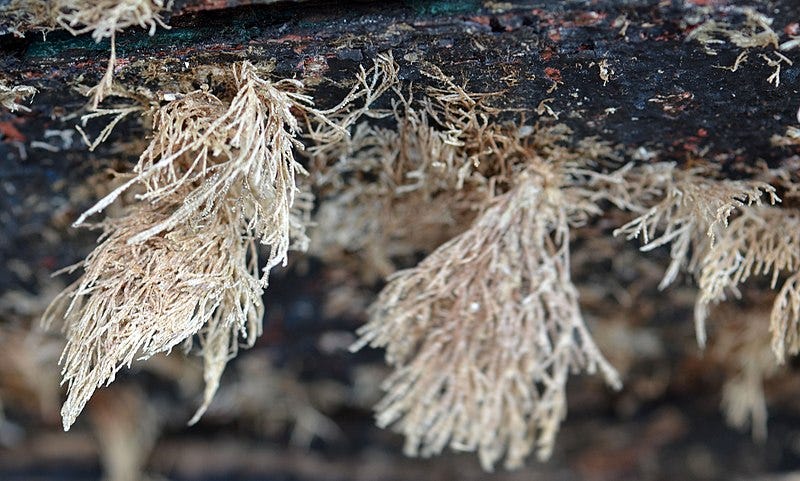
I live and write on a boat. The boat floats in the sea and it gets fouled — stuff grows on it. Quickly.
The worst I ever experienced was 15 cm of growth in a month when I was anchored in Woburn Bay, Grenada. I will admit that we were in an area where the effluent from the local rum distillery enters the sea. I thought that would have killed anything, but no, the buggers love it.
The old solution
Copper plates were once used as an anti-fouling measure by the Royal Navy. These copper plates were nailed to the bottoms of wooden warships in order to prevent the build-up of marine organisms. The copper plates would slowly corrode, releasing a chemical that would prevent marine life adhering to the hull.
The use of copper plates as an anti-fouling measure was first proposed in the 18th century. However, it wasn’t until the early 1800s that a method for implementing this proposal was developed. In 1802, Sir Home Popham designed a system in which copper plates would be placed on the bottom of ships.
The plates were manufactured in Swansea, Wales and were a secret weapon used by the Royal Navy at the time of its development, making their ships faster than the fouled ships of the French navy.
The use of copper plates as an anti-fouling measure for commercial and naval use was eventually phased out in the early 1900s as steel hulls became prevalent — copper and steel are not a good mix in salt water. This was also due to the development of newer, more effective anti-fouling measures, such as paints and coatings that release toxic substances into the water.
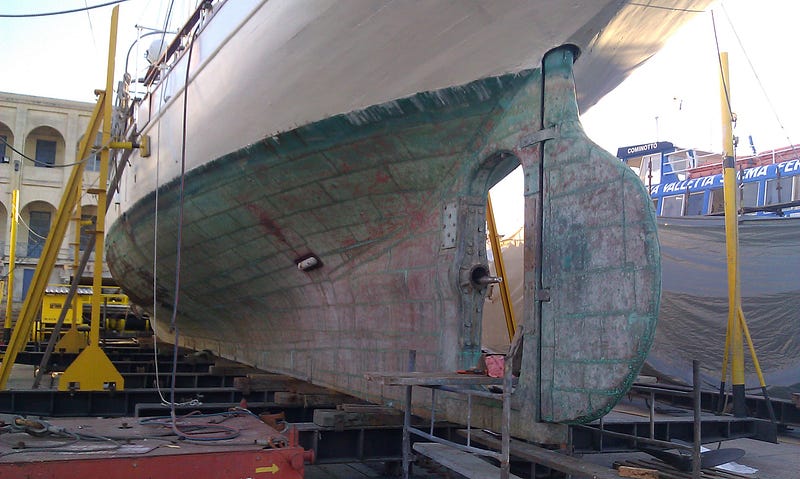
But copper plate is still use for larger, old private wooden yachts, such as this one I photographed on a slipway at Manoel Island, Malta.
Anti-fouling is expensive
On average I haul out every 18 months and apply anti-fouling paint to the bottom. It’s eco-friendly paint, apparently, and the 20 litres (5 gallons) that I use can cost up to $2,000 depending on where I am. It’s bloody hard work too.
I use ablative paint which washes off slowly, ensuring that fresh paint is always exposed. It works well as long as the boat is moved regularly. And then when I haul the boat out, the boatyard’s pressure washer seem to find a few hundred dollars worth of paint still there and clean it off!
Stronger paints using tri-butyl-tin compounds are available, but only for commercial shipping.
The problem with not using anti-fouling is that when I try to go somewhere in the boat then it’s like driving a car with half an engine trying to tow a truckload of bricks. I go more slowly and use more fuel, adding to emissions.
Hoist the sails? Yes, I can do that and use them whenever I can, but it’s still a huge drag.
Diving
Lately I’ve been using a local diver to scrape the hull clean and extend the haulout intervals. It costs about $150 for a couple of hours work and is well worth it. Some sailing folks do this themselves but although I do scuba (or did until a ear popped) I’m now getting past it.
Electronics
Over the last few years I’ve been looking at an electronic ultrasonic solution and even went into the Jaycar shop a couple of years back in Bundaberg where they sell the kits. I didn’t buy though. I’m not fazed by putting together electronics as I built a home-brew computer way back. I still fix my radar and boat electronics from time to time.
It works by emitting ultrasonic sound from a transducer placed inside the hull.
It’ll cost about $600 for my boat, but I guess I’m wondering whether to take the gamble given that the reviews by users are very mixed. And also whether I really want something else that will surely ‘go wrong’?
It looks like it will be paintbrushes and rollers next month, even though the electronics shop is just down the road.
About me: I write on a variety of topics including humor, tech and travel, together with daily news events and the minutiae of daily life on a boat. I also write techno-thrillers…and about…
…applying expensive paint and watching it dry!
If you enjoy reading stories like these and want to support other writers and me, consider signing up to become a Medium member. It’s $5 a month, giving you unlimited access to incredible stories on Medium. If you sign up using my link below, I’ll earn a small commission at no extra cost to you.
You can follow me on Facebook Twitter @jamesmarinero . On Pinterest you will find many of my research photos from around the world. Check out my website where I occasionally have a free book on offer.


