Should Fines Be Proportional To Income?
In the very richest countries, yes. Elsewhere, we should be very careful.
These are the two most important things to know about Finnish businessman Anders Wiklöf:
- He is quite rich
- He likes driving fast

Wiklöf is the sole owner of Wiklöf Holdings, a group with almost 700 employees, turnover of over €400 million, and profit of €12 million. This group deals in alcohol, hotels, banking, shipping, groceries, wholesaling, duty-free sales on boats between Sweden and Finland, and a host of other activities as niche as supplying military uniforms to Lebanon.
Life, in short, is good.
But in the past 10 years, Wiklöf has been fined €280,000 for speeding. That’s an astonishing amount of money for such a minor offense, and might leave you wondering if this elderly gent (he will turn 77 next month) is racking up tickets every day because he is struggling to read his speedometer.
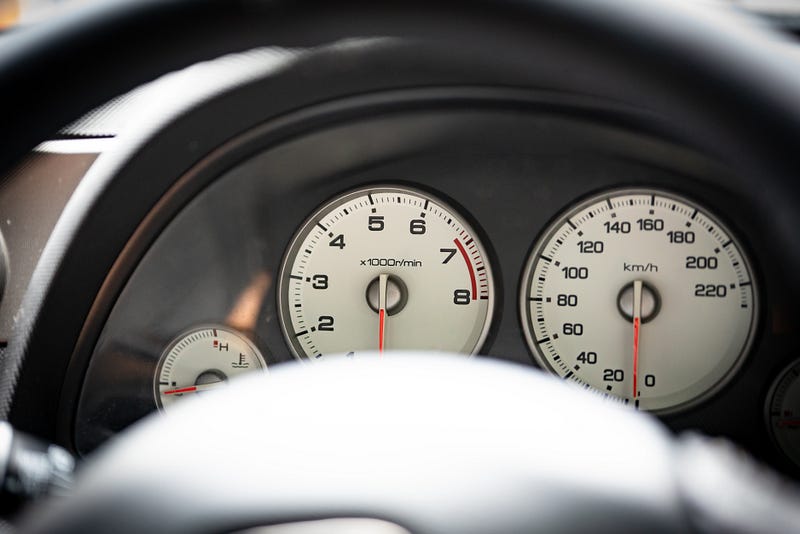
The truth is that Wiklöf has only been fined 3 times in those 10 years. Inconveniently for him, however, he still lives in Finland, a country in which many fines (such as those for shoplifting, fraud and speeding) are issued on a progressive basis, meaning that the richer you are and the more severe the offense, the more you pay.
In this case, Wiklöf was driving at 82 km/h (51 mph) in a 50 km/h (31 mph) zone where the limit had recently dropped from 70 km/h (43 mph). Given the numbers in question, perhaps I was exaggerating a little when I said he loves driving “fast”.
Nevertheless, his need for speed was enough to earn him a €121,000 fine.

His other penalties were for €64,000 in 2018, and €95,000 in 2013.
Offenders are given a number of “day fines” based on the disposable portion of their daily income, which is typically assumed to be about half of the net income. To put Wiklöf’s payments into perspective, the minimum penalty is €6 per day fine.
The case for this system is as follows: if you fine everyone an equal amount for breaking the law (let’s say €100), the punishment is far harsher for poor people. Someone on social benefits rushing to a job interview might go hungry after a fine like that, whereas a billionaire speeding to meet one of his mistresses would barely notice such an insignificant sum.

By linking fines to income, you introduce the appearance of fairness. In theory, the fine should sting the poor and the rich equally, while reinforcing the integrity of the rule of law. Perhaps this is why an incredible 73% of Finns trust their government.
People so rich that they would ignore a €100 note on the ground might never fear going hungry, but the threat of having to sell a few Rolex watches to cover your fine might make you think twice about speeding.

Wiklöf is certainly pretty pissed about these fines.
“If I had driven too fast in Sweden, I would have been fined SEK 4,000 and that’s a huge difference. I can’t understand why I would be a bigger criminal here,”
was his argument in 2013. Interestingly, the maximum fine is still the same in Sweden and works out to about €346.
It’s perhaps worth noting that Wiklöf has spent his entire life (and was fined) in an autonomous region of Finland called the Åland Islands. It has held a different identity for over 100 years; it has its own parliament, flag, laws, police force and internet domain. The locals, like Wiklöf, speak Swedish rather than Finnish.
Wiklöf in particular speaks almost no Finnish.

Recently he has sounded more contrite, but he wishes he had more control over what his money was going towards.
“I have heard that Finland intends to save half a billion euros in care costs. So I hope my money fills some gap in the government’s care budget. I would prefer the money from the fines to be earmarked for that purpose.”
Has any of that actually stopped Wiklöf from speeding?

Well, no, but perhaps he does it less often now. In the summer of 2002, he was stopped twice (and fined heavily, of course) for speeding. These days, he seems to allow himself only one infraction per 5 years.
I like the Finnish system, even though I don’t bear Anders Wiklöf any ill will.
Born the year after World War II ended, he grew up in the closest thing you’ll find to poverty in a Nordic country: his father was a bricklayer who was unemployed during winters, and his mother was blind, eventually finding work as a masseuse.

As a young car dealer, he couldn’t afford one himself, so he cycled around delivering invoices. Hilariously, when he married in 1978, his father-in-law insisted on a prenup to protect his daughter from this good-for-nothing car salesman. 45 years later and still happily married, it looks like his wife Rita is safe.
Wiklöf worked hard for his money, is apparently a good neighbour, and his employees seem to like him. He has remained loyal to his community, pays over €5 million a year in tax, and talks approvingly of the welfare state. As far as millionaires go, he doesn’t seem like the worst of the lot.
But I still think he should follow the law, and experience consequences if he doesn’t.

Finland and Switzerland, as far as I’m aware, are the only countries that issue such large fines for this kind of offense. In Finland, Nokia director Anssi Vanjoki got a similarly huge fine in 2002, as did racehorse breeder Reima Kuisla in 2015.
As for Switzerland, it dominates the list of highest fines. The record of 1.08 million Swiss francs (almost €1 million) was given to a Swede who drove at 290 km/h (180 mph) on a stretch of motorway with a 120 km/h (75 mph) limit. His $200,000 Mercedes SLS AMG was also impounded.
Moral of the story? Rich people who speak Swedish really love driving fast.

Could this system work in other countries?
Well, I think it would work just fine somewhere like Sweden, Denmark or Austria — but if we look instead at somewhere like Italy or Northern Ireland, I’m inclined to think that heavy penalties for the rich would just create some very wealthy traffic cops.
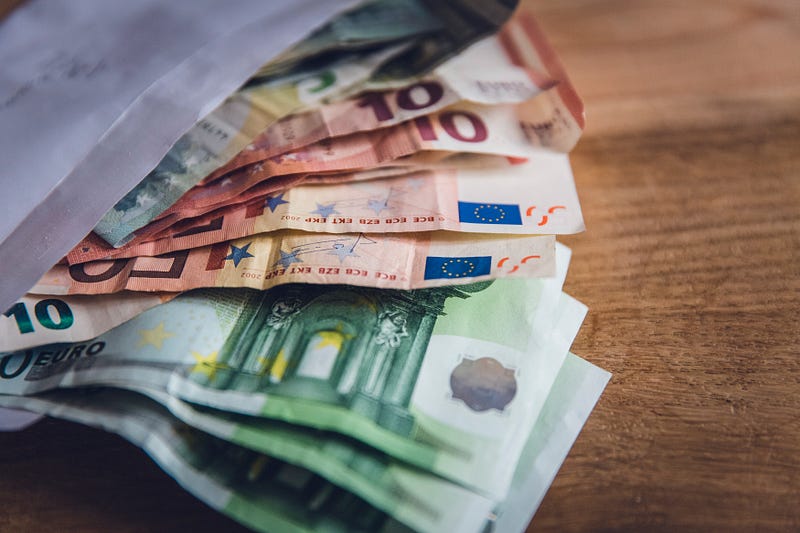
If I’m a rich guy in Sicily and I get caught going double the speed limit, am I going to pay a €50,000 fine? No. I’m gonna pay a €2,000 bribe to the cops who catch me, donate to a local mayor in return for some electronic footage going missing, or take a local magistrate out for a very nice dinner to find the right procedural technicality to get the case dropped.

Worst case scenario, I’ll sue the police department for faulty equipment, knowing they’re probably slacking on some aspect of equipment maintenance.
The situation is problematic because you create too great an incentive for the rich and powerful to pervert the course of justice.
Switzerland and the Nordic countries are extraordinarily rare in that the respect for institutions, professional integrity, and competence of public agencies make it very, very difficult to do that. But in 90 — 95% of the world, the rich are not backing down to a local police department.
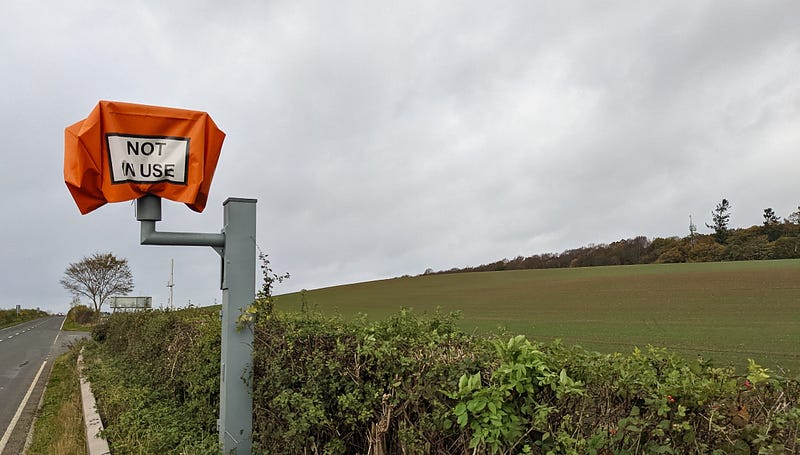
In the UK, there is a progressive system, but the maximum fine is £2,500.
That strikes me as especially insulting, because it makes sure that the system punishes everybody proportionately … except for the actual rich. In the grand scheme of things, however, I wonder if this is better for society than allowing much larger fines on paper — fines that have a corrosive effect on our rule of law.
There would definitely come a point where it would make sense for the ultra-wealthy to start offering big bribes, and there would come a point where police or other people in authority would accept them — and if you accept a bribe once, you might as well accept a few more. That begins a downward spiral for all of our institutions.
In summary, I think this is a great idea. Philosophically, it makes a lot of sense. In practice, however, I think it’s a lot harder to enforce than it seems at first glance — which gives me a lot of admiration for the places that make it work.