
Dear Cisters: Should Cis Writers Tell Trans Stories?
It’s not like there are no benefits to cis authors writing trans stories.
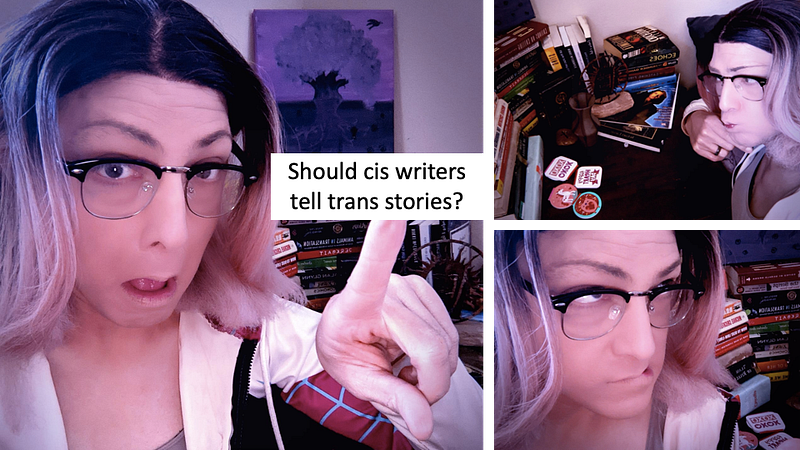
I’m okay if seemingly cis writers tell stories about trans people. Before I came out, I wrote tons of trans characters as a way to ask permission to exist. A seemingly cis author’s trans fiction may be their path to accepting what makes them queer.
But there is one possibility I don’t even want to mention. It makes me feel…well.
Allowing seemingly cis authors to write trans fiction means accepting that sometimes those authors will turn out to actually be cis. It’s not like they lied to anyone. This was part of their self discovery.
What’s the answer? Only let people openly queer write queer stories? We can’t force people to silently confess something so personal just because their book was shelved in a particular genre. That means letting it sometimes not apply.
And it’s not like there are no benefits to cis authors writing trans characters. Representation itself matters. Seeing trans characters — even terrible representation — opens doors that will never open if the cost of representation is to require that it always be excellent before we can simply be seen.
There is, however, a transgender elephant in the room.
You say opacity, I say transpacity
The thing we most desperately need is not just more trans representation in stories — it is open trans representation in the real world.
Because man, at some point, don’t we want to see real trans people as authors? Editors? Agents? Publishers? Studio heads? Asshole billionaires?
That’s the source of any conflict I feel about seemingly cis authors writing trans stories. Some of them are cis people who won’t mind their own business. But some of them are us. They just aren’t ready yet. And the issue there is, well, you can’t force an author to be ready. Becky deserved better.
So if we want more open trans representation in the real world — more openly trans authors writing stories about openly trans characters — how do we allow seemingly cis authors to process their queerness without inhibiting opportunities for openly queer people?
A binary question deserves a non-binary solution
It feels so strange to say it like this, but the privilege of being perceived as cis-gender is half the reason so many queer people struggle to come out. People still take me seriously after coming out because well, I am an amazing writer (Stephenie Edits) who wishes she was nearly as good at anything else.
But then again, when you’re queer, you have to be amazing or you don’t get published. You have to be amazing or you get crushed in reviews. You have to be amazing or that 4.2-star review average is just a time bomb set to go off from the soonest detectable flaw.
The answer then, to me at least, is not to squelch seemingly cis authors from writing trans stories. Leave that journey open for those people who need to write trans stories as a way to accept they are trans. My answer is instead to use this space to empower trans people to exist.
The privilege of passing is the passing of privilege
I pass easily in person, on the phone, whatever. I could quietly withdraw into what we trans folk call “stealth mode” and never be recognized as trans unless I said so. But open trans representation in the real world matters to me as much as open trans representation in our fiction.
We need to see other openly trans professionals striving, thriving, failing, succeeding. My contribution to the fight is instead to live as an openly trans person. Because if the answer isn’t to stop seemingly cis authors from writing, maybe it’s the opposite.
Maybe the answer is to:
Empower trans people to exist. For me, that means letting cis people write trans stories as a possible path to identifying, accepting, and sharing what makes them queer.
Empower those who are seemingly cis to complete their journey — because feeling secure in your gender is important regardless of whether that means you determine you are cis.
Empower queer people to safely explore their identities by sacrificing what privilege I have so that those less fortunate can thrive in new ways.
It’s through a ubiquitous and compassionate understanding of what all trans stories represent — even those written by seemingly cis authors — that we will empower our community to succeed as complicated individuals thriving in as much mediocrity as unheralded success.
Final thoughts
If you are seemingly cis, write our stories. I can only speak for myself, but you have my blessing. I just ask that you listen closely to what openly trans authors tell you about their stories, particularly if they offer kind insight and advice to improve the representation.
Because some of you are queer. Some of you are trans. Some of you are using these stories to find yourselves. And if these stories should ever lead you to our ranks, let me be the first to welcome you.
The end (of the article)
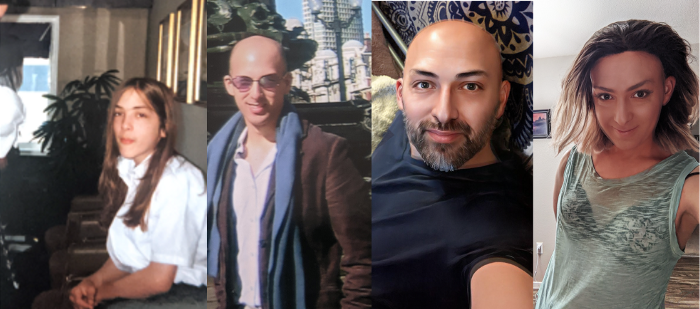
If you like my work and want to support it, buy me a cup of coffee! To join the Translation Team, subscribe to my Substack newsletter: Translating Everything


