
Celebrity Culture | Social Media
Should Beyonce be Canceled?
Let’s take a moment to think and not be rash here
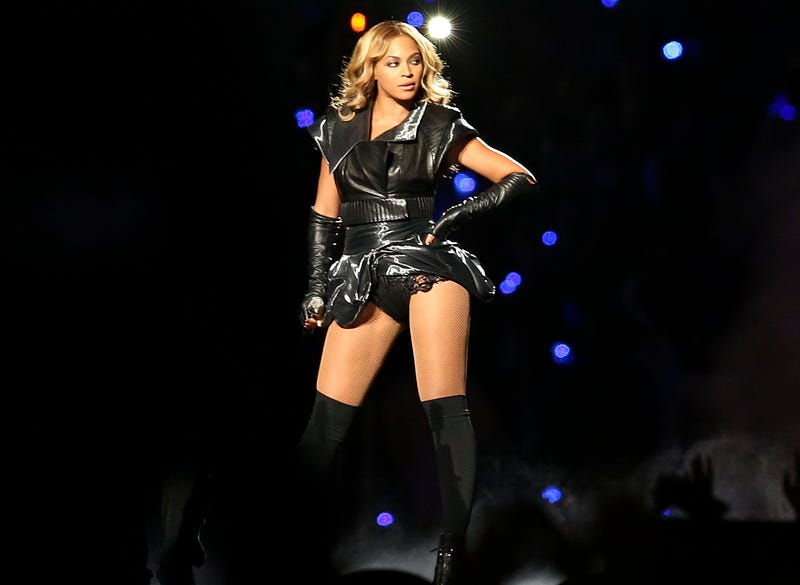
Beyonce is about to release Black is King, her latest visual album, on Disney+ on July 31. Before the film is out, Queen Bey has already received backlash for her portrayal of African culture. What is going on? Why are people attacking Beyonce, “the superstar that brought black power to the Super Bowl” as one headline in The Guardian proclaims?
Beyonce’s Lemonade album was even critically acclaimed by the Rolling Stones to have “[legitimized] and [created] space for a range of black women’s emotions.” What went wrong?
Before we get into what the Internet horde has to say about Black is King, here is the trailer that has enraged the masses who are now all too eager to cancel Beyonce.
What do people have to say about ‘Black is King’?
The main gripe that people have about the trailer is that it inaccurately portrays African culture. With over 3,000 ethnicities, not all of Africa wear tribal clothes and paint their faces. Some even tweeted skyscrapers in Africa in response to the trailer’s tribal imagery.
The general impression is that Beyonce, along with the rest of the entertainment industry, has painted Africa in broad strokes by aggregating the richness of African culture. Given Beyonce’s track record in the Black community, I do not think that her intentions are as nefarious as people say.
Nevertheless, I believe that there is some truth in these criticisms.
How I perceived African culture as a child
As with any other kid who grew up watching Disney, Lion King was — and still is — a favorite. In my case, it also meant that I grew up under the false impression that all of Africa was a savannah with giraffes and zebras worshipping a pride of lions.
I cannot imagine what kids these days must think of Africa after watching Black Panther. Do they think that all Africans chat bang sticks on the ground as two men duel for premiership?
When I was introduced to Nelson Mandela as a child, I thought that South Africa and Africa were synonymous. It was not until I was way past the age of ten that I realized Africa was a continent, not a country.
I read Alan Paton’s Cry, the Beloved Country for a Literature class when I was fifteen, and it was then that I began to open my eyes to how diverse Africa is. Even so, I cannot claim with confidence that I am fully educated about Africa. Perhaps, not many of us can.
I am laying down all of the above to demonstrate that I am ignorant about African culture. I cannot deny that. I have allowed the entertainment industry to educate and inform me about Africa instead of putting in the effort to learn and empathize.
Now, back to Beyonce
With all things considered, I believe it is unfair to heap all of that criticism onto Beyonce when it is popular culture as a whole that has fed into the narrative of one homogenized African culture.
I also do not see how one can level such pointed remarks at Beyonce from a one-minute snapshot of her film. Are we reaching a boiling point where we are overly sensitive and too quick to judge, or worse, cancel a celebrity who has lifted communities through her art form?
It is difficult to please everyone as well. The reality is that it will never be possible to feature all 54 African countries with its 3,000 ethnicities within a one-minute trailer or any short film for the matter.
Before we direct all of our hatred towards Beyonce, perhaps, we should also look inwards and question whether popular culture is an accurate reference point for understanding cultures.
Should we even base our impression of an entire continent off of a one-minute video? Why do we rely on movies and music videos instead of burying our noses in research to educate ourselves? Are we not just as culpable for the homogenization of African culture in mainstream media?
These are the questions I am asking myself before I rush in and cancel Beyonce along with everyone else. Remember, it takes two hands to clap. Hollywood would not consistently adopt this angle unless there is consumer appetite for it. If we were to cancel Beyonce, we may have to cancel ourselves too.
If you are want to know more about my take on cancel culture in general, this next essay may interest you as well:
Ming Qian is a freelance writer and an undergrad blogger who is currently pursuing a degree in Economics. Subscribe to his monthly newsletter to never miss any story that he publishes here and on his blog!


.jpg)
