
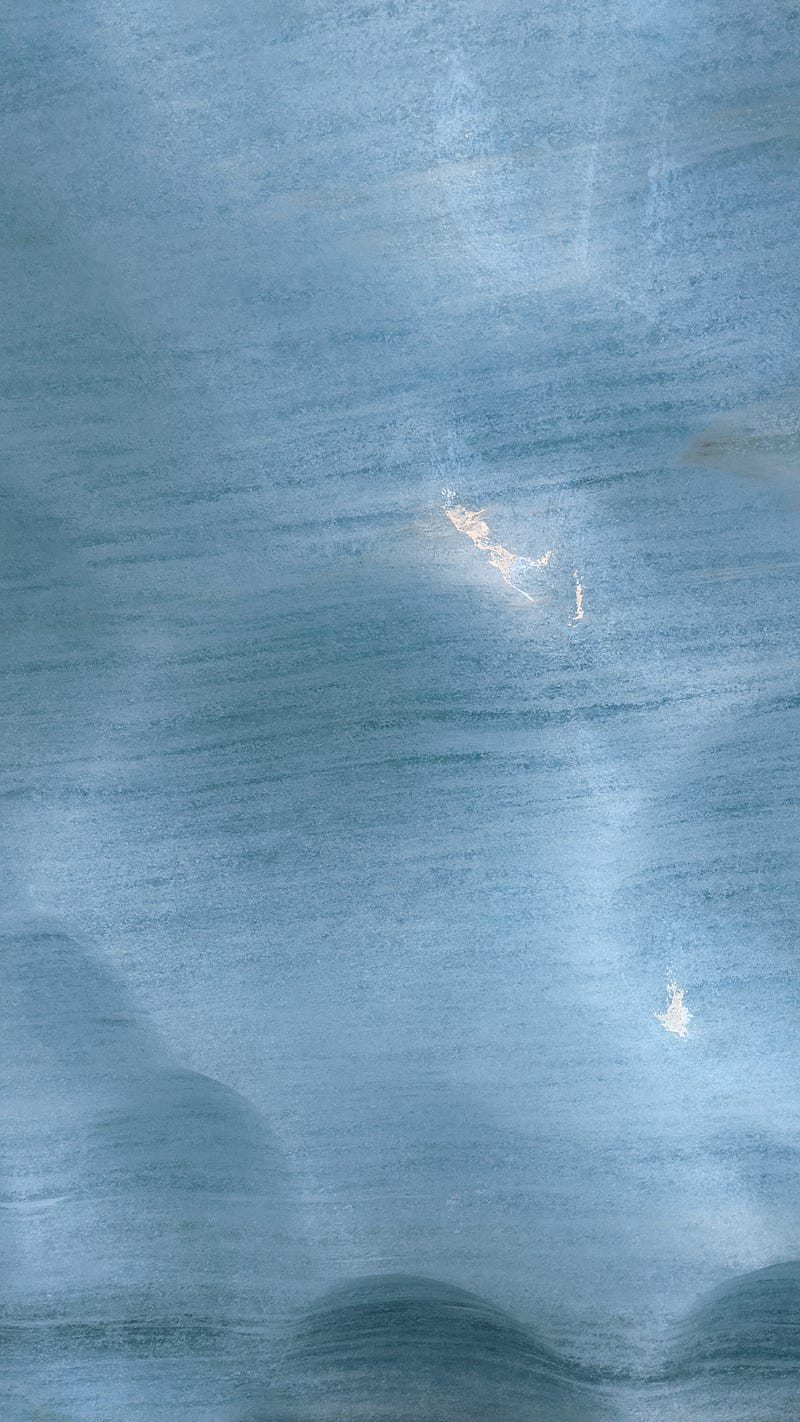
Zinal glacier, Canton Valais, Switzerland
Shots inside the cave of a mountain glacier
The melting front of this glacier makes a perfect spot for snapshots of weird shapes and colors… come and see the best shots here, and wait for my upcoming story on the hike!
I recently visited the Zinal valley, deep into the Swiss Alps near the border with Italy and close to the valley of the famous Zermatt ski area. But the Zinal valley is much wilder and holds a gem of a glacier with a huge ice cave. The best of all is that you can get to this cave relatively easily after “only” 3 hs of hiking through rocks and snow -a story I will post separately.
Check out these photos, which I’ve labeled with names. And do comment on which ones you like the most. Enjoy!
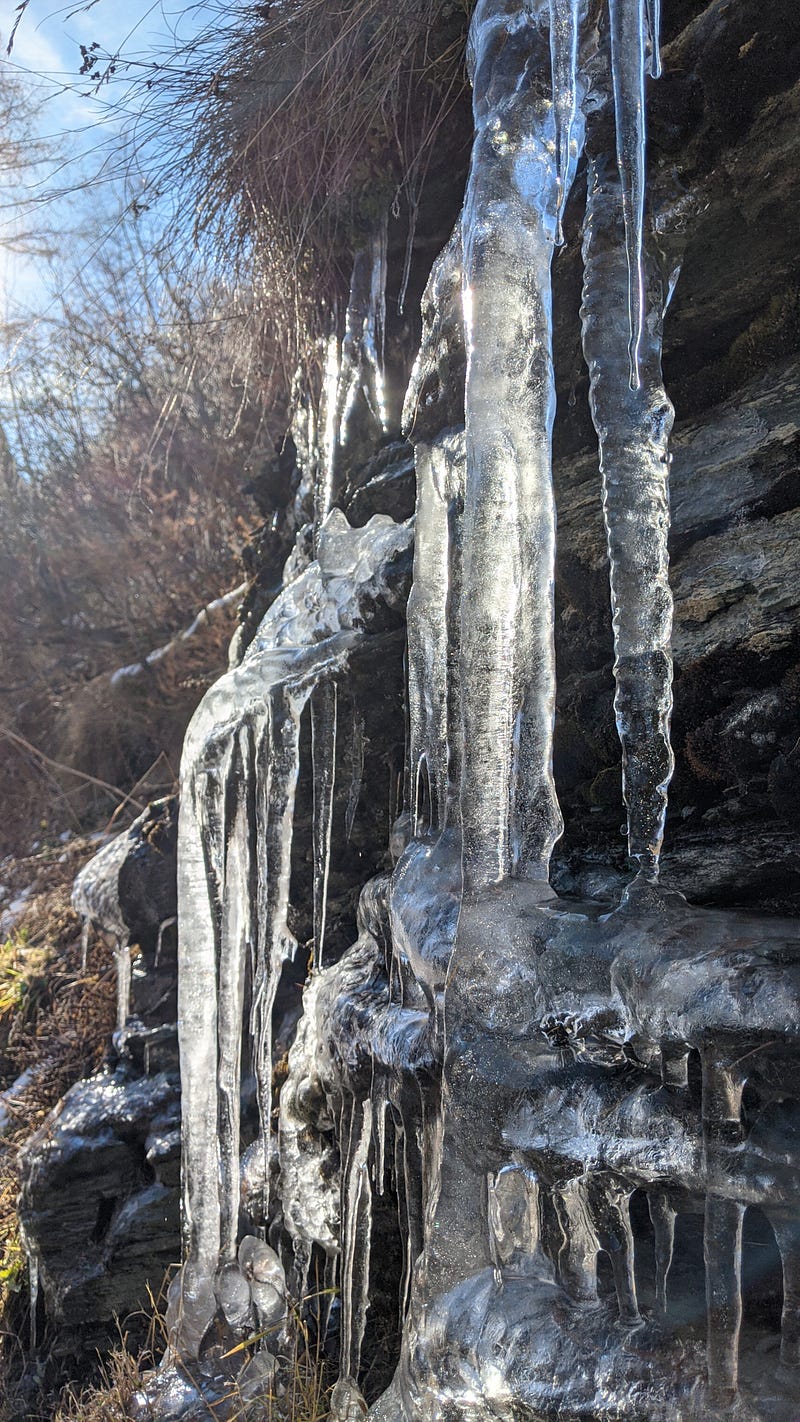
Ice stalactites along the hike
An avant-première about ice, just half an hour into the hike.
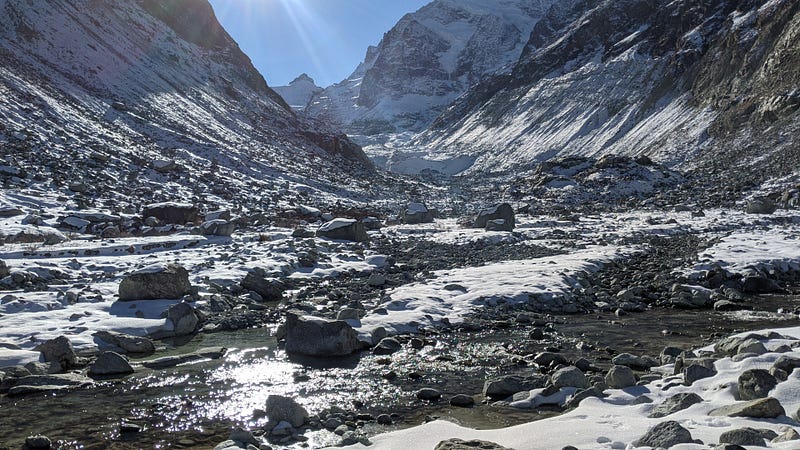
A white wall on the back -the glacier!
We reached this point after 2.5 hs hiking over the rocks and snow… I will tell you this story in a separate article.
The glacier’s cave is just 50 meters away
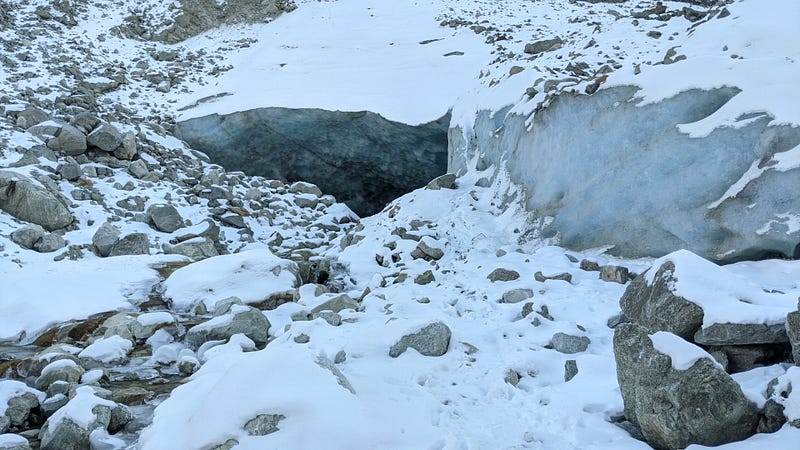
A river comes out of the glacier’s cave
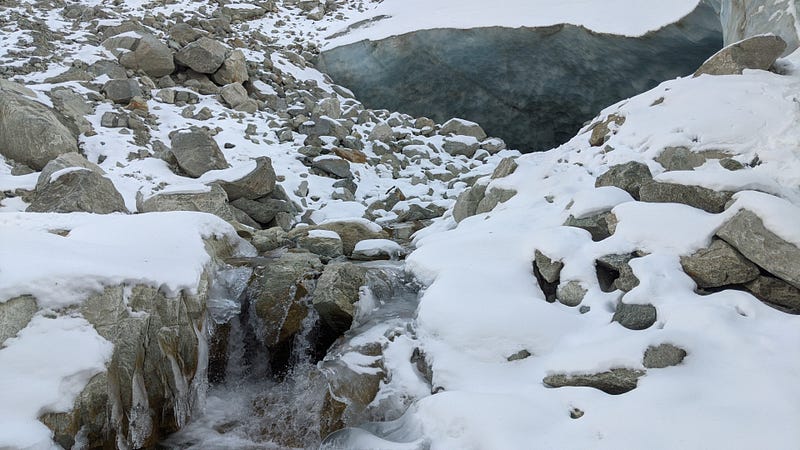
Finally, here we are in the cave
3 hs after departing from the town of Zinal, we reach the glacier!
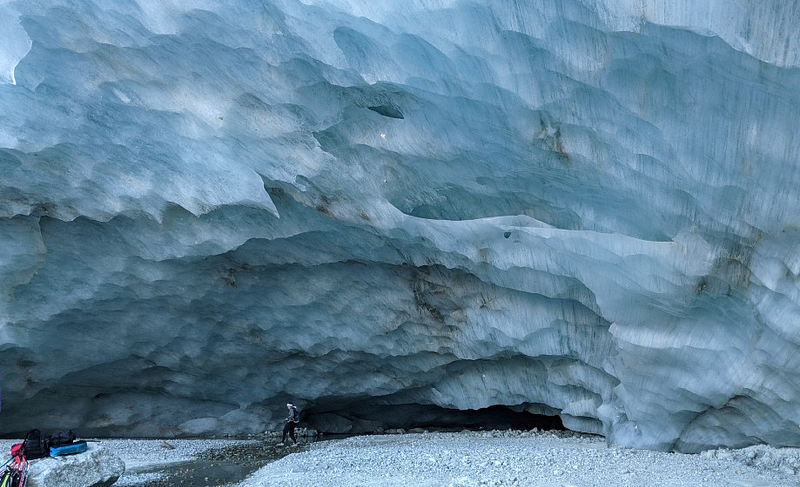
The cave from inside
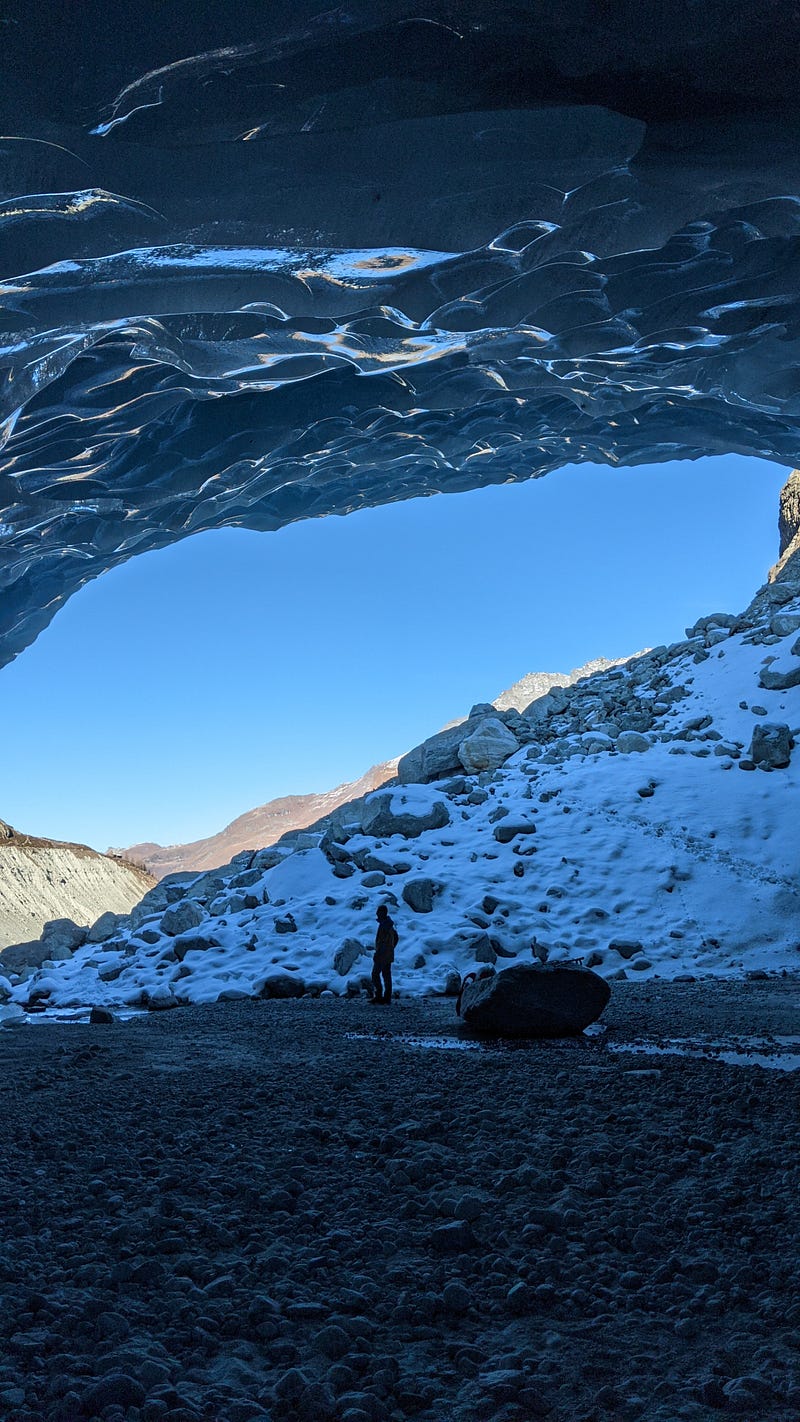
Depths of the ice cave
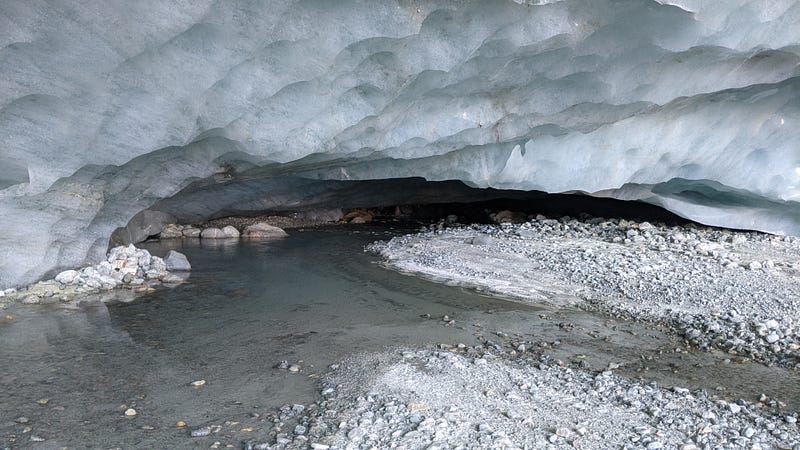
Water is not colorless, but blue
I learned at the elementary school that water is “tasteless”, “odorless”, and “colorless”. But it isn’t truly colorless. It in fact absorbs some wavelengths in the visible range, having a very weak blue color that you can only see over long optical paths. (Technically, they are infrared transitions very shifted to the visible area of the electromagnetic spectrum). For example, the small amounts of water we handle at home look totally transparent, but blue emerges in large bodies of water like a lake or the ocean. In fact the following blog entry and articles show experimentally that you can kind of see some blue already on an optical path of 3 meters of water:
The same happens with ice. The small pieces of ice you prepare at home look totally transparent, but when you have several meters of ice, the blue color becomes more evident, as I captured in this photo of the walls of the cave:
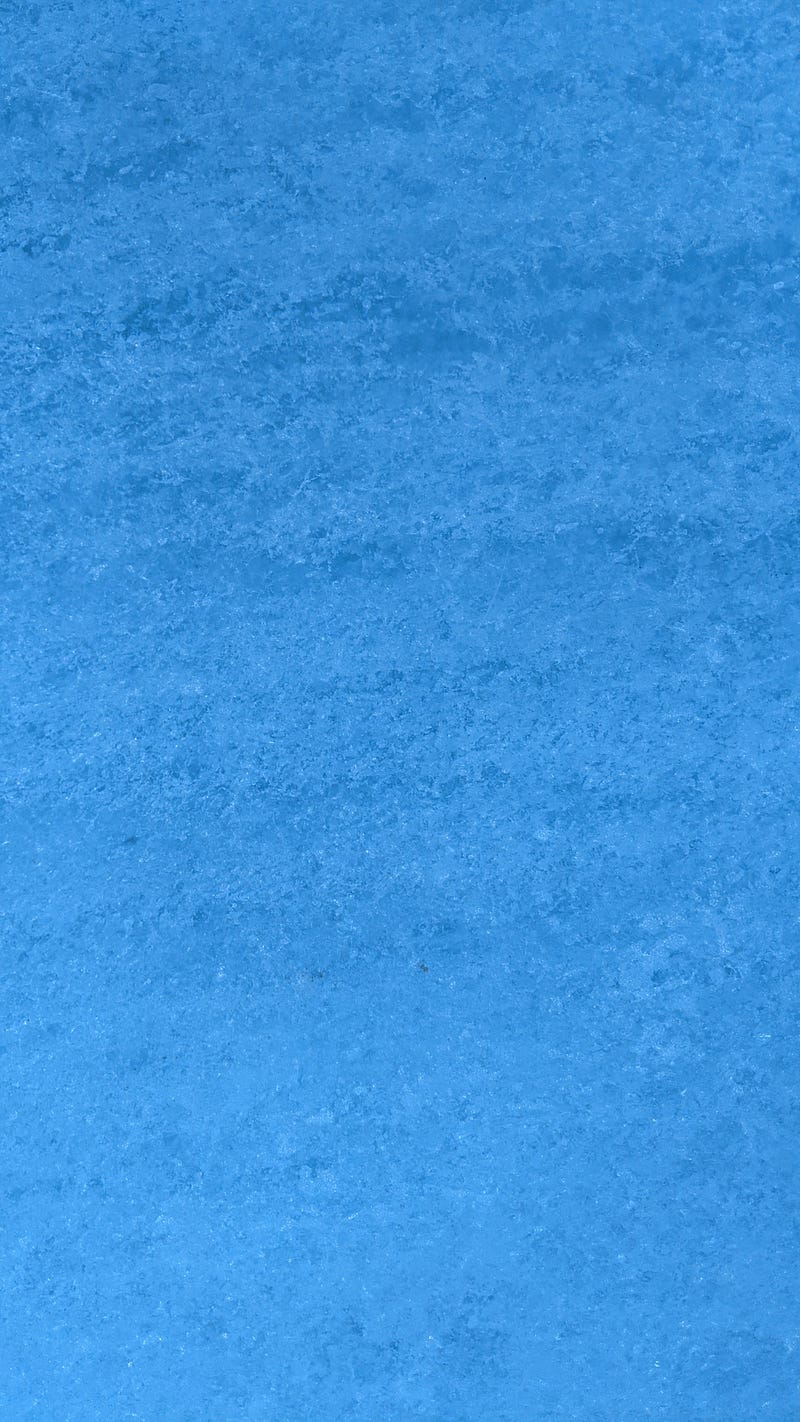
Ice wall
Another nice thing to investigate in the walls of the glacier’s cave is its contact surface against the soil. It’s remarkably clean, and the soil clearly eroded hard by the ice -which looks static but is actually slowly displacing down the valley, especially in winter when snow and ice accumulate in the highest part pushing the downstream ice.
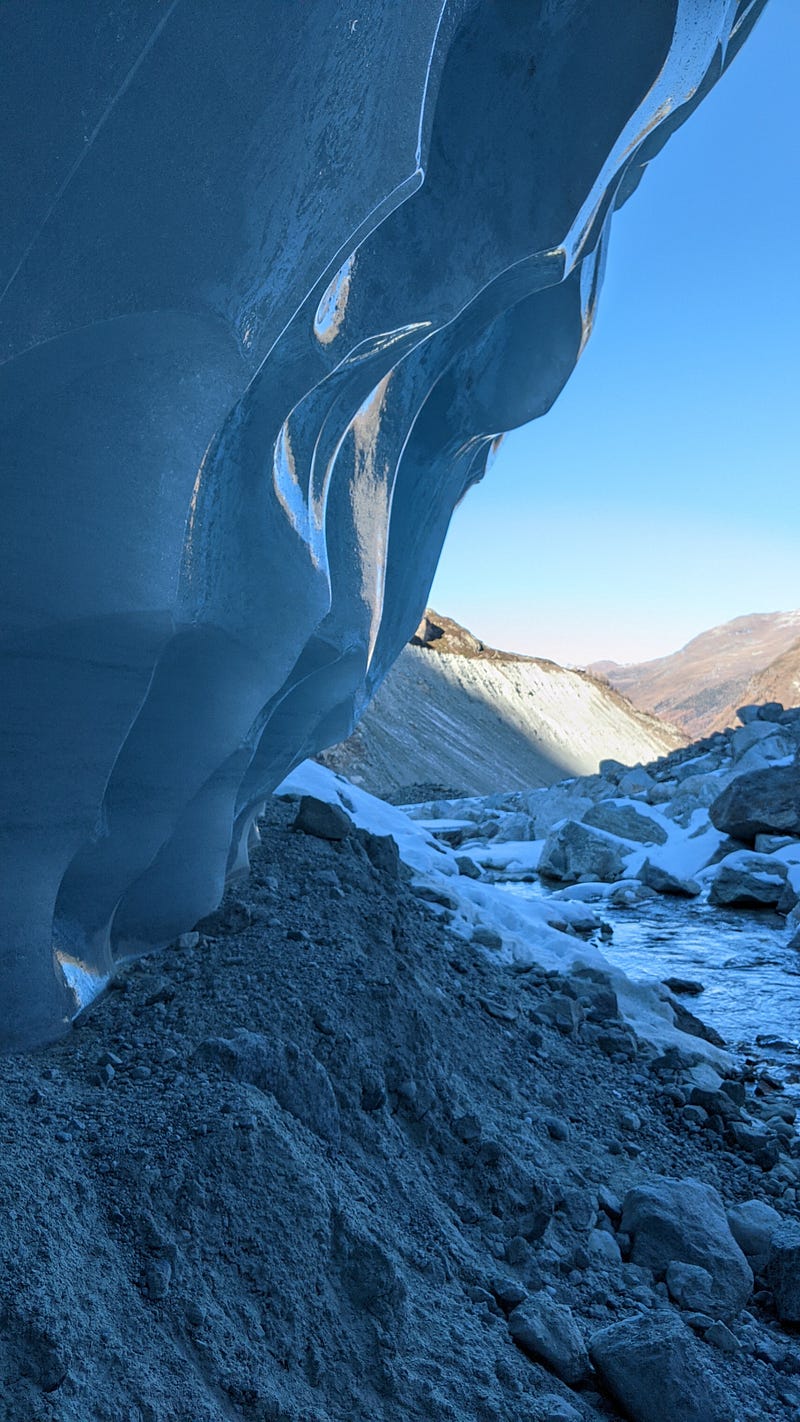
What’s your favorite shot? Have you ever been into a glacier? I hope you’ve enjoyed this photo, and stay tuned for the story on the hike up to this glacier!
If you like winter and cold stories, don’t miss these:
I am a nature, science, technology, programming, and DIY enthusiast. Biotechnologist and chemist, in the wet lab and with computers. I write about everything that lies within my broad sphere of interests -the @lucianosphere. Check out my lists for more stories. Become a Medium member to access all its content and subscribe to get my new stories by email (original affiliate links of the platform for which I get small revenues without special costs to you).
For inquiries of all types, contact me here. For small jobs (on programming, data analysis, cryptocurrencies, biotech + bioinf project evaluations, science outreach + communication, molecular data analysis and design, molecular graphics, photography, moleculARweb tutorials, science teaching and tutoring, etc.) check my services page here.