avatarLucianoSphere (Luciano Abriata, PhD)

Free AI web copilot to create summaries, insights and extended knowledge, download it at here

1340

Abstract

y.</p><p id="aee9">Here is the full upper part of a specimen in this field:</p><figure id="fa26"><img src="https://cdn-images-1.readmedium.com/v2/resize:fit:800/1*qx70-c17WV0jTZJ84-YxLA.jpeg"><figcaption>Photo by author Luciano Abriata.</figcaption></figure><p id="5fcf">Apparently, this plant grows very rapidly and produces a high amount of biomass, it suppresses weeds, and it is a nitrogen holder, all three points contributing to maintain and improve the soil when no crops are being cultured. Besides, when the plant dies or is harvested it can be ripened into compost to further improve the soil, or it can be fed to animals whose manure is then added to the soil for crops. Besides, the flowers of this plant are particularly good at attracting bees and other beneficial insects. In fact, I saw lots of bees around this field. Here’s one working on its target flower:</p><figure id="ad64"><img src="https://cdn-images-1.readmedium.com/v2/resize:fit:800/1*GwcBpc79xX9Falte99XJ8Q.png"><figcaption>A bee focused on its work. Photo by author Luciano Abriata.</figcaption></figure><p id="37a1">According to WikiPedia, this plant is native to Southwestern US and northwestern Mexico, especially in its more desertic regions. However, it clearly grows very well in various other climates, as apparently farmers use it as a cover plant in m

Options

any regions of the world. So, dear reader residing in the US or Mexico, next time you go hiking check if you spot some wild forms of the plant. You should easily recognize its flowers:</p><figure id="afca"><img src="https://cdn-images-1.readmedium.com/v2/resize:fit:800/1*NjGMFEe-EWiFmygQtdQA_Q.jpeg"><figcaption>Zoom on a set of flowers. Photo by author Luciano Abriata.</figcaption></figure><p id="f18a">To close this short story I leave you here a vertical shot of the whole field. I hope to visit it again in a few weeks to bring home some seeds:</p><figure id="8b33"><img src="https://cdn-images-1.readmedium.com/v2/resize:fit:800/1*zkO9fz3lMX6Rz_4XB2Dzxg.jpeg"><figcaption>Photo by author Luciano Abriata.</figcaption></figure><p id="7be5"><i>I am a nature, science, technology, programming, and DIY enthusiast. Biotechnologist and chemist, in the wet lab and in computers. I write about everything that lies within my broad sphere of interests. Check out my <a href="https://lucianosphere.medium.com/lists">lists</a> for more stories. <a href="https://lucianosphere.medium.com/membership">Become a Medium member</a> to access all stories by me and other writers, and <a href="https://lucianosphere.medium.com/subscribe">subscribe to get my new stories</a> by email (original affiliate links of the platform).</i></p></article></body>

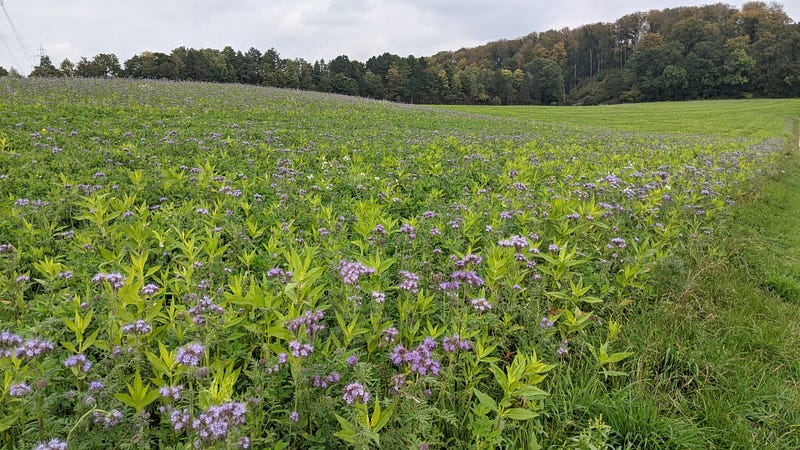
A field covered with Phacelia tanacetifolia a.k.a. Lacy phacelia, blue tansy, or purple tansy. Photo by author Luciano Abriata.

Photos + Facts

Shots in a phacelia field

Simple shots plus some interesting facts about this flower and plant that until yesterday I didn’t even know existed.

Yesterday morning I went for a quiet run around here, and since it wasn’t enough, in the afternoon I rode my bike to explore a region north of Lausanne that I barely explored a few times but which holds some interesting stories about wood (to come soon -stay tuned!). Before I got to the place where I did my research and took the photos required for these stories, I unexpectedly came across a field of purple flowers. What are these flowers? Why is somebody culturing them in such large numbers?

The subject is Phacelia tanacetifolia, which according to WikiPedia goes by the common English names of Lacy phacelia, Blue tansy, or Purple tansy.

Here is the full upper part of a specimen in this field:
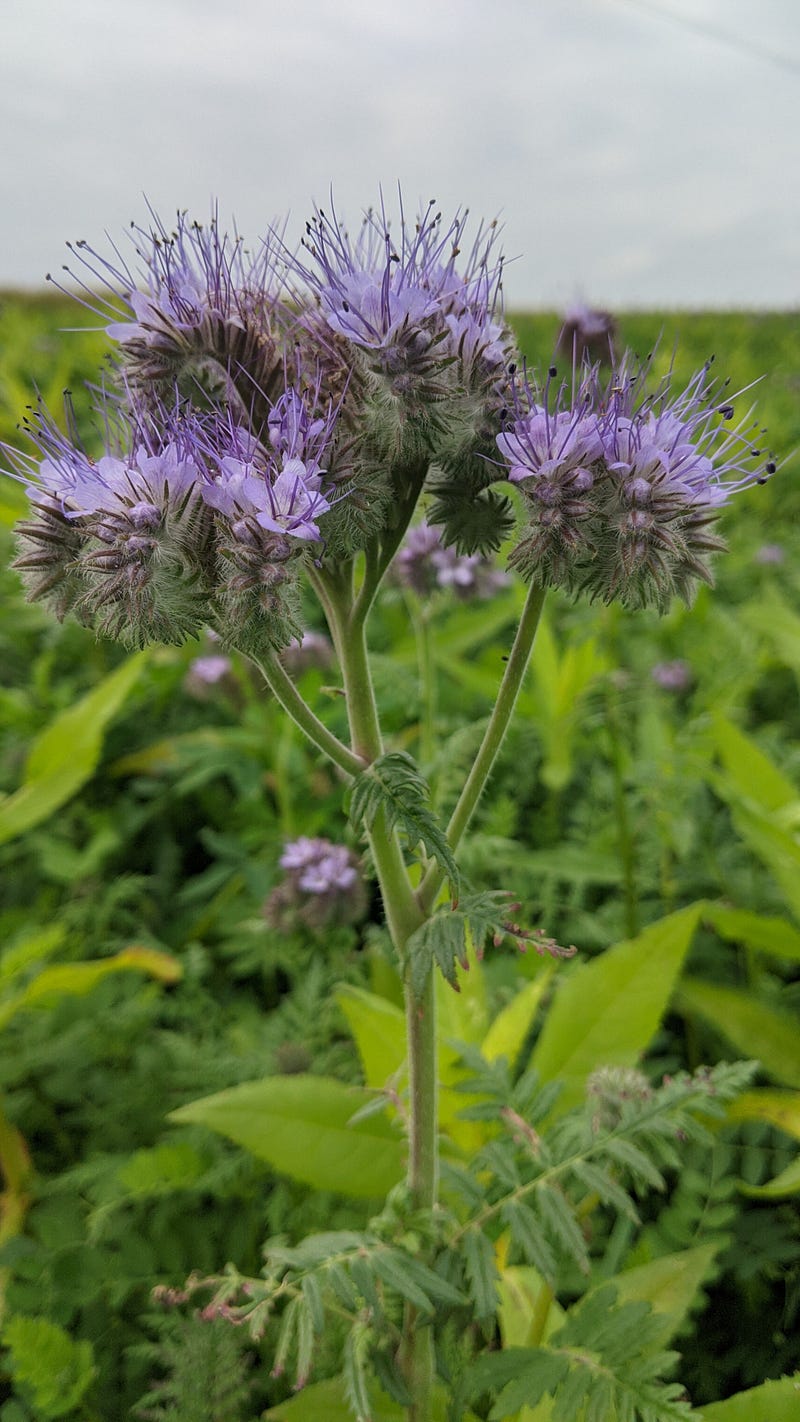
Photo by author Luciano Abriata.

Apparently, this plant grows very rapidly and produces a high amount of biomass, it suppresses weeds, and it is a nitrogen holder, all three points contributing to maintain and improve the soil when no crops are being cultured. Besides, when the plant dies or is harvested it can be ripened into compost to further improve the soil, or it can be fed to animals whose manure is then added to the soil for crops. Besides, the flowers of this plant are particularly good at attracting bees and other beneficial insects. In fact, I saw lots of bees around this field. Here’s one working on its target flower:
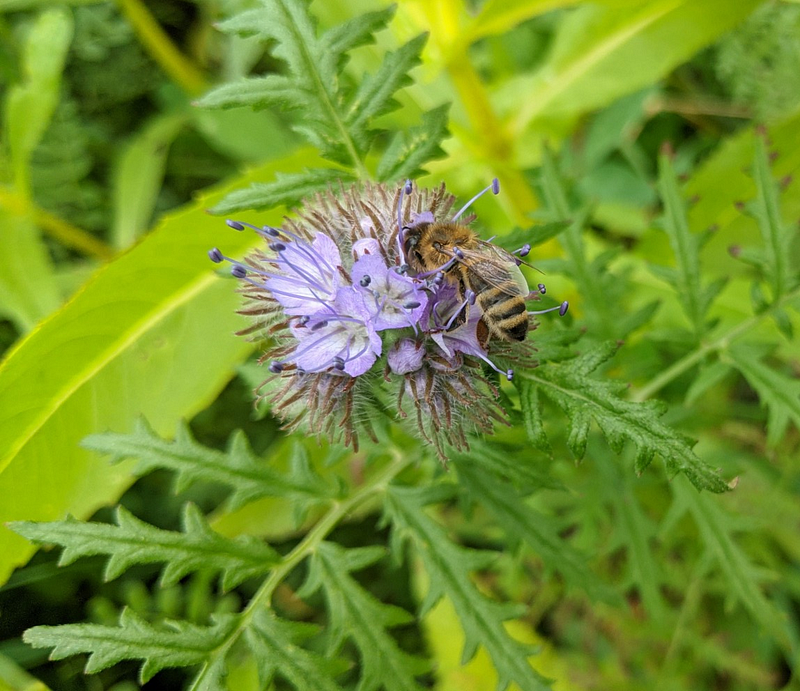
A bee focused on its work. Photo by author Luciano Abriata.

According to WikiPedia, this plant is native to Southwestern US and northwestern Mexico, especially in its more desertic regions. However, it clearly grows very well in various other climates, as apparently farmers use it as a cover plant in many regions of the world. So, dear reader residing in the US or Mexico, next time you go hiking check if you spot some wild forms of the plant. You should easily recognize its flowers:
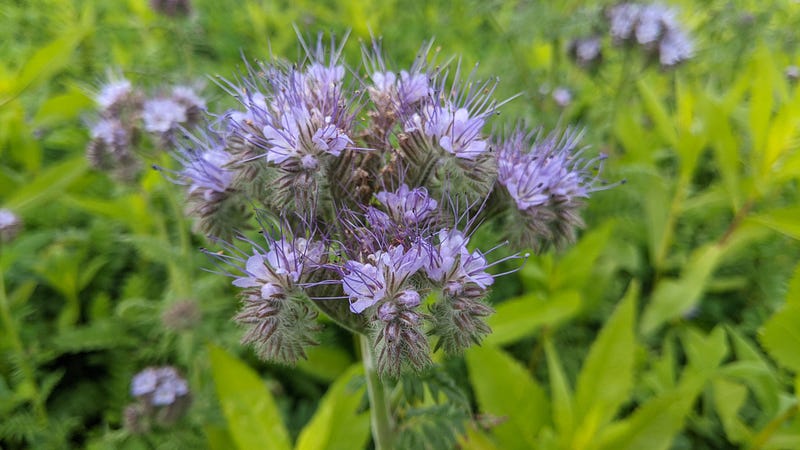
Zoom on a set of flowers. Photo by author Luciano Abriata.

To close this short story I leave you here a vertical shot of the whole field. I hope to visit it again in a few weeks to bring home some seeds:
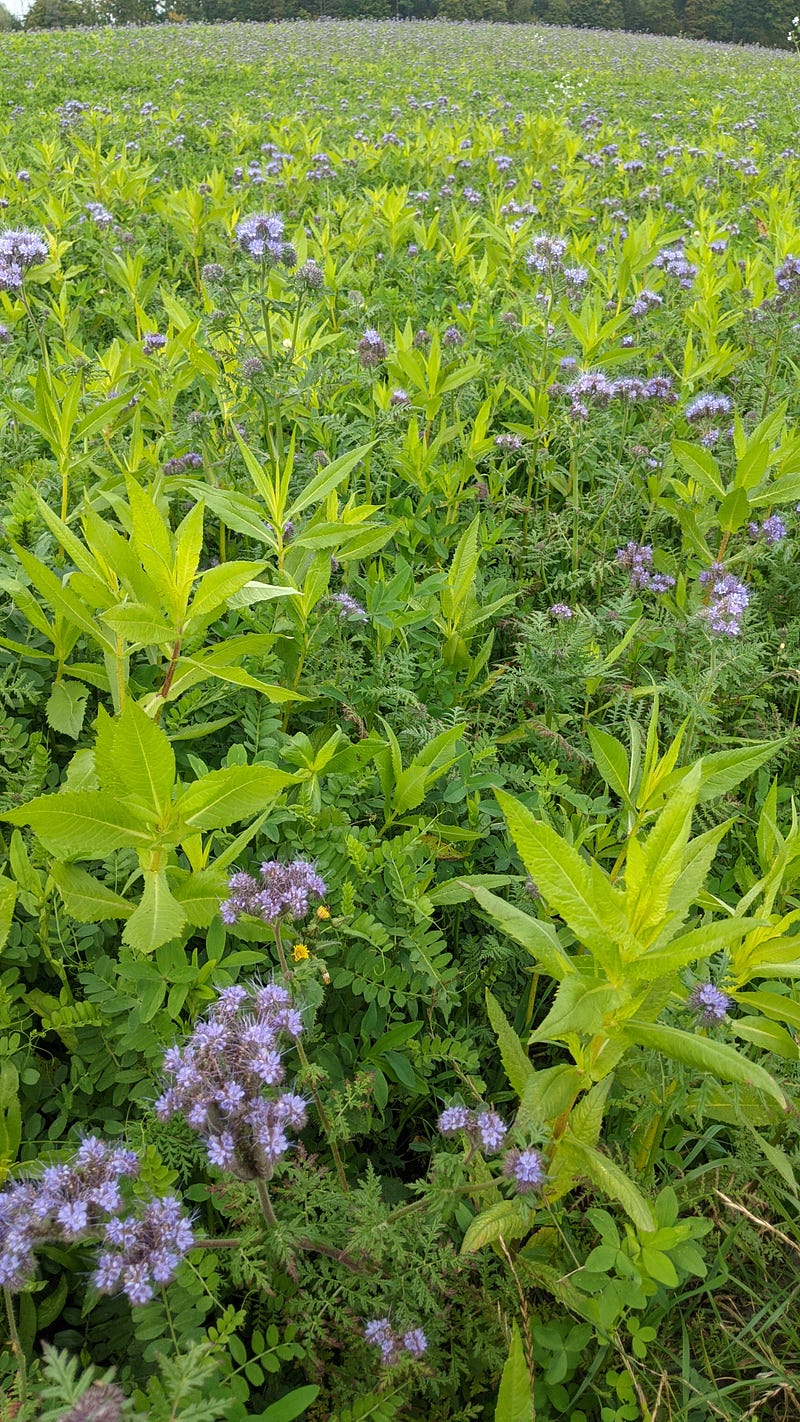
Photo by author Luciano Abriata.

I am a nature, science, technology, programming, and DIY enthusiast. Biotechnologist and chemist, in the wet lab and in computers. I write about everything that lies within my broad sphere of interests. Check out my lists for more stories. Become a Medium member to access all stories by me and other writers, and subscribe to get my new stories by email (original affiliate links of the platform).

Plants
Photography
Nature
Flowers
Outdoors
Recommended from ReadMedium