
Short Form Video Platforms
Should you use TikTok, Instagram Reels, or YouTube Shorts?
Today, I am going to explore three different short-form video platforms and identify which one is the best to invest your time in if you are trying to grow your online audience.
Before I get into the current platforms that we have available, let’s take a quick history lesson in short-form video platforms!
A History Lesson
Our story begins way back in 2012, when the Philip Hamilton of these platforms was born…. (was that reference too niche?) Vine was born in 2012 and allowed users to create 15-second videos. This app launched the careers of many YouTubers and influenced how many of us consume video content.
In 2014, the musical.ly app was released. This app allowed users to create videos up to one minute long, lip-syncing to songs.
In 2016, Vine lost a duel (Hamilton joke). But seriously, Vine died, causing a lot of content creators to migrate over to different platforms, like YouTube.
In 2017/2018, Musical.ly was acquired by TikTok, which is the current leader in short-form video.
During 2020, many factors caused panic for TikTok users and opportunities for other platforms. While the world was in quarantine, millennials flocked to TikTok, realizing that it was very nostalgic of its dead older brother, and the number of users increased immensely. According to a CNBC article that I read, TikTok sat at almost 40,000,000 users in October 2019, and by June 2020, had grown to over 91,000,000 users.
In mid-2020, TikTok started receiving some backlash from former president Trump’s administration. This resulted in threats to ban TikTok altogether in the US.
The success and the impending doom of TikTok meant opportunity for other platforms.
Instagram and YouTube are the main runners for top TikTok competitors.
The first to be put into action was Instagram Reels, in August 2020. Reels are in a new tab on your Instagram profile. Your Reels show up on your profile, and also in a “Reels” feed on Instagram. I believe this feed works similar to the “for you” page on TikTok.
The newest TikTok competitor is YouTube’s new feature “shorts.” From what I’ve seen so far, this platform works differently than the others I’ve shown. To upload a YouTube short, you will follow the same process as uploading a regular video.
Experiment
The big question today is: which platform should you use to allow your short videos to reach the largest audience?
Let’s test it out together!
Here are my analytics were for all three platforms at the beginning of the experiment:
YouTube: 45 Subscribers
TikTok: 269 Followers
Instagram: 290 Followers
For this experiment, I made three test videos and uploaded all three videos to all three platforms. I documented the changes in my analytics.
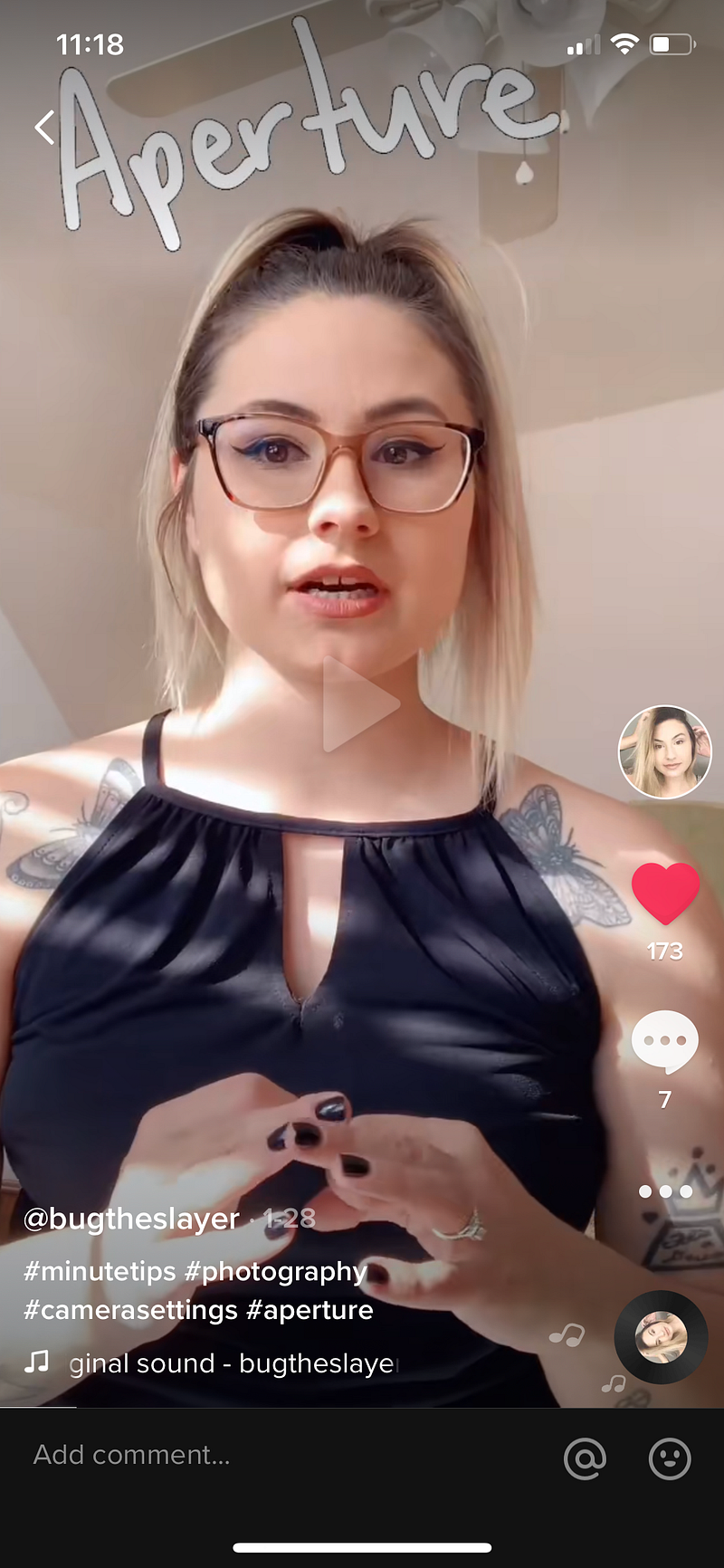
For my first video, I made a minute-long informational lesson about Aperture in photography. I recorded my analytics after 30 minutes, two hours, and one day.
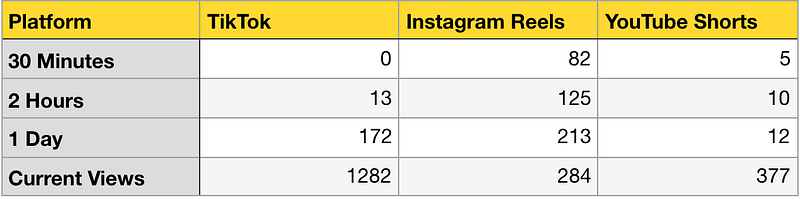
As you can see from the table above, TikTok was the obvious winner for the Aperture video with its 1,282 views.
Each platform has a different system to promote your content and therefore has its own “takeoff time.” With Instagram, you can tell right away if your Reel will do well. On TikTok, it can take a few days for it to take off. On YouTube, it can take a week or longer for your video to be added to the “shorts shelf,” where YouTube places your video in front of viewers, swiping through videos.
One more short video analytics that I would like to share is my White Balance video. I posted this video on February 4th, 2021. As of February 23rd, my view count for this is:
YouTube Shorts: 5
TikTok: 168
Instagram Reels: 5,587
The views on Instagram happened mostly within the first hour of it being published.
Results
From this experiment, I learned these platforms perform completely differently from each other. My advice to you would be to use the platform that makes the most sense with your current following.
For example, if you have a bunch of Instagram followers, push out short-form videos there.
If you specifically want to create long-form content on YouTube, YouTube Shorts can be a great way to generate traffic to your channel.
If you don’t know where your place is on the internet, but want to create that following anyway, post on all three! You can link each of your accounts on the other platforms, so you can theoretically push your audience to any platform you want.
Source:
https://www.cnbc.com/2020/08/24/tiktok-reveals-us-global-user-growth-numbers-for-first-time.html


