
Short-Form Stories Can Be Challenging
It’s not easy to explain something with a maximum of 150 words.

British spelling
Here are a few of my attempts to describe things with so few words.
Why Don’t We Hear from Aliens?
There must be other intelligent life in the universe, so why have we never heard from them?
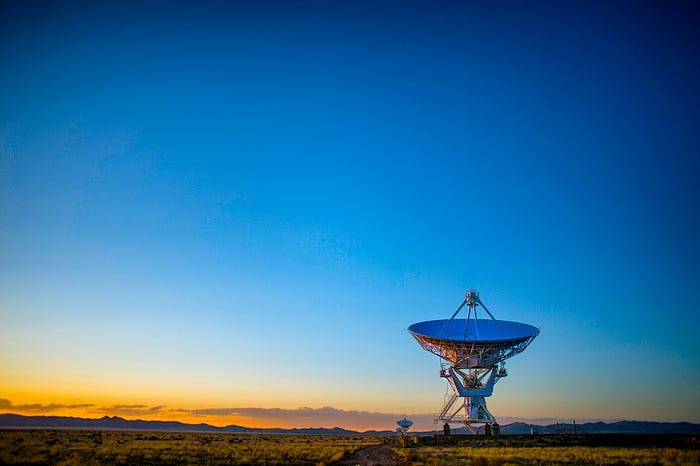
Light travels faster than anything else in the universe. Radio waves are part of the spectrum of light and travel at 300,000 kilometres per second, or 1,080 million kilometres per hour.
It would be unreasonable to think that we are alone in the universe; an estimated two trillion galaxies are spread throughout that gargantuan area. Every one of those galaxies holds millions or billions of stars.
If intelligent life were living on a planet near the centre of our galaxy, their radio message would take approximately 25,000 years to reach us.
Of course, that distance is just a step away when considering the size of the universe.
The distances throughout space are just too big to realistically expect messages from aliens.
The Long History of Our Canine Friends.
Dogs are our most popular and loved pets.

Arguably, around 30,000 years ago, wolf-like animals would have been attracted to the smell coming from the open fires of nomadic hunter-gatherers.
Over time, some animals became more tame than others and started trusting humans.
Roughly 16,000 years ago, some wolf-like animals became domesticated.
An estimated 12,000 years ago, human lifestyles began to change as groups formed permanent settlements and grew crops.
That may have been when humans started breeding their companions to be faster, stronger, and larger, like evolution on overdrive.
Today, the FCI officially recognises 360 breeds of dogs from all over the world.
Dogs show so much love, respect, and friendship. We would like their lives to be longer, as they are a great miss when they are gone.
Our Local Star
Our local star is, of course, the closest star to the earth, our life-giving sun.
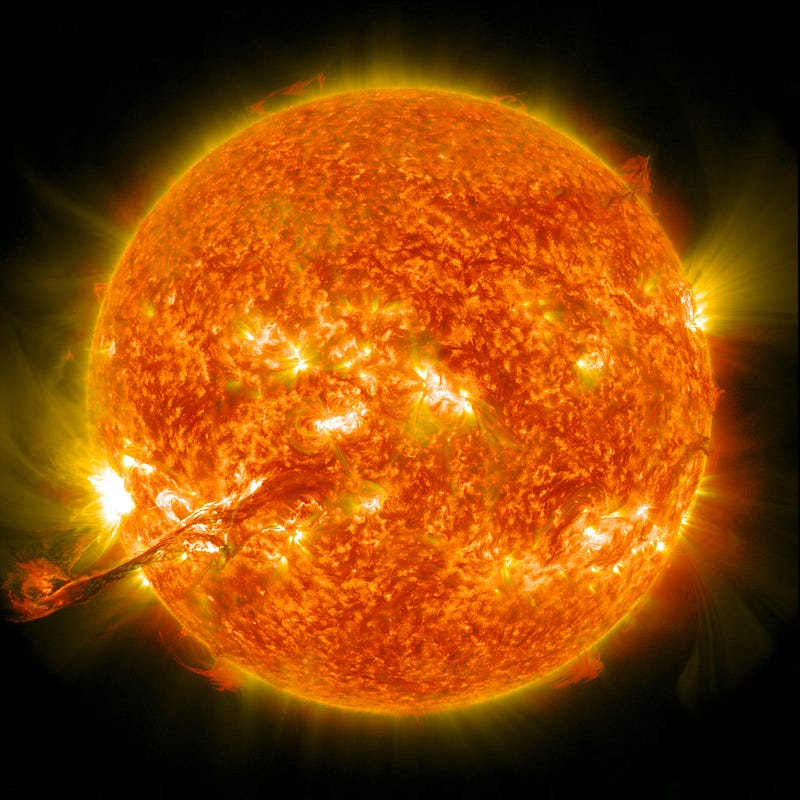
Light leaving the surface of the sun takes just over eight minutes to reach the surface of our planet.
Nuclear reactions in the core of the sun produce photons of light and other types of radiation.
Surprisingly, some of that light can take up to 200,000 years to reach the sun’s surface, then it is free and can start its long journey through space, travelling at almost 300,000 kilometres per second.
Although the sun is almost 150 million kilometres away, we can still feel its heat.
Light is still travelling through the universe that left the first stars to exist. Imagine light travelling at 1,080 million kilometres per hour for over 13 billion years. Wow!
Polar Bears Have Black Skin
Astonishing facts about polar bears: be surprised.
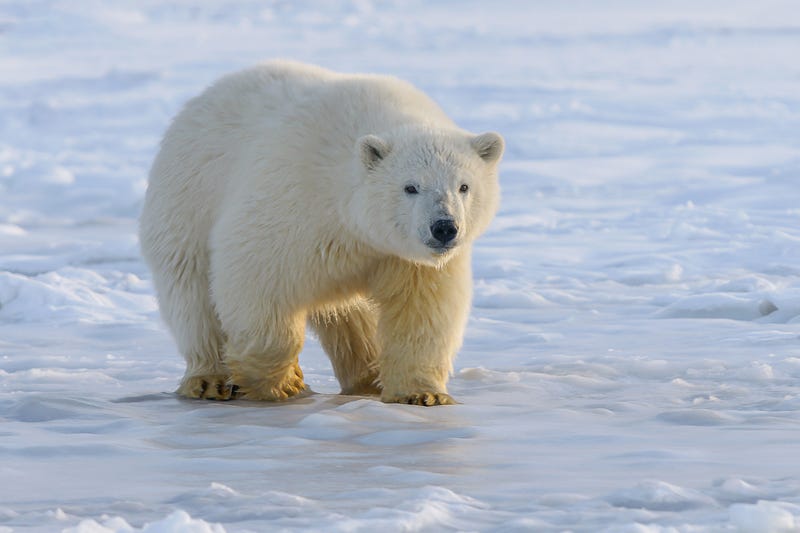
Polar bears are the only carnivorous bears; their main food supply is seals, but they will also prey on larger animals such as walrus, narwhal, and beluga.
Cubs born at the same time can have different fathers, as females rarely mate more than once with the same male.
Litter size is commonly two cubs, but very rarely a female will give birth to four cubs.
The female’s milk is as thick as double cream.
Life expectancy in the wild is rarely more than 30 years.
Considering their size and weight, they can run at an astonishing speed, up to 40 kilometres per hour, which is faster than any human.
They can also weigh up to 680 kilograms, or 1,500 pounds.
Have you any doubts about what Jesus was capable of doing?
I do believe that a man named Jesus lived over 2,000 years ago, and many people followed and worshipped him.

Personally, for me, that is where the facts end.
There are certain rules that govern what is possible throughout that vast area we call the universe. The laws of physics do not allow miracles to happen.
Jesus was a teacher and religious leader. We are told that Jesus was sacrificed on the cross, and three days later he was resurrected.
Over the lifetime of our species, an estimated 117 billion humans have walked the Earth.
Do you know of anyone who has come back from the dead?
I realise that many different faiths are a comfort to billions of people all around the world, but we have to be realistic.
What are your thoughts?
I Was Once A Planet
I, being the dwarf planet Pluto.
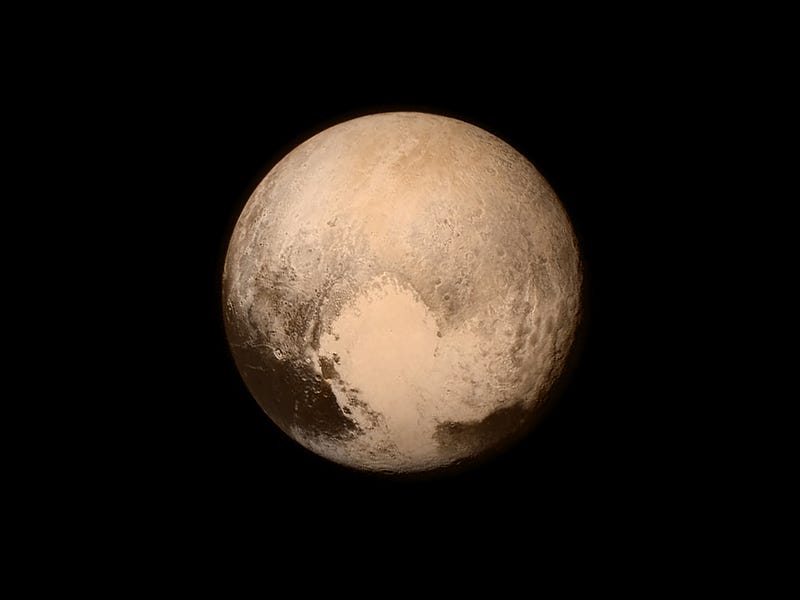
Pluto had its planet title taken away in 2006, leaving eight planets in our solar system.
It failed to be classified as a planet because of this requirement: “It was not big enough to clear away other objects in its orbit around the Sun.”
Pluto is now known as a dwarf planet, with a diameter of 2,370 kilometres, which makes it smaller than our moon.
Although Pluto is travelling at an average speed of 10,600 mph (17,096 kph), it still takes 248 Earth years to complete one journey around our local star.
Pluto was found to exist in February 1930, and it will be 2178 before it finally makes a complete orbit of the sun since its discovery. That shows how distant Pluto really is.
The Universe is amazing.
What Is an Atmosphere?
Including the Earth, almost all the other planets in the solar system have atmospheres.

The closest planet to the sun is Mercury, which has very little gas above its surface, so it could be said that it has no atmosphere.
The definition of an atmosphere is a layer of gas or a mixture of gases that surrounds a planet or a moon.
A large celestial body retains its atmosphere through self-gravity, but the warmer the gases are, the easier they can escape into outer space.
Atmospheres have been detected on four of the solar system’s moons. Saturn’s moon, Titan, however, is the only moon with a substantial atmosphere.
The Earth’s atmosphere is mostly made up of nitrogen and oxygen and, at any one time, can hold an estimated 12,900 cubic kilometres of water in the form of vapour.
The end
If you have found any of my short stories interesting, then please follow the link for more. Regards