
Shifting Urban Landscapes of Global Cities: Vacancy Rates and Adaptive Reuse of Offices Post-Pandemic
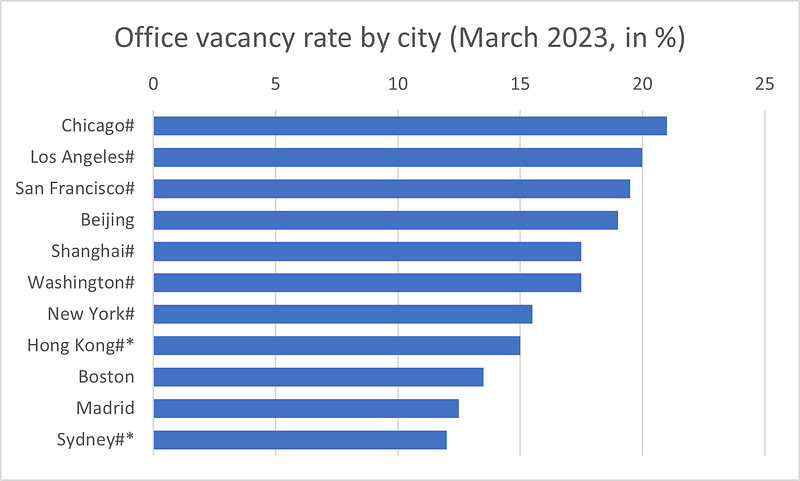
Office Vacancy Rates in Major Global Cities
The pandemic-induced surge in remote work has led to a substantial increase in office vacancies across major global cities like New York, London and Tokyo. New York City, for instance, witnessed a notable uptick in office vacancies, with iconic skyscrapers standing partially empty as businesses reevaluate their real estate needs. A global wave of empty offices, as depicted in Figure 1, underscores the double-digit vacancy rates in major cities, with some even reaching record highs (Cities with # signs in Figure 1).
The Rise of Adaptive Reuse
In response to these shifting dynamics, mayors, property developers, and urban planners have embarked on exploring alternative uses for vacant office spaces. A prominent trend emerging from this exploration is the adaptive reuse of offices, involving their transformation into residential spaces and other creative repurposing. Reports, such as those from CNBC (2022, 2023) and WSJ (2023), shed light on this trend, emphasizing its welcome reception while acknowledging the complexities and technical challenges associated with the conversion process.
Converting Offices to Residential Spaces
The conversion of vacant offices into residential spaces has gained traction as a viable solution to repurpose underutilized real estate. This approach addresses the high demand for housing in urban areas, presenting a mutually beneficial solution that revitalizes once-deserted business districts. Figure 2 showcases the growth in San Francisco’s C&S house price index since the pandemic, emphasizing the potential economic viability of such conversions.
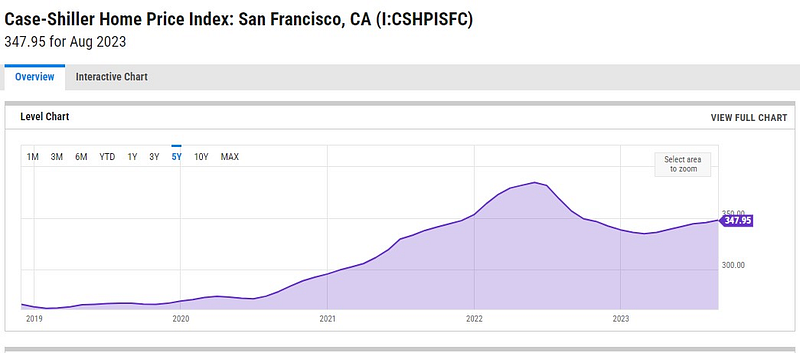
Figure 2 shows the C&S house price index of San Francisco, CA. since the pandemic. There was a strong growth in house prices from about 269 in 2020 to the recent peak of 384 in May 2022 (almost a 43% increase), and still stayed at about 347 in August 2023 (still 29% higher).
What are the Challenges and Barriers?
Despite the promising benefits, several challenges impede the widespread adoption of office-to-residential conversions:
Zoning Restrictions: Zoning regulations, originally designed for commercial use, may not seamlessly align with residential needs, necessitating a complex and time-consuming navigation process.
Regulatory Hurdles: Cumbersome regulatory approvals for changes in land use involve multiple stakeholders, including local governments, planning boards, and community groups. Streamlining these processes is crucial for a smoother transition.
Cost Considerations: The conversion process incurs substantial costs, covering structural modifications, amenities, and compliance with building codes. Balancing these costs with potential profits poses a significant financial challenge.
Profitability Concerns: Developers must carefully assess the financial viability of such conversions, weighing upfront costs against potential returns, and factoring in market demand and rental rates for residential units.
Cases Study
Thus, it is more technically and financially viable to convert aged office blocks in districts zone for mixed uses. There were two recent cases in Auckland illustrating the considerations. One was retrofitted to a high-quality office block and the other was a conversion to a residential block. They are located next to each other, and happened in the same year. The office market of Auckland was also hit by the wave of vacancy. Its office vacancy rate in June 2023 was 12.5%. (Colliers, 2023)
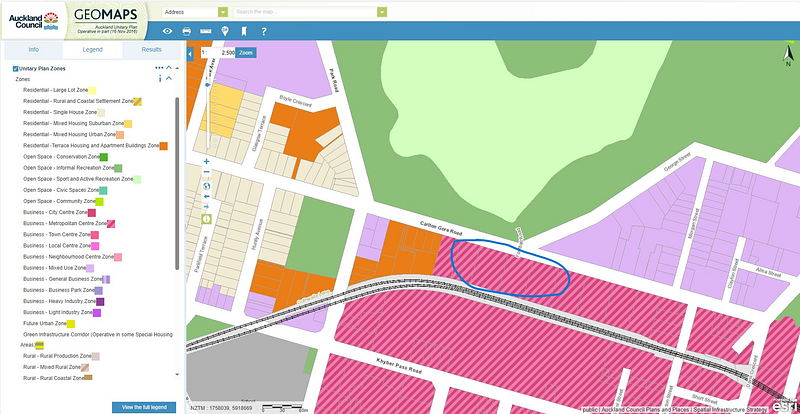
As shown in Figure 3 (the blue circled area), the sites are located at the Business — Metropolitan Centre Zone (red colored zone with strips), facing green space (Auckland Domain), and next to Residential — Terrace Housing and Apartment Buildings Zone (Orange colored zone) and Mixed Use Zone (Purple colored zone). According to the descriptions of the Unitary Plan, H9.1 Zone description of H9. Business — Metropolitan Centre Zone, “the zone provides for a wide range of activities including commercial, leisure, high-density residential, tourist, cultural, community and civic services.” It provides high flexibility for adaptive reuse.
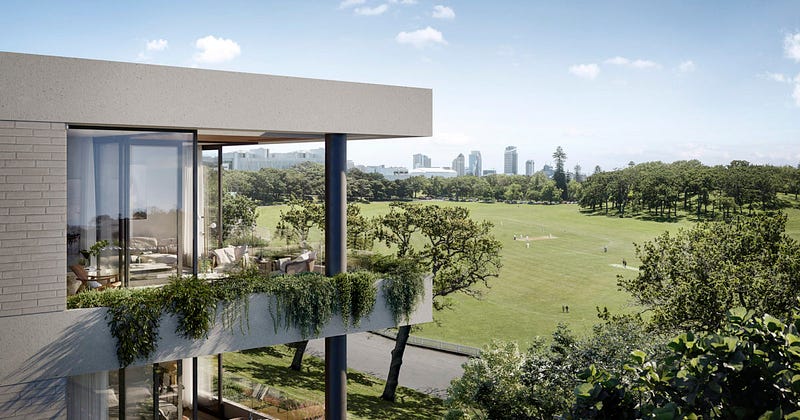
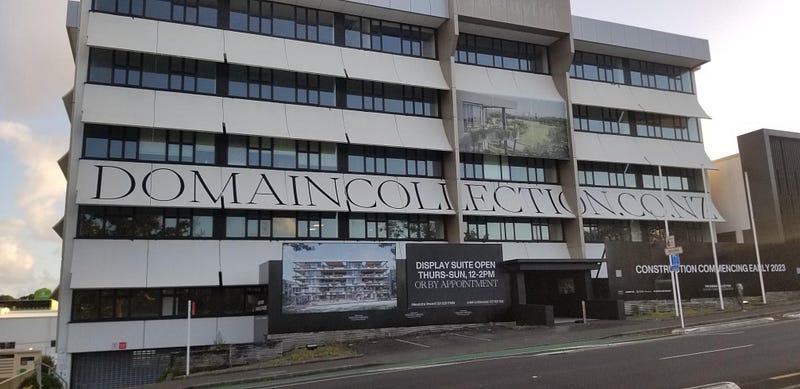
One of the office blocks located at 81 Carlton Gore Road (as shown in Figure 4) has been vacated and proposed to be converted into an apartment block. The conversion from the former office building into two residential blocks of 69 apartments, included the construction of a six-story building behind the existing seven-story one.
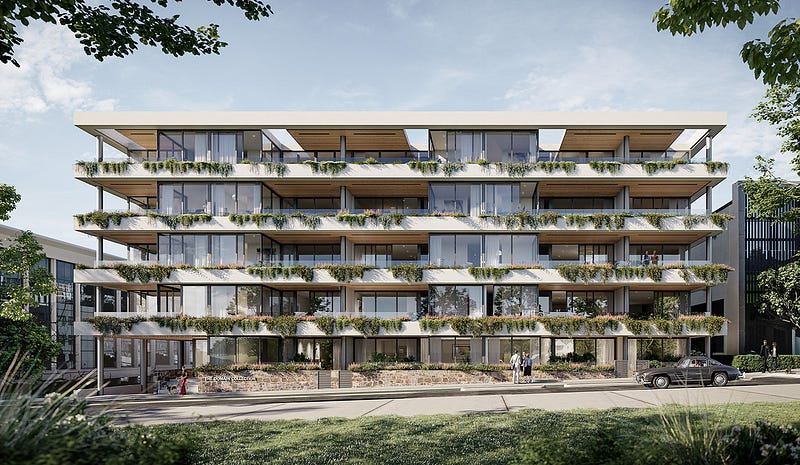
The proposed architectural design of the project is shown in Figure 6. Since pre-sales are commonly engaged in the housing markets in New Zealand, the building has been vacated for about two years (since 2022) for pre-sales, and the construction works has just been commenced in November 2023. The pre-sales practice can further reduces developers’ risk in adaptive reuse.
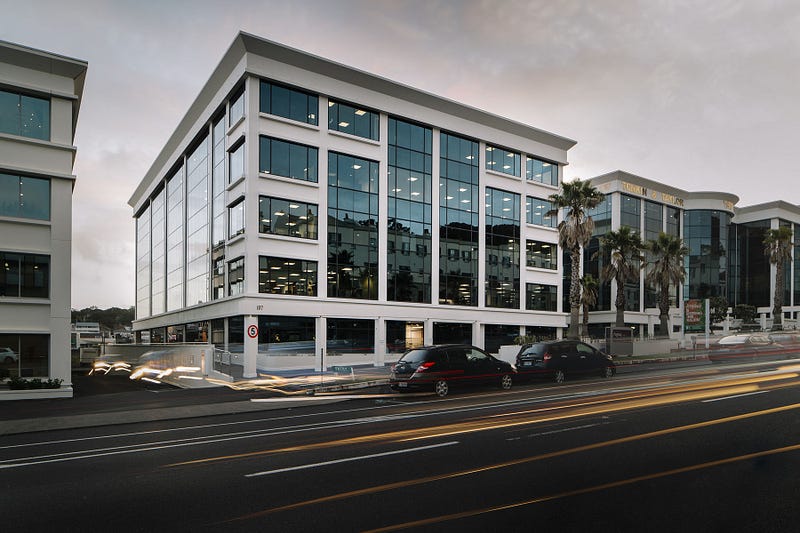
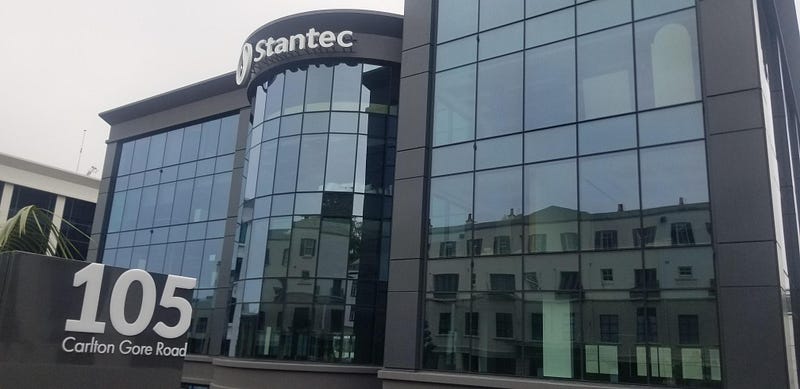
In contrast, another office building located at 105 Carlton Gore Road was retrofitted in 2022–2023. It belongs to a group of office blocks with similar design and construction as shown in Figure 6. Another building within the group (located at 111 Carlton Gore Road) had been considered by Platform Consulting Group (2023) as “needed a smart new upgrade to enhance its position in the tenancy market.” Retrofitting did not only enhance the future rental incomes, but it could also help reduce operational costs as advanced facilities could be more sustainable. The retrofitting works also lasted for a period of more than one year. Figure 6 shows the group of office building before the retrofit.
Sustainable Green Star Full Refurbishment
One Roof (2023) reported that “Argosy are in the process of redeveloping 105 Carlton Gore Road to create a 5 star NABERSNZ rated offering.” Environmental friendly features, “including motion sensored LED lighting, brand new lifts, brand new end of trip facility including bike parks, showers, lockers and changing rooms” were installed.
It is a five-storey building with about 5,000 sqm floor area (Ground Floor — 1,053sqm, Levels 1 to 4–1,135sqm each).
Conclusion
These two cases illustrate the viability and considerations in either retrofitting to office or converting to residential. Zoning and regulations permissions are critical, but the financial comparison between retrofitting versus converting depends very much on the expected market changes in the two markets.
The post-pandemic era has triggered a paradigm shift in the use of office spaces in major global cities. The adaptive reuse of these spaces, particularly for residential purposes, holds promise for revitalizing urban landscapes. However, overcoming challenges such as zoning restrictions, regulatory hurdles, costs, and profitability concerns is essential for the successful implementation of these transformations. As cities grapple with the new realities of work and urban living, the adaptive reuse of office spaces emerges as a key strategy to reshape our built environments for a more sustainable and resilient future.
References
Auckland Council Geomaps (2023) Unitary Plan Operative in part (16 Nov. 2016). Unitary Plan Operative in part (aucklandcouncil.govt.nz)
CNBC (2022) How San Francisco Can Solve Its Empty Office Problem. Youtube, December 31, 2022
CNBC (2023) How Empty Offices Become Apartments In The U.S. Youtube, July 16, 2023
Colliers (2023) Auckland CBD Office Report | Second Half 2023. https://www.colliers.co.nz/en-nz/real-estate-research/colliers-essentials-auckland-cbd-office-2h-2023#:~:text=The%20overall%20vacancy%20rate%20tightened,%25%20and%2017.1%25%2C%20respectively.
Nikkei Asia (2023) Wave of empty offices hits global market, Vacancy rates log post-Lehman highs in 60% of big cities. by Yoshikazu Imahori, June 17. https://asia.nikkei.com/Spotlight/Datawatch/Wave-of-empty-offices-hits-global-market
One Roof (2023) 105 Carlton Gore Road, Newmarket, Auckland City. https://www.oneroof.co.nz/property/auckland/newmarket/105-carlton-gore-road/LXFqL
Platform Consulting Group (2023) 111 Carlton Gore Road (platformconsultinggroup.co.nz)
WSJ (2023) How to Convert Empty Offices Into Luxury Apartments. Youtube July 6, 2023