
She Believed, She Achieved — The Evolution of Women’s Football in England
From a Victorian boom to a professional ban to a World Cup final
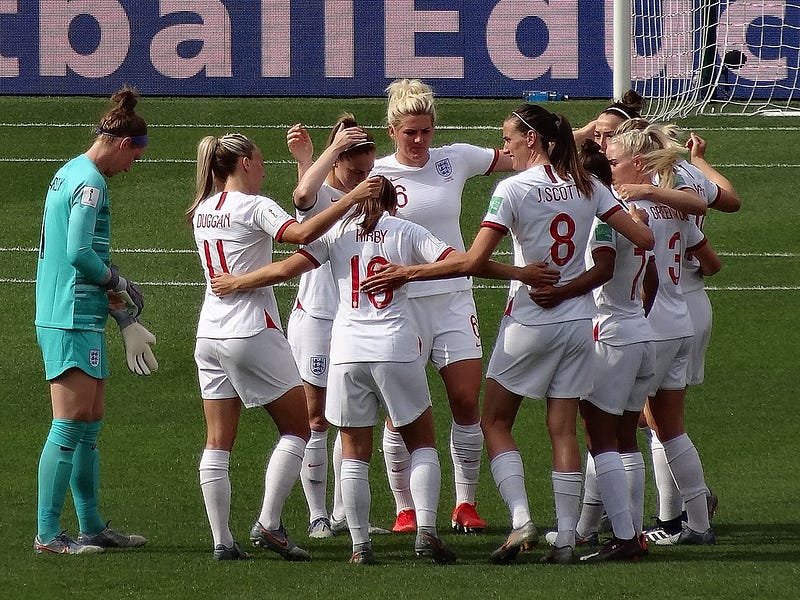
On the 20th of August 2023, an estimated 14.8 million people watched England play Spain in the World Cup Final. To put this in context, the King’s Coronation in May 2023, a major historical event for the country, had an average audience of 18.8 million.
You might not think that the popularity of this match is surprising. Football is our national team sport, after all.
However, this was the Women’s World Cup.
Our Lionesses got comparable levels of pre-match TV coverage, media interest and public support as the men’s team for the first time. We watched the match in our homes, in pubs and in fan parks. Just like we would if the men’s team had reached their World Cup Final.
If you live in a country where football (or soccer, as you might call it) is a perfectly acceptable female sport, then you might be scratching your head about why this is such a big deal in England.
The current Lionesses are the latest players in a long historical line of women who have fought for their game. It has taken over a century for them to have professional careers.
They have had to fight against gender discrimination. They have had to blow away the myth that football is a man’s game.
Let’s take a look at their journey.
Booms and a ban
While we’ve been playing forms of football in England since the 1100s, the game wasn’t professionally organised until the 1800s. We’ve worked under Football Association (FA) rules since then.
Women could — and did — play then. The first recorded women’s match was in 1881. Local clubs played matches and formed leagues. Their games were popular.
Fast forward to World War One, and women’s football geared up a level. Women’s lives and freedoms changed radically at this time. They had to fill gaps in the workforce left by men.
Many women worked in munitions factories. This work was hard, physically tiring and dirty. So, many factory owners encouraged women to play football.
Matches got them out in the fresh air and gave them some exercise. They also attracted spectators who wanted a football fix. Many male games and leagues were suspended because so many men were away at the front. So, women’s games became more popular.
Things changed after the war ended. While some women continued to work, many went back to the old norms. A woman’s place was generally considered to be back in the home again.
Women’s football became an irritant to those in power. In 1921, the FA banned women from playing the game at professional grounds or on club pitches. The reason?
The game of football is quite unsuitable for females and ought not to be encouraged.
The wilderness years
Women continued to play the game, but this was a struggle. They had to play in public parks and rugby grounds. They couldn’t usually find professional referees. They had no facilities or financial support.
But, they persisted. They established clubs. Some even played in unofficial tournaments abroad.
Things didn’t change much until the late 1960s when a group of clubs set up the Women’s Football Association (WFA). Societal, club and WFA pressure eventually forced the FA to lift their professional ban in 1970.
Women’s teams could now take part in accredited cup competitions and official international matches. However, the game had lost public visibility and didn’t have significant financial support.
Things were better, but the struggle was far from over.
Inching towards equality
I was at school in the 1970s. I played football in the street and in the playground. I didn’t play football in PE lessons. It never occurred to me to try out for a school team.
Football was a boy’s game.
By the time my son went to school in the 2000s, the bigger picture was becoming brighter. The FA started building national female teams at all ages; there was a national women’s league.
By 2002, football was the top team sport for girls and women. People were becoming more aware of women’s football, especially at a national level, but the game still lacked investment, media support and TV time.
During these decades, girls who loved football had to really work to play. Some struggled to find teams in grassroots football clubs or places in professional academies. Even girls who were taken on by professional football clubs had a harder path than their male counterparts.
They often had to travel long distances to get to the nearest academy club with female teams. Even if they signed professional forms with a club, they often had to take on other jobs to fund their footballing career.
I believe that things really started to change in 2012. The London Olympics captured our hearts and TV viewing time. The Team GB women’s team reached the football quarter-finals and more people started to follow the game.
Credible performances in World Cup and EURO championships over the next few years helped build a bigger fan base. The FA was also taking women’s football more seriously. They appointed one of the best female managers in the world, Sarina Wiegman, to take over the senior England squad.
And then we got to EURO 22.
We won the tournament, and the country took the Lionesses — and women’s football — to its heart. The women’s team outperformed the men’s team who haven’t won anything since 1966.
Is the game over yet?
No. Women’s football has made enormous strides, but it still lags behind the men’s game in investment terms.
Men’s football in England has an enormous amount of TV rights and sponsorship money behind it. This money isn’t in the women’s game just yet.
Women players don’t have pay parity. In 2023, female players in the WSL league earned an average of £25–27,000 a year. The average male player in the Premier League earns £3 million.
However, as any professional female footballer will tell you, this isn’t just about the money. It’s also about building a sustainable legacy.
Since the EUROs win and the World Cup Final, female players have made significant progress in securing the future of the game. For example, in 2023, the government committed to give girls equal access to sports in schools after direct lobbying from the Lionesses.
The number of girls playing football has also skyrocketed in recent years. After EURO 22 many professional clubs started allowing their women’s teams to play in home stadia — attendance figures went up by 172%.
If this continues to build, then the visibility and popularity of women’s football can only improve. Women have fought for over a century to get to this point. Unlike male footballers who fight for their own careers, female players have had to fight for a woman’s right to have this career.
The future is bright, but the game isn’t over yet.
Sources:
- itvX — Lionesses’ World Cup final defeat sets new record for UK’s most-watched women’s match
- England Heritage — The History of Football in England
- The FA — The Story of Women’s Football in England
- National World — How much do women footballers get paid?
- The Guardian — Sunak pledges to ‘build on legacy’ of Lionesses after schools commitment
- UEFA — UEFA Women’s EURO 2022 one year on: impact study shows major boost across Europe