
Shawshank Transgender Institutionalization
Meeting with the gender parole board
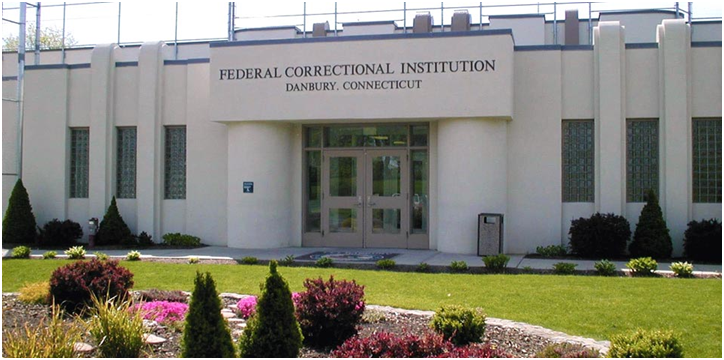
In Shawshank Redemption, my favorite movie of all time, there is a scene where Red shares with Andy his sense of his own reality in prison. He says he’s been in prison so long that he’s “institutionalized” and incapable of conceiving of life outside the walls of the prison. It actually scares him.
According to Wikipedia, “Institutionalization or institutional syndrome refers to deficits or disabilities in social and life skills, which develop after a person has spent a long period living in mental hospitals, prisons, or other remote institutions.”
The only reason Red left the prison was, essentially, he was thrown out. He was not given a choice. He was unexpectedly granted parole. Brooks was also granted parole earlier after a lifetime in prison and found his freedom to unacceptable. He committed suicide.
At 60 years of age, my true gender was offered the opportunity, for the first time in my life, to meet with the gender parole board. Regardless of my wishes, aided by my growing gender dysphoria, she was granted parole. I now live in a gender “half way house”.
I am stuck between Brooks and Red.
A large part of me just wants to go back to my male prison and serve out my life sentence among the peoplein the world that I have been institutionalized in, with all the benefits that come with it. The female part of me wants to follows Red’s lead. As Red said at the conclusion of the movie:
“I find I’m so excited I can barely sit still or hold a thought in my head. I think it’s the excitement only a free (person) can feel, a free (person) at the start of a long journey whose conclusion is uncertain. I hope I can make it across the border.”
I find that I am paralyzed by the choice.
Psychologist Herbert A. Simon noted that deciders fell into two groups “Maximizers” and “Satisficers”. The Maximizer tends to be a perfectionist and, therefore, creates a very difficult environment to reach an acceptable conclusion.
The Satisficer simply searches through the available choices until an acceptability level of satisfaction is met.
Generally, I am by nature a Satisficer. I find the best possible solution and I am satisfied that I was as thorough as I could have been to make my decision. Full transition, unfortunately, does not allow me that kind of comfort. Because the decision affects people that I love in my life, I find that I am seeking the perfection of the Maximizer and I have effectively painted myself in an emotional corner.
I can’t seem to decide and it is terrible. I am surrounded by excellent opinions, thoughts and suggestions and they seem to arrive at the same point:
Just make a choice.
Which brings me to “Sophie’s Choice”. Setting aside the immense human tragedy of the choice she was forced to make; the essence of the film is being forced to make a decision where there is no outcome that is better than the other. Once a choice is made it feels like a pyrrhic victory where the cost was too great for the victor.
Now that I know my truth that has been hidden for a life time, why do I need all of the physical changes? I fear that the cost of transitioning, to me and my family, will be greater than the joy it will create. I also fear that not transitioning could be the one regret that I think about in the last moments of my life.
Being 65 years old doesn’t leave me a lot of pondering time.
I am jealous of my gay and lesbian friends. They don’t need to pass as gay to be gay, they just are. Will I pass as a six foot tall woman?
Maybe I should switch to watching Cinderella again.
Do glass slippers come in a women’s size 10?
Emma Holiday
Writers note: If you have read any of my writings on Medium you will have noticed a definite theme: the incredible pain of gender dysphoria and all the difficult aspects of just being transgender.
My writing has three specific goals:
1. Writing is my therapy. I have a very limited outlet for my thoughts so I write to find a way to process the most profound experience in my life. I need to understand and I need to accept myself to move forward.
2. Being transgender, for me, is a very lonely existence and if I can share some of the things that I feel and think as I go through the process of transitioning with others who are transgender and, in some way, lessen their pain and sense of loneliness, then all of this public exposure of my personal thoughts is not a waste.
3. I write to help cisgender people understand that all trans people want is to be simply understood, accepted and treated as a normal person. We are.
Thank you for reading my work.
Please also read:


