
Sharing the Turf — Space Research
The government’s recent reforms for the Space sector has been a giant leap in Indian Space Research. It will not only enable private companies to build rockets and satellites but also let them use the Indian Space Research Organisation’s (ISRO) facilities for research purposes.
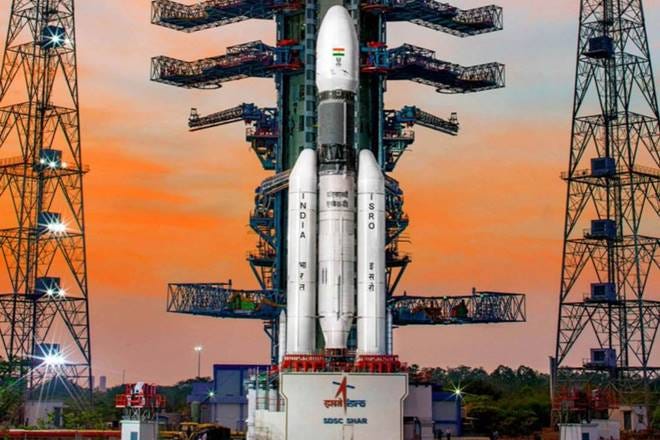
Space Exploration is a vast industry and needs an inexplicable amount of money and technology to keep up. The National Aeronautics and Space Administration(NASA) went private long time back and is one of the biggest space agencies in the world with its budget running into billions. Also, last year NASA opened up its International Space Station to commercial players which also includes private astronauts.
Private players have been active in the development, production and operation of spaceflight technology. They have been developing and producing space technology for state agencies since long before, but the operation as a contracted service for state agencies is relatively new, from spaceflight being solely operated by government-regulated state agencies.
In the early decades of the Space Age, the government space agencies of the Soviet Union and the United States pioneered space technology in collaboration with affiliated design bureaus in the USSR and private companies in the US, entirely funding both the development of new spaceflight technologies and the operational costs of spaceflight.
Later on, large defence contractors began to develop and operate space launch systems, derived from government rockets. Private spaceflight in Earth orbit includes communications satellites, satellite television, satellite radio, astronaut transport, and sub-orbital and orbital space tourism.
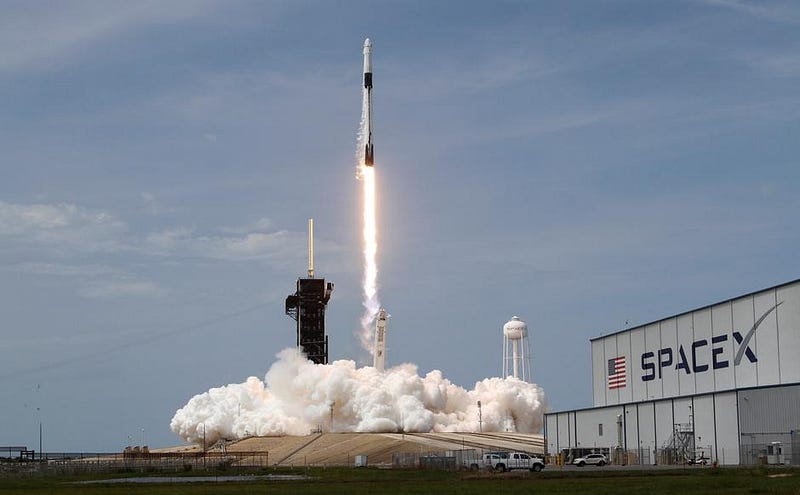
One key player in the commercial field is SpaceX. Formerly, the USA had been reliant on Russia to ferry astronauts into space since 2011. But now, with the recent launch of astronauts to the international space station by the SpaceX Demo-2 mission has put them back on track, with grander ambitions for human space flight ahead of them. The primary role of a private commercial space company in the Demo-2 mission was highly significant and had defined a new era of space.
SpaceX’s Dragon spacecraft with two NASA astronauts had successfully docked with the International Space Station after a historic launch from the Kennedy Space Center in Florida, marking the dawn of a new age in commercial space travel, being the first private body to conduct human spaceflight.
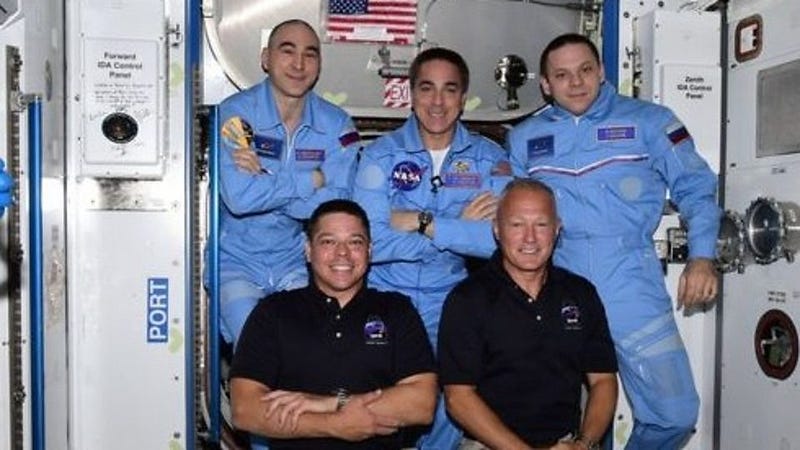
Astronauts Hurley and Behnken (in black) received by ISS Commander and fellow Nasa astronaut Chris Cassidy and Russian cosmonauts Anatoly Ivanishin and Ivan Vagner upon entering the ISS
SpaceX worked for a decade to develop its own replacement for the Shuttle under a $2.6 billion fixed-priced contract with NASA. Largely funded by taxpayers, SpaceX designed its own Crew Dragon capsules and the associated Falcon 9 rockets they fly aboard. NASA will serve as SpaceX’s customer, purchasing seats for astronauts as needed, and allow the company to sign up its own passengers, including tourists, scientists and even movie stars like Tom Cruise for future missions.
So where are we at?
India took its first-ever step in the same direction when the Indian government created the New Space India Limited (NSIL) back in March 2019. The main objective of the NSIL was to ramp up industry participation in India’s space programmes. NSIL will assist ISRO in bringing private participation in its space programmes, while IN-SPACe will be work on ISRO working with the industries and meeting demands of the private sector in the space programmes.
How can private players get there?
Through IN-SPACe. Under the new reforms, an autonomous nodal agency called Indian National Space Promotion and Authorisation Center (IN-SPACe) is being established under the Department of Space as a separate vertical for permitting and regulating the activities of private industry in the space sector. IN-SPACe will act as a national nodal agency to hand-hold and promote private endeavors in the space sector and for this ISRO will share its technical expertise as well as facilities. IN-SPACe will have its own independent Directorates for Technical, Legal, Safety & Security, Monitoring as well as Activities Promotion for assessing the private industry requirements and further coordinating activities.
The opening up India’s space initiative to private players does not mean there were no partnerships earlier. Engagement with private players began nearly 50 years ago, and ISRO already boasts of 150 companies tie-ups. Private industries will be offered opportunities to undertake R&D activities and assist in advanced inter-planetary missions.
What are the current ambitions of ISRO?
Although the approval for private spaceflight in India has been granted, we will have to wait before any private entity can start functioning parallely.
India’s economic progress has made its space program more visible and active as the country aims for greater self-reliance in space technology. In 2008, India launched as many as eleven satellites, including nine foreign and went on to become the first nation to launch ten satellites on one rocket. ISRO has put into operation two major satellite systems: the Indian National Satellites (INSAT) for communication services, and the Indian Remote Sensing Programme (IRS) satellites for management of natural resources.
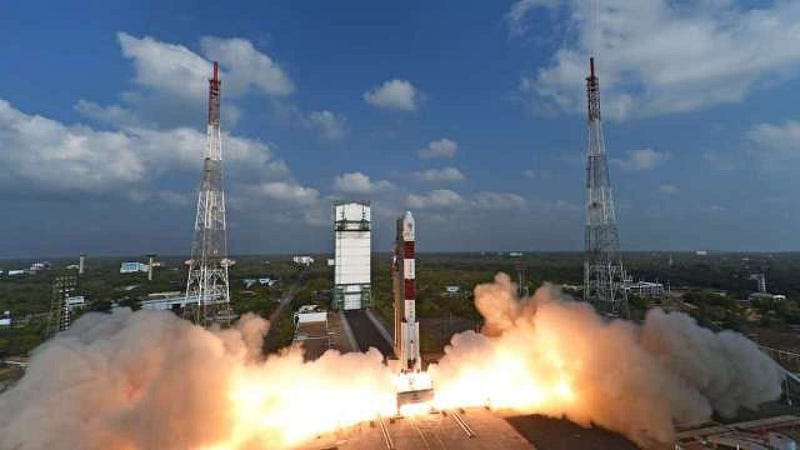
Prime Minister Narendra Modi had announced in his Independence Day address of 15 August 2018 that India will send astronauts into space by 2022, on the new Gaganyaan spacecraft. Also, ISRO has developed most of the technologies needed such as crew module and crew escape system, and that the project would cost less than its foreign counterparts, capable of sending at least 3 Indians to space, for at least seven days. The chance of a female being a member of the first crew is also very high.
We also have a probe to Venus, that's still on the drawing boards. India plans to build a space station as a follow-up programme of the Gaganyaan mission. ISRO chairman K. Sivan has said that India will not join the International Space Station program and will instead build a 20 tonne space station on its own. It is expected to be placed in a low earth orbit of 400 kilometres ) altitude and be capable of harboring three humans for 15–20 days. Rough time-frame is five to seven years after completion of the Gaganyaan project.
If you liked this article, do check my first ever write up on the A380 — The End of an Era, right here.
Update : NASA astronauts Robert Behnken and Douglas Hurley, the first astronauts to travel into orbit aboard a commercially developed spacecraft, are aiming to return to Earth on August 2, the space agency announced Friday. The exact time and date of their return home will be determined by weather, NASA Administrator Jim Bridenstine reports
.
.
.
We are now on LinkedIn! Do follow us there!
Follow us on Medium for more for International events, news, MUN tips and tricks, and detailed analysis. Get in touch with us on Social media to stay in the loop -
Facebook| Instagram|Telegram Channel |Youtube|Twitter|LinkedIn.
We also invite guest writers to publish their material via this blog!