
Share All My Sorrows
Marsha Stevens-Pino’s “For Those Tears I Died” means more than you know
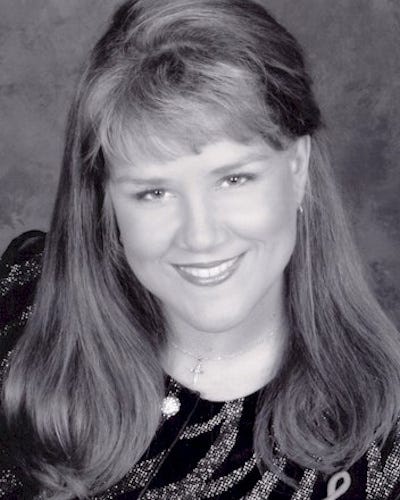
June 23, 1969. Five days before the Stonewall riots were to begin.
A sixteen-year-old hippie girl sits down and writes a song to express her love of Jesus, and to share that love with her baby sister and with her friends at school.
She never thought anyone outside of her own family and friends would hear the song, let alone people all over the world. She never dreamed we would still be singing it today.
Marsha Carter grew up in a household troubled by alcoholism. When she found Jesus, she found a freedom and a love that she had to share. A lover of music, she searched for songs of Jesus but found nothing that spoke to her heart. So she decided to write her own. And she made history.
You said You’d come and share all my sorrows, You said You’d be there for all my tomorrows. I came so close to sending You away, But just like You promised You came there to stay; I just had to pray!
Marsha’s song “For Those Tears I Died (Come to the Water)” would be recorded by history as the beginning of a new music genre, the birth of Contemporary Christian Music (CCM). Marsha’s band “Children of the Day” were pioneers in the “Jesus People” movement, a group of hippies who loved Jesus. When I was growing up in the church, we looked back at the Jesus People movement with a kind of blurry reverence that faded them all together into a monolith. We saw them as heroes of the faith, but we knew nothing about them as individuals.
When Marsha divorced her husband Russ Stevens and came out as a lesbian, much of the church and the music industry she had helped to birth and build turned against her. People tore the pages containing her songs out of their hymnals and her record company tried to withhold royalties from her. But some people continued to enjoy her music while never talking about her. I had not heard of her until a few years ago, despite “For Those Tears I Died” having been one of my favourite songs when I was a teenager in the 90s. As with Ray Boltz, we just didn’t talk about gay Christians. We pretended they didn’t exist.
And Jesus said, “Come to the water, stand by My side, I know you are thirsty, you won’t be denied; I felt ev’ry teardrop when in darkness you cried, And I’m here to remind you that for those tears I died.”
Marsha says she has met people who sang her song in countries where it was against the law to be a Christian, where they were literally risking their lives to sing it. But the stories that really touch her heart are those from queer young people, those who learn that their mom or grandma’s favourite hymn was written by a lesbian. If the woman who wrote that beautiful worship song is gay, maybe they are okay too. Maybe Jesus does love them.
The poetry of Marsha’s lyrics has always meant so much to my soul, and the simple beauty of her melody catches in my ear and stays with me. After listening to it once, I find myself singing it for days. And I don’t mind.
There is something countercultural in the song. It was not like anything that came before it. And, while songs that followed have copied from it, Marsha’s music is and will always be the first, the original. It stood out in its time; it was queer.
Today, Marsha runs Balm Ministries with her wife Cindy. They are affiliated with the Metropolitan Community Church (MCC) and Marsha has written theme songs for every MCC General conference since 1985. She is still sharing the love of Jesus with those the organized evangelical church mostly ignores.
The love of Jesus shines from Marsha’s face. Despite everything her church family did to her, she remains a light of love. She forgives them as Jesus forgives. She is truly a hero of the faith. She is a Jesus person in every way.
“If Larry Norman is to be called the father of Christian Rock, then Marsha Stevens certainly deserves to be known as the mother of contemporary Christian music, a title that Christian Century and others have bestowed upon her. She was the leader of what is considered to be the world’s first contemporary Christian music group, Children of the Day, and she has continued as a solo artist to produce albums of worship-oriented and edifying adult contemporary pop. As such, she remains the progenitor of what, by 2002, would become the single most popular genre in the contemporary Christian music market.” — Excerpt from “The Encyclopedia of Contemporary Christian Music”, Sept. 2002