
Sharable scooters aren’t efficient. Yet.
From San Francisco to Paris and Tel Aviv, sharable electric scooters appeared in cities around the globe, but there is more to them than the “green” stickers.
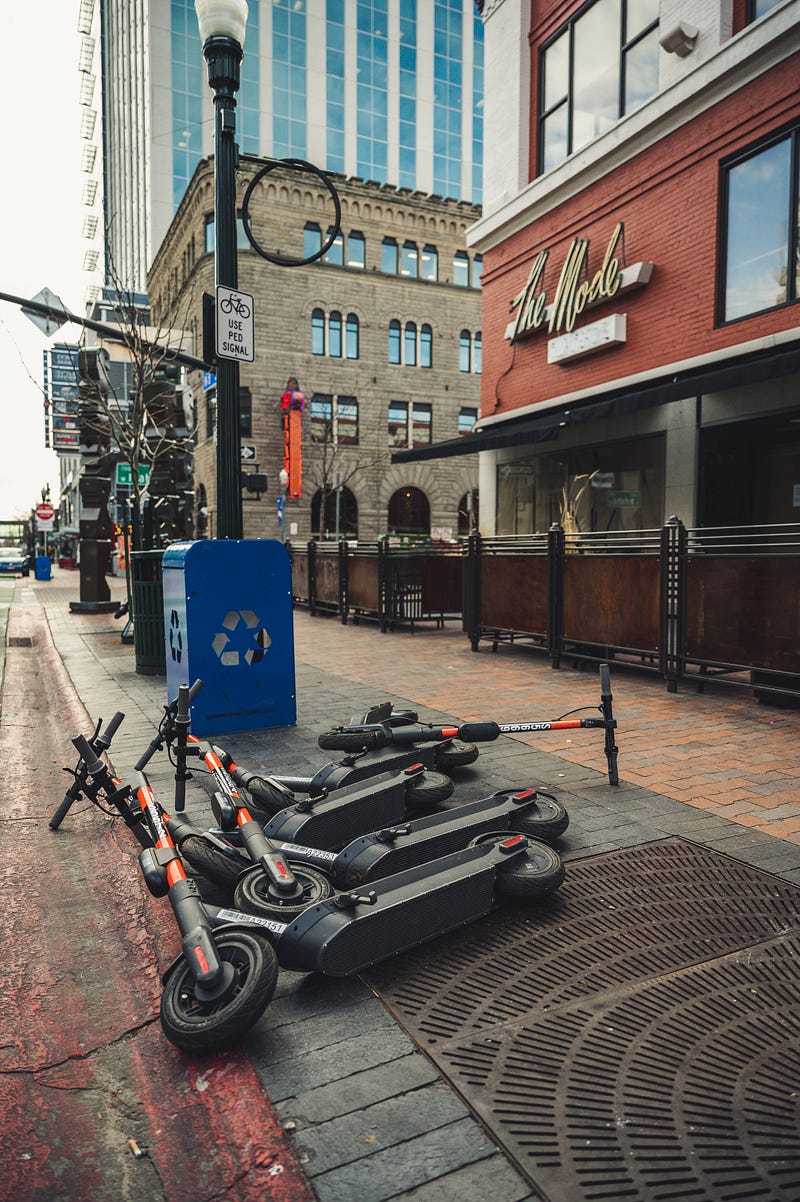
Companies like Lime and Bird would like to have us believe that they are all about eco-friendly transportation, getting the cars off the streets, and making the cities cleaner. And in a perfect world, I would believe them. Everyone would ditch their cars inside cities and just use public transportation for long trips and the scooters for the “last mile”. In this world, everyone would park them responsibly(off the sidewalk), no one would throw them in lakes, and people would ride them on a lane separated from pedestrians.
But we don’t live in a perfect world, so we need to adapt to the realities of our environment.
They are harmful to the environment
What do a Honda Civic 1.5L and an electric scooter have in common? They both have a cost of 202 grams of CO2 per mile*.
How can electric scooters pollute so much? Manufacturing, shipping, and daily collection of scooters from the streets are the main contributors, with 93% of the total emissions. The average car age on the road is 12 years, according to research firm IHS Markit. On the other hand, the average life expectancy for a sharable electric scooter is somewhere around 2–3 months. Having such a short life-span is no wonder that 50% of the total CO2 for a scooter comes from manufacturing.
33%. That’s the percentage of people who would have taken their automobile if there weren’t any e-scooters sharing services, according to NCSU’s study. That’s in line with official Lime claims, who stated that 1 out of 3 rides are displacing a car.
The vehicle reduction is great, but how about the remaining 2 thirds. 60% of the total trips displaced walking, cycling or public transport. To me, that is a worrisome percentage, as all those ways of transportation are significantly more eco-friendly. The remaining 7% would have skipped the trip.
The bottom line: only 1 out 3 times an e-scooter is displacing a personal car and in the other cases it’s displacing better ways of transportation. This doesn’t sound like a good deal to me.
*according to official government data and a study published by North Carolina State University
They are dangerous
It’s a beautiful day and on my way home I decide to rent a scooter. I open the app, find one near me, and start riding. Something is missing. A helmet. I have never seen someone with a rented electric scooter wearing a helmet, myself included. Why? Because I don’t own one I should be able to rent the scooter with the helmet.
An analysis made by Quartz found out that from 20 scooter-linked deaths, 18 happened on a shared one (deaths for which the company is known). Tier, a small European company, identified this problem and offers protective gear when renting the scooter. I hope the rest will soon follow.
Then, there’s the problem of where should I ride? Sidewalk? Bike lanes? The street? I would prefer to ride them on sidewalks as I feel safer.
While I might feel safer, riding scooters on sidewalks is dangerous for pedestrians. 2 out of 29 total deaths analyzed by Quartz were pedestrians. Companies and local governments are stepping up though. Regulations have arisen in cities and some sharable services started offering classes on how to safely ride. This is a step in the right direction.
Finally, there’s the matter of parking. In most cities, you can just park scooters everywhere. So people do leave them everywhere. In response, this is leading to scooters being thrown or set on fire. While I do understand the frustration, I can’t understand the need for destruction. That’s not going to magically make companies pull out.
Scooters aren’t eco-friendly, for now, but they can become. If we manage to extend their life to at least 1.5 years, recycle their components as much as possible, collect them with clean energy, and recycle the battery at the end of life, scooters can become part of the solution.
Final thought: if you can, always choose walking or cycling, that’s way better for the environment and for your health.