
Shame and Fear — To Embrace or Eliminate?
A Timeless Tale with Enduring Lessons
Read this article for free here. Use my referral link to enjoy unlimited access to Medium posts.
What are your thoughts on Shame and Fear? Should we embrace these attributes, or should we eliminate them? Take a moment to think about this question.
While you are thinking about it, let me share a story with you that belongs to ancient times. Perhaps some settings may be familiar to my Indian friends, rest assured, this is a different story.
This happened many years ago in Baranesa, known as Varanavasi, in present-day India. In those times, there was a wise and respected ruler named King Brahmadatta. He was blessed with two sons, Mahinsasa and Chandra.
Unfortunately, the queen passed away when the princes were young. So, the king remarried, and from the second queen, he had another son — a lovely prince named Suriya.
Overwhelmed with joy, the king approached his queen, offering her any request she desired as a token of his happiness. The queen, cunning and patient, decided to bide her time and save this precious opportunity for a later time.
As the princes reached the appropriate age, it became widely accepted that the rightful heir to the throne would be the elder prince, Mahinsasa.
However, at this crucial moment, the queen made her request known. She asked the king to declare her son, Suriya, as the successor.
The king, taken aback by this unexpected demand, felt anger coursing through him. But he pleaded with the queen to reconsider her request.
However, the queen remained unchanged, refusing to alter her proposition. The king found himself trapped by his own previous words.
Realizing the gravity of the situation, the king gathered his two elder sons, Mahinsasa and Chandra. With a heavy heart, he explained the circumstances and shared his decision not to intervene in the succession.
Instead, he entrusted fate to determine the rightful heir. To protect both princes from potential harm from the queen, the king urged them to temporarily leave the kingdom until his passing.
And so, the princes decided to move away from their homeland, expecting to return at the right time. However, unaware of the events, young Suriya witnessed his elder brothers bidding farewell.
When inquiring, he was informed about the unfair decision made by his mother. Affected by the revelation, Suriya determined to stand by their side and decided to accompany his brothers on their journey.
The three princes entered a forest at the end of the kingdom. After venturing deeper into the forest, they decided to take a rest. During their break, the eldest brother requested the youngest brother Surya to find a water source and fetch some water.
Time passed, yet the youngest brother didn’t return. The concerned elder brother asked the second brother to search for the youngest brother. However, the second brother also didn’t return.
The worried elder brother went to look for his missing siblings. Along his path, he encountered a picturesque pond with crystal-clear water.
Upon closer inspection, he noticed something alarming — only a single set of footprints leading into the pond, but none leading away. Realizing something was wrong with the pond, he became aware of a potential danger. He took a moment to plan his next move.
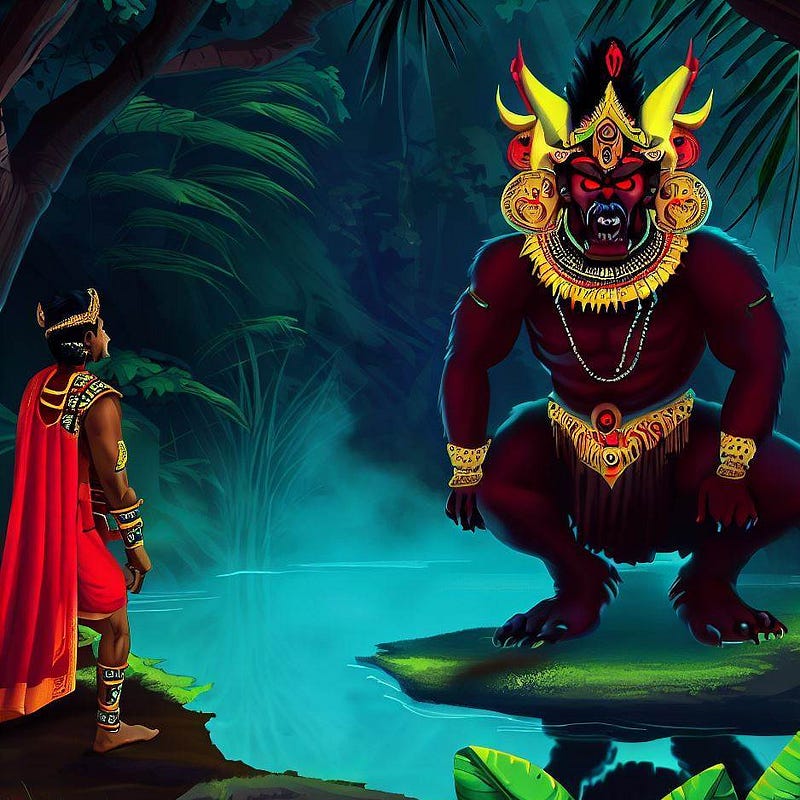
At that moment, a tall and sinister figure emerged from the pond. The figure invited the elder brother to take a bath and rest. However, the elder brother carefully observed this person. He didn’t blink and cast no shadow. It became evident to the elder brother that this person was none other than the demon entrusted with guarding the pond.
So, the elder brother declined the invitation and demanded the release of his missing brothers, holding the demon accountable for their disappearance.
The demon admitted to imprisoning both siblings and explained the motive behind their imprisonment. The demon had taken them captive due to their lack of knowledge about the Divine Teachings or World Governing Principles. If anyone were to enter the pond without this understanding, the demon had the power to claim their lives.
Then, the elder brother said that he possessed knowledge of the Divine Teachings and was willing to share them with the demon. However, he made it clear that his offer would be valid upon the release of his brothers in return. The demon agreed to the terms, to release the imprisoned siblings in exchange for the Divine Teachings.
Do you have any idea about what these Divine Teachings might be? Well, they are none other than Shame and Fear. The very same thing I mentioned at the beginning of this post.
These two concepts play a fundamental role in governing our world. Let’s imagine a time and place where there are no religious leaders to guide us along the right path. We are left to navigate on our own. During such times, Shame and Fear take matters into their hand.
Now, you might wonder how? The elder brother explained the same thing to the demon.
There exist universally unethical actions. These actions are taking another person’s life, engaging in theft, committing sexual misconduct, propagating falsehoods, indulging in divisive speech, using offensive language, participating in gossip, nurturing covetousness, harboring ill will towards others, and adopting distorted perspectives.
Irrespective of one’s beliefs, these actions are universally considered unethical and are applicable at all times.
There is an individual who has sound reasoning capabilities. This person recognizes the presence of particular unethical virtues within our world.
He realizes these actions would result in Shame before his family, friends, relations, workplace, and society. And it even makes the disapproval of powerful entities. Hence, he refrains from engaging in these unethical actions due to the Shame.
Further, he thinks about the potentially severe consequences of engaging in unethical actions. These actions could lead to legal punishments. And he may face punishment from the community.
Even if he managed to escape both forms of punishment, he recognizes that judgment from the powerful forces in the world would still be inevitable. Even after death, he may face appropriate consequences for his actions. Therefore, he refrains from engaging in these unethical actions due to the Fear of punishment.
Since it helps an intelligent person refrain from engaging in unethical actions, these two concepts are referred to as Divine Teachings or World Governing Principles.
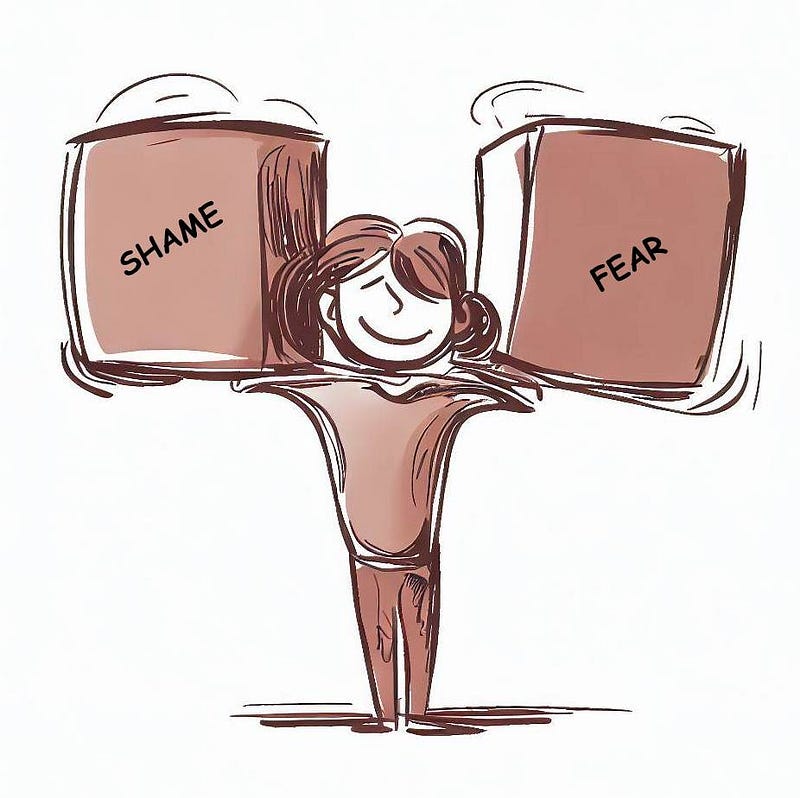
It is essential to understand that Shame and Fear are not negative concepts. On the contrary, they are vital in shaping our society, irrespective of religious guidance. Furthermore, these two contribute to the betterment of society, enhancing religious beliefs.
Returning to our story, the demon was satisfied and released the imprisoned princes. He also promised to refrain from engaging in unethical actions in the future.
As time passed, the princes received the news of their father’s demise and returned to the kingdom. Since there was no designated successor, the ministers appointed the eldest prince Mahinsasa as the new king.
The king chose his second brother as the vice-king and the youngest brother as the armed forces chief. Then he ruled his country for a prolonged period implementing the ethical virtues to govern his country.
Although our story has reached its conclusion, please keep in mind to cultivate positive aspects of Shame and Fear in your own life. It would enable you to develop good qualities regardless of your religious beliefs, even if you identify as an atheist.
Thank you very much for your attention throughout this long story. Oh, I almost forgot. This tale represents another episode from the previous life of the Buddha. Obviously, the elder brother was the previous birth of Lord Buddha himself.