
Shakyo: the Guide to the Most Productive Meditation You Can Start Today
Try this if you can’t meditate with apps
Many of us know that meditation is good for our health. It’s difficult, however, isn’t it? When I close my eyes, I think about my job and family (did I text back to my mom?) Even if I try to focus on my breath with some Yoga breathing techniques, I just can’t forget everything; and my child is running around me, anyway.
So, what I want to introduce to you in this article is 写経 Shakyo. It’s also called sutra copying in the East Asian countries to describe the monks’ practice of hand-copying Buddhist sutras. According to Wikipedia, it is considered as merit in Buddhism:
The effort of sutra copying is considered an expression of piety. It is recognized as a devotional practice since it comprises worship, literature, and calligraphy.
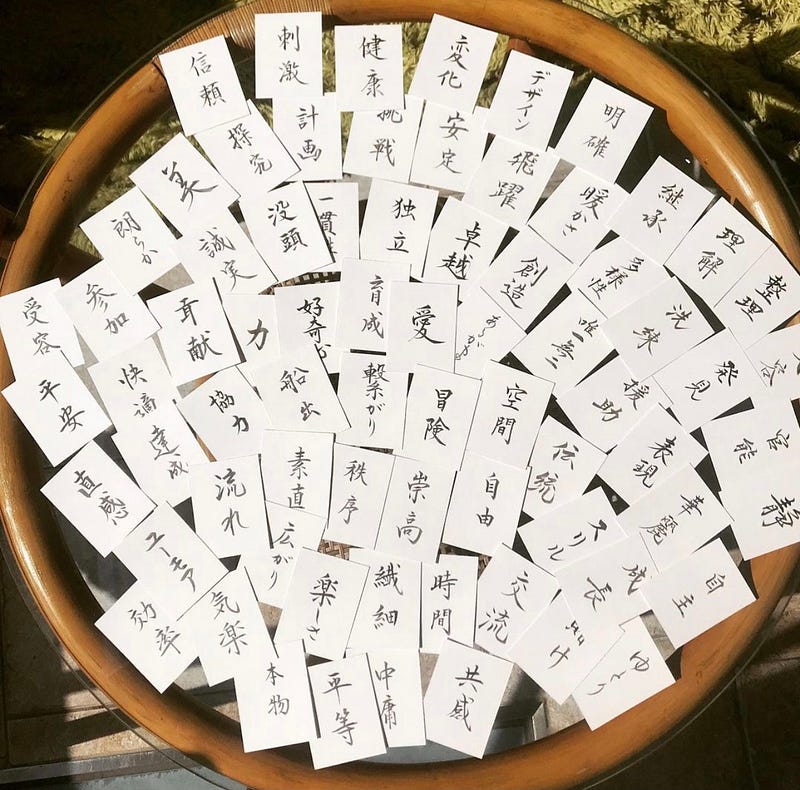
In its simplest definition, Shakyo is the art of copying script taken from the practice. Here in Japan, people around me refer to a lot of things as Shakyo pretty casually. We write anything we like with any pen, not with a brush and ink as Buddhist monks do. Yet, for the sake of its culture, here’s an exemplary sutra copying that a professional Japanese calligrapher does.
Shakyo Mind in Japan
The Shakyo culture has been evolving in this nation. According to an article, an illustration sutra copying workshop is often held for tourists at many temples. People can experience both drawing and sutra copying on Washi, traditional Japanese paper.
Japanese people tend to respect craftsmanship and proficiency. We generally believe that details matter. It’s often common for young apprentices to acquire skills by observing how their masters do the work, even if it takes several years.
Some may think it’s a waste of time in today’s technologically advanced society. We can google so many things in a flash and watch countless tutorial videos on YouTube. However, even today, apprentices’ dedication to the artistry and the craft is the critical ingredients of Japanese aesthetic sense in many scenes, from tea ceremony to flower arrangement.
What’s the Benefit of Shakyo?
When I write something, I can be mindful of what I’m writing. People often say writing is therapeutic because we talk to ourselves through the action. When it comes to Shakyo, you don’t need to consider what to write. You can write whatever you want from your favorite books or lyrics.
It may sound similar to journaling, but you can focus on copying the words without thinking. It’s easier and productive as you can memorize what you write, and it’s still beneficial for mindfulness.
According to Ryuta Kawashima, a professor at Tohoku University, Shakyo was the most effective activity among 160 brain exercises such as board games to activate one’s brain. The research says Shakyo is a highly recommended exercise to lower the future risk of dementia.
Here’s How to Start Shakyo Today
There are some basic Shakyo steps to follow. I summarized them below, assuming you’re going to use your tools; because I don’t grind an ink stick before writing.
Step1. Wash your hands and clean your desk Well, let me be honest here. I tend to skip this step, almost without fail. I always try to do it again.
Step2. Prepare what you need If you want to use your brush and Sumi ink, that’s nice, but it’s okay to use any pen. I use my favorite notebook and a regular ballpoint pen. What I want to copy changes every time, but usually, I write inspiring phrases from books. You can pick whatever you want, calligraphy examples or quotes, anything you want to learn something from them.
Step3. Take a deep breath, relax, and write If you want to follow the basic rule, you can put your hands together and bow before you start writing. You may want to read aloud what you’re going to write too, especially when you use a sutra.
In my case, I just focus on my deep breath and start writing carefully. Focus on what you’re writing and copy the words beautifully as much as you can.
Step4. Finish writing If it’s sutra copying, you may write your wishes, date, and name at the end of the writing. Now, as a final step, you can put your hands together and bow again to end the session.
Let me mention that if you feel better, it’s already successful. You don’t need to bow if you don’t feel like to. I’m just trying to introduce the way which is instructed at temples. What I want to highlight here is the effect you think matters most.
What My Friends and I Do
Aside from this authentic Shakyo style, what my friends and I do is very practical. We write anything from articles of The Economist to even my Medium posts! Usually, my friends copy what inspires them, including articles in non-Japanese languages that they want to memorize because many of us are lifelong language learners.
Technically, what we do might be a little off from the original concept of Shakyo as it’s a sacred activity. Nevertheless, we appreciate the value it provides. We copy what we respect and want to keep in our minds.
So, it was touching when my Twitter friend uploaded photos of her notebook filled with my words. It made me extremely happy and humble because Shakyo is still special for us, and for me, words are much more valuable than any expensive jewelry. Really.
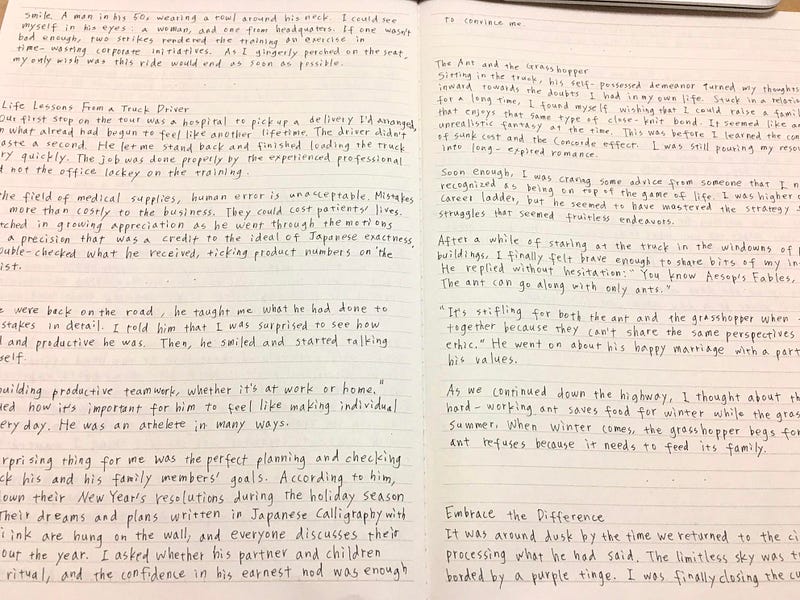
I asked her why she does Shakyo during her busy days. She said handwriting enables her to discover her fleeting feelings as it takes a longer time than only reading articles. For her, Shakyo in the morning is the way to be mindful and cleanse her feelings to start a brand new day.
Last Notes
If you feel too stressed or lost in cluttered thoughts, Shakyo may help you organize your thoughts. It’s like sweeping your balcony with a broom. If you find fallen leaves there, pick them up and see how their colors and shapes are different. You may find something new about your feelings.
When I use my favorite pen, I feel like it's a magic wand that leads me to a better self. Have a happy Shakyo life!
Follow me for more stories about life lessons and cross-cultural topics. I’d love to connect with readers wherever you are.