avatarBarb Dalton

Free AI web copilot to create summaries, insights and extended knowledge, download it at here

2407

Abstract

city reasonably well.</p><p id="ee8f">What I saw was frightening and astoundingly horrific.</p><p id="d282">The downtown core was predominantly cordoned off; many buildings too precarious to allow passersby anywhere near them. The concrete structures that hadn’t toppled were broken, cracked and buckled. Rubble was strewn everywhere.</p><p id="9872">It felt like I was walking in a war zone.</p><figure id="4aa6"><img src="https://cdn-images-1.readmedium.com/v2/resize:fit:800/1*Fu_rX2NK1liu3G9fCzsBTw.jpeg"><figcaption>The downtown core; Photo by Author</figcaption></figure><p id="8499">Every building had a sign on its exterior, indicating that it had been briefly inspected by civil defence engineers and deemed either safe or unsafe. Countless appeared unscathed, but looks were deceiving.</p><p id="f52f">Many beautiful, historical buildings fared the worst. Constructed well before building codes were established, their concrete structures were no match for mother natures velocity.</p><p id="2fd1">Some were in the midst of repair following the September earthquake but suffered their final fate with this one. Churches were steepleless, windows smashed and crosses buckled.</p><figure id="ed49"><img src="https://cdn-images-1.readmedium.com/v2/resize:fit:800/1*9yAlXIposyZccgFoQpa6jg.jpeg"><figcaption>The Cathedral of the Blessed Sacrament; Photo by Author</figcaption></figure><p id="72bd">I distinctly remember a vile smell as I walked past a fruit store. The owner had only just been allowed to return and empty the shelves, one month later. From the window I could see the rot; the store was now a walking compost bin. The stench — and sight — churned my stomach.</p><p id="8077">Roads were still full of liquefaction. Getting around anywhere in the city was slow as traffic was reduced to one lane or weaving around mounds of silt. Over 10 000 houses had to be destroyed or relocated because they sunk and warped. Areas where liquefaction was significant, deemed uninhabitable and cannot be built on to this day.</p><figure id="1306"><img src="https://cdn-images-1.readmedium.com/v2/resize:fit:800/1*zTmq00vqhS9plt_NROl_YA.jpeg"><figcaption>Liquefaction; Photo by Author</figcaption></figure><p id="efb7">The visible signs of destruction were heart-wrenching. But I couldn’t help but think of the psychological trauma the people were experiencing. I felt several small earthquakes in my sho

Options

rt time there and was petrified. To live through two sizable shakes within a 5-month period and have your city and life literally turned upside down, unimaginable.</p><p id="8794">Anxiety, fear, grief, frustration and guilt were documented findings in an <a href="https://www.publish.csiro.au/hc/pdf/hc11248">abstract</a> outlining the psychological effects of trauma immediately after the quake. More recent <a href="https://onlinelibrary.wiley.com/doi/full/10.1111/1753-6405.12894">research </a>indicates mental health issues continue to be widespread, years after the event.</p><p id="70de">Over the course of the following year, Christchurch experienced over 30 aftershocks that registered 5 and above on the Richter scale.</p><p id="ed29">Although it was wonderful to see my folks, I couldn’t wait to get out of there. I was shaken and stirred, even though I did not experience the trauma first-hand.</p><p id="351e">My last visit to Christchurch was six years ago and I was sad to see parts of it were still battered and bruised. After my mother passed away, Dad moved to Sydney, Australia. He could not cope with the frequent shakes any longer.</p><p id="7ced">Ten years later, the city is <a href="https://www.theguardian.com/world/2021/feb/22/before-and-after-how-the-2011-earthquake-changed-christchurch">bouncing back</a>, but will never be the same.</p><blockquote id="7386"><p>Central Christchurch is unrecognisable from the disaster zone it was post-quake, and significantly changed from how it was even five years ago. And the city it is yet to become is still emerging. <i>Elle Hunt, Freelance Journalist</i></p></blockquote><p id="1d63">Ironically, New Zealand is a stunningly beautiful landscape because of the tectonic plates that it sits on. The majestic Southern Alps and plentiful volcanoes would not exist if it wasn’t for seismic events.</p><p id="7067">According to <a href="https://www.gns.cri.nz/Home/News-and-Events/Media-Releases-and-News/Media-briefing-New-Alpine-Fault-research-20-04-2021">GNS Science,</a> the likelihood of a massive earthquake on the Alpine Fault in the next 50 years is a significant 75%.</p><p id="a520">I’ll admit it is one of the reasons I am glad to live in Montreal.</p><p id="d194">I prefer to be on solid turf; unshaken, not stirred.</p><p id="8e81"><a href="https://en.wikipedia.org/wiki/2011_Christchurch_earthquake">Source</a></p></article></body>

Shaken and Stirred

Visiting Christchurch one month after a devastating Earthquake.
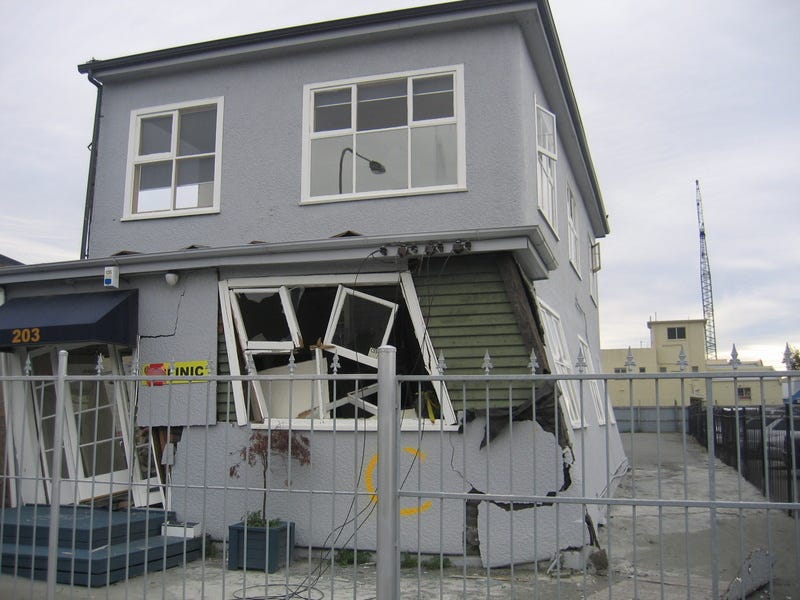
The effects of a reverse thrust earthquake; Photo by Author

My phone did its usual bleep as I packed my groceries into bags with a couple of kids in tow. I was surprised to see the incoming text was from my ex. He rarely messaged. My jaw dropped when I read his words.

You might want to check in with your folks. A massive earthquake in Christchurch.

An earthquake in Christchurch? How was that even possible? Wellington was always first on the list for the big one. Not Christchurch!

My mind went into a spin as I hurriedly loaded the car and headed home as fast as I could. It seemed a lifetime before I was able to reach Dad to know that both he and Mum were okay.

Phew.

The jolt had thrown Dad out of bed and rattled both him and Mum to the core. Despite its 7.1 magnitude, no one died and buildings stood firm, although there was structural damage.

Five months later, it happened again.

At 1251 on February 22nd, 2011, a second major earthquake struck the garden city. Although smaller in size, combined vertical and horizontal forces buckled and crumpled weakened buildings as people were out and about at lunchtime. Roads turned from solid asphalt into liquid silt.
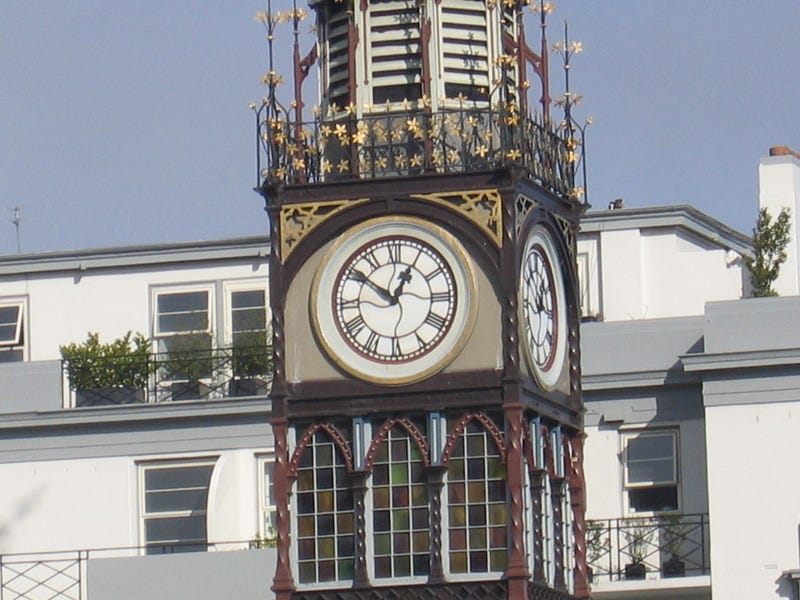
A clock stopped the moment the earthquake struck; Photo by Author

185 people lost their lives that day. Crushed by concertinaed buildings, buried by falling bricks, swallowed by landslides or hit with tumbling rocks.

Thankfully, my parents were unscathed physically. Dad’s house was a mess with items strewn all over the floor. Mum was lucky to avoid injury when her little television was flung onto her bed. They were rattled but alive.

A month later, I arrived in Christchurch for a much-anticipated visit that had been planned long before the earth started moving. Although I did not grow up or ever live there, I knew the city reasonably well.

What I saw was frightening and astoundingly horrific.

The downtown core was predominantly cordoned off; many buildings too precarious to allow passersby anywhere near them. The concrete structures that hadn’t toppled were broken, cracked and buckled. Rubble was strewn everywhere.

It felt like I was walking in a war zone.
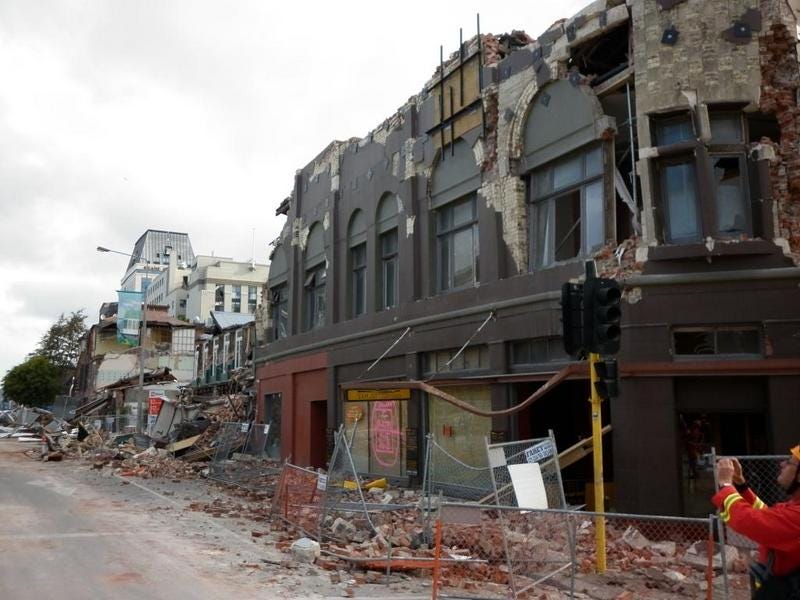
The downtown core; Photo by Author

Every building had a sign on its exterior, indicating that it had been briefly inspected by civil defence engineers and deemed either safe or unsafe. Countless appeared unscathed, but looks were deceiving.

Many beautiful, historical buildings fared the worst. Constructed well before building codes were established, their concrete structures were no match for mother natures velocity.

Some were in the midst of repair following the September earthquake but suffered their final fate with this one. Churches were steepleless, windows smashed and crosses buckled.
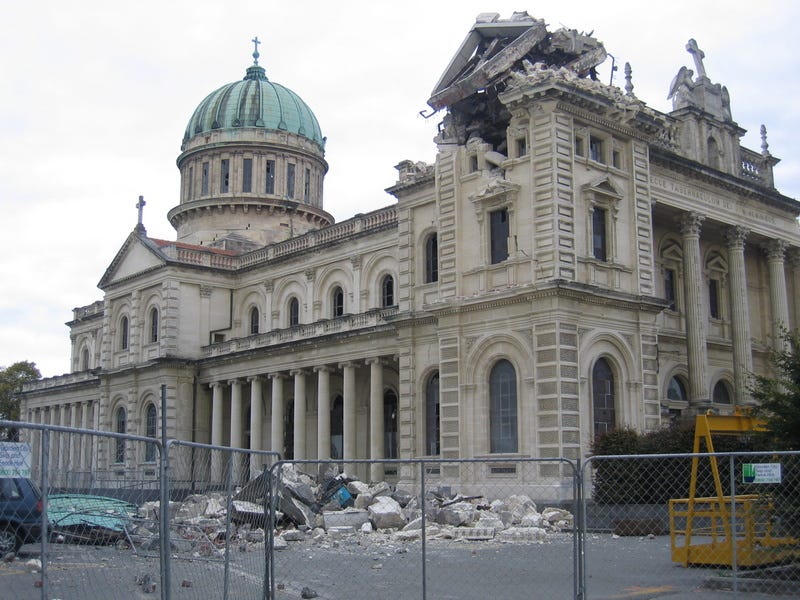
The Cathedral of the Blessed Sacrament; Photo by Author

I distinctly remember a vile smell as I walked past a fruit store. The owner had only just been allowed to return and empty the shelves, one month later. From the window I could see the rot; the store was now a walking compost bin. The stench — and sight — churned my stomach.

Roads were still full of liquefaction. Getting around anywhere in the city was slow as traffic was reduced to one lane or weaving around mounds of silt. Over 10 000 houses had to be destroyed or relocated because they sunk and warped. Areas where liquefaction was significant, deemed uninhabitable and cannot be built on to this day.
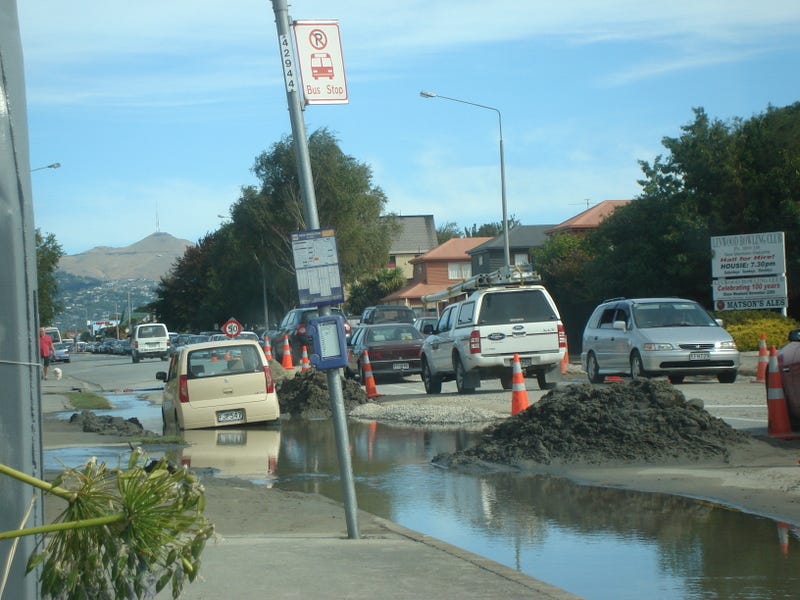
Liquefaction; Photo by Author

The visible signs of destruction were heart-wrenching. But I couldn’t help but think of the psychological trauma the people were experiencing. I felt several small earthquakes in my short time there and was petrified. To live through two sizable shakes within a 5-month period and have your city and life literally turned upside down, unimaginable.

Anxiety, fear, grief, frustration and guilt were documented findings in an abstract outlining the psychological effects of trauma immediately after the quake. More recent research indicates mental health issues continue to be widespread, years after the event.

Over the course of the following year, Christchurch experienced over 30 aftershocks that registered 5 and above on the Richter scale.

Although it was wonderful to see my folks, I couldn’t wait to get out of there. I was shaken and stirred, even though I did not experience the trauma first-hand.

My last visit to Christchurch was six years ago and I was sad to see parts of it were still battered and bruised. After my mother passed away, Dad moved to Sydney, Australia. He could not cope with the frequent shakes any longer.

Ten years later, the city is bouncing back, but will never be the same.

Central Christchurch is unrecognisable from the disaster zone it was post-quake, and significantly changed from how it was even five years ago. And the city it is yet to become is still emerging. Elle Hunt, Freelance Journalist

Ironically, New Zealand is a stunningly beautiful landscape because of the tectonic plates that it sits on. The majestic Southern Alps and plentiful volcanoes would not exist if it wasn’t for seismic events.

According to GNS Science, the likelihood of a massive earthquake on the Alpine Fault in the next 50 years is a significant 75%.

I’ll admit it is one of the reasons I am glad to live in Montreal.

I prefer to be on solid turf; unshaken, not stirred.

Source

New Zealand
Christchurch Earthquake
Life Experience
Non Fiction
Cities
Recommended from ReadMedium