
Roleplaying Games
The Best Shadowrun is Political Shadowrun
Dirty Tricks, Anarchy, and Ork Rights
“If you think Humanis is bad but the Proud Boys are alright, Lone Star sucks but kneeling on someone’s neck for eight minutes is ok, Neo-Anarchists are cool but Antifa isn’t, ork lives matter but Black lives don’t; you’re wrong, and please stop reading my stuff. It’s not for you.” — Russell Zimmerman
Before the advent of solo and online gaming, tabletop gamers would build RPG characters, battlemechs, Magic decks, and 40K armies when we got bored. We’d never actually play with them, but that wasn’t the point. Just allocating stats and optimizing heat sinks is fun in itself. I’m surprised I didn’t make hundreds of characters during the pandemic (WHICH IS NOT OVER), but I feel the need to do it now. I also feel the need to give them a political bent.
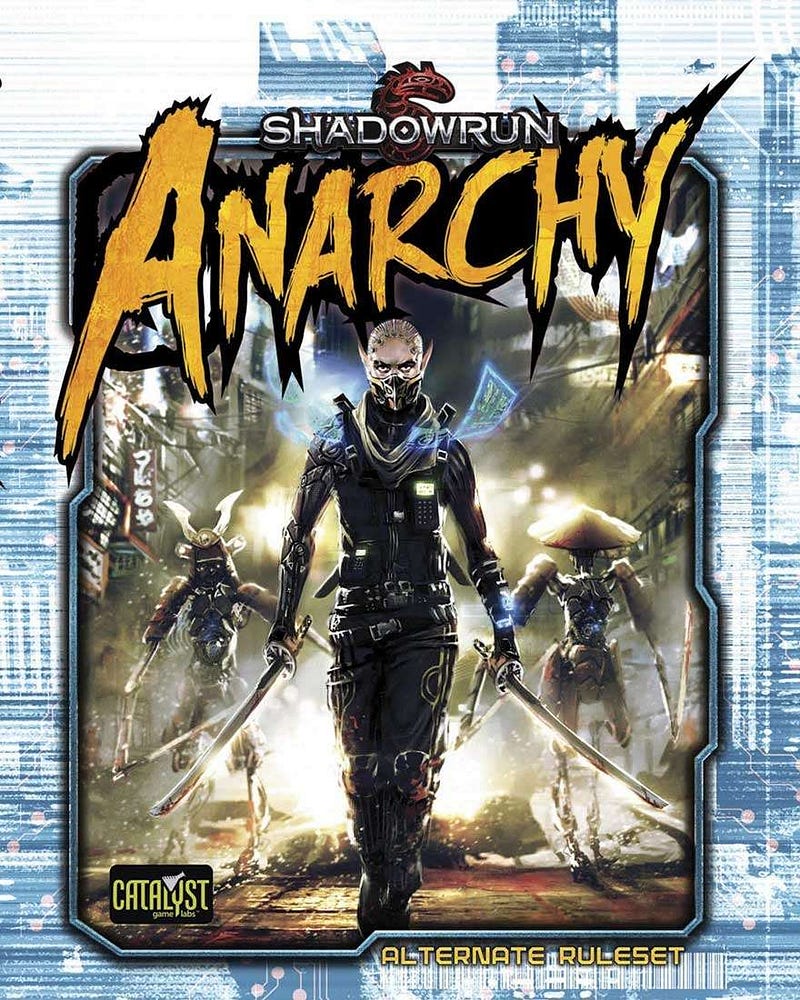
I don’t play the main Shadowrun game. It’s too crunchy and that annoys me. Shadowrun: Anarchy is WAY more my jam (despite unclear rules for your starting armor). It’s a narrativist and rules-lite alternative. Combat is fairly lightweight. Character gen requires little math. Plot Points let players alter narrative details, jump ahead in Initiative, and do a bunch of other things simulationists hate.
The simplification extends to gear and money. Spells and cyberwear and whatnot are abstracted into one kind of thing called ShadowAmps. Wealth is abstracted into Karma, Shadowrun’s traditional experience system. Karma is everything. It’s money. It’s experience. It’s reputation. It’s whatever. Shadowrunners are even “paid” in Karma. Don’t think about.
But why is it called “Anarchy”? Neo-anarchism gets mentioned a lot in Shadowrun’s lore but the title means something else. Shadowrun: Anarchy rejects the idea of the GM being the be-all, end-all authority in the game. The GM in Anarchy doesn’t have the same authority over the players as in traditional Shadowrun. Not only can players insert or change story elements with Plot Points, but each player gets a turn advancing the narrative. The GM is more like a referee when this happens. Shadowrun: Anarchy wasn’t the first game to do this, but most games that question the GM’s power are fairly indie.
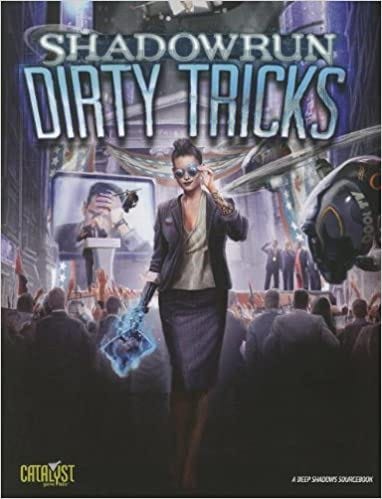
To make politically relevant shadowrunners, I dipped into Shadowrun: Dirty Tricks. It’s a guide to election tactics like ballot stuffing, voter intimidation, opposition research, etc. There are no election mechanics in the book. It’s assumed that enough successful dirty tricks will swing an election one way or another. That’s not depressing at all.
Shadowrun has always had one foot in political commentary, and it’s an exceedingly cynical foot. Even more than Underground. Underground had the audacity to let you make the world a better place. Shadowrun would rather you focus on election fraud.
RPGs rarely let or make PCs run political campaigns. Underground has one politician archetype, and Moonpunk has a Politician playbook. Those are the only examples I know off hand, and neither of those games have published adventures about elections.
But Shadowrun puts elections front and center. The game has two election-centric campaign books: Election Day and Super Tuesday. These make Shadowrun more interesting for gamers who are also politics junkies. Still, players don’t actually run political campaigns in these missions.
My guys are far from classic shadowrunners. They’re professional political shadowrunners. PoliRunners, if you will. They join and, sometimes, manage political campaigns. Electoral hooders.
But being able to do the right thing is kind of a privilege. You have to already be fairly stable to willingly work for less pay. So, I built these PoliRunners with a prime runner game in mind. They start out with more skill and Amps and whatnot. Because when you’re an established badass, you can occasionally move the immovable or stop the unstoppable. Occasionally.
Neither of my PoliRunners are human because I am done with humans being the default species in sci-fi and fantasy. They’re boring. I’m so done with human characters that I want the next Star Wars trilogy’s hero to be a Zabrak, a Wookiee, or a droid. And if Netflix ever makes a Shadowrun series, the hero better be an troll.
Shadowrun never shied away from the fantasy racism metaphor. By the time progressive gamers started resisting “monstrous races” in D&D, Shadowrun had already been there for a few decades. The early art wasn’t flattering for orks and trolls, but the struggle for metahuman rights was always part of the lore. I don’t know if they meant to do it for the Stan Lee/X-Men reasons, but it doesn’t matter. Shadowrun lets players examine racism and identity politics though the filter of fantasy. That’s a good thing.
Stat-wise, PoliRunners don’t fit the classic shadowrunner mold. Shadowrunners tend to specialize. Polirunners can’t do that as much. There are fewer of them, and they don’t have the cash to outsource much. As underdogs working for underdog candidates, they have to wear many hats. They also carry less lethal hardware. Getting caught with heavy firepower near a poling place is a no-no. A taser isn’t as big a deal.
One last thing sets them apart from typical runners: they’re definitely not neo-anarchists. Again, anarchism gets mentioned a lot in Shadowrun’s lore. It’s not positioned as good or bad, but it is fleshed out more than other ideologies.
Anarchism is getting more real-world traffic at the moment, mostly because of BreadTube. It’s a sexy idea in theory, but it’s a philosophy of last resort. Democracy can still be saved. It’s way too early to jettison the idea of government. All we need to do is KILL THE FILIBUSTER, THEN PASS THE JOHN LEWIS VOTING RIGHTS ACT AND THE “FOR THE PEOPLE” ACT RIGHT THE FUCK NOW!
My polirunners specialize in two tactics from Dirty Tricks.
Using Oppo Paydata
Trump made a big to-do over the fact that he knew the word “oppo”. I almost felt embarrassed for him. He thought it made him sound sophisticated, and he loved the idea that he was exposing the practice to his supporters.
Shadowrun: Dirty Tricks devotes a whole chapter to the story of Proposition 23, aka Project Freedom. It was an effort to make the disenfranchised Ork Underground a legal district in Seattle. One of the big turning points was revealing that a key Prop 23 opponent had attended an anti-metahuman hate group rally. This led to him resigning from office. What’s sad is that in the real world multiple congressmen have been outed as white supremacists and none of them have felt the need to leave public office.
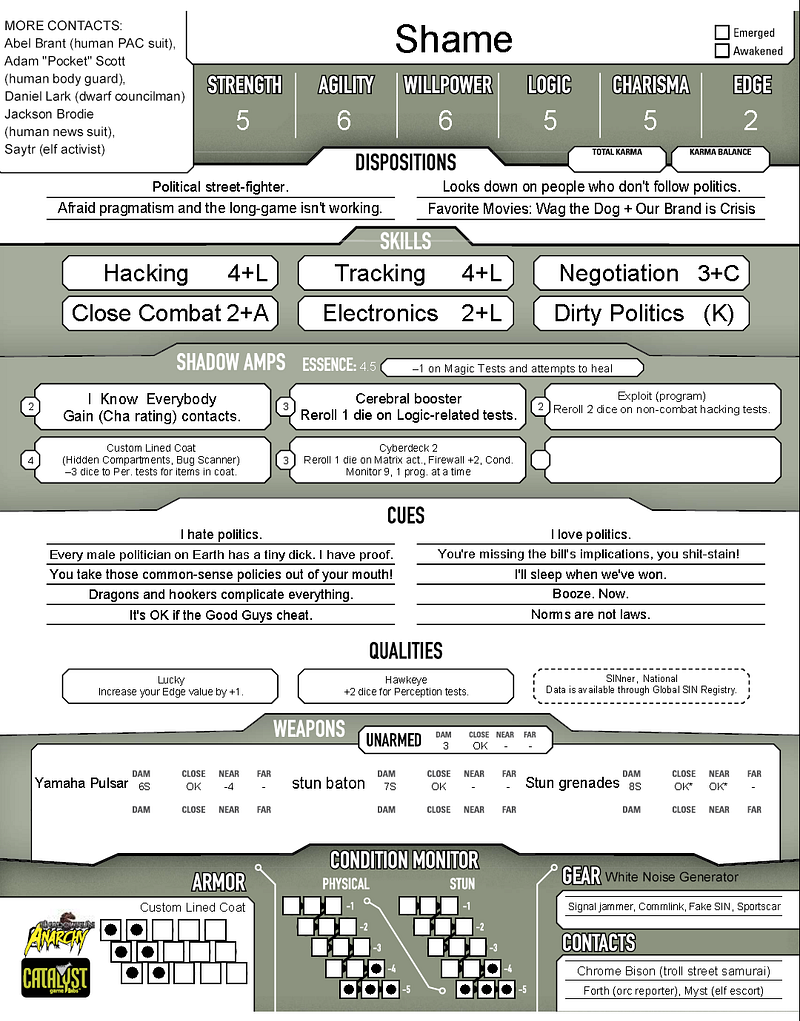
Shame — Ork Oppo
Tags: Politico — Informed — Recovering Idealist — Pragmatic — Drinker
Background: Brandy “Shame” James is not a shadowrunner. She’s an upstanding citizen with a SIN and a career. It’s not her fault politics is dirtier than ever. Elections didn’t cost people their lives back in the day, but they do now.
Shame got her start as a Prop 23 activist. She didn’t live in the Underground, but she was an ork and felt the need to get involved as a petitioner. She didn’t know about the shadow side of the campaign until it was over and done with. Brandy was shocked and embarrassed when she learned all the details. The public-facing efforts weren’t the deciding factors. It was the dirty tricks that led to their victory. Her embarrassment doubled when she learned how few Underground residents actually wanted it.
Shame specializes in opposition research and application, and that job is harder than ever. Getting paydata is the easy part. Shame knows the right people with the right dirt, and she’s a good enough decker to find dirt on her own. But candidates are vetted to such an extent that their dirty laundry is minimal or VERY well hidden. And if there is something in their closet, a lot of voters don’t care. Sticking it to the other side is what’s important. All this makes her handle kind of a misnomer. Most political candidates don’t feel shame. Or guilt.
But shaming the other guy isn’t the only goal. Shame often exposes white collar crimes, which turns into legal trouble, which turns into candidates bowing out. And when she’s really on the jazz, she exposes candidates screwing over big donors, corps, and other candidates. Once that news hits the wire, the powerful turn on each other.
Shame’s ties with the ork political community are long gone. Her candidates promised but rarely delivered any lasting change for orks and trolls. Now that she has no connection to her political roots, she’s starting to wonder if any candidate has the political will to protect ork and troll rights.
Rent-A-Crowds
I think rent-a-crowds and related tactics would be fun to play with in a fictional setting. This sort of stuff doesn’t happen too much in the US, but the Right insists that every BLM march is run by professional protesters. “Professional” implies that these people get paid to turn protests into sieges on police precincts.
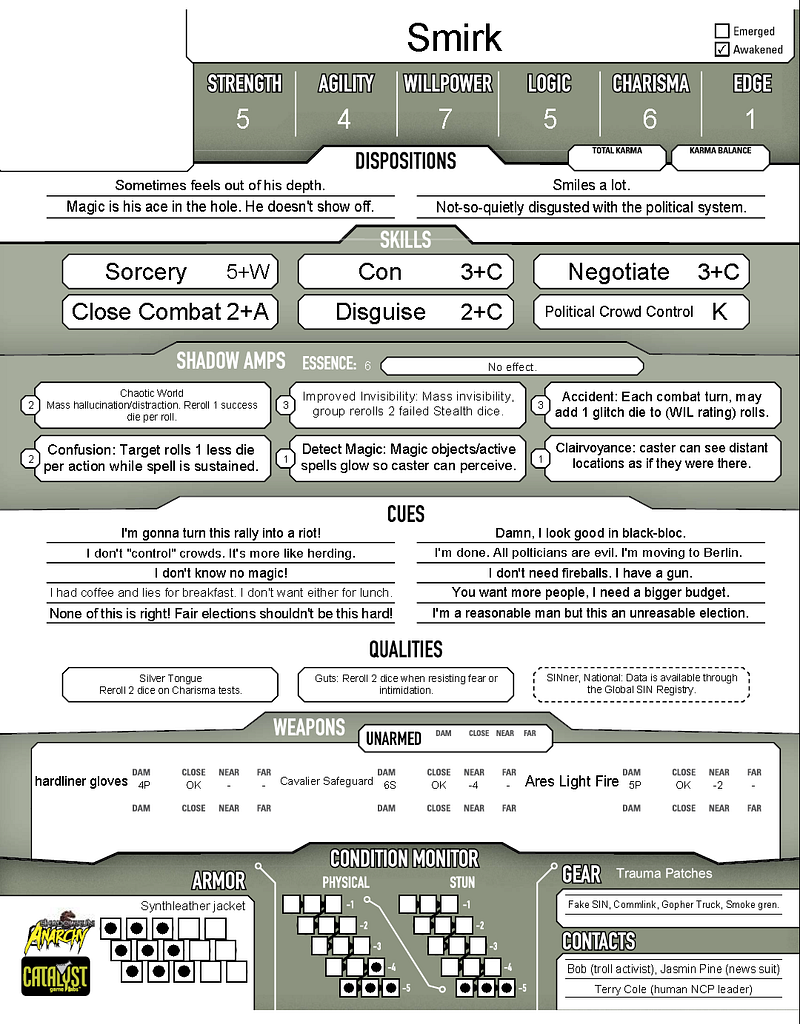
Smirk — Dwarf “Face”
Tags: Mage — Distrustful — Crowd-Wrangler — Hooder — Cynic
Background: Smirk specializes in Rent-A-Crowd tactics. By greasing the right hands or shouting the right things at the right time, he can steer a crowd in the right direction. His height helps him hide in a crowd, and he’s good at dressing to blend in. But it’s not his skills as a Face that make him effective.
Few people know that Smirk is a mage, and he wants to keep it that way. Smirk is careful not to use magic out in the open unless he has no choice. As an anonymous dwarf in a crowd, it’s hard to identify him as the caster.
Smirk is just as useful without a crowd of his own. He is a master at ruining the opposition’s events. By confusing the right people he can turn a well organized rally into a mob. He can trip up speakers, plague them with “accidents”, and ultimately humiliate the opposition in front of their own supporters.
Politically, Smirk is bitter and burned out. He’s a registered member of the New Century Party, but like his magical skills he keeps that under wraps. He doesn’t trust anyone with his secrets, and he certainly doesn’t trust politicians with his future.
Smirk is torn between the dream of clean elections and knowing that the megacorporations make that impossible. He’s most happy when he’s countering the opposition’s dirty tricks. Every time he has to use those tricks offensively he thinks about quitting the entire scene.


