
A MODERN RETELLING OF AN ANCIENT FABLE
Sexism is Easy to Explain
The problem is getting men to listen
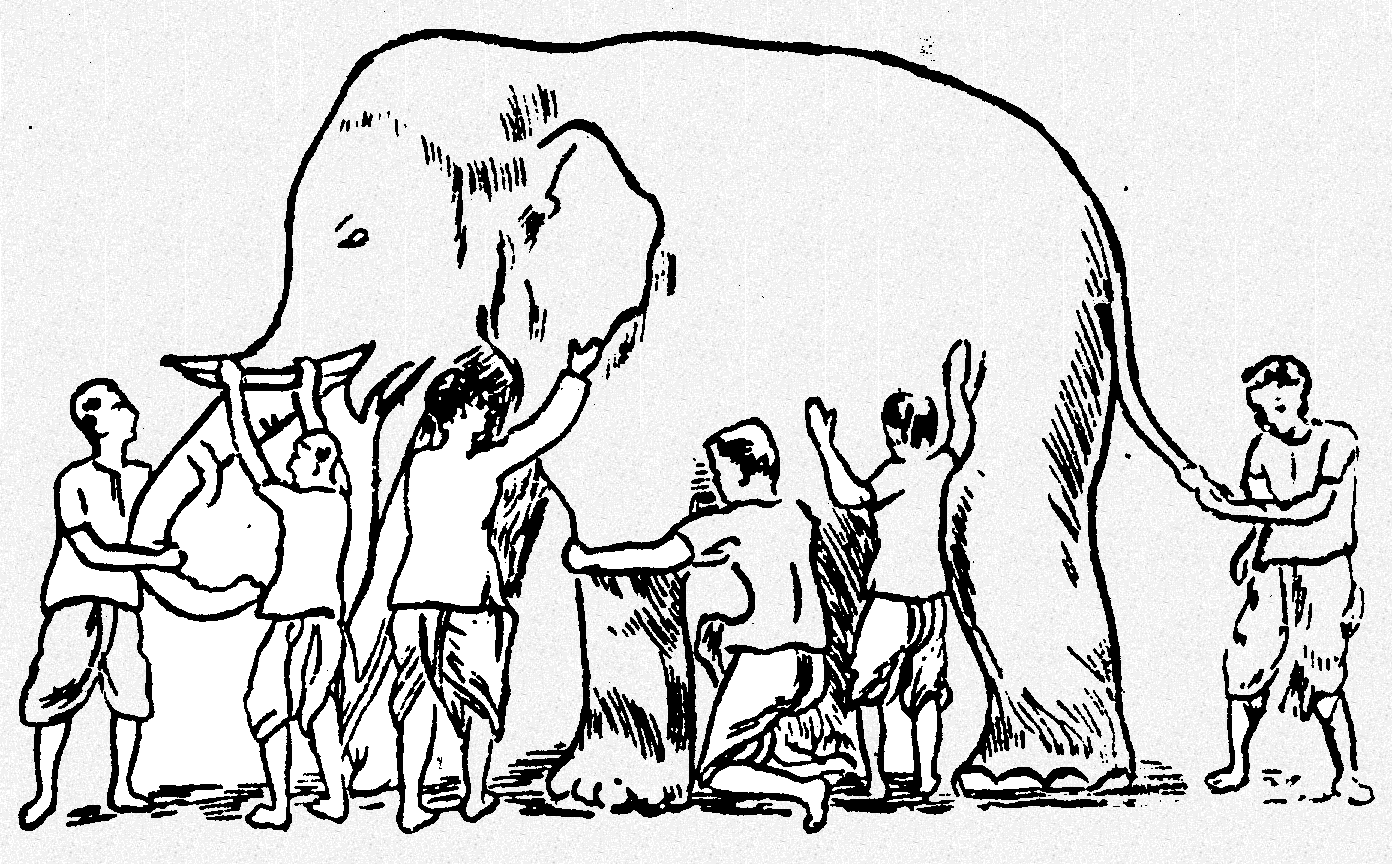
[WARNING: this story is a parable, and not for the faint of mind. Keep your hands inside the cabin, as we may run into some pointed sarcasm, turbulent ideas, and the occasional attempted character assassination]
ONCE UPON A TIME, there lived six blind men in a village.
Their smart phone personal assistants notified them of a big event in eerie robotic tones:
“Hello, blind man, there is an elephant in the village today.”
They had no idea what an elephant is because they had terrible reception and could not google the answer. So they decided to take a chance and have an IRL experience by meeting up with this elephant, thinking:
“Even though we would not be able to see it, let us go and feel it anyway.”
The men went to the town square where the elephant was on display. Each of them touched the elephant.
“Dudes, the elephant is a pillar!” said the first man who touched her leg.
“Oh, no! it is like a rope,” said the second man who touched her tail.
“Wrong-O! it is like a thick branch of a tree,” said the third man who touched her trunk.
“Fuggetaboutit. It’s like a big hand fan” said the fourth man who touched her ear.
“No, you jackasses, it’s like a huge wall,” said the fifth man who touched her belly.
“F*ck off, you wankers, this is definitely like a solid pipe,” Said the sixth man who touched her tusk.
They began to argue about the elephant and each of them insisted that his perception was the only one that could possibly be right.
Things began to get ugly and they started sending out angry tweets.
Fortunately, a wise man was passing by and saw the fight unfolding.
He stopped and asked them what was the matter. They replied that they could not agree about the true nature of an elephant. Then each blind man told the wise man his thoughts on the elephant. The wise man calmly explained to them,
“All of you are right. The reason every one of you is telling it differently is because each one of you touched a different part of the elephant. So, actually the elephant has all those features you said.”
Everyone was relieved and the fight ended. They felt happy that they were all right.
But one more voice finally entered the conversation.
It was the elephant.
She calmly told them:
You have all made accurate observations, but you are all wrong, because you barely scratched the surface of who I am and what I am capable of.
The blind men stopped and listened and started to talk amongst themselves.
She called over to the wise man, since he was the only one who could see and asked him:
Do you see that crack on my right tusk? I clashed with a young bull to defend my baby.
Do you see that light colored ring around my left rear leg? That was where I was chained up when I was taken from the jungle and forced to work in the circus.
Do you see those scars on my back? That was where I was whipped because I wasn’t pulling the circus wagons fast enough.
But I’m free now, and I will never allow myself to be insulted or attacked by men again.
The wise man, looked down at the ground, and blushed, for he had been humbled. He looked the elephant in the eyes and then said
Oh, beautiful elephant, even though I have eyes, my perception is still so limited. Without walking in your shoes, I will never truly know what it is like to be you. Would you, uh, like to go out for coffee?
Before the elephant could answer, the tavern door opened and three drunks stumbled out: a manure salesman, a tanner, and a horny goat herder.
The manure salesmen, pointed over to the elephant and yelled “check out that ass! I could be rich if I had that sh*t!”
The tanner whistled and yelled “Gimme some skin, baby! I could make the finest quality boots and belts and be rich.”
The horny goat herder screamed “woo baby! look at that rack!” and started to run unsteadily toward the elephant yelling “Sh*t yeah, I’d tap that!”
The elephant looked over at the wise man, said, “oh, not again” and ran out of the village never to be seen again.
THE END
And let the fireworks begin.
If you liked this modern fable, please check out the story from the blind men’s perspective (props to Stan L., whose feedback made me think a little further outside the box and add some interesting balance to this issue.)

[Notes from 2016]
I always thought myself as being progressive, objective and conscious about issues like sexism and racism. I thought I had a grasp of the meaning of white male privilege (playing the game of life on Easy Mode.)
But over the last week I crashed into my own blind spots and wrote this comment in response to Kel Campbell’s now deleted article on sexism. After I learned the underlying fear that is part of a woman’s every day life, I updated the comment to apologize to Kel. She gracefully taught me a valuable lesson, for which I will always be grateful. Because of plagiarism and bullying, Kel Campbell left Medium.
This weekend, I found another post by Pax Ahimsa Gethen about racism and learned to identify some more blind spots about racism.
I started to research the subject to better understand sexism and racism and found an excellent resource in Everyday Feminism.
Here’s an article on Gaslighting. Both sexes can be guilty of this, but it’s worse when the one doing it is a foot taller and seventy five pounds heavier:
Here’s the original article on mansplaining. We all do it a little, just not as bad as the idiot in the article:
On racism, here are some great resources.
A comic on why we can’t perceive white privilege:
A comic on how even the dictionary codifies institutional bias:
And this one explains the difference between racism and prejudice: