
Sex, Drugs, and Rock & Roll Were the Trifecta of a Generation
A look back at the summer of ‘69

Like most adolescent males, I saw the guitar as a passport to girls and sex.
So when the phone call came from Russell — a friend working in the southern California music scene — I didn’t hesitate.
Russell played bass at local clubs and did session work for several recording studios. Two years older than me, he’d chosen to pursue the music business right out of high school. After three years of pounding the pavement in LA, he’d managed to generate enough work to pay his bills and give up his part-time job as a waiter.
He was, as he put it, “living the dream.”
“How soon can you get here?” he asked.
“Depends,” I said. “I’ve got two papers due next week. Then I’m done with school.”
I was in the last week of my freshman year in college. Although my course load was relatively light, I was knee-deep in finals.
“That won’t work,” Russell said. “I need you here day after tomorrow. You always told me if an opportunity came up, you were ready to jump into the business. Well, now’s your chance.”
Due to an underground wave of solidarity for striking New York Met musicians, some of the LA-based players had suddenly become “less available.”
Although their lack of availability was far from a walk-out, it hinted at the possibility. Agents, promoters, and producers were worried — and they wanted an alternative group of musicians to call on when needed.
Russell told me there was plenty of work for a guitarist, but only if I came immediately.
I was nineteen.
Woodstock was less than three months away
Jimi was showing us lead runs and chord progressions we’d never seen. Eric had substantiated his reputation as god of the guitar with Cream, and Mick Jagger was about to revert to bohemian simplicity by eliminating the bass run under the verses of Honky Tonk Woman.
“Should I bring my amp?” I asked.
“You won’t need it,” Russ said. “Just throw your guitar in the car and get your ass over here.”
That evening turned into an all-nighter
Racing to finish term papers that would account for half my grade, I hoped the abbreviated length wouldn’t bring down my average. The following morning, I left them in the faculty mailboxes, along with a brief note explaining I had to leave town to take advantage of a great job offer.
The eight-hour drive gave me plenty of time to think.
Was I really good enough to be paid the $37.50 an hour Russ had promised?
“That’s just for studio work,” he’d said. “You’ll make more for a live performance.”
That was a lot of money for a nineteen-year-old. Especially since guitarists were a dime a dozen in LA — a place where everyone was a musician.
But it was the assurance of money that gave me the ammunition I needed to rationalize the move to my parents.
“There’s no way I can make that kind of money staying here for the summer,” I told them. “It will give me a chance to build some savings.”
Even so, they saw my moving to the coast as impulsive, rash, and downright foolish. “You’re throwing away your future,” they said. “The music business is full of drugs and booze. It’s no place for a young man with potential.”
We finally came to an agreement based on my solemn promise to return in time to start my sophomore year in the fall.
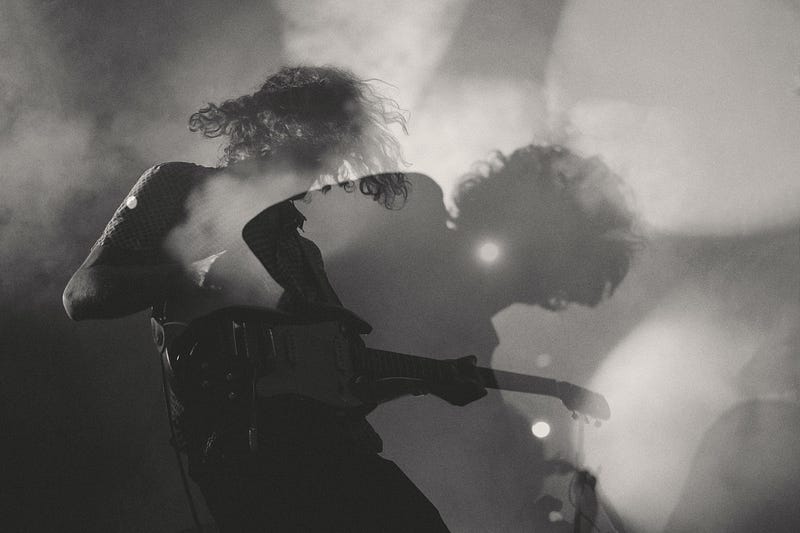
Russell was right — about the amp, I mean
I was used to playing on Fenders, the occasional Vox, and — when absolutely necessary — a Silvertone (ugh). For vocals, the band I played with used a Kustom PA system — big upholstered boxes with lots of speakers. And if you used enough of them, you could push the vocals up and over the instruments.
It was all we’d ever needed for a high school cafeteria or a small street dance. But these venues were different.
My first gig was in San Bernardino playing in a nightclub called Mother Lizards. A former bowling alley, the lanes had been removed, the ceiling raised, and the pin-setting machines ripped out and replaced with a large, elevated stage.
The place would hold at least two thousand people — which it did, every Saturday night.
I was paired with a second guitarist, a keyboardist, a drummer, and Russell on bass.
Russell and I arrived early. Neither of us had seen the building before, and we wanted to get a sense of the acoustics and lighting. The sound guy, Lee, showed us around.
“Your concern is power, right?” Lee asked. “Seems like you guys are always wanting more power.”
I nodded. I’d always felt I was pushing the amps to the edge of distortion. There never seemed to be enough reserve to handle the lead runs the way they were supposed to be played.
Until now.
“We don’t use a house PA,” Lee explained. “It’s all on stage, directly behind you.”
He pointed to a couple of guys who were pulling dust covers off a wall of eight Marshall stacks — monuments to the god of thunder … and premature deafness.
“That’s eight power amps driving sixteen banks of phase-matched twelve-inchers,” he said proudly. “That’s a total of eight-hundred watts pumped through sixty-four speakers.”
I wanted to jump up and down. I wanted to tell this guy how excited I was to play on a stage full of Marshalls. Instead, I said, “Good. That’ll work.”
Lee smiled. “The owner likes the customers to feel the music as well as hear it,” he added.
That sounded ominous, especially since I would be closer to the Marshalls than the audience. But it also meant there was a good chance I’d be able to hear the other instruments — not just my guitar part.
“You know how the vocals can get lost in the mix?” he asked.
I nodded.
“Doesn’t happen here,” he said. “Take a look at those horns.”
Flanking each side of the stage sat the pride and joy of every roadie who pushed them into position: The Mother Dude.
Their four-foot-diameter horns could break crystal from twenty feet away (I shit you not).
And that big red warning plate promising permanent hearing damage to any soul within fifty feet gave every singer that final bit of assurance they needed: I will be heard.

I worked every weekend
With Russell’s help and influence, I quickly developed a reputation for showing up early, being cooperative, and staying out of the way after finishing my set.
I battled my nerves on more occasions than I like to remember, especially when I played backup for a group with a national reputation. They often needed an extra guitar to fill in the parts provided by studio musicians. And while that usually brought more money, it could also push me to the point of panic.
But the possibility of stage-fright wasn’t lost on promoters.
Knowing how a bad case of nerves could wreak havoc on a performance, they often made arrangements for medicinal support.
Affectionately called the “Bag Man,” he was always around in one form or another, ready to dispense whatever level of courage was needed.
He was most visible during sound-checks, about an hour or so before the show was scheduled to start. Wearing a cloth nail-apron filled with pills, he quietly made his rounds by methodically approaching each group member with a question . . .
“Up or down?”
Feeling my nervous stomach threatening to do its worst, I always said, “Down, by all means, down.”
I remember the night we opened for Steppenwolf
The show was set in an old agricultural building on the Yuma fairgrounds.
After a short, forty-five minute set, we left the stage and the roadies began pulling cables and re-setting the mix.
Fifteen minutes later, John Kay welcomed the crowd by saying how gratified he was to see such a great turn-out from the little town of Yuma, California. (For the geographically challenged, Yuma is located in the state of Arizona).
But no one dared correct him.
The SRO crowd made it clear they didn’t care where Kay thought he was. The band’s appearance was a welcome break from the weekly CYO dances and the country shit-kicker bars across from the airport.
If Kay thought he was in California, the audience probably got a better show because of it.
Kay started the first set by belting out his trademark hit, Born to be Wild.
It laid all doubts to rest. Yes, they really were who they said they were.
The live music was a far cry from the recorded version.
The lead guitar part was missing (an obvious over-dub during recording), and the drums were hollow and lacked punch. They looked like the set I got for Christmas when I seven.
But the vocals? They were right on. Raunchy and in your face, they promised to brain-fuck you until your ears bled.
I took my place just offstage to watch
The next hour dragged on with several songs by Muddy Waters. Then more blues by some obscure groups from the fifties I’d never heard of. Over an hour-and-a-half later, he got to it.
Introducing the last song of the night with a long-winded dedication to those who could “think for themselves,” the audience — their brains buzzing from sound levels comparable to the roar of a jet engine at full thrust — looked at each other in sedated confusion.
I saw a young girl in the front row ask the kid sitting next to her if he knew what the hell Kay was talking about. The guy was so stoned he could no longer stay in his seat. As he tried to answer, he poured out on to the floor.
And then it came.
Slow at first, with three chords. Sevenths and minors.
It was an abrasive, raking sound. The kind that gets under your skin, crawls all over you, then pushes you down into the seat.
You want it to be over as much as you never want it to end
The four-word chorus brought obvious expressions of shock, horror, and disgust from the dozen or so cops strategically placed around the building.
“God damn the pusher!” Kay screamed.
Straining his voice to its limit, he brought every bit of his substantial power and nuance to the performance, intent on making this little ditty his personal condemnation of those who sold, but did not use.
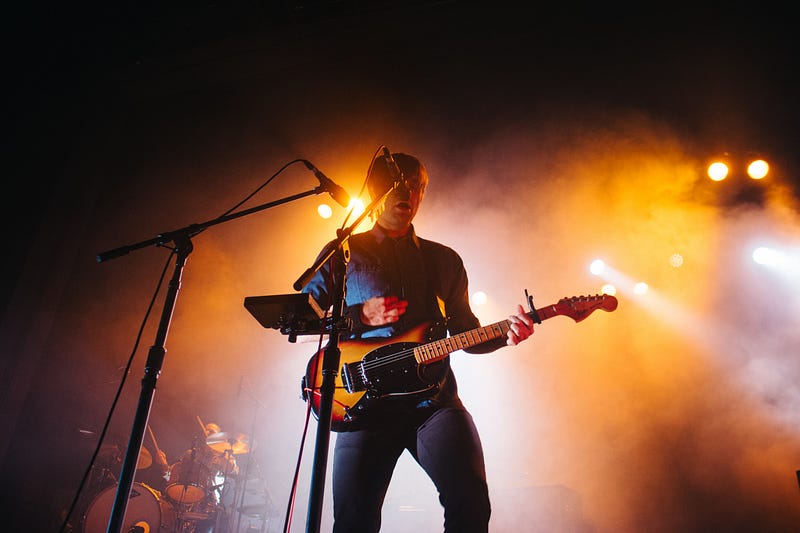
For several years, I thought back on that summer
More than a simple case of nostalgia, I missed the comradery with other musicians, and the conversations with the promoters, producers, and sponsors — the grownups who treated us as young professionals in a business where respect was a commodity of the trade.
Most of all, I missed doing something that mattered — something others seemed to enjoy and appreciate as much as I did.
While I did break my promise to my parents — I was three weeks late in getting back — my college advisor reluctantly allowed me to register for my sophomore year, on the condition I obtain each teacher’s permission to start their class late.
Due to the sound levels, I lost about fifty percent of my hearing in my left ear, which has become progressively worse with age.
Would I change anything?
When life opens a door to a place where everything is new — where every day is an adventure — the idea of change loses its meaning.
Granted, the excitement of “new” eventually wears off. But when you’re fully engaged with your work, you have greater influence over the circumstances of your life. You’re in the driver’s seat. You simply need to keep your final destination in front of you.
Regrets?
My brief stint in the music business resulted from the advantages of timing, having a friend with connections, and enough naiveté to neutralize the fear of leaving the well-traveled road — the road everyone expected me to follow.
Even now, fifty years later, there is no looking back.
Only the satisfaction of knowing I lived fully in the present — of being in “flow” with the most authentic version of who I was at the time.
So no, I don’t regret a single moment. Because like Brian Adams sang in The Summer of ’69” . . .
Those were the best years of my life.
© 2020 Roger Reid. All Rights Reserved.
Related Articles:
Find more tips & strategies for personal and career success in Better Mondays
Roger A. Reid, Ph.D. is the founder|host of Success Point 360 Podcast and author of Better Mondays: The New Rules for Creating Financial Success and Personal Freedom (While Working for the Man) and A certified NLP trainer with degrees in engineering and business, Roger offers tips and strategies for achieving higher levels of career success and personal fulfillment in the real world.