
Seven Secrets of NaNoWriMo Success
How to write a novel in a month. For real.
This story is behind Medium’s membership paywall, which means the writer earns through our Partner Program. To become a Medium member, click here.
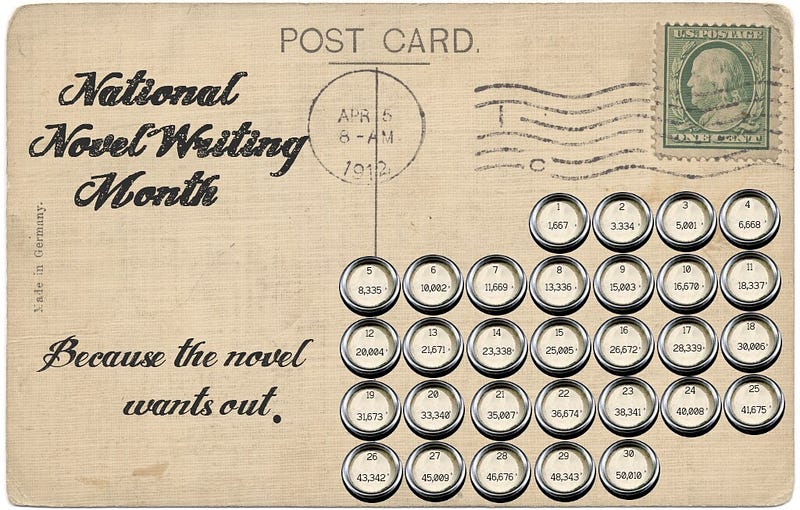
National Novel Writing Month (aka NaNoWriMo, which I’m the executive director of) takes place every November, and is, most simply, a call to write a novel in a month. A wild idea…that’s proved to be wildly popular. But how can you really write a novel in a month? Studies to discover the key ingredients of NaNoWriMo success have been conducted by data scientists, wizards, alchemists, two plumbers from Toledo, a rodeo rider, and a winemaker from France, to name just several. In our endless search to find the recipe for success, we’ve held debates to find the definitive answer, but we’ve concluded that because everyone is different, there is no single formula to cross the finish line. The main thing? Keep trying new approaches and find your way to write.
The other main thing? Be in conversation with others to learn from their creative process. It’s in that creative spirit that I share the NaNoWriMo recipe that works best for me.
Oh, and if you don’t know what National Novel Writing Month is, it’s two things: 1) a writing boot camp that challenges you to write 50,000 words of your novel in the month of November; and 2) a rollicking writing party to make that boot camp more fun (and to help you be accountable to your goals).
Here goes!
1) Write your story, your way: This is perhaps the most important tip for NaNoWriMo success. Choose the story that’s calling to you. Don’t worry about what anyone else will think about it, or whether it’s “marketable” — or if it’s the story you “should” write. If you tell your story and tell it the way you want to tell it, your passion will be as powerful and eternal as Willy Wonka’s Everlasting Gobstopper. 2) Prepare to write before November: Some people like to write meticulous outlines. Some people buy extravagant novel-planning software. Some people brainstorm “what if” scenarios and fill a wall with post-it notes of scenes. There’s no right way to write a novel — in fact, sometimes people write wonderful novels by the seat of their pants (we call them “pantsers” in NaNoLand). In general, though, I think some preparation will help you whack through the inevitable writer’s blocks that clutter the path of any novel’s journey, even if you just scribble some notes about your main characters or spend an afternoon daydreaming about your story before November. You don’t necessarily need a plot before you write a novel — because a novel, especially the first draft, is an exploration — but having a sense of your novel’s direction will help propel you forward. 3) Experiment (which also means have fun): NaNoWriMo is about some serious writing, but writing with abandon is also an invitation to be playful, wild, and downright wacky. How to be fun loving in such a writing endurance test? I recommend donning a writing hat to remind yourself of the whimsical powers at your disposal, or participating in some “word sprints” (which happen round-the-clock on Twitter in November at @NaNoWordSprints). “Writing is at its best — always, always, always — when it is a kind of inspired play for the writer,” said Stephen King.
4) Write with others: Writing a novel has always been more of a community endeavor than it’s perceived to be. Proust talked through his ideas with his housekeeper for hours each day. Zora Neale Hurston found inspiration and kinship in Harlem Renaissance writers such as Langston Hughes. And C.S. Lewis and J.R.R. Tolkien were buoyed by the feedback and encouragement they received from the writers in the Inklings. Since NaNoWriMo is an extreme experience, it’s important to be involved with a community of writers to share “war stories,” get encouragement, and enact a system of accountability. NaNoWriMo has nearly 1,000 Municipal Liaisons who organize “write-ins” in approximately 750 different regions around the world. If you can’t make it to a write-in, the NaNoWriMo forums are vibrant with rollicking discussions of every writing topic under the sun, and NaNoWriMo’s online community spreads its reach to nearly every nook and cranny of the Internet. 5) Get a dog who will force you to take walks: A dog clamoring for a walk often seems like an interruption at a crucial juncture, but dogs have a preternatural instinct to know when you need to get the blood flowing in your body. Or so my dog Buster tells me. This is particularly important during the “muddy middle” of a novel, where so many novels go to die. There’s nothing like a dog walk (or your version of a dog walk if you can’t get or borrow a dog) to welcome in unexpected imaginative insights, ward off back spasms, and spark an idea for the next plot pivot. 6) Practice the art of letting go: No one can do everything. If you’re going to write a novel in a month, you have to let go of things. Maybe you have to let go of a clean house. Maybe you have to let go of social engagements. The house can be cleaned in December, and your friends will be there as well. Or if they’re not, they’re not the kind of friends you want anyway. Also, let go of the idea of perfectionism and banish your inner editor. Remember, nothing is permanent in a first draft, and everything can be fixed — later! If you keep your expectations low, you’ll be better able to get the words on the page so you can edit later. 7) Practice the art of not letting go: It’s easy to talk yourself out of any creative project — you might get sick during November, win the lottery, lose your favorite pen, or fall in love. Whether you have good luck or bad luck, you committed to writing a novel. Even if you fall behind and can’t hit the 50,000-word mark, it’s important to hold on tenaciously to one thing: you are a writer, and writers write. So keep showing up and write with abandon. Because as Newton observed, objects in motion tend to stay in motion…
What tips do you have? I’d love to hear yours to help get me through those inevitable moments when I hit the wall and can’t see a way forward (it always happens)!
For continued support throughout NaNoWriMo, connect with other writers here.
Grant Faulkner is executive director of National Novel Writing Month and the co-founder of 100 Word Story. He’s the author of Pep Talks for Writers: 52 Insights and Actions to Boost Your Creative Mojo and the co-host of the podcast Write-minded. His essays on creative writing have appeared in The New York Times, Poets & Writers, Lit Hub, Writer’s Digest, and The Writer.
For more, go to grantfaulkner.com, or follow him on Twitter at @grantfaulkner.


