Seven Great John Williams Scores That Aren’t from Star Wars or Spielberg Films
The great composer has more to his repertoire than his most well-known themes.
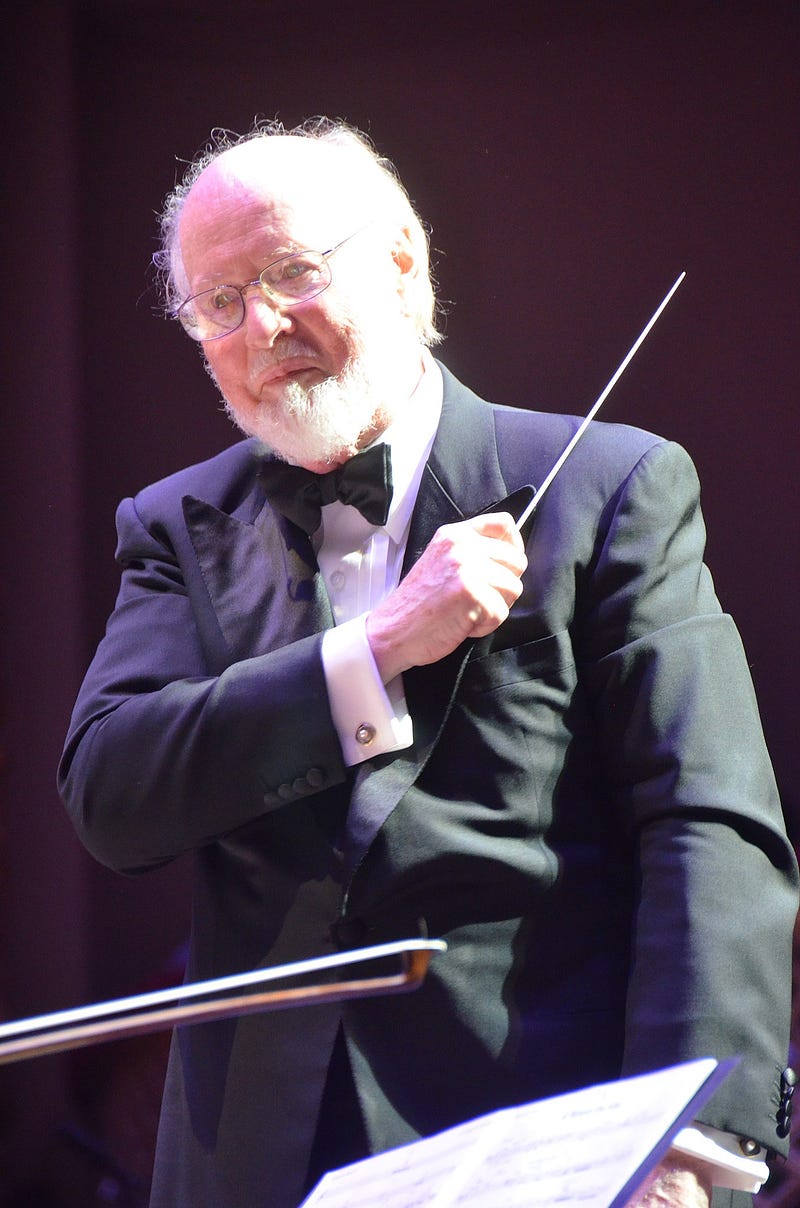
As far as I’m concerned, John Williams is the greatest film composer in cinema history. Sadly, he is also the last of his kind; a tower of genius and one of the few remaining that work with real orchestras.
Williams is steeped in the musical traditions and lore of classic Hollywood, building on the legacies of greats like Max Steiner, Erich Wolfgang Korngold, Alex North, and Bernard Herrmann. His contemporaries — from Jerry Goldsmith to James Horner, Ennio Morricone, and John Barry — are sadly no longer with us. But Williams remains, and I for one hope he turns out to be immortal, as the idea of living in a world without the man who scored my childhood feels too much to bear.
Such depressing thoughts aside, here are ten of his greatest scores that aren’t from a Star Wars or Spielberg film. I’ll write about these iconic scores — Jaws, Star Wars, E.T. The Extra-Terrestrial, Schindler’s List, and so on — in the future, but for now I’ve excluded them purely to give a clearer picture of Williams’s extraordinary body of work. Some of these titles are also iconic, but shutting out Spielberg and Star Wars at least provides a chance for his lesser-known gems to shine.
Born on the Fourth of July (1989)
One of the uncanny things about John Williams’s music is that it fits its subject matter like a glove. In the case of something like Jaws, the two-note motif simply screams shark, but his epic scores for Oliver Stone’s pictures are just as perfectly matched. In this case, for Stone’s angry, stunningly powerful Ron Kovic biopic set against some of America’s most painful years, Williams contributed a score that mirrored all those elements.
Just listen to that mournful French horn at around the 3:10 mark. In this suite, it is a snippet of a much longer element of the soundtrack; a poignant scene in which Kovic arrives home after the war, returning to his family in a wheelchair. Elsewhere, the lush strings provide tragic melodramatic flourish, yes, but there is also an element of heroism, reflecting the irony of Kovic’s character arc from gung-ho Vietnam volunteer to anti-war activist; no less patriotic or heroic in his latter incarnation, and if anything even more courageous. Again, all of this is encapsulated in the score.
JFK (1991)
Sticking with Stone, for this epic conspiracy thriller, Williams’s score is propulsive and thrilling for the most part, reflecting the subject matter. Like Stone, the score isn’t afraid of melodramatic overdrive at times either, but the main title is a lament encapsulating the Kennedy tragedy with aching sorrow. It begins with a dramatic drumroll. A French horn solo comes to the fore, before being joined by the rest of the orchestra, elevating the score to a kind of hymn for a fallen kingdom. The Kennedy presidency was romantically equated to that of Arthur’s Camelot, but now Camelot has fallen.
Memoirs of a Geisha (2005)
Williams’s innovative score for this story of a Japanese girl sold by her impoverished family to a geisha house is another triumph for the great composer. It also features cello and violin solos by Yo-Yo Ma and Itzhak Perlman respectively, and their combined work is remarkable. This end credits suite gives an idea of the range and variety of the score, but I highly recommend listening to it in full. It’s a beautiful piece of work, filled with longing, and aching melancholy.
The Witches of Eastwick (1987)
A mischievous, magical, playful score is an appropriate accompaniment to this darkly funny fantasy about three witches and their deal with the Devil. The suite gives an overview of the soundtrack, which is little heard these days and arguably one of Williams’s most criminally underrated. Varied and fantastical, the score sits alongside more well-known examples from the Williams repertoire such as Harry Potter, Home Alone, and Hook (the latter even featured part of the score in the teaser trailer).
Home Alone (1990)
I wasn’t the right age for this film when it came out, I was deep into my cynical teenage years, and found Macaulay Culkin outright irritating. However, I rediscovered it as an adult when showing it to my children, both of whom were the perfect age, and loved it. I’ve since come to grudgingly appreciate the film. However, one aspect I’ve always loved, even as a cynical teen, was John Williams’s superb, Christmasy-score, which also features a Christmas carol of sorts, during a scene in a church where Culkin discovers his Boo Radley-esque neighbour isn’t so scary after all.
Harry Potter and the Philosopher’s Stone/Harry Potter and the Prisoner of Azkaban (2001, 2004)
When I discovered the Harry Potter novels (around the age of 25, just as they were becoming popular), I was so utterly captivated, I experienced a kind of second childhood (as did my wife, to whom I had just got married). As previously mentioned, John Williams had already scored my first childhood, so it seemed appropriate that he would score the second. Therefore I can’t listen to these scores without experiencing wistful nostalgic longing.
At any rate, I’m cheating here by including two scores, because I couldn’t choose between John Williams’s two genuinely outstanding contributions to the Harry Potter franchise. The music for the first film is once again a perfect marriage of score and subject, delivering a thrilling blast of pure magic. The soundtrack has so many stunning highlights, but here’s the iconic Hedwig theme, a motif used throughout all the films. It builds to what might just be the very greatest of Williams’s famous thrilling crescendo finales.
The score for Prisoner of Azkaban proves yet again that the only person who can outdo John Williams is John Williams. Eschewing almost all the score of Philosopher’s Stone (except for the signature brief reprise of the Hedwig theme), this soundtrack features Williams at his most experimental and diverse, incorporating slapstick comedy (Aunt Marge’s Waltz), avant-garde anarchy (The Knight Bus), a mischievous Macbeth inspired song (Double Trouble), melancholy reminiscences (A Window on the Past), soaring adventure (Buckbeak’s Flight), and some seriously scary music for the Dementors (The Dementors Converge). At any rate, this end credits piece features a glide through some of these superb pieces.
Superman (1978)
There is so much more to Williams’s score for Superman than just the iconic main title. The epic, elegiac Krypton theme, for instance. Not to mention the lush strings of the Smallville scenes, the comedic Lex Luthor theme, and the sinister theme that accompanies both General Zod and the later kryptonite moment. And yes, that main title is magnificent, practically speaking the name Superman.
Yet rather than leave you with any of these, I’ll end this piece with the love theme from Superman; an absolutely beautiful track that perfectly encapsulates the comedic and romantic aspects of the Lois/Superman relationship. This arrangement is found in the second half of the end credits, but is also a regular fixture at concerts. I think it’s the finest love theme Williams has ever crafted.
Author’s note: I hope you enjoyed this article. For more about me and my writing, please click here.


