
Seven Firmaments of Heaven to Hell, Eight Million Stories to Tell
Wrong! There are more. Here’s why

In my book, I talk about the uniqueness of the organism
Any organism you can think of has a level of uniqueness unbounded by features such as your genome. If there is anything the human genome has taught us, it is that we are less human than we think.
What, then, do all those TV shows mean when they say mistakes and imperfections make us human?
I don’t know. I’ll leave that to the directors.
Your Uniqueness — The Physics Perspective
My description of uniqueness is derived from math and physics. In this article, I focus on the physics side of things.
But wait.
Before you freak out, I’ll not get into those equations physics graduate students and professors are known for printing on their t-shirts. I’ll focus on the simplest concept:
There is you and then there is the universe
There you go. This is all you need to know to follow my argument.
Simple, huh?
According to one branch of physics, there is a system and its universe.
In this case, you are the system, and everything external to you is the universe. We can call this a map. This map will, therefore, comprise a system and its universe.
My Universe is Different from your Universe
Let us imagine a shared reality by three organisms — Ed, Edd, and Eddy.
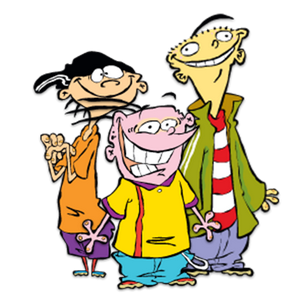
In this example, there is Ed, and everything external to Ed, including Edd and Eddy is Ed’s universe. As for Edd, everything external to him including Ed and Eddy is his universe. The same case applies to Eddy — even though Eddy likes to boss the other two.
Every organism is a system. Every system is unique because of this map. Therefore, you are unique because of this map.
You have your universe and I have my own.
Despite our different universes, our organ systems allow us to establish robust predictions and perceptions of reality. What this means, for instance, is if we’re from the same city, you can see the sunrise at the same time as me. The various overlaps of our universes allow us to share a reality.
A different set of organs and perceptive systems would paint different realities for each of us. Consider:
The mantis shrimp has the broadest range of vision known in the animal kingdom. Bats use echolocation to visualize their paths. The blind can use guiding sticks to navigate their way about their duties.
An animated sphere (a 3D object) can have a difficult time convincing an animated circle (a 2D) object that reality is 3 dimensional when the circle has always known things to be two-dimensional. (In reality, a sphere will see two dimensions and a circle one dimension, but these are unnecessary details).
Now, if you have your universe and I have mine, then our stories can never be the same.
Consider identical twins who had perfect genetic duplication and the same environmental background. According to the genetic view of life, these entities are similar. A gene-centered view further elaborates on how the genes are identical.
But remember, we already established a map.
If we summon the power of the map, these two entities are different, even at the genetic level. By extension, their stories will be different.
I develop this argument extensively in my book. But for now, this article is a snippet of the core idea.
If you are unique, from a physics perspective, what does it mean?
Up to that point, it was basically physics.
I will only pull you back to mathematics because Mos Def told his unique story using that title as a song.
Using the map, we are unique.
We do have eight million stories to tell.
But there’s more…
Subscribe to the lightest newsletter on the Internet for a one-four-all & all-four-one weekly feed, because all you need is one alternative view, only one, to edge you closer to extreme value creation, but I give you four.


