avatarMAG

Free AI web copilot to create summaries, insights and extended knowledge, download it at here

3766

Abstract

articiple </b>is followed by has/have/had</p><p id="4f9f">For example: (Present Tense) They <b>have not played</b> cricket today. Sara and Jake <b>have taken </b>the exam.<b> </b> They <b>have not burnt</b> their boats. The children <b>have not gone </b>today. These gadgets <b>have done </b>well.</p><p id="8bd5">For example: (Past Tense) They <b>had not played</b> cricket today. Sara and Jake <b>had taken </b>the exam.<b> </b> They <b>had not burnt</b> their boats. The children <b>had not gone </b>today. These gadgets <b>had done </b>well.</p><p id="38aa">For example: (Future Tense) They <b>will have not played</b> cricket today. Sara and Jake <b>will have taken </b>the exam.<b> </b> They <b>will have not burnt</b> their boats. The children <b>will have not gone </b>today. These gadgets <b>will have served </b>well.</p><blockquote id="337d"><p><b>Hard work and perseverance is a key to success</b></p></blockquote><p id="f5d2"><b>5. Pronouns I/we/they/you are </b>followed by the Plural verbs in Present Tense</p><p id="403b">For example: (Present Tense) They <b>play</b> cricket today. Sara and Jake <b>take </b>the exam.<b> </b> They <b>burn</b> their boats. The children <b>have got toys</b>. These gadgets <b>shine bright</b>.</p><p id="ff80"><b>6. Auxiliary Verb ‘did’ take the first form of the Verb</b></p><p id="5e78">For example: (Present Tense) They did play every day. Sara and Jake did not come back.<b> </b> <b>Did they burn</b> their boats? The children did not make a noise in the class. These gadgets <b>did shine bright</b>.</p><p id="7d52">And the Second form of <b>the verb </b>is used if ‘<b>did</b>’ is absent in Past Tense</p><p id="1170">For example: (Present Tense) They <b>played</b> cricket yesterday. Sara and Jake <b>took </b>the exam last week. They <b>burnt</b> their boats centuries ago. The children <b>got new toys</b>. They <b>bought</b> these gadgets.</p><p id="f7cd"><b>7. Phrase or Clause takes the Singular Verb. What is a Phrase- a phrase is a group of words, </b>such as in the morning, at the nick of time, most of the students, by and large etc.</p><p id="6898"><b>What is a Clause- a clause is a sentence that takes its own subject</b> and predicate, such as They make noise in the class. (‘they’ is subject; ‘make a noise is a predicate.</p><blockquote id="20d3"><p>The end of all knowledge should be service to others. — Cesar Chavez</p></blockquote><p id="9c97">For example: (Present Tense) <b>His consecutive absence</b> has made me upset. (phrase) <b>He smokes a lot of cigarettes (that) </b>irritates me much. (clause) <b>The training I receive in school</b> helps me now. (phrase) <b>All that glitters </b>is not gold. (a clause) They have <b>bought</b> these gadgets. Service to mankind <b>is</b> a great virtue.</p><figure id="1511"><img src="https://cdn-images-1.readmedium.com/v2/resize:fit:800/1*r9Y-9v_CxeBP_qsjFWyIlg.png"><figcaption>Screenshot by the writer</figcaption></figure><blockquote id="0e49"><p><b>Always be yourself, express yourself, have faith in yourself, do not go out and look for a successful personality and duplicate it. Bruce lee</b></p></blockquote><div id="b643" class="link-block"> <a href="https://basicenglishgrammaronline.blogspot.com/2023/04/mcqs-for-first-year-english.html"> <div> <div> <h2>MCQs for First Year English</h2> <div><h3>Quiz in Javascript Self-Assessment Test Choose the correct option Question of Next Good Try! You Got out of Answers…</h3></div> <div><p>basicenglishgrammaronline.blogspot.com</p></div> </div> <div> <div style="background-image: url(https://miro.readmedium.com/v2/resize:fit:320/0*rZMKkCFBKVocuSYl)"

Options

</div>
          </div>
        </div>
      </a>
    </div><div id="9d6b" class="link-block">
      <a href="https://basicenglishgrammaronline.blogspot.com/2023/04/100-verb-correction-for-all.html">
        <div>
          <div>
            <h2>100 Verb Correction for All</h2>
            <div><h3>Quiz in Javascript Self-Assessment Test Choose the correct option Question of Next Good Try! You Got out of Answers…</h3></div>
            <div><p>basicenglishgrammaronline.blogspot.com</p></div>
          </div>
          <div>
            <div style="background-image: url(https://miro.readmedium.com/v2/resize:fit:320/0*CNbtkcxxepfzprs1)"></div>
          </div>
        </div>
      </a>
    </div><h1 id="b728">Choose the correct option-Verb</h1><p id="9668">1. These plants ___ plenty of water.

A) needs B) need C) to need D) needing ANSWER= (B)<b> need</b> Explanation: the’ plants’ is a plural noun</p><p id="cfe0">2. Children ___ plenty of milk. A) drinks B) drinking C) to drink <b>D) drink</b> ANSWER= (D)<b> drink</b> Explanation: ‘<b>Children</b>’ is a plural noun</p><p id="06ae">3. She always ___ good novels. A) reads B) reading C) to read D)reading ANSWER= (A)<b> reads </b> Explanation: ‘<b>She</b>’ is a singular pronoun</p><p id="a568">4. Those who work hard _____ in life. A) succeeds B) succeed C) to succeed D) succeeding</p><p id="146e">5. They _____ the books on the table. A) lied B) laid C) to lay D) laying</p><p id="58b2">6. We did not _____ to them. A) lied B) laid C) to lay D) lie</p><p id="bfea">7. The hens have not _____ the eggs. A) lied B) laid C) lay D) laying</p><p id="a1df">8. Did they _____ their books? A) buys B) bought C) buy D) Buying</p><p id="cda2">9. He did not _____ the exam last week. A) took B) takes C) to take D) take</p><p id="ef21">10. What will they _____ without me. A) do B) does C) to do D) doing</p><p id="d62e">11. Those who work hard will be _____. A) rewards B) rewarded C) to reward D) reward</p><p id="40a1">12. He does nothing only _____ in the air. A) built B) builds C) to build D) build</p><p id="0075">13. Water _____ its level. A) keep B) keeping C) to keep D) keeps</p><p id="f4a0">14. The hens _____ eggs throughout the year. A) lied B) laying C) to lay D) lay</p><p id="b314">15. Did she _____ new books? A) buys B) bought C) buy D) Buying</p><p id="92e6">16. He did not _____ qualify for the test. A) qualified B) qualify C) to qualify D) qualifies</p><p id="8fac">17. Inquiry into the nature _____ one to find ground realities. A) to lead B) lead C) leads D) leading</p><p id="69c9">18. Did she _____ her breakfast? A) eats B) ate C) to eat D) eat</p><p id="e25d">19. He does not _____ any regard for their neighbours. A) has B) have C) to have D) had</p><p id="3253">20. Two and two _____ four. A) makes B) is made C) making D) make</p><blockquote id="6189"><p>Answers: 4 (B) 5 (B) 6 (D) 7 (C) 8 (C) 9 (D) 10 (A) 11 (B) 12 (B) 13 (D) 14 (D) 15 (C) 16 (B) 17 (C) 18 (D) 19 (B) 20 (D)</p></blockquote><blockquote id="b579"><p><b>Success consists of going from failure to failure without loss of enthusiasm. — Winston Churchill</b></p></blockquote><figure id="a0e2"><img src="https://cdn-images-1.readmedium.com/v2/resize:fit:800/1*cdkEkBCLHBxQ-3PeD6Ijow.png"><figcaption>Powerpoint Slide</figcaption></figure><p id="54dd">There are many other important grammar rules in English but after a long teaching experience, I have come to know that these seven rules must be exercised thoroughly. I guarantee you a good understanding of the basic English grammar rules.</p><p id="2c57">You can visit Google and type: “Basic English Grammar by Masood Sadiq” for more self-assessment tests.</p></article></body>

Seven Basic Grammar Rules in English

English Grammar is not as difficult as it is supposed to be. There are just seven basic English Grammar rules that you need to learn and that would help you to learn the rest of the grammar rules. You can minimise your maximum errors which are as follows:

Pexels images by thought catalogue
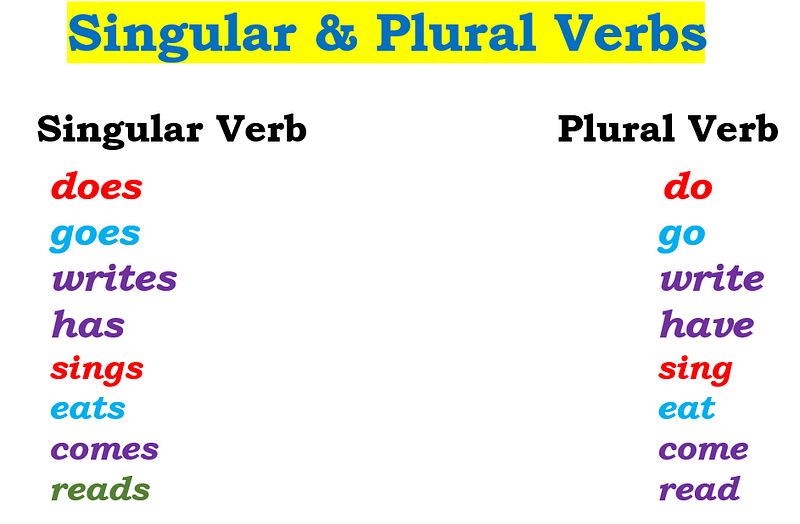
Screenshot by the writer

The Singular Noun takes a Singular Verb in the Present Tense.

For example: He plays cricket daily. She likes to sing songs. It burns quickly. John goes to the office by bus. Sara works very hard.

2. The Plural Noun takes a Plural Verb in Present Tense.

For example: They play cricket daily. Sara and Jake like to play tennis. They burn the pieces of paper. Children go to the office by bus. These gadgets work better.

3. Only a Singular Verb is followed by do/does/did/will/shall

For example: (Present Tense) They do not play cricket daily. Sara and Jake do not like each other. They do not burn their books. Children do not go to the office by bus. These gadget does not work better.

For example: (Past Tense) They did not play cricket yesterday. Sara and Jake did not like each other. They did not burn their books yesterday. The children did not go to the office by bus last week. These gadgets did not work better.

For example: (Future Tense) They will not play cricket daily. Sara and Jake will like to play tennis. They will not burn their books. Children will not go to the office by bus. These gadgets will work better. She will not take the games We shall wait for you.

Never feel hesitation to make mistakes. Your mistakes will lead you correction

4. Only the Past Participle is followed by has/have/had

For example: (Present Tense) They have not played cricket today. Sara and Jake have taken the exam. They have not burnt their boats. The children have not gone today. These gadgets have done well.

For example: (Past Tense) They had not played cricket today. Sara and Jake had taken the exam. They had not burnt their boats. The children had not gone today. These gadgets had done well.

For example: (Future Tense) They will have not played cricket today. Sara and Jake will have taken the exam. They will have not burnt their boats. The children will have not gone today. These gadgets will have served well.

Hard work and perseverance is a key to success

5. Pronouns I/we/they/you are followed by the Plural verbs in Present Tense

For example: (Present Tense) They play cricket today. Sara and Jake take the exam. They burn their boats. The children have got toys. These gadgets shine bright.

6. Auxiliary Verb ‘did’ take the first form of the Verb

For example: (Present Tense) They did play every day. Sara and Jake did not come back. Did they burn their boats? The children did not make a noise in the class. These gadgets did shine bright.

And the Second form of the verb is used if ‘did’ is absent in Past Tense

For example: (Present Tense) They played cricket yesterday. Sara and Jake took the exam last week. They burnt their boats centuries ago. The children got new toys. They bought these gadgets.

7. Phrase or Clause takes the Singular Verb. What is a Phrase- a phrase is a group of words, such as in the morning, at the nick of time, most of the students, by and large etc.

What is a Clause- a clause is a sentence that takes its own subject and predicate, such as They make noise in the class. (‘they’ is subject; ‘make a noise is a predicate.

The end of all knowledge should be service to others. — Cesar Chavez

For example: (Present Tense) His consecutive absence has made me upset. (phrase) He smokes a lot of cigarettes (that) irritates me much. (clause) The training I receive in school helps me now. (phrase) All that glitters is not gold. (a clause) They have bought these gadgets. Service to mankind is a great virtue.
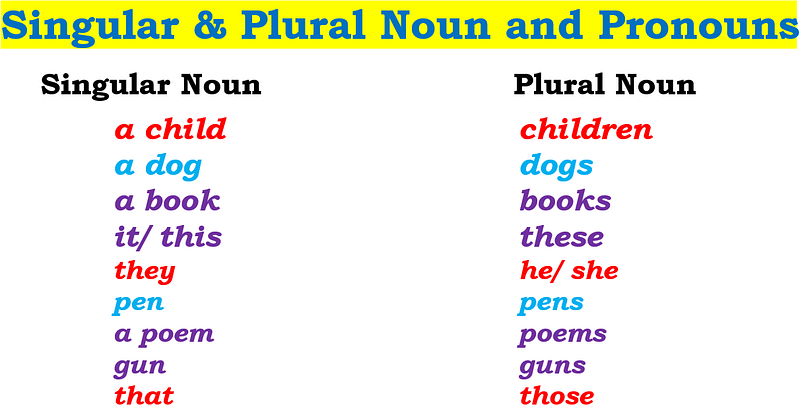
Screenshot by the writer

Always be yourself, express yourself, have faith in yourself, do not go out and look for a successful personality and duplicate it. Bruce lee

Choose the correct option-Verb

1. These plants ___ plenty of water. A) needs B) need C) to need D) needing ANSWER= (B) need Explanation: the’ plants’ is a plural noun

2. Children ___ plenty of milk. A) drinks B) drinking C) to drink D) drink ANSWER= (D) drink Explanation: ‘Children’ is a plural noun

3. She always ___ good novels. A) reads B) reading C) to read D)reading ANSWER= (A) reads Explanation: ‘She’ is a singular pronoun

4. Those who work hard _____ in life. A) succeeds B) succeed C) to succeed D) succeeding

5. They _____ the books on the table. A) lied B) laid C) to lay D) laying

6. We did not _____ to them. A) lied B) laid C) to lay D) lie

7. The hens have not _____ the eggs. A) lied B) laid C) lay D) laying

8. Did they _____ their books? A) buys B) bought C) buy D) Buying

9. He did not _____ the exam last week. A) took B) takes C) to take D) take

10. What will they _____ without me. A) do B) does C) to do D) doing

11. Those who work hard will be _____. A) rewards B) rewarded C) to reward D) reward

12. He does nothing only _____ in the air. A) built B) builds C) to build D) build

13. Water _____ its level. A) keep B) keeping C) to keep D) keeps

14. The hens _____ eggs throughout the year. A) lied B) laying C) to lay D) lay

15. Did she _____ new books? A) buys B) bought C) buy D) Buying

16. He did not _____ qualify for the test. A) qualified B) qualify C) to qualify D) qualifies

17. Inquiry into the nature _____ one to find ground realities. A) to lead B) lead C) leads D) leading

18. Did she _____ her breakfast? A) eats B) ate C) to eat D) eat

19. He does not _____ any regard for their neighbours. A) has B) have C) to have D) had

20. Two and two _____ four. A) makes B) is made C) making D) make

Answers: 4 (B) 5 (B) 6 (D) 7 (C) 8 (C) 9 (D) 10 (A) 11 (B) 12 (B) 13 (D) 14 (D) 15 (C) 16 (B) 17 (C) 18 (D) 19 (B) 20 (D)

Success consists of going from failure to failure without loss of enthusiasm. — Winston Churchill
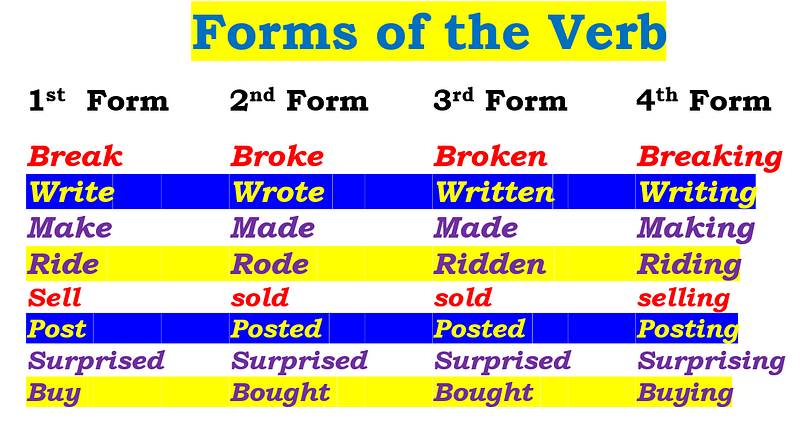
Powerpoint Slide

There are many other important grammar rules in English but after a long teaching experience, I have come to know that these seven rules must be exercised thoroughly. I guarantee you a good understanding of the basic English grammar rules.

You can visit Google and type: “Basic English Grammar by Masood Sadiq” for more self-assessment tests.

English Language
English Learning
ESL
English Speaking Course
English
Recommended from ReadMedium