
Setting My Sights on the Stars
Why Star Trek: Picard may just be the best sci-fi show yet
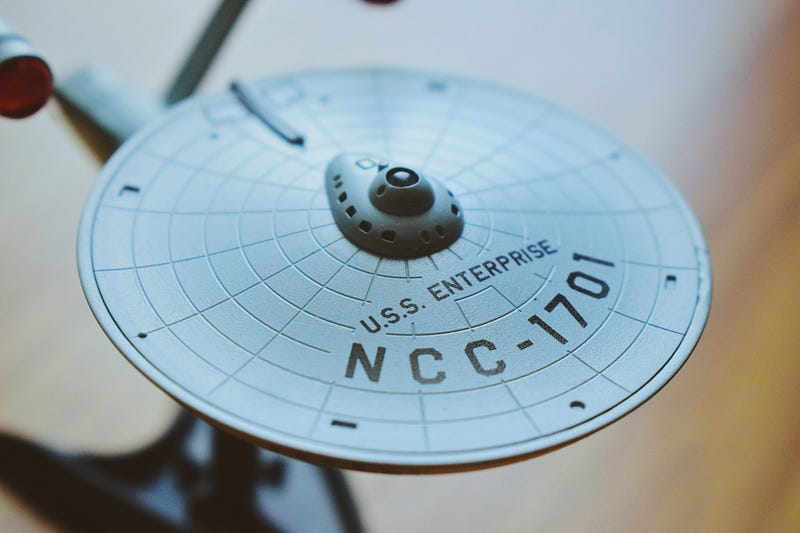
I am a lifelong ‘Trekkie’, I’ve watched every episode of every series except The Original Series (TOS) — but that’s more because of a lack of interest in that time period in general. I just don’t really like shows from the 60's.
I got hooked on Star Trek: The Next Generation (TNG) around the age of ten when I discovered it on tv and it opened up whole worlds of possibility to me. Of course, at the age of ten (and even for the years after it) there is a very willing suspension of disbelief that allows you to soak up everything you see. I watched as Wil Wheaton got to live out my dream of working on a starship every week. I can’t tell you how many times I imagined myself as an acting ensign and learning the intricacies of a vessel in deep space.
It’s a perspective that I’ve never lost, even using it to help build the world of the Kanata, a fictional generational deep-space vessel that is at the heart of a series of short stories and novels I’m working on. Being able to see the workings of the USS Enterprise (NCC-1701-D) means that I can add reality and life into my fictional ship design by drawing on the things I saw on the screen.
But as much as I loved (and continue to love) TNG, it was often a little too idealistic for my taste. It lost some of its realism by presenting a future that was just a little too good, too clean, too sanitized. Oh, they still dealt with thought-provoking situations and used science fiction as allegory for real-life problems, but it was just a little too clean.
I originally started to watch Picard out of a sense of nostalgia. I have admired both the character and the actor for the better part of my life, and that admiration has only grown with social media and being able to see inside parts of Patrick Stewart’s life. He is an excellent example of healthy masculinity, and his bromance with Ian McKellan is a friendship for the ages!
So, when I heard that he was coming back to the Star Trek universe as an aged Picard, I knew that this was a series that I’d be watching as much as possible.
I have yet to be disappointed.
From the very beginning, Picard has felt more realistic and more possible than any other Star Trek outing I’ve seen. While many of my old friends are there, we are introduced to a whole new group of people, and most of the first season takes place entirely outside of the Federation. While it is certainly present as a character, Gene Rodenberry’s fictional Federation of Planets is not at the center of this story as it is in all of the other iterations of Stark Trek.
Instead, we see an aging hero working to live out his days as best he knows how. While he was driven back into action in the first season by passion and love for his fallen android friend, Data, the second season finds him back in the embrace of Starfleet where we all expected him to be.
That doesn’t last.
I’m not going to spoil it for anyone who hasn’t seen the series yet, but more people need to see this series.
The Best Trek
So, why is Picard the best iteration of Trek?
Because it removes everything that made me fall in love with Star Trek in the first place — so I can fall in love with it all over again.
To start with, there is no ship, no station around which the storyline focuses.
There has always been a ship (or in the case of DS9, a station)— whether it was the Enterprise, Voyager, Discovery, Cerritos, the Defiant, or DS9 itself. While some of Picard does take place on a ship, the ship itself is only a minor character, one that serves to enable the story instead of being the story.
The heart of the first season really is the question of what happens to heroes when their stories end. Do they retire graciously to the comforts of a family vineyard, or do they continue to yearn for the stars and to seek out new life and new civilizations?
I’m floored by the way that the writers, directors, and producers bring old friends back into the fold almost seamlessly — or at least in ways that feel natural. While Seven of Nine would certainly have been aware of who Jean-Luc Picard was, when these two powerful narratives meet in Picard, their alliance doesn’t seem forced.
The same is true when Admiral Picard finds himself in need of allies and joins (the now married and retired) Troi and Riker for an episode that brings back some familiar faces for a story that speaks to the bonds forged by co-workers who become friends and years of working together.
Ultimately, what makes Picard work is the step away from science fiction as the primary narrative, and into the human stories that are found in the Star Trek Universe. Picard isn’t a science fiction series, it is a series about humans that happens to be told through science fiction.
While I could only dream of sitting at the conn of the USS Enterprise like Ensign Crusher did, I can find myself reflected all over the place throughout Picard — and I think that is true for most people. The heart of what makes Picard the best of Trek is a man whose heart was ripped to shreds by a Nausicaan as a young man — and all the other people around him.
Where other series have led with sci-fi, this one leads with heart — and that’s what makes it work.