
Seriously, Laziness Does Exist
Don’t let anyone bamboozle you into thinking it doesn’t
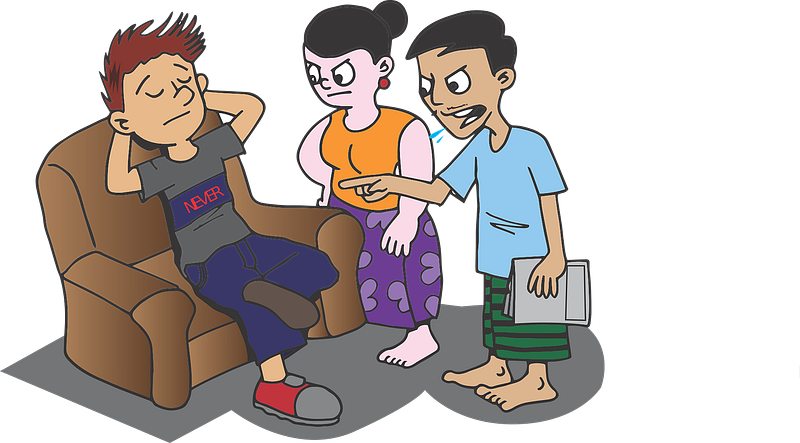
You’re not malingering when you lie on the couch covered in popcorn, surrounded by old pizza boxes and stale coffee and grime.
You’re just smart. You’re figuring out the meaning of life, or that’s what you can say if anyone asks. After all, there’s a study to back up the idea being a layabout goes hand-in-hand with a busy mind.
Research suggests intelligence is reflected in the lazy individual’s imagination superhighway that hums below visibility.
The argument in favor of lollygagging to your heart’s content because it shows how intelligent you are, falls flat, though, when you recognize the subtle difference between thoughtful contemplation and stagnation.
Bright people do contemplate life’s problems and find solutions when they aren’t doing anything too taxing. They might be in the shower, sitting on the toilet, or walking the dog.
Then again, wonderful insights might stream when you practice mindfulness, meditate, or assume a yoga pose.
But real, larger-than-life laziness occurs all the time, and it has nothing to do with Einstein-like tendencies.
There might be a good reason you look lazy
Sometimes, people become couch potatoes because they are upset, bored, or fed up. Often, they lack motivation.
You might also appear lazy if you are depressed. Your lack of get-up-and-go, however, is a symptom of disease rather than a choice, something people around you might not recognize if they don’t understand.
Leon F. Seltzer, Ph.D., writing for Psychology Today, rightly mentions dismissing someone glibly as ‘lazy’ when there’s a good reason they don’t feel like being active is harmful. It overlooks the cause of the problem — if, indeed, it is a problem.
Sometimes, Seltzer proposes, we call people lazy because they aren’t doing what we think they should do; who is to say we are right? Maybe they just disagree with our view they should paint the front room or clean the oven.
Loafing because you secretly hope someone else will wash up, take out the trash, and mow the lawn is a tactic that leads to alienation. The person taking the slack will resent you, and your relationship will decline.
What if your propensity to shirk is genetic and has nothing to do with personal ethics or mental health? Research shows if previous generations of your family liked to lounge rather than sprint, you might inherit their disposition.
You need not be an athlete if your instincts don’t align with physical exercise, nonetheless, and can probably manage the US Federal guidelines suggest thirty minutes of exercise a day.
There is such a thing as being ‘too lazy’
Why bother, though, you might wonder? If you aren’t ill due to lack of exercise, surely avoiding too much movement can’t be damaging? Well, think again. An ANU (Australian National University) archaeological study suggests Homo erectus — people before Homo sapiens — died out because they were lazy ( although I prefer to give them the benefit of the doubt; climate change, perhaps?)
For all we know, early humankind thought about essential subjects just before they became extinct. The point is if the study is correct, and they did, it didn’t help them.
Thinking is only useful if it’s effective. It has to lead to positive change, or it’s not as intelligent as it looks. So, even if you consider dilemmas while lolling around, your brain’s tendency to wander isn’t useful unless you get up at some point and do something productive.
If Homo erectus, researchers state, searched a little further afield for resources — food, plus materials to make tools — they probably would have survived.
There’s nothing wrong with relaxation
What, though, is wrong with doing absolutely nothing simply because you can?
There’s a time for everything, including relaxing without the intention to ‘do’ something. In our modern world, we are keen to make every moment productive. Even the idea you’re busy finding solutions while you ponder existence suggests the need to generate valuable results as you relax.
It’s okay to veg out indolently now and then. You can laze until the call to take action arises. When you sit back and relax, without the pressure to do anything, you recuperate, which is a good thing.
However, knowing when relaxation turns into deterioration might stop you from becoming defunct.


