
Marketing / Technology
3 Popular SEO Myths That Harm Your Ranking
According to John Mueller at Google
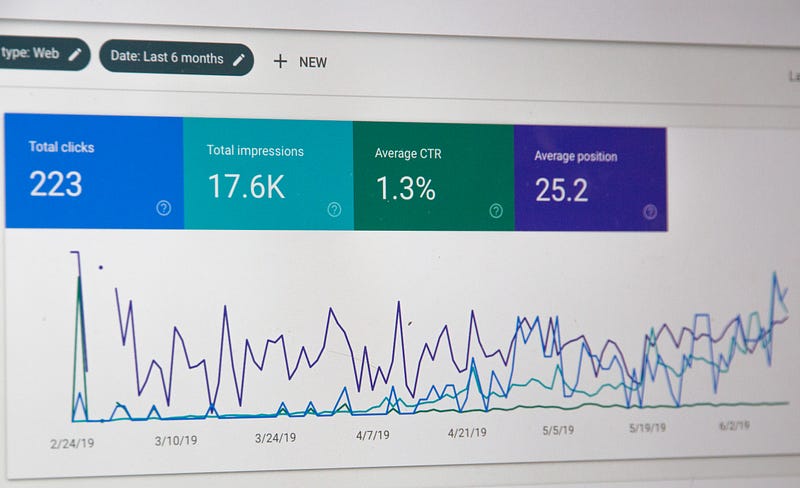
There are many myths surrounding SEO.
The reason might be that Google and others hardly grant insight into their algorithms.
But trial and error is not an option. Thank god, there are clear facts about what is good and what is terrible in SEO.
Here are three popular myths you should not listen to anymore, according to John Mueller, a Webmaster Trends Analyst at Google.
1. The keyword domain is best for ranking
You can spend a lot of money on a good domain.
Domains like money.com, times.com, and voice.com are worth a fortune and have been traded repeatedly for millions.
What makes these so good?
They are short, easy to remember, and look very professional. The mentioned domains also have one thing in common — they contain a keyword, i.e., a possible term that someone enters in a search engine.
The general belief is that search engines also take the domain into account. So a website with the domain money.com will rank better for the keyword “money” than the domain petshop100.com.
But that is not true. Domains are for humans. Not for machines like the Google algorithm.
It would be a bit unfair if the domain played a role in the ranking. If the good domains are all taken, new competitors only have a smaller chance to keep up in the ranking.
The choice of the domain does not influence the ranking in the search engines — the content and the reputation of the website are essential.
John Mueller from the Google team also confirms this:
2. The Meta Description influences your ranking directly
The meta description is the short description directly below the title of a website.
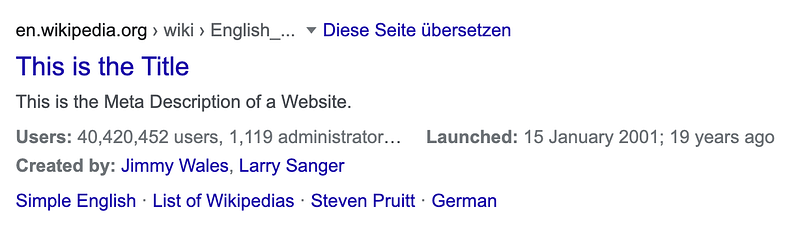
We can define the content ourselves thanks to the<meta name="description" content=""> tag in HTML. If you don’t set a description manually, Google will take one from our page itself.
Although the description can be just a few sentences, some people make a huge mistake: they assume that it directly influences the ranking.
For this reason, they try to include as many relevant keywords as possible. But this is not a good idea.
The problem is that the meta description does not directly influence the ranking. Search engines will not rank your page based on the content of your description.
Nevertheless, the meta description does matter for your ranking. It is essential to understand that it influences it indirectly. This is precisely why squeezing keywords into it is not a good idea — the description should look appealing, helpful, and attractive.
If you don’t take this into account, users won’t even open up your website.
Fewer clicks will result in less traffic and may signal to search engines that your page is irrelevant. Less relevance leads to a worse ranking.
Again, also John Mueller confirms this:
3. You need a specific keyword density
Keywords are essential to rank a page successfully. They give the search engine information about the content of the website.
For the end-user, keywords are relevant. When I search for “dog food,” I am most likely to click on a website with the words “dog food” in the title.
Even if it is not in the title, it makes sense to place the keyword in the first lines. Therefore, the user knows that he has found something relevant.
Keywords are also indirectly essential for the ranking. Because if the user feels lost on the page, he will leave it. A quick return to the search engine’s results page is considered a sign of low relevance.
Precisely this effect can also work in reverse. Once upon a time, the so-called keyword stuffing worked nicely. This technique means placing many keywords invisibly on the page or including them everywhere in the text.
Yes, it was about deceiving the search engine. Even today, many webmasters try to place as many keywords as possible.
The problem: Placing too many keywords can be seen as stuffing and could get punished.
Indirectly, it can also lead to inferior and unserious texts on the website. Due to a bad reading experience, the user will leave the site early. Just imagine how awful a text is that repeats the same word over and over again.
A good guideline is to write content for the user, not for the search engine.
All significant improvements in crawler algorithms have precisely that as their goal. It’s about rewarding user-friendly websites, not just machine-friendly websites.
Don’t worry if your keyword is not in every second sentence. The crawlers will usually understand it that way, and it will make your texts much more readable.
Keyword density in general is something I wouldn’t focus on. Search engines have moved on from there. — John Mueller


