avatarJeffrey Goodman

Free AI web copilot to create summaries, insights and extended knowledge, download it at here

9400

Abstract

id="dabb">That’s about it in terms of framing and problem definition. It seems pretty simple and easy to digest, right?</p><p id="04f0"><i>If your instincts are telling you that it</i><b> isn't</b><i> that simple and that maybe the Chinese aren't the real villains on this . . . keep reading.</i></p><figure id="49f1"><img src="https://cdn-images-1.readmedium.com/v2/resize:fit:800/1*fPEuLOBD9eKLQcIi9SW8wg.jpeg"><figcaption>A piece of unprocessed silicon. Photo by author, 2022</figcaption></figure><h2 id="b358">An inferior semiconductor business model for the 21st century. Inept senior management and operational failure at Intel over the past decade.</h2><p id="2cff">Here’s what has really been going on.</p><p id="ccb3"><b>First and most important, (1) the remaining US semiconductor manufacturers</b> (primarily but not exclusively Intel) <b>are still using a last-generation integrated manufacturer business model</b> to compete against (2) <b>Taiwanese (TSMC) and Chinese companies (SMIC) that use the newer semiconductor foundry business model</b>.</p><p id="29a1"><b>Bottom line up front:</b> when it comes to the economics of the semiconductor business, <b>the “semiconductor foundry” business model is superior to the 60 year-old “integrated device manufacturer” business model.</b></p><ol><li><b>OLD BUSINESS MODEL Integrated device manufacturers (IDMs) such as Intel design, manufacture, market, sell, and support the chips that they themselves bring to market.</b> They make huge capital investments to build the ever-more-expensive semiconductor fabrication lines. (“Fabrication line” or “fab line” is basically just a fancy way of saying “factory line that makes semiconductor chips.”) The fixed costs and variable costs of the fab lines that these<b> integrated device manufacturers</b> have invested in get spread out across the revenues of the chips they design, build, and sell for themselves. The more chips these IDM’s make, the larger a number of chips they have to spread the fab line capital costs across.</li><li><b>NEW BUSINESS MODEL Semiconductor foundries, by contrast, ONLY manufacture chips for other companies that these other companies (known as “fabless design houses”) have designed.</b> Foundries make massive investments in their semiconductor fab lines and in their manufacturing operations, and they take designs from <b>OTHER</b> companies and manufacture chips for those companies that those other companies then go ahead and market, sell, and support. An example of this would be Apple as a “fabless design house” doing the design work for their new M-series of high performance, low power consumption processor chips sending their designs to TSMC’s semiconductor foundry in Taiwan where TSMC will then go on to mass-produce these M1 and M2 processors for Apple.</li></ol><p id="222a"><b>Foundries include such companies as:</b></p><ul><li>TSMC (Taiwan Semiconductor Manufacturing Company),</li><li>UMC (United Microelectronics Corporation; Taiwan),</li><li>Global Foundries (Singapore, Europe, U.S.),</li><li>SMIC (Semiconductor Manufacturing International Corporation; China), and</li><li>Samsung Group (South Korea).</li></ul><figure id="c2f9"><img src="https://cdn-images-1.readmedium.com/v2/resize:fit:800/0*g_l60vh2TAhq0Flq"><figcaption>Photo by <a href="https://unsplash.com/@younis67?utm_source=medium&amp;utm_medium=referral">L N</a> on <a href="https://unsplash.com?utm_source=medium&amp;utm_medium=referral">Unsplash</a></figcaption></figure><h2 id="187f">More context about semiconductor manufacturing</h2><p id="cc27">There are thousands of points in the semiconductor fabrication process where something can go wrong. Because a single wafer can have thousands of individual chips on it, each wafer represents a huge investment of time, potential revenue, and potential profit.</p><p id="2ca0">Having yields of fully functional, shippable chips on wafers be as high as possible makes a large difference when it comes to revenues for the foundries . . . and even more so when it comes to their profits. Each extra percentage point of “yield” of functional chips on a wafer represents additional revenue that will — to a large extent — drop straight down to the bottom line profit for the foundry.</p><p id="cb76">Whether a company gets high yields or low yields on their wafers depends greatly on how much volume running through the factories and fab lines. The more volume that an operations team manufactures, the better they get at it. They fix problems, they optimize their processes, they how to tweak things to get better and better yields as time goes on. They constantly learn.</p><p id="8f50">Also, since the capital expense is so huge, foundries and integrated device manufacturers alike want to be running their factories as many hours of the year as they can.</p><p id="ccca">Bottom line, it is very much in the interest of a company that has made a huge investment in a semiconductor fab line to keep it running as many hours of the year as possible.</p><h2 id="80fa">Now, imagine two hypothetical scenarios</h2><ol><li><b>Intel has made a 10 billion investment in a next-generation fab line, and they plan on manufacturing, say, Radeon chips on it.</b> If there is a lot of market demand for that chip, they can keep that fab line running pretty much the entire year. <b>That's the optimistic scenario. </b>The pessimistic scenario would be if, say, companies like Apple decide to start designing and manufacturing their own next generation processor chips. Maybe at that point, Intel's market demand for Radeon chips decreases by, say, 50%. (<i>To be clear, I am making up these numbers for illustration purposes only.</i>) At that point with the lower market demand for that chip, <b>when you spread the same fixed cost across half as many chips, the <i>fixed cost per chip</i> will have doubled.</b> High utilization rates for fab lines are critically important to the business economics and financials.</li><li><b>Now imagine that TSMC has made a similar 10 billion investment in a next-generation fab line. But in TSMC's case, they have probably thousands of customers that they are building chips for. </b>So TSMC really doesn't care<i> that much</i> if 1 or 2 or 20 of their customers end up needing less manufacturing capacity during the year than originally projected. They have an incredibly large portfolio of customers for whom they are manufacturing chips. They do not have the kind of risk exposure that Intel does where “one particular chip” not selling well can have a huge impact on their factory utilization rate.</li></ol><h2 id="986b">To summarize, the “Semiconductor Foundry” business model is superior for these reasons:</h2><ul><li><b>The Foundry Model is less risky. </b>When hundreds or thousands of “fabless design houses” use a company like TSMC to manufacture all of their different chip designs, this means <b>a more reliable, more diversified source of high volumes of chip orders to run through thechip foundry</b>. TSMC does NOT have have the kind of concentrated, unmanageable risk that an integrated device manufacturer like Intel does.</li><li><b>Higher profit margins. </b>Higher volumes mean that the <b>semiconductor foundry manufacturing engineers “get more practice” running the lines and increasing yield.</b> Increased yields make a huge difference for corporate profit margins.</li><li><b>Ability to produce shippable chips more rapidly. </b>The “more practice” aspect also increases the probability that a semiconductor manufacturer can rapidly and reliably get a next-gen fab line up and going . . . and producing shippable chips. <b>(This might seem like a hypothetical, kind of benefit, but trust me — it is real.</b> <b>Intel was as much as 3 chip generations behind TSMC over the past several years,</b> and this had a MASSIVE impact on Intel’s business. Indeed, it’s safe to say that Intel being so unreliable and so far behind was a major reason —<i> if not the <b>major</b> reason</i> — why Apple abandoned Intel as their primary source for microprocessor chips. Intel had proven beyond any reasonable doubt that they were incapable of keeping up. No “smart money” would have bet on Intel.)</li><li><b>Customers trust a pure-play semiconductor foundry more than they would trust an IDM trying to be half-pregnant with the foundry model.</b></li></ul><p id="2341">If we take TSMC and Intel as examples of the 2 different business models and only look at 2 high-level metrics of success — <b>(1) corporate profitability and (2) ability to continuously be able to manufacture at the very most cutting edge</b> —TSMC has been destroying Intel for at least the past decade.</p><p id="e01e"><i>It hasn't even been close.</i></p><p id="0ae3"><b>Again, look at Apple.</b></p><ol><li><b>Apple abandoned their longtime supplier, Intel, </b>because Intel couldn’t keep up with Apple’s desire to keep increasing the performance of their Macintosh computers.</li><li><b>Apple then began manufacturing their own chip designs with Intel’s competitor, TSMC</b>, and these new chips absolutely blow away Intel's in terms of performance and power consumption. <b><i>Again, it's not even close.</i></b></li></ol><div id="a744"><pre>Speaking <span class="hljs-built_in">from</span> personal experience, <span class="hljs-number">8</span> months ago I moved <span class="hljs-built_in">from</spa

Options

n> <span class="hljs-keyword">a</span> <span class="hljs-number">2017</span> <span class="hljs-number">13</span>-inch MacBook Pro <span class="hljs-keyword">with</span> <span class="hljs-keyword">an</span> Intel i7 processor <span class="hljs-built_in">to</span> <span class="hljs-keyword">a</span> <span class="hljs-number">2021</span> <span class="hljs-number">16</span>-inch MacBook Pro <span class="hljs-keyword">with</span> <span class="hljs-keyword">an</span> M1 Max processor.</pre></div><div id="c022"><pre>One <span class="hljs-keyword">of</span> <span class="hljs-keyword">the</span> main reasons I <span class="hljs-keyword">finally</span> upgraded <span class="hljs-keyword">last</span> year was that <span class="hljs-keyword">the</span> old Intel-based laptop was really feeling slow. And <span class="hljs-keyword">it</span> got noticeably hot even <span class="hljs-keyword">with</span> only <span class="hljs-keyword">normal</span> levels <span class="hljs-keyword">of</span> web browsing <span class="hljs-keyword">while</span> battery life (<span class="hljs-keyword">on</span> <span class="hljs-title">a</span> <span class="hljs-title">relatively</span> <span class="hljs-title">new</span> <span class="hljs-title">battery</span>) <span class="hljs-title">was</span> <span class="hljs-title">only</span> <span class="hljs-title">4</span> <span class="hljs-title">or</span> <span class="hljs-title">5</span> <span class="hljs-title">hours</span>.</pre></div><div id="b6d3"><pre>By contrast, <span class="hljs-keyword">my</span> <span class="hljs-number">2021</span> <span class="hljs-number">16</span>-inch MacBook Pro <span class="hljs-keyword">with</span> an Apple-designed, TSMC-manufactured M1 Max processor <span class="hljs-keyword">is</span> beyond fast. Power consumption-wise, <span class="hljs-keyword">it</span> feels like <span class="hljs-keyword">it</span>'s only taking tiny sips <span class="hljs-keyword">from</span> <span class="hljs-keyword">the</span> battery. I've been <span class="hljs-keyword">on</span> airplane flights <span class="hljs-keyword">where</span> I had <span class="hljs-keyword">the</span> screen <span class="hljs-keyword">set</span> <span class="hljs-keyword">not</span> too brightly, <span class="hljs-keyword">and</span> <span class="hljs-keyword">the</span> estimated battery life was more than <span class="hljs-number">20</span> hours. I net <span class="hljs-keyword">at</span> least <span class="hljs-number">10</span><span class="hljs-number">12</span> hours under regular <span class="hljs-built_in">day</span>-<span class="hljs-keyword">to</span>-<span class="hljs-built_in">day</span> conditions. As I <span class="hljs-built_in">write</span> this <span class="hljs-keyword">at</span> a coffee shop, <span class="hljs-keyword">the</span> <span class="hljs-keyword">last</span> <span class="hljs-number">4</span> hours <span class="hljs-keyword">of</span> usage has only used up <span class="hljs-number">25</span>% <span class="hljs-keyword">of</span> <span class="hljs-keyword">the</span> battery.</pre></div><div id="c697"><pre>And no <span class="hljs-keyword">normal</span> business usage makes this laptop hot enough <span class="hljs-built_in">to</span> <span class="hljs-built_in">start</span> <span class="hljs-keyword">the</span> fan running.</pre></div><div id="9173"><pre>Intel might catch up <span class="hljs-keyword">with</span> this <span class="hljs-keyword">in</span> terms <span class="hljs-keyword">of</span> performance, power consumption, <span class="hljs-keyword">and</span> battery life <span class="hljs-keyword">in</span> <span class="hljs-keyword">the</span> next few/several years . . . <span class="hljs-keyword">but</span> <span class="hljs-keyword">at</span> <span class="hljs-keyword">that</span> point I expect Apple <span class="hljs-keyword">and</span> TSMC will also have upped their game. There's no reason <span class="hljs-keyword">to</span> expect <span class="hljs-keyword">that</span> Apple <span class="hljs-keyword">or</span> TSMC would stand still <span class="hljs-keyword">over</span> <span class="hljs-keyword">the</span> next few years <span class="hljs-keyword">the</span> way <span class="hljs-keyword">that</span> Intel did <span class="hljs-keyword">over</span> much <span class="hljs-keyword">of</span> <span class="hljs-keyword">the</span> past <span class="hljs-number">10</span> years.</pre></div><figure id="cd73"><img src="https://cdn-images-1.readmedium.com/v2/resize:fit:800/0*jx-KUW9Gz04Efj9N"><figcaption>Photo by <a href="https://unsplash.com/@usmanyousaf?utm_source=medium&amp;utm_medium=referral">Usman Yousaf</a> on <a href="https://unsplash.com?utm_source=medium&amp;utm_medium=referral">Unsplash</a></figcaption></figure><h2 id="ed03">Why will the CHIPS Act have a tough time fixing the problem with our domestic semiconductor industry?</h2><ol><li><b>It doesn’t address the fact that U.S. companies are decades behind TSMC in starting on — <i>let alone perfecting</i> — the foundry business model.</b></li><li><b>There don’t seem to be serious provisions by Congress to manage these public investments in the semiconductor industry. </b>We don’t seem to be setting these investments up with performance conditions, and we don’t seem to be using the “<a href="https://www.upcounsel.com/tranche-investment">tranche</a>” approach to providing this investment money to our semiconductor companies, the way that smart venture capital companies parse out the money they invest in startups.</li><li><b>The CHIPS Act has a long-term time horizon. </b>Nothing comes on line that will impact things at a national level for at least 4–5 years…and it will probably be more like 5–7 years. There is a <b>massive disconnect between this fact and Biden’s promise</b> that “<a href="https://www.whitehouse.gov/briefing-room/statements-releases/2022/07/28/statement-from-president-biden-on-house-passage-of-chips-and-science-act-to-lower-costs-create-good-pay-jobs-and-strengthen-our-national-security/">the Chips and Science Act is exactly what we need to be doing to grow our economy right now.</a></li><li>It is probably very difficult — if not impossible — to maintain both an Integrated Device Manufacturer (IDM) business model and a Semiconductor Foundry model at the same time. <b>Although Intel says it will start foundry services, “smart money” would not bet on Intel successfully pulling this off.</b></li></ol><p id="e9d7">And yet huge amounts of money from the American people will apparently be used to make exactly that bet.</p><p id="4874"><b><i>Why?</i></b></p><p id="551f">The more you look at this, the more it looks like a <b>wasteful and poorly planned way to blow massive amounts of taxpayer money</b> just so senators and members of Congress can score political points in advance of the 2022 midterm elections.</p><p id="4a23">Isn’t this just the corporate version of the kind of “socialism” that American politicians love to scream bloody murder about when the beneficiaries are regular working Americans?</p><p id="a3bb"><b>Why don’t Biden and Congress apply the same standards to gifting vast amounts of money over many years to U.S. corporations?</b></p><p id="f96d">Count on the U.S. government to constantly come up with bigger-dollar versions of hypocrisy, cynicism, and laziness . . . especially when politicians have no long-term accountability and the money is going to their corporate donors.</p><p id="0694"><b>Call it <i>Semiconductor Socialism.</i></b></p><h1 id="0ec9">Related and recent articles</h1><p id="d7e5"><a href="https://bright52.medium.com/5-things-you-need-to-know-about-u-s-stock-buybacks-305db48ffd13"><b>5 Things You Need to Know About U.S. Stock Buybacks</b></a><a href="https://bright52.medium.com/the-1985-semiconductor-depression-vs-the-2022-semiconductor-demand-shock-337964a0203c"><b>The 1985 Semiconductor Depression vs. the 2022 Semiconductor Demand Shock</b></a><a href="https://bright52.medium.com/wtf-our-taxpayer-money-will-pay-for-intels-130-billion-in-stock-buybacks-and-dividends-1b5a42a2366a"><b>WTF! Our Taxpayer Money Will Pay for Intel’s $130 Billion</b></a> in Stock Buybacks and Dividends? • <a href="https://bright52.medium.com/5-things-you-need-to-know-about-u-s-stock-buybacks-305db48ffd13"><b>5 Things You Need to Know About U.S. Stock Buybacks</b></a><a href="https://bright52.medium.com/part-1-the-5-most-important-u-s-economic-events-over-the-last-50-years-290a08634252"><b>(Part 1) The 5 Most Important U.S. Economic Events</b></a> Over the Last 50 Years • <a href="https://bright52.medium.com/did-this-happen-by-accident-to-89-percent-of-americas-stock-market-wealth-fa393bf4654a"><b>Did This Happen by Accident to 89% of America’s Stock Market Wealth?</b></a></p><p id="b6de">(<a href="https://bright52.medium.com/subscribe"><b><i>Subscribe</i></b></a><i> to receive email notifications when I post new articles.</i>)</p><p id="752e"><b>Want me to cover a topic?</b> Please post suggestions in the comments, and I’ll use your input to help prioritize my writing and research.</p><p id="f315"><i>Again, thank you for reading, <a href="https://bright52.medium.com/subscribe"><b>subscribing</b></a>, clapping, and sharing — your time and attention are deeply appreciated!</i></p><p id="f35c"><a href="https://bright52.medium.com/about"><b>Jeffrey Goodman</b></a></p></article></body>

Semiconductor Socialism — Why Such a Rush to Pass the CHIPS Act?

“Money for nothing and CHIPS for free” is not a thing. Is the CHIPS Act only a $300B bill designed to boost polls for Congress and Biden?
Related and recent articles

5 Things You Need to Know About U.S. Stock BuybacksThe 1985 Semiconductor Depression vs. the 2022 Semiconductor Demand ShockWTF! Our Taxpayer Money Will Pay for Intel’s $130 Billion in Stock Buybacks and Dividends? • 5 Things You Need to Know About U.S. Stock Buybacks(Part 1) The 5 Most Important U.S. Economic Events Over the Last 50 Years • Did This Happen by Accident to 89% of America’s Stock Market Wealth?

(Subscribe to receive email notifications when I post new articles.)

Suddenly over the past week, the CHIPS Act has been back in the news.

Is this good news, or is it the foreshadowing of a $300 billion boondoggle that could end up hobbling the U.S. economy in addition to not really doing much for the U.S. semiconductor industry?

Mainstream corporate media has generally been telling us that this is AWESOME news.

But look at how few of the members of Congress voting in favor of the CHIPS Act have real business experience — and the fact that probably none of them have semiconductor industry experience. You have to:

  1. start wondering what we are are getting ourselves into; and
  2. get a little panicky over the rush to pass this Act without thrashing out issues to ensure that this expensive commitment can actually solve the semiconductor industry problems.

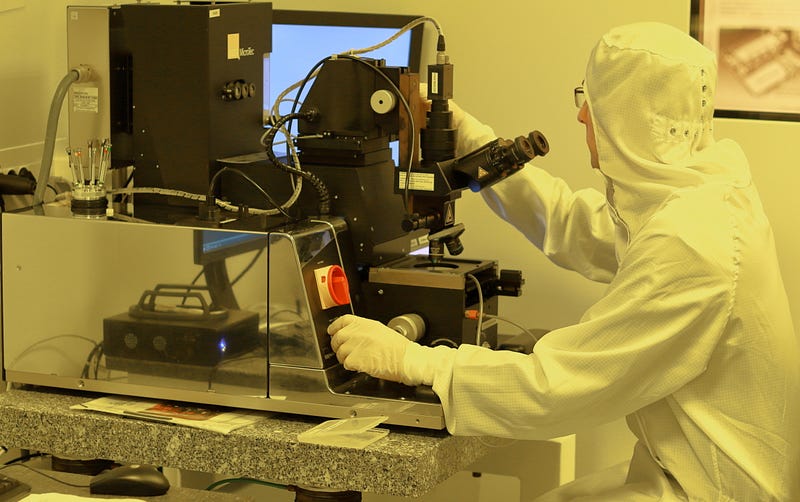
Photo by Zachary Nelson on Unsplash

Mainstream media outlets seem positively thrilled at the prospect of the CHIPS Act getting passed.

Can the CHIPS Act news really be this good?

Probably not.

Most of the coverage has been superficial, incomplete, and misleading, particularly from partisan cheerleaders CNN, MSNBC, NPR, New York Times, and Washington Post.

To be fair, a few media outlets — such as The Wall Street Journal, Bloomberg, and Vox — have actually been covering some of the underlying issues for the industry.

Along they way, they help explain why the CHIPS legislation is likely to only be (1) a windfall for an inferior business model and (2) a reward for poor leadership and substandard operational performance by Intel, the largest U.S. semiconductor company.

  • (Bloomberg) Chips Act Skips US Leaders for Asian Winners. “Long-awaited funding for the CHIPS Act is a win for a cabal of US chipmakers and foreign companies, but largely ignores the nation’s true semiconductor leaders who have been propping up the domestic sector for two decades….”
  • (Vox) The CHIPS Act won’t solve the chip shortage. “…while it’s certainly fair to call the legislation a victory for bipartisanship, this plan is primarily focused on keeping up with China’s growing investment in its own domestic chip industry — not solving the present issues with the tech supply chain. The chip factories produced by this package won’t be complete for years, and the bulk of the funding won’t necessarily go toward basic chips, also known as legacy chips, which account for much of the ongoing shortage. And that shortage may be nearing its end anyway….”

A few people in Congress and the Senate — very few, to be sure — are calling out real issues and problems with this apparently soon-to-be-signed Act:

  • “…Sen. Bernie Sanders (I-VT) has called the legislation a “bribe” and has argued that chip companies are, in effect, extorting American taxpayers. Sen. Ron Johnson (R-WI) said the CHIPS+ Act amounts to “corporate welfare” and suggested imposing tariffs on imported tech instead….” (Vox, July 27, 2022)

What’s really going on?

After seeing a frantic amount of cheerleading commentary on the CHIPS Act over the past several days, I’d like to clarify and summarize what is going on here.

First, by way of background, I majored in Electrical Engineering as an undergraduate, and I did coursework that included a fairly deep dive into the topic of semiconductor physics.

My first company out of college was a semiconductor equipment manufacturer. Our customers were semiconductor manufacturers like Intel, AMD, Micron, Toshiba, Hitachi, and Samsung, and I held engineering and sales positions. Bottom line, I learned the semiconductor industry from both engineering and business perspectives.

Maybe the most important qualification I bring to the table for this discussion is that I have always been fascinated by this technology. When I pick up an iPhone or a laptop or a remote control for a flat panel TV, I’m always just a little bit amazed and awestruck that this stuff actually works — but it does, and I am endlessly impressed by the science, the engineering, and the massive amounts of hard work that go into making all of this possible!

Let’s get back to business now.

Specifically, why is the CHIPS Act problematic?

First, the way that the cheerleaders are describing the problems that the CHIPS legislation is supposed to address is too simplistic. And it is misleading.

  1. American-made semiconductor chips are not cheap enough compared to chips that are made in Asia.
  2. Asian governments — specifically China — are unfairly subsidizing their semiconductor industries.
  3. We don’t make chips anymore here in the U.S., and we need to bring production back.

That’s about it in terms of framing and problem definition. It seems pretty simple and easy to digest, right?

If your instincts are telling you that it isn't that simple and that maybe the Chinese aren't the real villains on this . . . keep reading.
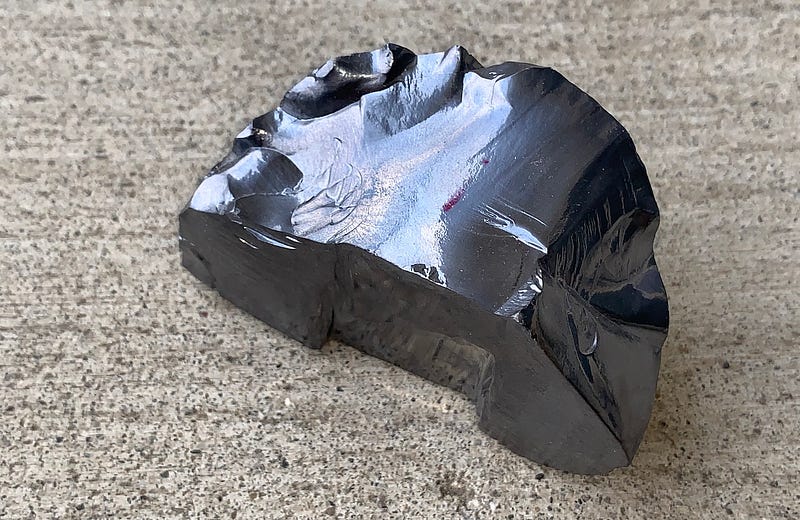
A piece of unprocessed silicon. Photo by author, 2022

An inferior semiconductor business model for the 21st century. Inept senior management and operational failure at Intel over the past decade.

Here’s what has really been going on.

First and most important, (1) the remaining US semiconductor manufacturers (primarily but not exclusively Intel) are still using a last-generation integrated manufacturer business model to compete against (2) Taiwanese (TSMC) and Chinese companies (SMIC) that use the newer semiconductor foundry business model.

Bottom line up front: when it comes to the economics of the semiconductor business, the “semiconductor foundry” business model is superior to the 60 year-old “integrated device manufacturer” business model.

  1. OLD BUSINESS MODEL Integrated device manufacturers (IDMs) such as Intel design, manufacture, market, sell, and support the chips that they themselves bring to market. They make huge capital investments to build the ever-more-expensive semiconductor fabrication lines. (“Fabrication line” or “fab line” is basically just a fancy way of saying “factory line that makes semiconductor chips.”) The fixed costs and variable costs of the fab lines that these integrated device manufacturers have invested in get spread out across the revenues of the chips they design, build, and sell for themselves. The more chips these IDM’s make, the larger a number of chips they have to spread the fab line capital costs across.
  2. NEW BUSINESS MODEL Semiconductor foundries, by contrast, ONLY manufacture chips for other companies that these other companies (known as “fabless design houses”) have designed. Foundries make massive investments in their semiconductor fab lines and in their manufacturing operations, and they take designs from OTHER companies and manufacture chips for those companies that those other companies then go ahead and market, sell, and support. An example of this would be Apple as a “fabless design house” doing the design work for their new M-series of high performance, low power consumption processor chips sending their designs to TSMC’s semiconductor foundry in Taiwan where TSMC will then go on to mass-produce these M1 and M2 processors for Apple.

Foundries include such companies as:

  • TSMC (Taiwan Semiconductor Manufacturing Company),
  • UMC (United Microelectronics Corporation; Taiwan),
  • Global Foundries (Singapore, Europe, U.S.),
  • SMIC (Semiconductor Manufacturing International Corporation; China), and
  • Samsung Group (South Korea).
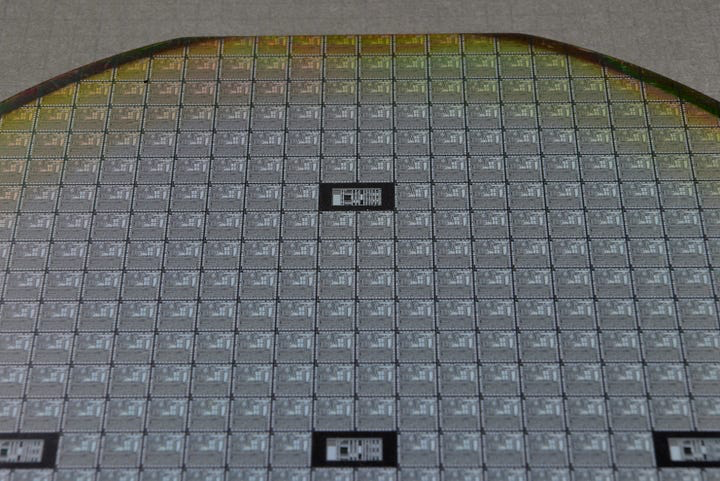
Photo by L N on Unsplash

More context about semiconductor manufacturing

There are thousands of points in the semiconductor fabrication process where something can go wrong. Because a single wafer can have thousands of individual chips on it, each wafer represents a huge investment of time, potential revenue, and potential profit.

Having yields of fully functional, shippable chips on wafers be as high as possible makes a large difference when it comes to revenues for the foundries . . . and even more so when it comes to their profits. Each extra percentage point of “yield” of functional chips on a wafer represents additional revenue that will — to a large extent — drop straight down to the bottom line profit for the foundry.

Whether a company gets high yields or low yields on their wafers depends greatly on how much volume running through the factories and fab lines. The more volume that an operations team manufactures, the better they get at it. They fix problems, they optimize their processes, they how to tweak things to get better and better yields as time goes on. They constantly learn.

Also, since the capital expense is so huge, foundries and integrated device manufacturers alike want to be running their factories as many hours of the year as they can.

Bottom line, it is very much in the interest of a company that has made a huge investment in a semiconductor fab line to keep it running as many hours of the year as possible.

Now, imagine two hypothetical scenarios

  1. Intel has made a $10 billion investment in a next-generation fab line, and they plan on manufacturing, say, Radeon chips on it. If there is a lot of market demand for that chip, they can keep that fab line running pretty much the entire year. That's the optimistic scenario. The pessimistic scenario would be if, say, companies like Apple decide to start designing and manufacturing their own next generation processor chips. Maybe at that point, Intel's market demand for Radeon chips decreases by, say, 50%. (To be clear, I am making up these numbers for illustration purposes only.) At that point with the lower market demand for that chip, when you spread the same fixed cost across half as many chips, the fixed cost per chip will have doubled. High utilization rates for fab lines are critically important to the business economics and financials.
  2. Now imagine that TSMC has made a similar $10 billion investment in a next-generation fab line. But in TSMC's case, they have probably thousands of customers that they are building chips for. So TSMC really doesn't care that much if 1 or 2 or 20 of their customers end up needing less manufacturing capacity during the year than originally projected. They have an incredibly large portfolio of customers for whom they are manufacturing chips. They do not have the kind of risk exposure that Intel does where “one particular chip” not selling well can have a huge impact on their factory utilization rate.

To summarize, the “Semiconductor Foundry” business model is superior for these reasons:

  • The Foundry Model is less risky. When hundreds or thousands of “fabless design houses” use a company like TSMC to manufacture all of their different chip designs, this means a more reliable, more diversified source of high volumes of chip orders to run through thechip foundry. TSMC does NOT have have the kind of concentrated, unmanageable risk that an integrated device manufacturer like Intel does.
  • Higher profit margins. Higher volumes mean that the semiconductor foundry manufacturing engineers “get more practice” running the lines and increasing yield. Increased yields make a huge difference for corporate profit margins.
  • Ability to produce shippable chips more rapidly. The “more practice” aspect also increases the probability that a semiconductor manufacturer can rapidly and reliably get a next-gen fab line up and going . . . and producing shippable chips. (This might seem like a hypothetical, kind of benefit, but trust me — it is real. Intel was as much as 3 chip generations behind TSMC over the past several years, and this had a MASSIVE impact on Intel’s business. Indeed, it’s safe to say that Intel being so unreliable and so far behind was a major reason — if not the major reason — why Apple abandoned Intel as their primary source for microprocessor chips. Intel had proven beyond any reasonable doubt that they were incapable of keeping up. No “smart money” would have bet on Intel.)
  • Customers trust a pure-play semiconductor foundry more than they would trust an IDM trying to be half-pregnant with the foundry model.

If we take TSMC and Intel as examples of the 2 different business models and only look at 2 high-level metrics of success — (1) corporate profitability and (2) ability to continuously be able to manufacture at the very most cutting edge —TSMC has been destroying Intel for at least the past decade.

It hasn't even been close.

Again, look at Apple.

  1. Apple abandoned their longtime supplier, Intel, because Intel couldn’t keep up with Apple’s desire to keep increasing the performance of their Macintosh computers.
  2. Apple then began manufacturing their own chip designs with Intel’s competitor, TSMC, and these new chips absolutely blow away Intel's in terms of performance and power consumption. Again, it's not even close.
Speaking from personal experience, 8 months ago I moved from a 2017 13-inch MacBook Pro with an Intel i7 processor to a 2021 16-inch MacBook Pro with an M1 Max processor.
One of the main reasons I finally upgraded last year was that the old Intel-based laptop was really feeling slow. And it got noticeably hot even with only normal levels of web browsing while battery life (on a relatively new battery) was only 4 or 5 hours.
By contrast, my 2021 16-inch MacBook Pro with an Apple-designed, TSMC-manufactured M1 Max processor is beyond fast. Power consumption-wise, it feels like it's only taking tiny sips from the battery. I've been on airplane flights where I had the screen set not too brightly, and the estimated battery life was more than 20 hours. I net at least 1012 hours under regular day-to-day conditions. As I write this at a coffee shop, the last 4 hours of usage has only used up 25% of the battery.
And no normal business usage makes this laptop hot enough to start the fan running.
Intel might catch up with this in terms of performance, power consumption, and battery life in the next few/several years . . .  but at that point I expect Apple and TSMC will also have upped their game. There's no reason to expect that Apple or TSMC would stand still over the next few years the way that Intel did over much of the past 10 years.

Photo by Usman Yousaf on Unsplash

Why will the CHIPS Act have a tough time fixing the problem with our domestic semiconductor industry?

  1. It doesn’t address the fact that U.S. companies are decades behind TSMC in starting on — let alone perfecting — the foundry business model.
  2. There don’t seem to be serious provisions by Congress to manage these public investments in the semiconductor industry. We don’t seem to be setting these investments up with performance conditions, and we don’t seem to be using the “tranche” approach to providing this investment money to our semiconductor companies, the way that smart venture capital companies parse out the money they invest in startups.
  3. The CHIPS Act has a long-term time horizon. Nothing comes on line that will impact things at a national level for at least 4–5 years…and it will probably be more like 5–7 years. There is a massive disconnect between this fact and Biden’s promise that “the Chips and Science Act is exactly what we need to be doing to grow our economy right now.
  4. It is probably very difficult — if not impossible — to maintain both an Integrated Device Manufacturer (IDM) business model and a Semiconductor Foundry model at the same time. Although Intel says it will start foundry services, “smart money” would not bet on Intel successfully pulling this off.

And yet huge amounts of money from the American people will apparently be used to make exactly that bet.

Why?

The more you look at this, the more it looks like a wasteful and poorly planned way to blow massive amounts of taxpayer money just so senators and members of Congress can score political points in advance of the 2022 midterm elections.

Isn’t this just the corporate version of the kind of “socialism” that American politicians love to scream bloody murder about when the beneficiaries are regular working Americans?

Why don’t Biden and Congress apply the same standards to gifting vast amounts of money over many years to U.S. corporations?

Count on the U.S. government to constantly come up with bigger-dollar versions of hypocrisy, cynicism, and laziness . . . especially when politicians have no long-term accountability and the money is going to their corporate donors.

Call it Semiconductor Socialism.

Related and recent articles

5 Things You Need to Know About U.S. Stock BuybacksThe 1985 Semiconductor Depression vs. the 2022 Semiconductor Demand ShockWTF! Our Taxpayer Money Will Pay for Intel’s $130 Billion in Stock Buybacks and Dividends? • 5 Things You Need to Know About U.S. Stock Buybacks(Part 1) The 5 Most Important U.S. Economic Events Over the Last 50 Years • Did This Happen by Accident to 89% of America’s Stock Market Wealth?

(Subscribe to receive email notifications when I post new articles.)

Want me to cover a topic? Please post suggestions in the comments, and I’ll use your input to help prioritize my writing and research.

Again, thank you for reading, subscribing, clapping, and sharing — your time and attention are deeply appreciated!

Jeffrey Goodman

Chips Act
Semiconductors
China
Politics
Supply Chain
Recommended from ReadMedium