
Selling Superstardom with the Myth of the Hero’s Journey
The clash between the model of adventure and the Pareto principle

Stories are more popular than arguments.
We absorb volumes of nonfictional information in school and in our workplaces, and if we’re sane we try to keep in touch with the facts so that our life doesn’t go off the rails. But fiction and nonfiction intermingle. Even a fantasy story models itself on the real world, as when the laws of magic replace the laws of nature, and all representations of facts simplify, which means they’re not strictly true. Our best nonfiction is practically true in that it’s useful for certain purposes.
But we clamor to hear stories, not to plow through data or to grapple with a complicated argument or scientific explanation. Perhaps the root reason for this preference is that we want our life to be a story, and we assume we’re protagonists, the stars of our personal show, even if others regard us as villains or as extras or nonplayable characters.
The reason we seem to be stars to ourselves is because of the attention our consciousness pays us. Actors are liable to be narcissistic because the audience hangs on their every word and gesture. The knowledge that someone wants to hear what you think or to see you perform is flattering, and fame can inflate your ego.
Similarly, we constantly observe what we’re thinking and doing because we’re self-aware. This is like having an audience in the back of our mind that’s potentially watching our life play out. Our mind can wander, and we can attend to other things in a flow state or in a moment of great concentration. But by the time we’re adults, we’ll have watched ourselves think, feel, and act countless times.
Thus, to self-consciousness we seem to be actors. Our consciousness watches us act, as we model our behaviour according to our standards (scripts), and as we think of ourselves in third-personal terms. We pretend our mind isn’t embodied, and we analyze our thoughts and ponder our plans. We make ourselves the center of our attention innumerable times, even if we’re ethically selfless.
And even if that weren’t so, and we weren’t liable to think of ourselves as the starring actor in our life’s work and play, we’d still be drawn to stories because stories have built-in meanings, and we don’t want our life to be meaningless.

The hero’s journey and the Pareto principle
The greatest, most fundamental stories are those of heroes and villains. We find we’re the center of the attention paid by our consciousness, but we don’t want to be mere actors. We want to be Oscar-winning actors, as it were. We want to live well, to have fulfilled the highest standards which are those that are fit for heroes.
Lord Raglan, Carl Jung, and Joseph Campbell contributed to the idea that there’s a monomyth, an underlying logic or plot to heroic tales. According to this logic, the hero leaves the comforts of home to encounter the unknown and is helped along the way until the unknown overwhelms him or her, so that the hero must be transformed or reborn, whereupon the hero returns to home a superior person, someone who appreciates the preceding struggle from a wiser vantagepoint.
This monomyth is what we want our life to be like. We strive to be heroic in roughly that way, in fearlessly confronting challenges rather than being stuck in a rut, and we assume we’ll be rewarded if we do our best.
Yet is this monomyth as propagandistic as the myths that the world’s great religions used to compromise with the prevailing kingdoms and empires of their heyday? Notice, for instance, that the monomyth clashes with the Pareto principle, the latter being that in many areas of life roughly 80% of the results are due to 20% of the causes. The vital few therefore rule in many fields.
In the entertainment business, for instance, this principle holds since most folks who try to be actors are either turned down or they struggle to make a living with only minor roles. Only that minority of around 20% of actors — or writers or directors or musicians or visual artists — become so successful and influential that their output makes up 80% of what’s consumed in that market. Due to that influence, the lion’s share of the benefits usually goes to a minority of leaders in the field.
Arguably, those leaders are the most heroic individuals since their lives become legendary. Like minstrels, gossip columnists and biographers sing their praises. The deeds of these leaders are larger than life since they provide the models that shape our shared assumptions, or they’re positioned to set the Overton window. And their personal transformation is obvious since they dramatically go through a stage of obscurity, when they were just heading out on their journey, to one perhaps in which they’re overnight sensations, and are showered with riches and fame.

Propaganda for life’s leaders
But what does that say about the rest of us? How can those who aren’t famous or legendary, who belong to the 80% of mediocrities or failures in their field be heroic in the same sense as the genuine stars whose output that same majority flocks to consume? How can we all be heroes if most of us actively revere those 20% of leaders as our heroes? Can a hero lionize someone else rather than being self-absorbed enough to have gone on a life’s journey and successfully battled demons?
What if the monomyth, then, serves a similar social function as the theistic myths? The gods stand in for the upper-class aristocrats, or the transcendent deity of monotheists represents an even greater power that just happens to favour an in-group, be it Jews, Christians, or Muslims. Likewise, maybe the hero of the monomyth is literally just a subject of the 20% of superstar success stories in some field, so that the rest of us can be heroic only in a more farfetched, metaphorical sense, as we might stretch our mind to identify with those leaders.
Think of it like this: in developed countries, the floorplan of suburban houses is a simplified version of the plan that’s more fully realized only in the mansions of the upper class. Likewise, the middle-class fashions we wear begin as the haute couture items for celebrities before they’re degraded to be affordable to the majority. Our tastes in music, food, and art are likewise hand-me-downs from the functional aristocrats, from the 20% of life-leaders or winners who’ve taken 80% of the pie.
The style begins as the whim or inspiration of some celebrity or of his or her team of culture creators. Then the industry gets a hold of the idea, and the product is gossiped over until it becomes the talk of the town, whereupon everyone wants a piece of it, so the product is downgraded to fit into our less cultivated lifestyles.
Maybe it’s the same with the monomyth. The upshot of the very dramatic reversals that typify the success stories of the rich and the famous likewise serve as the model for everyone else because we envy that success, and we too want to be superstars. We want to escape our mediocrity and obscurity, to triumph over adversity and to emerge a world-famous legend.
Yet the Pareto principle shows that the monomyth can’t be so literally applicable to every life. If we still take this model of heroism to be relevant to the bottom 80%, the monomyth looks like a case of sheer propaganda. We’re being misled to accept a pipe dream as an actionable model of how to deal with life’s troubles.
The monomyth would be a meta-advertisement. We generalize about the structure of the superstar’s life story, and this model plays out in virtually all our traditional stories that feature heroes overcoming obstacles and growing in the process.
Again, this model can’t apply directly to all of us because there aren’t enough gold medals to go around. Think of a footrace between runners with different skill levels. Some come out ahead and others fall behind in the race, and in the end there’s only one winner (or perhaps there’s a virtual tie between a couple of runners). Similarly, in the competition for rewards when resources are scarce and when the Pareto principle is operative, most competitors in any field can’t possibly act heroically in the strict sense.
We can say we’re taking baby steps to make piecemeal progress, or that we can be heroic in some attenuated, modest sense. Sure, most of us aren’t and can’t possibly be world famous, but we can still have a few friends as opposed to living like a troll under a bridge. So, our meager successes might approximate the monomyth, just as we like to think the middle-class houses, food, and clothing are close enough to the ones found on Mount Olympus, or in the paradises occupied by the celebrities who monopolize our attention and whom we model ourselves on like children who never truly grow up.
We want our lifestyle to be close enough to that of the heroic superstar because we’d rather not have to revolt against the status quo. Again, we want our life to be meaningful, not absurd, so we’re loathe to imagine that we’ve been defrauded. If most of us couldn’t even approximate the lifestyle of the rich and the famous, we’d be like Tantalus in Hell, taunted by success stories that are cruelly out of reach for the majority. Why would the majority willingly uphold such a society in which the good life doesn’t really trickle down?
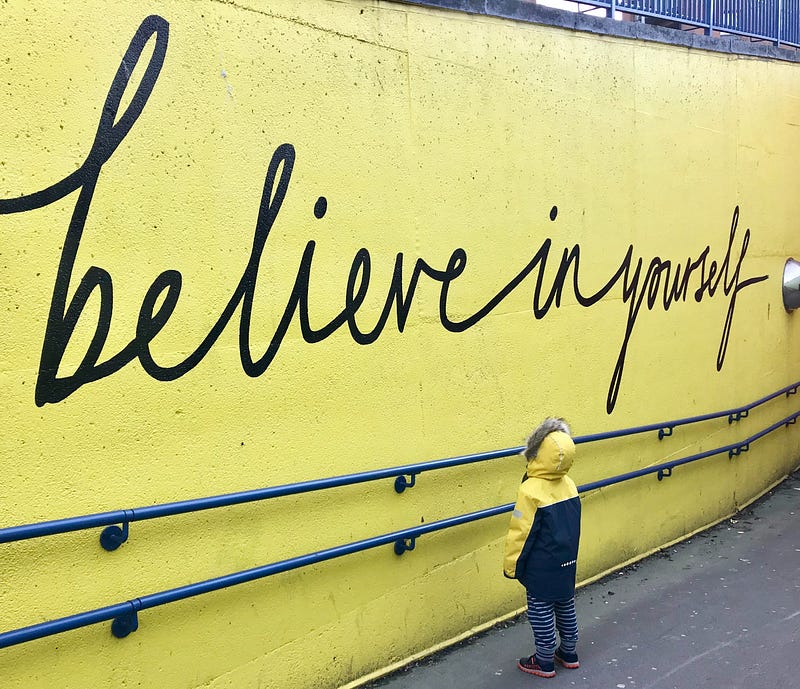
The hero’s luck
There’s another reason the monomyth is indeed a myth in that its universal application is utopian. The events of the hero’s journey are united by a plot, by a narrative logic designed by the author. In real life, though, there’s no such plot or all-powerful author. Here, again, the literary monomyth resembles the religious myths of gods. In both cases, the heroic or apocalyptic events are chalked up to magic or to a divine plan. The good guys win because the gods are in charge, and they ensure that everything works out for the best by intervening miraculously to uphold the moral order.
If we presume that life-leaders are similarly aided or fated to succeed, we should be struck by the suspicion that that’s what those leaders would want us to think. Again, this would be sheer propaganda, like the myth that the king deserves to rule because God granted him that power — not because this king is merely fortunate to have inherited that power from his parents or because that power was obtained initially in some onslaught of Machiavellian brutality.
Why do the 20% of life-leaders succeed in such dramatic fashion? Is it because there’s literally a cycle which we call the hero’s journey, a narrative logic that acts in human affairs? To be sure, that’s what it must feel like to have become a superstar, or that’s how such a person would be encouraged to rationalize his or her success. Otherwise, how could such a celebrity look himself or herself in the mirror, or live with undeserved wealth and power?
Nothing would be easier than for us to remember key events creatively, to craft our life’s story in our imagination by ignoring unpleasant episodes and focussing on the reassuring parts. And since necessity is the mother of invention, those who succeed the most have even more incentive to glorify their life’s journey, to cast themselves as conquering heroes who fully deserve their wealth and upgraded perspective.
The problem, of course, is that spinning our life’s story in that way would run up against cognitive dissonance because we know that luck plays a role in all events. To deny that that’s so is to accept the theistic worldview, which has its secular, capitalistic counterpart in the self-serving New Thought or Self-Help myths. Life’s leaders would dearly like to think there’s no such thing as good or bad luck, that we get what we deserve. They’d downplay the role of luck to feel better about keeping their gains in life, just as the bottom 80% would prefer to downplay the roles of hard work and talent, to feel better about their meager standing.
Regardless, there’s no room for the logic of the hero’s journey in the scientific picture of reality. The narrative logic applies to the stories we tell, not to our life itself. In glorifying certain success stories that are always supported partly by luck, we ignore the luck factor and simplify to make some moral or propagandistic point. We think of life as a journey with necessary phases because that ideology benefits society by apologizing for the massive, inevitable inequalities in wealth and opportunities.
In legendary tales of heroes, for instance, there are literal supernatural helpers who equip the hero with magic weapons to enable the hero to defeat the enemy. Of course, these are just symbols, and few would think there are gods or angels who physically hand a minority of actors, musicians, or painters magical tools to enable them to thrive and to become superstars. To apply the monomyth so literally would be a feat of deranged narcissism.
Still, what would be the point of speaking even about approximate acts of heroism if there were no narrative logic in life at all, or if there were only the illusion of such necessity?

Approximations of heroism
Granted, life features many encounters with strange unknowns. We learn as we age and as we process new experiences. And some handle those encounters better than others, due to some combination of hard work, skill, and luck. Moreover, there are obvious social patterns, such as the pattern accounted for by the Pareto principle. We can think of the hero’s journey, then, as a prescription, as a goal we can pursue. But that would be different from explaining a leader’s life in hindsight as having been guaranteed by a kind of narrative logic.
In the real world, there are lots of heroic confrontations with challenges that the world ignores because of bad luck or because there aren’t enough gold stars. After all, we’ve overpopulated the planet and we’re selfish competitors, so resources are scarce. Moreover, heroes fall prey to temptation and to self-absorption and materialistic excess so that their success doesn’t improve every aspect of their character. The notion that success goes along with wisdom is indeed a myth, one that originated in the West due to Aristotle’s teleological view of nature.
For Aristotle, wisdom is the ability to excel, to achieve a purpose by avoiding extremes. Within society there are many artificial purposes, and an organism’s adaptation to its environment provides the illusion of natural purposes or functions. But the higher knowledge afforded by a scientifically informed philosophical outlook takes for granted the lack of what Aristotle called “final causes” or purposes in nature.
Thus, it’s possible to excel in some instrumental terms, to have mastered some market, for instance, without having this higher knowledge that would prevent superstars from becoming mockeries of their former selves. Of course, Aristotle’s account of ethics warns against such vices, but his entire teleological philosophy was itself a fiction that catered to the idyllic life of classical Greece, in which there wasn’t over-competition because women and slaves weren’t citizens with rights, and communities were divided into city-states that in some cases could fit on small islands.
Part of the higher knowledge that subverts the monomyth is that existential success can be alienating, not rewarding but stultifying and disheartening. With the modern proliferation of the higher knowledge, we face the acute problem that life appears to be objectively meaningless and even ridiculous. Consequently, we’re liable to be cynical about the celebrities we claim to admire, as we secretly root for their downfall because we know that neither successes nor failures mean much in the cosmic scheme.
Rather than overcoming the unknown and returning home an improved person, we might be swallowed up by inexhaustible alienness, becoming inhuman in the process. In short, the higher knowledge might be for villains rather than conventional heroes, so that the monomyth might implicitly demonize a higher type of hero.
I collect my Medium writings in paperback and eBook forms, and I put them up on Amazon. Check them out if you’d like to have them handy and to support my writing in that way. The newest one is Questing for Epiphanies in a Haunted House, and its 600 pages include 99 recent, wide-ranging articles of mine.


