
The Field Guide to Feelings
Self-Sufficiency
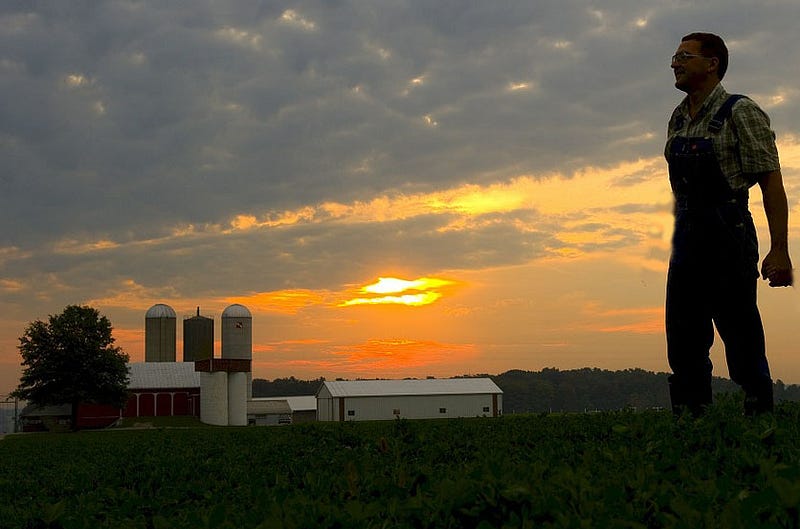
There was one point in my life when I was infatuated by the idea of self-sufficiency. It was when I was the most un-self-sufficient. I was coming out of adolescence, had no degree, no marketable skills, no place other than my parents’ to live, and was totally without savings. I declared I would be self-sufficient. I was not so self-sufficient that I didn’t need to tell others about it.
I had come under the influence of the back-to-the-land movement of the 1970s, as exemplified by Helen and Scott Nearing’s book, Living the Good Life. I poured through the Whole Earth Catalog, subscribed to the The Mother Earth News, ordered from Burpee seeds, and set out to live an agrarian lifestyle. Connection to society was a bad deal, they said. The government was war-mongering and corrupt. Corporations polluted freely. Schools indoctrinated, rather than educated. Churches and suburbs insisted on a stultifying conformity. Even Mom and Dad were not to be trusted, for they defended all the above. The solution was to find a plot of land, put up a simple home, grow most of my own food, subsist largely off the grid, and evade the rat race of American life.
Did I succeed? I did not come anywhere near total self-sufficiency, but I stayed out of the rat race and attained some notable achievements along the way.
I was not so intoxicated by the idea of self-sufficiency that I tried to do it alone. I got married a few days after graduating from high school. We would be self-sufficient, not I. We got an apartment in our hometown, she waitressed and I got a job washing dishes. We worked hard, lived simply, and in just a year, saved enough money to buy twenty acres of marginal farmland in Western New York and move out there. We pitched a tent and commenced to build a house. I didn’t know what I was doing, but I had a book on carpentry. Within a couple years, we had the house, a barn, a flock of chickens, a herd of goats, a couple cows, and a few dozen pigs. We pastured the animals, planted corn, buckwheat, and a quarter acre garden. We were able to live quite well on little cash income. I could not have done any of that without my wife’s help. Our main expense, and biggest frustration, was keeping the truck running. I impractically threatened to junk it and get a horse. She helped me with that, too; by talking me out of it.
There were many ways in which we failed to achieve economic self-sufficiency. We still needed a connection with the outside world. We had to have gas and parts for the truck, market for our produce, and books from the library. Looking at gorgeous countryside was often not enough for us, so we drove to the big city and went to zoos, museums, and sporting events. Your average villager in Africa is far more self-sufficient than we ever were.
In time, I became less enamored with self-sufficiency, at least with the agrarian kind. It wasn’t because we failed to achieve it; it was because we found that self-sufficiency cut us off from many of the things needed to live a full life. We decided to have children, and they take a village.
By the time the kids were ready for school, a transformation of my desire for self-sufficiency was well underway. Economic self-sufficiency had lost its allure. We still need to balance the books and not spend consistently more than we brought in, but it was no longer necessary to make, grow, and do everything ourselves. It was OK to pay others to do it for us. The kids needed doctors, teachers, and more trips to those libraries, zoos, museums, and sporting events. We needed babysitters. I wasn’t about to send the kids to school on horseback, wearing homemade clothes made of homespun fabric. All this takes money, so I got a job. I did not abandon self-sufficiency entirely, however. I found raising kids called for a different kind. I had to believe in myself.
The parent who does not believe in himself cannot raise a child well. He cannot, for instance, say no when the child wants something like candy for dinner because the child will hate him if he does. He also cannot bend the rules when he needs to because he feels he must slavishly follow every one. The parent who does not believe in himself will distrust his own moral compass and cannot teach his child right from wrong. Most seriously, the parent who does not believe in himself cannot allow his child to believe in herself, for he would need the child to stick around to bolster the parent’s wobbly self-esteem.
Believing in myself is a different self-sufficiency. It’s not the economic variety. Rather, it’s a capacity to take care of myself; I don’t need you to tell me I’m OK; even if I don’t know what I’m doing, I’ll figure it out. Of course, no nineteen-year-old sets out to build a house after studying a book about carpentry without believing in himself, almost delusionally. But, raising kids is far more difficult than building a house, and the consequences of disaster are far more enormous.
In the same way that I began building a house by getting a book on carpentry, my pursuit of psychological self-sufficiency led me to study psychology; and that led me to the family therapist, Murray Bowen. Bowen had this concept called differentiation. As a human develops over his life span, he goes from fusion with the mother, in which the fetus is indistinguishable from her; to childhood, in which he’s dependent on her; to more and more independence, in which he’s differentiated. Differentiation sounded a lot like self-sufficiency, a self-sufficiency within relationships.
I realized something about myself. When I went back-to-the-land, it was not just so I could grow the food I ate; it was so I could grow. My parents weren’t bad, they would have done anything for me; but that was the problem. I had to do things for myself so I could believe in myself. I had to be economically self-sufficient so I could differentiate.
Whenever I talk about psychological self-sufficiency or differentiation, people have an objection. They think it involves not caring about others. Nothing could be further from the truth. You can care about others without needing them. It’s easier that way. To the degree that I don’t need people, that’s as much as I can be tolerant of them. When I need something from someone, I already have an agenda. I have objectified them, and enlist them to serve my needs. When I need nothing from someone, they can be as they are, and I will care for them just the same.
Let me give you an example of psychological self-sufficiency (AKA differentiation) or the lack thereof. Someone steps on my toe. It hurts. What I do with that pain depends on how psychologically self-sufficient I am. If I need others to know I’m in pain, I say ouch loudly, limp around, and make a big deal of it. Others will see, feel sorry for me, and offer to help me. On the other hand, if I can deal with my pain myself, I have no reason to make this kind of display. I can tell them my toe hurts if they want to know, but I don’t need to turn it into a production.
What happens if I get angry when someone steps on my toe? Self-sufficiency plays a part then, too. If I’m able to say it was an accident, just one of those things, I ought to watch where I keep my toes; then I’m able to treat the incident in a self-sufficient manner. I have no need to complain to the man who did it, threaten him, or punch him in the face. My anger announces I’m not self-sufficient. I need something from this man who stepped on my toe. An acknowledgement, an apology. I want him to pay damages; I want to make him hurt as he hurt me; I want him to watch where he’s stepping next time.
When I’m angry with someone, I need something from them. Unfortunately, I need something from someone who has just hurt me and cannot trust. That’s why my need comes out as anger; because I don’t think it’ll ever be satisfied, except under duress. It’s a hopeless situation because I’m not self-sufficient; I need something from someone unlikely to give it.
Psychological self-sufficiency has many other benefits. It frees the individual from getting caught up in relational drama. Many adults, when they visit their family of origin, tell me they turn into a person they don’t want to be. That’s because they’re not differentiated. Rather than standing apart from the family’s madness, they become part of it, and contribute to it.
Let’s say you go to visit your elderly mother and all she does is complain that you never visit. If you need her to be grateful and pleasant, you’ll never want to see her again. But, if you can just roll with it, amused by the irony, then you can look past it all, have a good time, and see her again, sooner.
Obviously, this is easier said than done. I cannot say that I’ve attained that degree of psychological self-sufficiency, or differentiation, with my family, although I’m better than I could be. I can be differentiated from many others, though. I can maintain my equanimity with difficult clients, no problem. I do not need, or even expect, the troubled people who come to me to be perfectly well behaved. Why can I be differentiated from some, but not others? It helps that the client-therapist relationship is governed by a strict code of ethics, a treatment contract, and a well-established script. It also helps that my life is not at stake.
The other place where I struggle with psychological self-sufficiency is when I’m driving. I have yelled and honked my horn at other drivers who I believe don’t follow the rules of the road. If someone drives too slowly, wants me to go too fast, fails to signal, or disregards a light, my blood boils and sometimes I let them know. Aside from whether yelling and honking my horn is an effective way to induce behavioral change, it’s not self-sufficient of me. I ought to be able to cope with it myself, but I’m not, although I’m better than I used to be. When I go on the road, I am at the mercy of other drivers. I need them to watch where they’re going, so they don’t crash into me. If they don’t, there’s only so much I can do about it. My anger reveals a need and the necessity of trusting random strangers who act like idiots.
So, whether I’ve been striving to attain economic self-sufficiency or the psychological kind, I’ve run into limits. Self-sufficiency never seems to be possible. Does this mean that I’ll be fated to rely on untrustworthy or malevolent others? The answer is yes. This is something we’ve all had to face in the past year or two, since someone in China ate a bat for breakfast and the whole world got sick.
Even if the story of how the coronavirus got loose in the world is not literally true, most agree that pandemic illustrates how tremendously interconnected we are, even when we don’t mean to be. We all breathe the same air. There are some who still insist they are self-sufficient and rely on their own immune system to protect them. Forty years ago, I may have done the same; but now I know it’s a hopeless quest. We are connected in ways that are often hidden and always unavoidable.
In the middle of the pandemic, I went on a long hike by myself through the wilds of Northern Pennsylvania. I was three days in the wilderness and, all that time, came across only one other person. When I go hiking, it’s an exercise in self-sufficiency that would have made my nineteen-year-old self proud. I carry everything on my back, except the water I find. If anything goes wrong, I have only myself to rely on. For three days I would be self-sufficient, even if I couldn’t be the rest of the time.
On the third day I realized something. I’d been walking on a trail others blazed, Native Americans pursuing game centuries ago. Some other people made my maps, published them, and distributed them to a place where I could buy them. Someone else made my tent, my sleeping bag, my hiking shoes, my pack, and everything else I had inside it. I was able to buy these things, thanks to my clients who provide my income. There’s my bank, which holds my money till I’m ready to use it, and my credit card company, that ensures a trusted transaction. Some unknown inventors from the Han Dynasty devised my compass. My ready-to-eat meals were grown by farmers worldwide and cooked in a plant in New Jersey. The water I found was only clean if no one polluted it. My wife kept an eye on things at home while I was gone, and my friends and family listened to my stories of the trip when I returned. Hundreds, if not thousands of people, stretching back millennia, contributed to my hiking trip.
Self-sufficient, my ass.
Don’t even get me started on my place in the universe and the role I play in the ecosystem through which I hiked. You, your great-grandfather, the micro-organisms in your gut, the spider on the ceiling, the trees outside, the birds perching on them, the worms they eat, and the deer browsing the underbrush are no different. We are all thoroughly dependent on one other.
I am only marginally less dependent on others now, than when I was a baby, unable to even feed myself, walk on my own, or clean up my own shit. The difference is, rather than being utterly dependent on one or two people, I’m now dependent on a vast network of support. I can pick and choose who or what supports me, to some degree. If I don’t like the view where I am, I can go to another. If I don’t like the comfort of one hiking boot, I can wear another. I can walk on the trail the Native Americans made, or I can get lost walking through the brush.
I now know that self-sufficiency has little to do with the amount of input the greater world contributes to my survival. It has more to do with the skill by which I manage that input. Can I get a fair swap of what I want for what the world wants from me? Us back-to-the-land people in the 1970s took a look at what society was offering in exchange for our cooperation and we said, no deal. I wasn’t going to fight your wars, pollute my own environment so you could get rich, or cash in my own individuality for a house in the suburbs. I’ll take my chances building my own house out of salvaged lumber and grow my own food. I was still connected to the rest of society, but on my own terms. I didn’t have to do what everyone else was doing, just because they were doing it.
As this pertains to the guy who steps on my foot or any other the other people who need to watch where they’re going: if I get hurt or angry, there’s not much I can do about it because my feelings arise out of a need. But, I have a choice of what I do with my feelings. I can express my need in an effective way, so that I get what I need, or I can express them in an ineffective way and get trouble. I am no longer infatuated by self-sufficiency. Now, I’m smitten by self-efficacy.
Keith R Wilson is a mental health counselor in private practice. Read more of A Field Guide to Feelings and his other stuff.


