
Gratitude
Self-Love Takes Time
And slow and steady is my wheelhouse
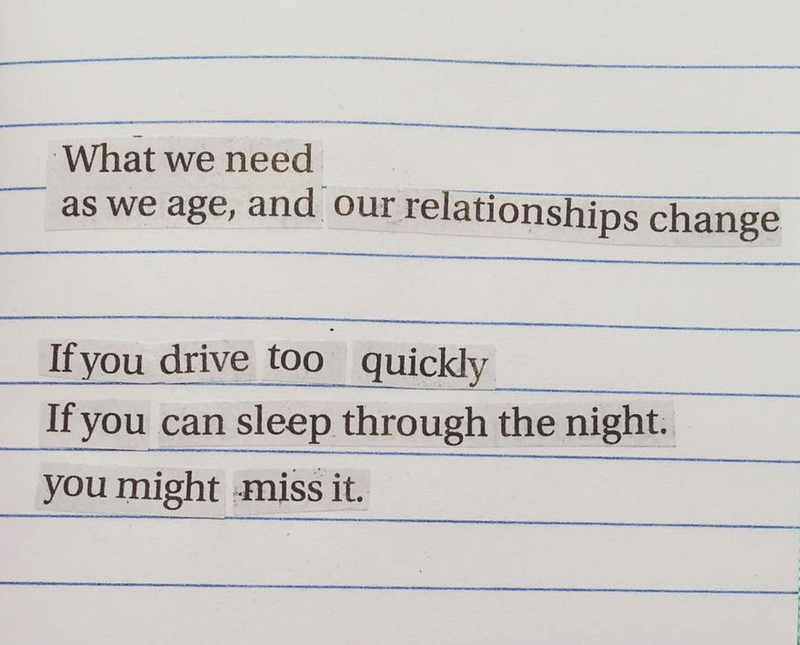
I grew up with self-love as one of those concepts like goal-setting: it was something other people took seriously. In fact, I’m not sure that I ever heard the term. Maybe from Oprah or Donahue, who talked in the background at my grandparents’ house in the two hours before dinner.
I grew up surrounded by the love of my close family: my brother and I had three grandmas, two grandpas, and our neighbors, the Coopers, who were like another set of grandparents. Everyone lived nearby, and we saw each other regularly, so it was like having this special committee that offered all the love in the world.
It’s kind of like how kids don’t have to worry about laundry because their clean clothes just appear in the dresser. You get used to not needing to do that kind of stuff for yourself.
From self-care to missteps with love
My parents definitely taught us little ways to build self-care into daily life. They taught us to pack snacks so you didn’t get hungry and to bring a heavy coat to leave in the car in case the weather turned.
My mom showed me how to write thank-you notes and make May baskets to give away, demonstrating how love comes back to you through your own acts of gratitude and kindness. My dad gave me practical self-care gifts as I got older: a Thomas Guide when I started driving, and a professional-grade plunger when I moved into an apartment.
Self-care techniques notwithstanding, life felt sadder and harder for me in my mid-20s. My mom’s parents, Mr. Cooper, and my dad’s dad all passed away within the space of two years. Mrs. Cooper had died when I was a little girl, but everyone else had always been there.
At the same time, I was in my first serious relationship, and I didn’t know how to do relationships very well. Maybe this happens to everybody in their 20s. Maybe it’s more prevalent when you have two generations of divorce (my parents and my dad’s parents). Maybe being a lesbian and still dealing with the effects of internalized homophobia played a part. I’m sure it was some kind of combo of not knowing what the hell to do.
Or more specifically, it was not knowing how to express boundaries with my partner and how to identify and understand my own needs. There’s a stereotype about lesbian couples and “the urge to merge” where two people become so close that they share the same hobbies, friends, and more. This happened to me because I was too conflict-avoidant to tell my partner that sometimes I needed to do what I wanted to do and that we didn’t always want the same things.
My 20-year path toward self-love in my 40s
Well, of course, there was more to it than that. But years later I can see that in my 20s I didn’t know how to start with self-love and self-care to build a mutual partnership. I’m not sure I knew much more in my 30s or early 40s either.
I think I shifted back and forth between selfless and selfish. I gave everything of myself and didn’t think about what I truly wanted, and then I overcorrected and hurt people who had grown close to me, in part because of selfless promises I couldn’t keep.
Self-love seemed like something other people knew how to do, not me. I’m reminded of how I used to think about anger: I thought there was some special way to manage the anger that I’d never learned. After much reading, thinking, and reflecting, I finally realized that you have to acknowledge angry feelings and abide, waiting for the intensity to pass while helping yourself with positive activities like journaling, walking, and talking to a safe person.
Over time, I came to see more of what Trista Signe Ainsworth said about self-love, how “we must take the time to fill our hearts with an appreciation for who we are becoming, moment by moment.”
It’s a lot about being present and accepting the present moment. My grandparents aren’t here expressing their love, but I can remember them, and I know I carry them with me, too.
I can stay in touch with myself and what I want and need by asking myself questions and answering honestly in terms of what I truly want and can offer to others.
The more I write and create, the more I feel a sense of self-love, too, because I know I’m taking time to do something that has meaning for me, whether I’m working on a poem or making a collage, or baking cookies.
A free resource I recommend
When I have a hard time staying present and loving toward myself — when I start mentally cataloging my mistakes and the people I’ve upset and the household tasks that I keep postponing — I know I can seek help, too, rather than stay inside the negative spiral that sometimes seems to come out of nowhere to pull me down.
I can talk to trusted people in my life, and I can write in my journal. I can write poems and personal essays to share, and through the act of sharing feel loving toward myself and others as part of a community of writers and readers linked by our images, descriptions, ideas, and messages.
One resource that has really helped me, especially in the wee hours of the night, is this guided meditation video on self-love from The Mindful Movement (an all-around great YouTube channel for affirming content).
Thanks, as ever, to Trista and Sharing Randomly at Thank You Notes for their writing prompts and ongoing work to create a publication filled with encouragement and mutual support. I wrote the essay above in response to the following prompt.
The story below is an example of self-love, communication, and compromise that happened recently in my life.