
Self Improvement Kept Failing Me Until My Cat Stepped In
Try these simple tips for two weeks and you’ll feel the difference

“Nope! None of it would work!” I screeched out and flung the book in the air. It was the third self-help book I picked within a week. And it all sounded so vague, so generic.
By that time, I had begun to question myself. Three books from three different writers, trying to make me “not me”; not all of them could have been rubbish. Could they?
As I, a 31-year-old self-improvement enthusiast, was indulging myself with childish tantrums, my cat, on the other hand, paid attention to something more practical.
Unlike me, he was still aware of the concept of gravity. As soon as I launched the book in the air, he fixed his eyes on it. And as the hardcovered piece of text landed right back at my head, he waved his tail casually and turned his head. I could literally hear him saying: “I told you so, hooman.”
It all started with something simple. Goals. We all have one. Don’t we? Be it getting rich, going places, or living life on our terms.
But, of course, we can’t do it by ourselves. We are so flawed, lazy, stupid, and unimaginative, that we can’t even get up in the morning and take a dump without some book titled “Shit Like A Pro: 101 Tips to Get It All Out Like A Millionaire.” Right?
Though I couldn’t put my finger on it, there was something inherently wrong with this culture, at least for me. It wasn’t making me better. If anything, I was more confused than ever.
I was listening so much to what they had to say, I stopped listening to myself.
So I had to unplug myself. I needed to find something less overwhelming — something smaller — something more personal. And as the title suggests, I found it in Ron Weasely, my cat.
Standing Out Is More Important Than You Think
Cats get a bad rep because they are not as obedient as dogs. While, in fact, their “don’t care” attitude speaks about their strong individuality—something we humans should take notice of. Individuality has nothing to do with ego but personality. Being true to who you are and what you believe in, no matter how unpopular that might make you, is worth it. Otherwise, you fall victim to a nasty thing called conformity.
Conformity is a type of social influence involving a change in belief or behavior in order to fit in with a group. This change is in response to real (involving the physical presence of others) or imagined (involving the pressure of social norms / expectations) group pressure. — McLeod, S. A. (2016, Jan 14).
Conformity can also be simply defined as “yielding to group pressures” (Crutchfield, 1955). Group pressure may take different forms, for example, bullying, persuasion, teasing, criticism, etc.
Peter Bregman has a very insightful article in Psychology Today named The High Cost of Conformity, and How to Avoid It. In it, he talks about his eye-opening personal experience and also about the three steps you can take to break conformity’s grip.
- To have a clear idea about your own values and what you believe in. Also, what you’re willing to do in the name of those beliefs.
- Be observant and assess everything around you with a clear head.
- Have the courage to act when something goes against your beliefs.
Why it matters
Kelman (1958) distinguishes three types of conformity- compliance, internalization, identification, each with its specific perils. But the one I want to focus on is compliance — conforming to the majority despite not agreeing with them.
In a conformist society, people lose their individuality so that they can become accepted or rewarded.
It’s the way the world works.
That’s how it was always done.
It is what it is.
Sounds familiar? My guess is yes.
Excessive conformity stifles individuality and kills the spirit. All around the globe (and even more so in Asia) people surrender their values in search of the “perfect image.”
How can you be your best self when you’re too busy being someone else?
“To be yourself in a world that is constantly trying to make you something else is the greatest accomplishment.”- Ralph Waldo Emerson.
How to fight it?
Let’s go back for a second to Bergman’s first two steps — having a clear idea about your beliefs and being observant.
That’s all fine and dandy, but how can you do that?
I had my aha moment when Ron Weasley the cat got his head stuck in a vase. A very expensive family heirloom in fact. At first, I was annoyed and quite pissed, as I’m sure most of you could relate. Then, the old and overused saying smacked me in the head with the force of a tornado. Their endlessly quoted kryptonite. Can you guess it?
Curiosity killed the cat. Yes, that’s the one. You surely heard it and know all about it. Right? Probably not. Here’s the deal.
Everyone knows that, despite its supposed nine lives, curiosity killed the cat. Well, not quite. The “killed the cat” proverb originated as “care killed the cat”. By “care” the coiner of the expression meant “worry/sorrow” rather than our contemporary “look after/provide for” meaning. That form of the expression is first recorded in the English playwright Ben Jonson’s play Every Man in His Humour, 1598:
Helter skelter, hang sorrow, care’ll kill a Cat, up-tails all, and a Louse for the Hangman.
So, we discover that not curiosity, but incessant worrying “killed the cat”. I’ll let you reflect on that some more in private.
Despite its bad rep, curiosity is an essential catalyzer in living a well-rounded life. It makes your mind active instead of passive, and observant to new ideas. Where would we be right now without inquisitive scientists or writers?
Don’t just teach your children to read… Teach them to question what they read. Teach them to question everything. — George Carlin
Curiosity is strongly correlated to our ability to wonder. To behold the world and rejoice at all its pieces. To pick them apart and build them anew. It opens up new possibilities and brings excitement into our lives. Not to mention, it helps us find purpose.
This links directly to the need to establish your set of values but also to be observant and figure out what is going on around you. Don’t underestimate the power of curiosity but work on developing it.
Here are a few ways to do that
- keep an open mind
- don’t take things for granted
- ask questions relentlessly
- don’t label something as boring (dig below the surface)
- see learning as something fun
- broaden your reading and don’t limit yourself to just one area of interest. Who knows what you will discover?
Takeaway
Be curious about anything. Challenge everything. Even a self-help article. Build your own belief system and stop comparing yourself to others and to society’s standards of the “perfect citizen”. Perfection is not only overrated, it doesn’t exist. Authenticity is much more attractive.
The important thing is not to stop questioning… Never lose a holy curiosity. — Albert Einstein
What If You Don’t Land On Your Feet All The Time?
So, we’ve established that curiosity is a powerful tool in fighting conformity. But curiosity isn’t enough. To reap the rewards of imagination, exploration, and observation you need to tap into an essential super-power.
Why don’t you take a guess?
Once again, the aha moment was prompted by one of Ron Weasley’s antics, when he bravely jumped from the fridge and injured himself in the fall. Even though he was a grown cat and the distance was insignificant.
This got me thinking about the saying “Cats always land on their feet” and how this ability means they can survive falls from incredible heights. Incredible heights, so 2 ft should be a no-brainer. What’s the deal? I had to get to the bottom of this.
Short intro into the animal kingdom
The higher the distance of the fall, the lower our chances of survival would be. Right? For humans, yes! For cats, not so much.
A study done in 1987 by the New York City Animal Medical Centre analyzed vet records of cats that had fallen from multi-story buildings and found that cats who fell from between 7 and 32 stories suffered fewer injuries than those who fell between 2 and 6 stories. Scientists think that the higher the fall, the more time cats have to right themselves — thanks to the evolutionary wonder called righting reflex.
Resilience can literally make or break us
Psychologists define resilience as the “process of adapting well in the face of adversity, trauma, tragedy, threats, or significant sources of stress — such as family and relationship problems, serious health problems, or workplace and financial stressors.” As much as resilience involves “bouncing back”, it can also involve profound personal growth.
Like a cat falling from a tall building. The higher the obstacle, the more meaningful the reward.
It’s a fact of life that living comes with good things and bad. That’s something outside our control.
What should we do instead?
What we can and should work on is our attitude toward the issue at hand. How we choose to view a certain event and how that attitude affects our actions.
Remember, where there’s a need (and a will), there’s a way. After all, nature gifted cats with the righting reflex. Why can’t it do the same for us, tailored to our specific needs? But for that, we need to build our resilience by fostering wellness. The more we build our resilience muscles, the more instinctively they would move the next time there’s a need for them.
Now, wellness is a vast subject, that can easily have an article just for it. Believe me, I read tons.
Here are a few ways to foster wellness (that don’t require you to do the same)
In a nutshell, cultivate and nurture good habits, in a holistic process tailored to your specific needs. “You time”. Small (or big) things you can do for yourself regularly to live and sustain a healthy, balanced life. Simple, right? It can be when put in the right perspective.
Besides the obvious — a good diet and constant exercise — other examples could include:
- a regular visit to the hairdresser or barber
- relaxing massages
- yoga
- mindfulness seminars
- breathing workshops
- money-management courses
- public speaking lessons, etc.
Keep in mind that the multi-billion dollars self-care industry is only as big as the need it meets.
Takeaway
Resilience is the foundation of your well-being. No matter how curious and imaginative you are, those powerful tools are sustainable only when backed by sturdy resilience muscles. The key to building those is committing to a diligent process of constant self-care.
Want to know an additional secret?
Resilience also helps you tick off Bergman’s final step in combating conformity — Having the courage to act when something goes against your beliefs. So now you’re all covered.
Final Thoughts
Conformity is an inhibitor that stops you from becoming the best version of yourself — the original model. The good news is that you can hit “Reset to default functions” by exploring your curiosity and honing your resilience muscles.
I challenge you to see for yourself by conducting your own experiment. Over the course of the next two weeks experience things that you normally wouldn’t. Read a book on a foreign topic, take a walk in a new neighborhood, see a documentary on a subject you know nothing about. Keep asking the magical question — why? And remember to set some time apart just for you.
You can find inspiration in the most surprising places. For me, it was this guy below. Maybe for you, it would be this article. Either way, always remember to “never lose a holy curiosity.”
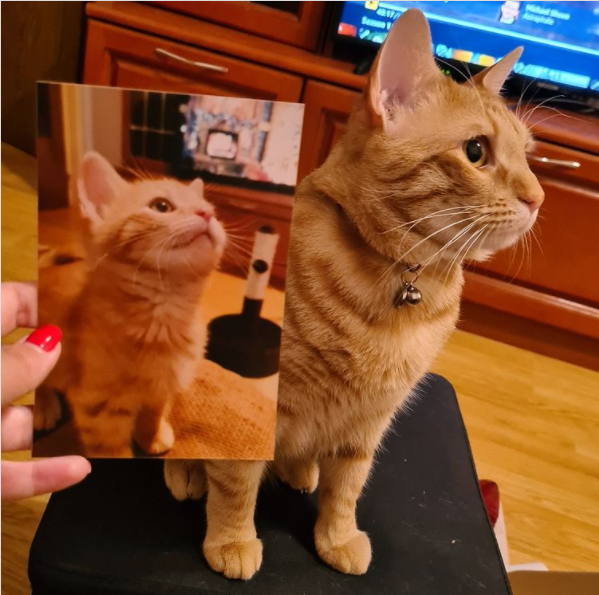
“Care about what other people think and you will always be their prisoner.”- Lao Tzu.
By Ana Maria Radulescu
Thanks so much for reading. If you enjoyed this article be sure to hit the Follow button at the top of the page.
For limitless access to ad free quality content, consider signing up to Medium, here. For only $5 a month you get access to a world of inspiration, while also gifting me with a small percentage in the process.