
Self-Editing Tip #12: KISS and Tell, but Keep it Simple, Sweeties!
Pretend you and your reader are chatting over a nice cuppa

You’ve heard the expression, Less is more.
This tip is a good example of that principle in action.
I’m not talking about your total word count, though that might come into play here. I am talking about the way we put words together.
On paper.
Most of us don’t have any problem opening our mouths and saying stuff. Many of us are quite loquacious. One of the best ways to get good at writing is to listen to people talking.
When you do, what do you notice?
Do people talk in complete sentences? Sometimes. Not all the time. When asked a question often the answer is one word or phrase. What’s for dinner? Burgers.
Do all the sentences have the same structure: Subject-verb-object? I bought a dress. She swam five laps. They loved the Barbie movie. Not usually.
Does every sentence or statement begin with ‘I?” Oops, did I get you on that one? I see this a lot. But you’re not alone. I do it a lot, too.
Speech has a rhythm. So, guess what? Your writing might want to have some rhythm, too.
How do we make that happen?
Easy. By varying sentence length. Some can be long. Even convoluted to make a point. It might be important to string a lot of thoughts, words, and phrases together in one long ‘run-on’ sentence to make an important point about your subject or topic in a way that gets people’s attention for the sheer length and convolution of it.
In other words, it’s done for effect. Consciously. Purposely.
Not because you got carried away. Or threw a bunch of clauses together without anchoring them to a central noun and verb. Sisters, I’ve seen it happen. I’ve done it myself. None of us are immune.
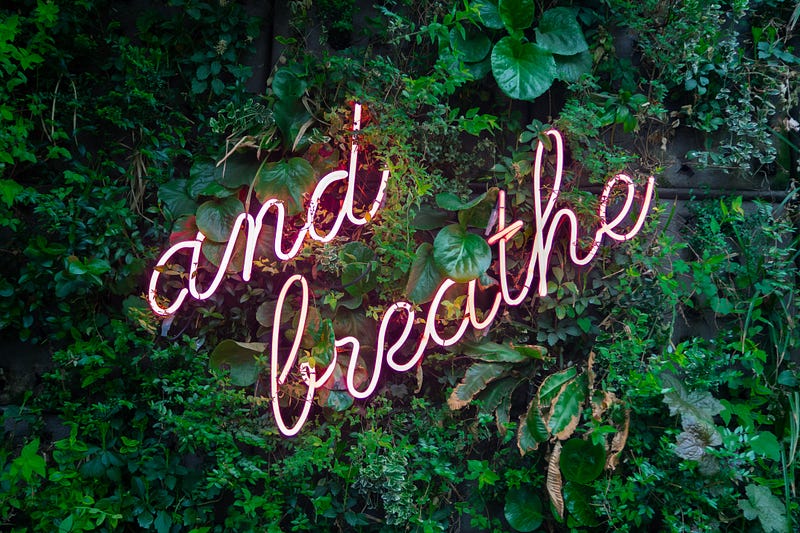
Another way to look at this is to let your writing breathe.
You may be in a hurry when you write. But don’t have that be your reader’s experience. Readers tend to take a breath with each sentence. So don’t submerge them too long. Have pity on their lungs. Stop often. Let them come up for air by putting a period right there.
Don’t believe me? Read something and notice your breath. What happens when you encounter a long sentence or a big block of text?
Which is my next point.
Break up long blocks of text.
This is another way of coming up for air.
Lots of white space is inviting. Long blocks of text are off-putting. Intimidating for a reader. We like to skim. Make it easy for us to do that. If your words engage us, we’ll slow down and read them. If they don’t, cramming them into long paragraphs and sentences won’t fix that.
Readers are fickle. They’ll move on after thirty seconds if not engaged.
So engage them.
With not only your story. But the lively, dynamic way you tell it.
Fill out the ‘Alt Text’ box for all your images.
This is so that visually impaired people can hear what your photo or image looks like. Their devices read what you write in the ‘alt text’ box. Medium is dedicated to accessibility for everyone. So we need to pay attention to this feature.
How’s that done?
Put your post in edit mode. Click on an image and a dialogue box pops up. The box lets you click on what size you want your image to be — small, medium, or large. I usually chose medium. Medium for Medium, get it?
That box also says ‘alt text.’ Click on that. A box will appear where you write a description of your image. I wrote: a long-haired dog kisses her doggy companion for the image on top of this post. Then hit SAVE and you’re done!
You Versus We
This is a serious dilemma for some of us writers. We have to make a choice. Are we including ourselves in the group of readers we’re addressing? If so, use the word we. and use it consistently throughout your piece.
If you want or need a more authorial voice, you may use the word you. Yes, I’m taking liberties by using both here. But not in the same paragraph. And it’s done on purpose to make my point.
But jogging back and forth between you and we during the course of a post feels wishy-washy. And I admit I’ve done it here. Oops, sorry.
Personally, I prefer we.
It feels more inclusive and less preachy. And that’s how I learned to discuss addictions and other sensitive topics in twelve-step meetings. With the collective we.
But there are times when you is the right thing to do.
For example: If you’re a woman addressing men in no uncertain terms. Then you might say something like, If you want the women in your life to respect you, guys, you need to listen to what they’re saying.
On the other hand, just because we’re women, doesn’t mean we’re exempt from listening to other women, but you know what I mean!

One more tip about storytelling:
Keep adjectives and adverbs to a minimum. Instead of clunky adjectives, find a more precise noun. Like snickerdoodles instead of cinnamon-flavored cookies. It’s more yummy, too.
Instead of clinky adverbs, find a more precise verb. Instead of, he walked swishily across the room, say, he sashayed.
I’ve said it before, but it’s worth repeating: Read your work out loud before hitting send or submit. You’ll hear the clunky spots. You’ll hear the run-on sentences. You’ll hear the flatness that happens when all the sentences are more or less the same length.
You might even try some dictation software to get a more conversational style into your writing. Again. imagine your reader across the table over a caramel macchiato or a cabernet sauvignon.
Now, Just. Tell. Your. Story.
Forget all these suggestions while writing your post or story. Bring them back to mind when you edit. Not during the drafting phase.
Let your heart write; let your brain edit. But not at the same time!
Marilyn Flower’s a sacred fool who writes every day — fiction, poetry, and blogs — inspired by a process called SoulCollage®. She’s the author of Creative Blogging and Bucket Lister: Get Your Brave On. Follow her Sacred Foolishness or SoulCollage® for Writers, and Stay in touch!


