avatarPrasanna Srinath Subhasinghe

Free AI web copilot to create summaries, insights and extended knowledge, download it at here

2442

Abstract

further said that he has chosen to permanently reside in Sri Lanka with his two wives: the goddess Devyani and his Sri Lankan native Adivasi wife, Valli.</p><figure id="922c"><img src="https://cdn-images-1.readmedium.com/v2/resize:fit:800/1*nW_C-QXzMy3X9dnSKPhI9g.jpeg"><figcaption>Lord Katharagama with his two wives by <a href="https://en.wikipedia.org/wiki/Raja_Ravi_Varma">Raja Ravi Varma</a>. This image is from <a href="https://en.wikipedia.org/wiki/File:Murugan_by_Raja_Ravi_Varma.jpg">Wikipedia</a> and this file has been identified as being free of known restrictions under copyright law, including all related and neighboring rights.</figcaption></figure><p id="b464">Among the legends surrounding Lord Katharagama’s life and romance, the one he won the heart of Valli is the most famous. The story also describes how Lord Ganesh got his elephant head. Perhaps my Indian friends may be familiar with a different version, and I like to hear about those versions, too.</p><p id="483e">According to our version, Lord Katharagama fell in love with Valli, a local <a href="https://en.wikipedia.org/wiki/Vedda">Adivasi</a> girl in Sri Lanka. He was devastated as the girl kept rejecting him. So Lord Katharagama turned to his brother, Lord Ganesh, the deity of wisdom. With his witty intellect, Lord Ganesh provided a solution.</p><p id="eea4">Lord Ganesh decided to transform into an elephant and lurked along Valli’s path as she headed for her bath. The plan was for Lord Ganesh to instil fear in Valli, creating a chance for Lord Katharagama to heroically rescue her by driving away the elephant, a classical film plot.</p><p id="7c4f">However, there was a catch. After being befriended by Valli, Lord Katharagama was supposed to chant a mantra and sprinkle special water onto Lord Ganesh to reverse the transformation. Lord Ganesh handed a jug filled with special water to Lord Katharagama for this purpose. He asked him to perform the ritual before sunset. Otherwise, the change would be irreversible.</p><p id="5530">As expected, the plan unfolded smoothly, perhaps even too smoothly. Valli fainted during the dramatic, heroic act of Lord Katharagama against the wild elephant. Hastily, Lord Katharagama used some water from the jug to revive her, tending to her well-being.</p><p id="cf17">Once Valli regained consciousness, she appeared to have a change of heart. She didn’t even mind having a romantic conversation with her hero,

Options

and soon, they lost track of time. It was almost the sunset when Valli reluctantly departed for home.</p><p id="e244">Then, only Lord Katharagama recalled his brother, who had been waiting in the forest impatiently. Unfortunately, only a small amount of water remained in the jug as a large portion was used for Valli. But the time was running past, avoiding to think about an alternative.</p><p id="6db2">Lord Katharagama did the logical thing. He hurriedly spilt the remaining water onto Lord Ganesh’s body. The areas touched by water reverted to their original form, but the part above the neck retained its elephant shape as the water had not reached, making it permanent.</p><figure id="65c3"><img src="https://cdn-images-1.readmedium.com/v2/resize:fit:800/1*AUP84_IOIpvHsrBW8wc4DA.jpeg"><figcaption>Lord Ganesh — An AI-generated image by the Author using Bing Image Creator</figcaption></figure><p id="e622">Similarly, we have numerous other stories describing why Lord Katharagama favor more Sinahalese over Tamils, how he blessed King Dutugemunu before the great war with King Ellalan and how King Dutugemunu built a great temple for Lord Katharagama after the victory.</p><p id="a67d">During the festival season, people from all across Sri Lanka gather at the temple dedicated to Lord Katharagama. Some of our Tamil friends residing at the opposite end of the country start their journey weeks in advance. They travelled on foot during the day, following ancient paths through forests and resting beneath trees at night.</p><p id="c71d">While the Sinhalese typically do not follow this tradition, the majority of participants at the temple during the festival season are Sinhalese. Aside from seeking his blessings, there is a belief that Lord Katharagama is among the deities who swarn to safeguard Buddhism in Sri Lanka.</p><p id="76d1">The day we visited this sacred place wasn’t during the festival period, yet a large crowd was present. As part of our tradition, we offered fruits and sought blessings for the success of our project works.</p><p id="e48c">I don’t claim that I rely solely on these blessings for success. However, if specific actions bear no harm and hold potential positive outcomes, I will not decline them.</p><p id="6bf5">I have taken a few photographs during our visit. But it was difficult to take photos without featuring other worshippers. Therefore, I had to refrain from using them.</p></article></body>

STORYTELLING

Seeking the Blessing for the Success of Our Project

From a god who knew the meaning of love
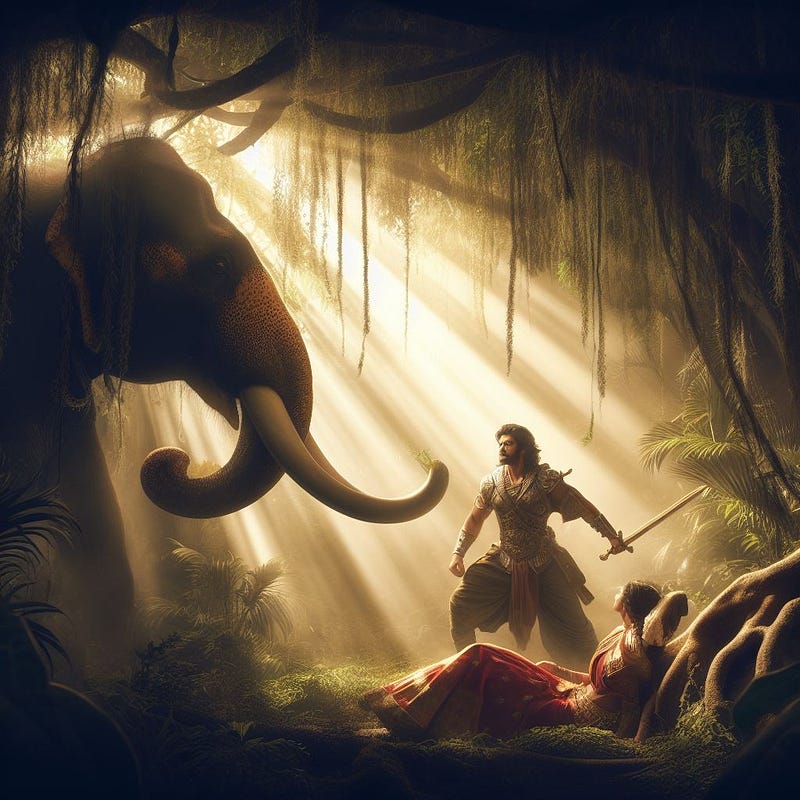
Lord Kathargama vs Lord Ganesh — An AI-generated image by the Author using Bing Image Creator

We Buddhists have a unique relationship with gods and other deities. We don’t believe that worshipping them is the path to enlightenment. However, we still respect them, as we accept the significance of their influence over our lives.

The project I’m involved in is in a rural area of Sri Lanka, where superstitions are a social acceptance. Despite utilizing the latest technology, we don’t disregard the common belief of seeking blessings from the overseeing deities of the area before commencing activities.

Especially when it involves changing the natural environment.

Our project area is said to be under the protection of a deity known as Lord Katharagama, who is recognized by various names such as Kadira, Kanda, or Skanda. To my Tamil friends, he is referred to as Murugan, and in Hinduism and Sanskrit, he is known as Kartikeya.

Traditionally, Lord Katharagama is depicted with six heads and twelve hands, and his divine vehicle is a peacock. He is believed to be the son of Lord Shiva and Parvati and the brother of Lord Ganesh. He was predominantly popular in the Southern region, particularly among Tamil communities.

However, in Sri Lanka, we believe that Lord Katharagama favors us more than our Indian friends. It is further said that he has chosen to permanently reside in Sri Lanka with his two wives: the goddess Devyani and his Sri Lankan native Adivasi wife, Valli.
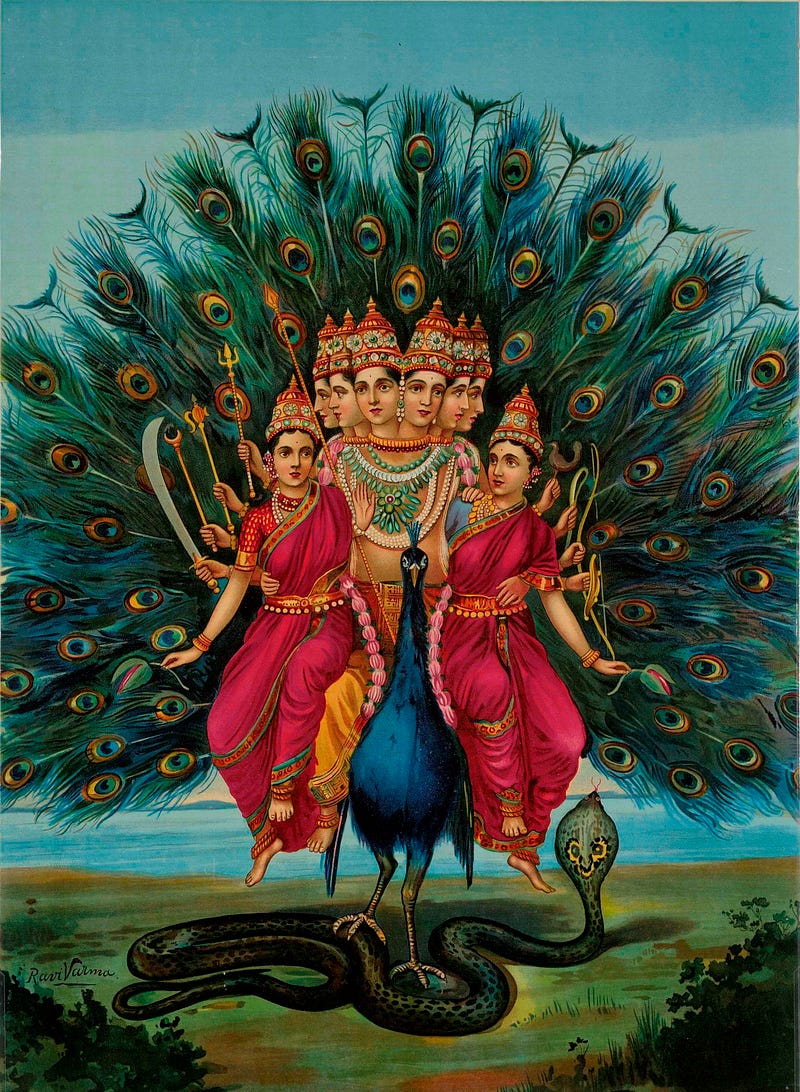
Lord Katharagama with his two wives by Raja Ravi Varma. This image is from Wikipedia and this file has been identified as being free of known restrictions under copyright law, including all related and neighboring rights.

Among the legends surrounding Lord Katharagama’s life and romance, the one he won the heart of Valli is the most famous. The story also describes how Lord Ganesh got his elephant head. Perhaps my Indian friends may be familiar with a different version, and I like to hear about those versions, too.

According to our version, Lord Katharagama fell in love with Valli, a local Adivasi girl in Sri Lanka. He was devastated as the girl kept rejecting him. So Lord Katharagama turned to his brother, Lord Ganesh, the deity of wisdom. With his witty intellect, Lord Ganesh provided a solution.

Lord Ganesh decided to transform into an elephant and lurked along Valli’s path as she headed for her bath. The plan was for Lord Ganesh to instil fear in Valli, creating a chance for Lord Katharagama to heroically rescue her by driving away the elephant, a classical film plot.

However, there was a catch. After being befriended by Valli, Lord Katharagama was supposed to chant a mantra and sprinkle special water onto Lord Ganesh to reverse the transformation. Lord Ganesh handed a jug filled with special water to Lord Katharagama for this purpose. He asked him to perform the ritual before sunset. Otherwise, the change would be irreversible.

As expected, the plan unfolded smoothly, perhaps even too smoothly. Valli fainted during the dramatic, heroic act of Lord Katharagama against the wild elephant. Hastily, Lord Katharagama used some water from the jug to revive her, tending to her well-being.

Once Valli regained consciousness, she appeared to have a change of heart. She didn’t even mind having a romantic conversation with her hero, and soon, they lost track of time. It was almost the sunset when Valli reluctantly departed for home.

Then, only Lord Katharagama recalled his brother, who had been waiting in the forest impatiently. Unfortunately, only a small amount of water remained in the jug as a large portion was used for Valli. But the time was running past, avoiding to think about an alternative.

Lord Katharagama did the logical thing. He hurriedly spilt the remaining water onto Lord Ganesh’s body. The areas touched by water reverted to their original form, but the part above the neck retained its elephant shape as the water had not reached, making it permanent.
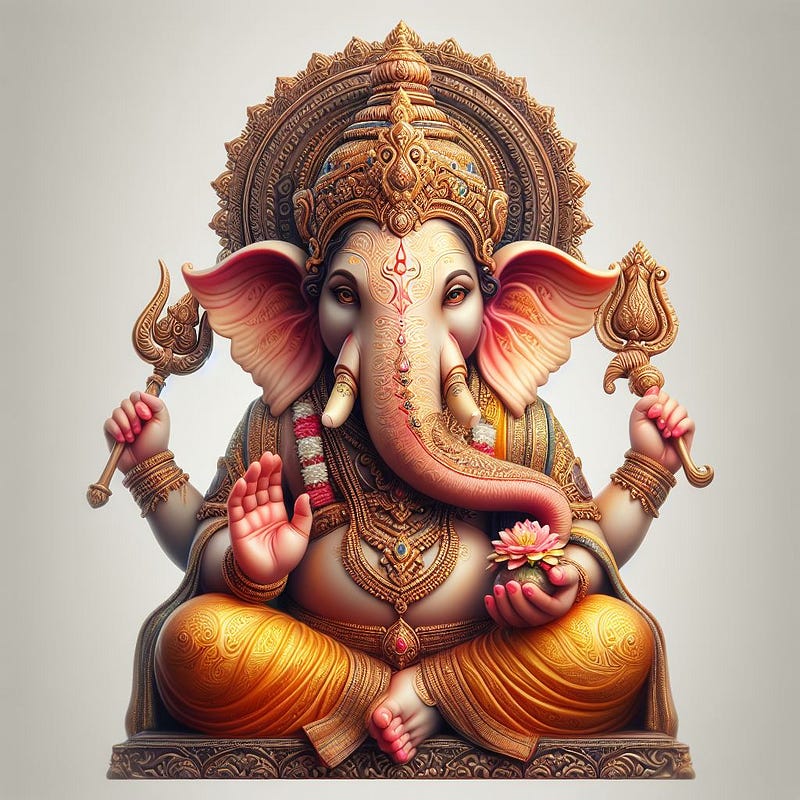
Lord Ganesh — An AI-generated image by the Author using Bing Image Creator

Similarly, we have numerous other stories describing why Lord Katharagama favor more Sinahalese over Tamils, how he blessed King Dutugemunu before the great war with King Ellalan and how King Dutugemunu built a great temple for Lord Katharagama after the victory.

During the festival season, people from all across Sri Lanka gather at the temple dedicated to Lord Katharagama. Some of our Tamil friends residing at the opposite end of the country start their journey weeks in advance. They travelled on foot during the day, following ancient paths through forests and resting beneath trees at night.

While the Sinhalese typically do not follow this tradition, the majority of participants at the temple during the festival season are Sinhalese. Aside from seeking his blessings, there is a belief that Lord Katharagama is among the deities who swarn to safeguard Buddhism in Sri Lanka.

The day we visited this sacred place wasn’t during the festival period, yet a large crowd was present. As part of our tradition, we offered fruits and sought blessings for the success of our project works.

I don’t claim that I rely solely on these blessings for success. However, if specific actions bear no harm and hold potential positive outcomes, I will not decline them.

I have taken a few photographs during our visit. But it was difficult to take photos without featuring other worshippers. Therefore, I had to refrain from using them.

Storytelling
Folklore
Culture
Sri Lanka
Illumination
Recommended from ReadMedium