
Seek Silence To Instill Peace and Clarity In Your Life
Live life unplugged
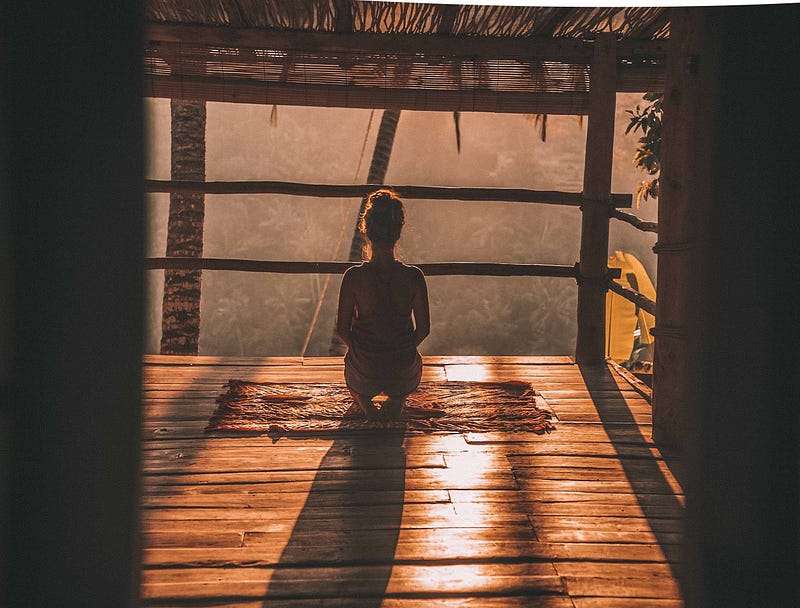
In my last year of graduate school on my journey to become a physical therapist, I treated patients at Jersey City Hospital. It was the most impactful experience for the clinical and spiritual lessons.
In the hospital, there is no respite. Even in the breakrooms, alarms jolt you, and a coordinator speaks through the intercom, prompting doctors and nurses to act.
“Dr. Shah, please report to the surgical floor.”
“Trauma team needed in the ER.”
“Code blue.”
At first, these commands jarred me. Every few minutes, adrenaline would surge through my veins, causing my heart to jolt. After a few weeks of the blaring noises, I became somewhat adjusted, but never immune to the eardrum-bursting intercom.
By the time the weekend came, I was depleted of energy. The residual stress of the week had me not wanting to do much.
During these times, I found great release from stress in silence.
Some mornings I’d sit outside captivated by the sounds of crickets. Others I’d paddle out in the ocean to be lulled by the crashing waves.
Every once in a while, I’d hike into the mountains to be enchanted by the various bird whistles and fall asleep to the hooting of owls at night.
I didn’t realize how healing nature’s sounds are until I needed them most.
Through the noise, I gained a new appreciation for noiselessness.
Therapy as old as time
Poets, philosophers, and religious leaders have sought silence for wisdom and deeper understanding.
Shamans journeyed into the woods for spiritual epiphanies that would guide the tribe to food and resources. The wisdom communicated through silence was vital for the survival of the tribe.
While our environments have evolved drastically from the primal caveman era, our neurophysiology hasn’t changed much. Our hunter-gatherer ancestors perceived all noises as dangerous until proven otherwise. Observing the snap of a branch or crunch of a leaf could mean life or death.
Although we live in a very different time, our bodies still interpret noise as they did thousands of years ago. Stress hormones are secreted, pupils dilate, and heart rate increases so we can fight or flee our way out of danger. When this system is overworked, it can cause a host of health problems such as high blood pressure and brain clot formation.
The opposite is true concerning silence.
Turning down the dial does wonders for our mental and physical health. Research shows silence can reduce adrenaline, cortisol, and lower blood pressure while boosting concentration and focus.
Silence is necessary for our complete well-being. When I filled my weekends with shopping, social events, and binge-watching, I was even more tired on Monday morning than the Friday before.
But when I stepped away from the cacophonous fast-paced world and surrounded myself with nature, I felt light and clear in my head. Come Monday morning, I was refreshed and ready to go.
The greatest way to strengthen relationships
If my hospital experience taught me anything other than how not to kill a patient, it’s the value of silence.
After work, I’d come home exhausted. But when I got away from all the noise, my mood improved and I felt an overwhelming sense of peace.
Silence connects us to ourselves and others. It provides answers to the most challenging life questions. It calms our racing minds and helps us appreciate life’s little moments.
One of my favorite quotes that underlines the importance of silence in relationships is from The Notebook by Nicholas Sparks.
We sit silently and watch the world around us. This has taken a lifetime to learn. It seems only the old are able to sit next to one another and not say anything and still feel content.
The young, brash and impatient, must always break the silence. It is a waste, for silence is pure.
Silence is holy. It draws people together because only those who are comfortable with each other can sit without speaking. This is the great paradox.
I find the people I am closest with are the ones I can stay silent for the longest. Rather than speaking with words, I can feel their aura emanating from them.
This is their life force. It is the love that they share with the world but you must be vulnerable enough to let down your walls and embrace it.
How to find silence in your life
If you’ve been feeling tired, stressed, and a general day-to-day malaise, it might be time to unplug.
Silence is free and can be found wherever you are. If you are in the city, find a park you can visit. If there are no parks near you, find a church or temple. Most are free to enter and are excellent places for healing and connecting with the divine.
If you are stuck in a place where there is no nature to be found (such as an airport or warehouse), put on some headphones and listen to nature noises. My favorite one to write to can be found here.


