
Seeing The World Anew: My First Microscopic Exploration
A lemon, a microscope, and the profound lessons of nature
Dear Readers,
Today I am thrilled to share with you an extraordinary experience in the world of the microcosm. Thanks to my new, long-desired microscope, I had the opportunity to delve for the first time into something incredibly extraordinary with my own eyes. Over the past two months, my articles have had a strong focus on the world of microscopes, juxtaposed with philosophy.
I have had the honour of gaining the trust of Bresser, an extraordinary brand in this field with a heritage of excellence since 1957, to embark on this stimulating experience straddling science and philosophy.
Bresser
I must thank Bresser for allowing me to possess a high-performance microscope, the Bresser DST-0745. In combination with the Bresser MikroCam II Microscope Camera 12MP, these tools enable me to immerse myself in the microcosm with a magnification capability of about 180x.
As a novice in this field, I will need time to experiment and use it to its fullest potential.
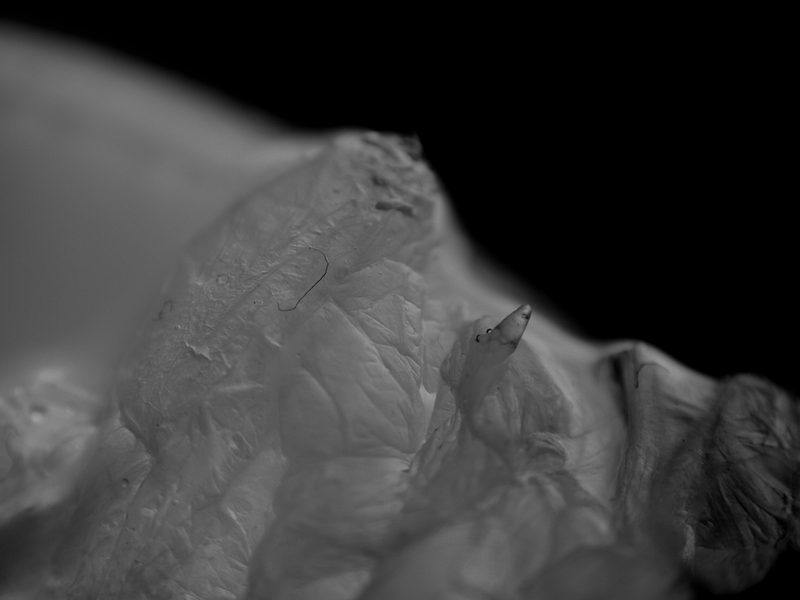
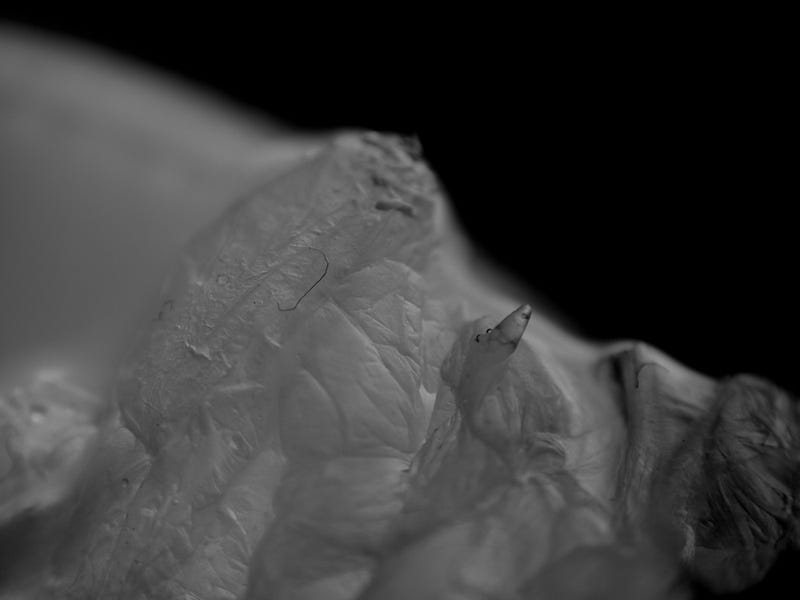
After some testing in the days following the arrival of the microscope, yesterday I asked my mother for a not-so-fresh lemon she was about to discard, and I decided to explore it. This was my first experiment, and I have attached some photos, but nothing can equal the hours I spent using the microscope, camera, and computer with the excellent photographic software provided by Bresser while listening to relaxing Lo-Fi music.
It was a meditative experience, with an extraordinarily expanded present, in which surges of enthusiasm coursed through my body as I discreetly crossed the threshold into the microcosm.
Geometries
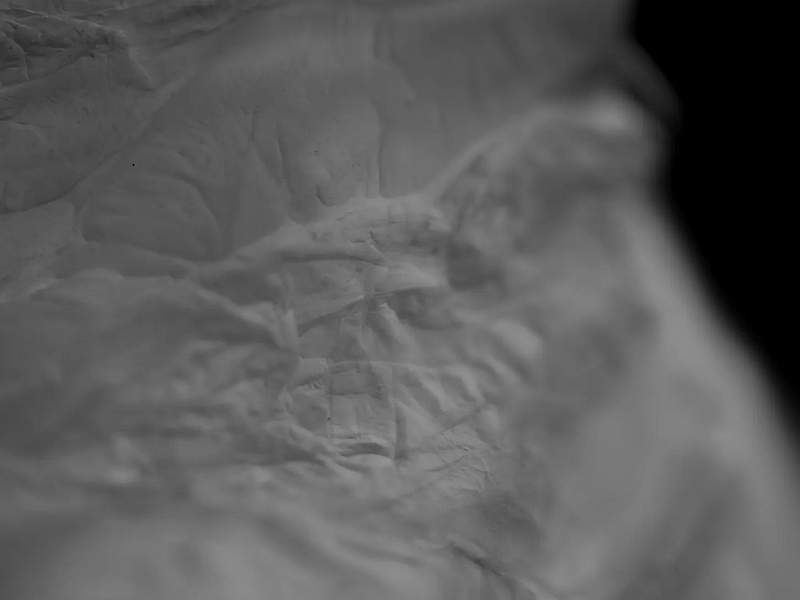
The geometries of the peel and the almost dried-out pulp of that lemon flooded me with emotions as enigmatic as they were familiar. These lines reminded me of the wrinkles on the necks of my beloved grandparents, and thus, by Freudian association, the wisdom of nature and the Vedantic teachings that have been permeating every inch of my body and life for over 3 years.
If I were to “catalogue” the emotions I experienced within the framework of the Vedantic way of life, I would say that I experienced:
Vismaya: A sense of awe and surprise at the complexity and beauty of nature.
Adbhuta: An experience of wonder that transcends ordinary comprehension.
Ascharya: A sense of amazement and wonder arising from the contemplation of beauty.
Jigyasa: A desire to know and understand the secrets of nature.
Kausala jnana: The pursuit of causal knowledge, the study of the relationships between things, and the understanding of the causes underlying the existence and functioning of the universe.
Magnification between 100x and 150x
Now allow me to elaborate on the description of the fascinating structures I observed through the microscope during the exploration of the lemon pulp and peel.
I do not yet fully control the microscope settings, but I believe I was at a magnification between 100x and 150x.
Lemon pulp
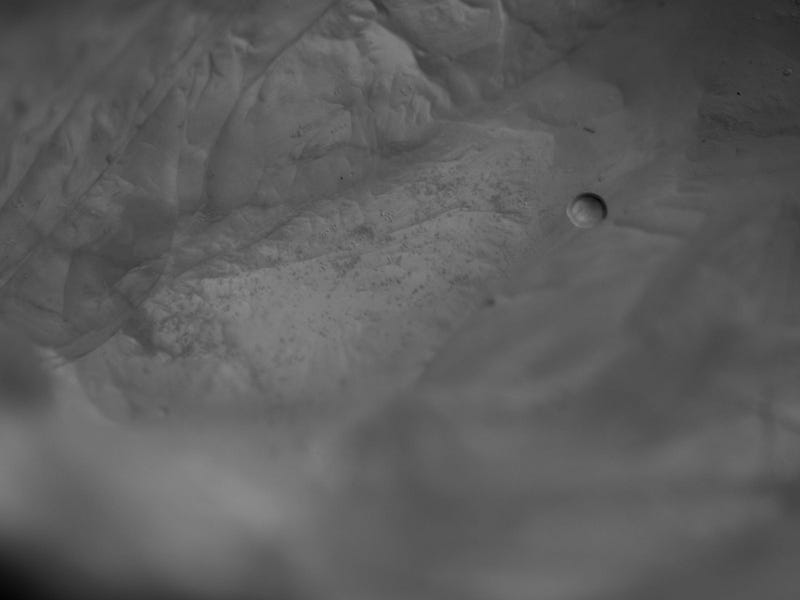
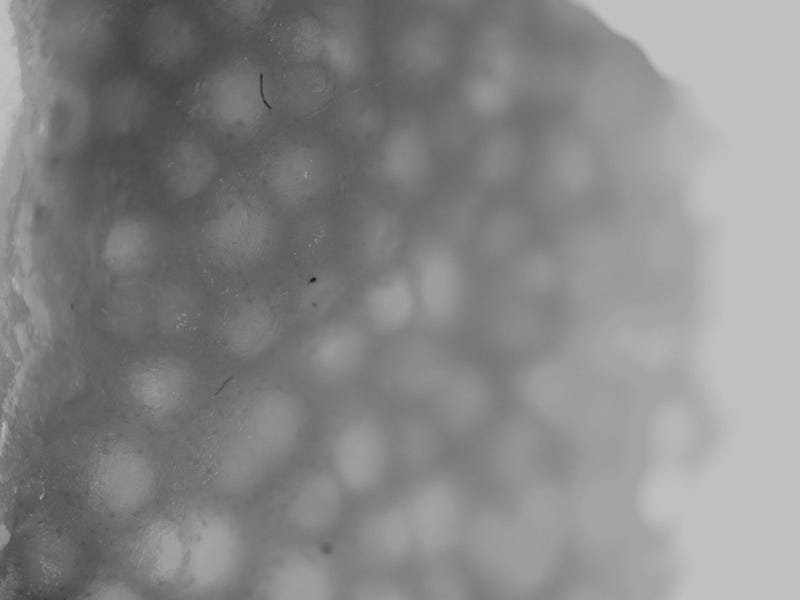
The images show a portion of magnified lemon pulp, in which several fascinating features can be observed: the pulp is composed of small sacs, called vesicles, which appear as rounded or oval cells, the vesicles are arranged to form a three-dimensional network, with empty spaces between them, inside the vesicles is the lemon juice, which contains water, vitamins, sugars, and other compounds, the vesicles have a diameter of about 50–100 micrometers.
Lemon peel
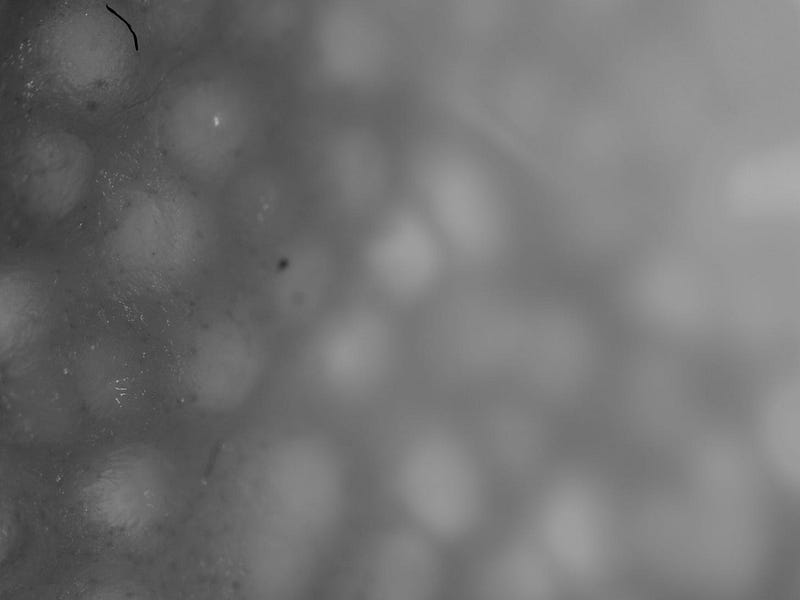
The “white balls” seen in the lemon peel are oil glands. The oil glands produce the essential oils of the lemon, which are responsible for its characteristic aroma and flavour. The oil glands, which are 50–100 micrometers in size, are small rounded or oval cells filled with oil. They are irregularly arranged on the surface of the lemon peel.
And…so?
Observing these complex and marvellously organized structures up close filled me with awe and admiration for nature. The contemplation of these microscopic details evoked in me a profound sense of wonder and a desire to more deeply understand the secrets hidden behind the structures and patterns I observed.
This first and small experience with the microscope has further strengthened my connection with the Vedantic teachings, prompting me to reflect on the intrinsic wisdom present in nature and its ability to evoke emotions as inscrutable as they are intimate.
For example, the oil glands of the lemon scent its peel, just as the pores of our skin emanate a subtle aura of human essences, an olfactory imprint of our very existence.
What a beautiful experience!
All is one.
“As a spider spins and withdraws its web, as plants grow on the earth, as hair grows on the head and body of a living person, so also does the universe arise from the Self.”
Mundaka Upanishad (1.1.7)
What do you think about my article?
Have you ever used a microscope?
Feel free to leave a comment.
Thank you for reading.